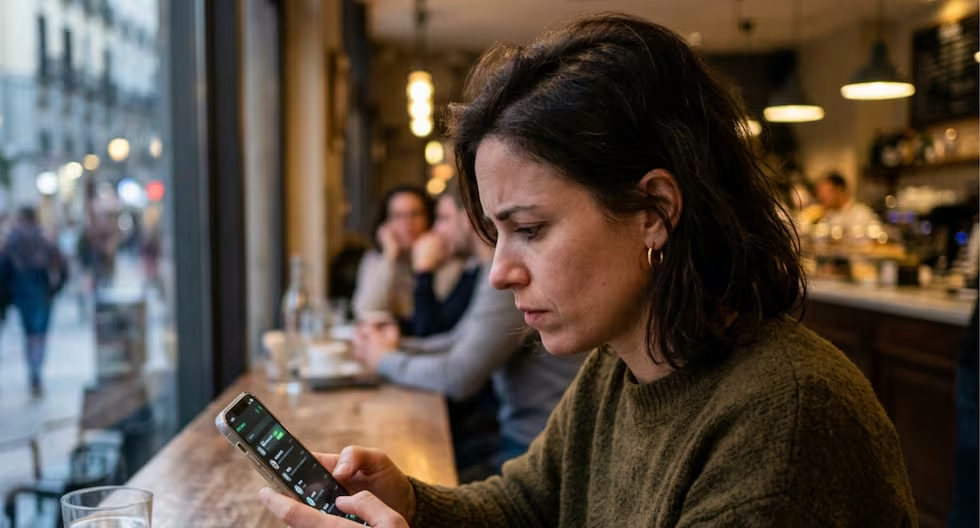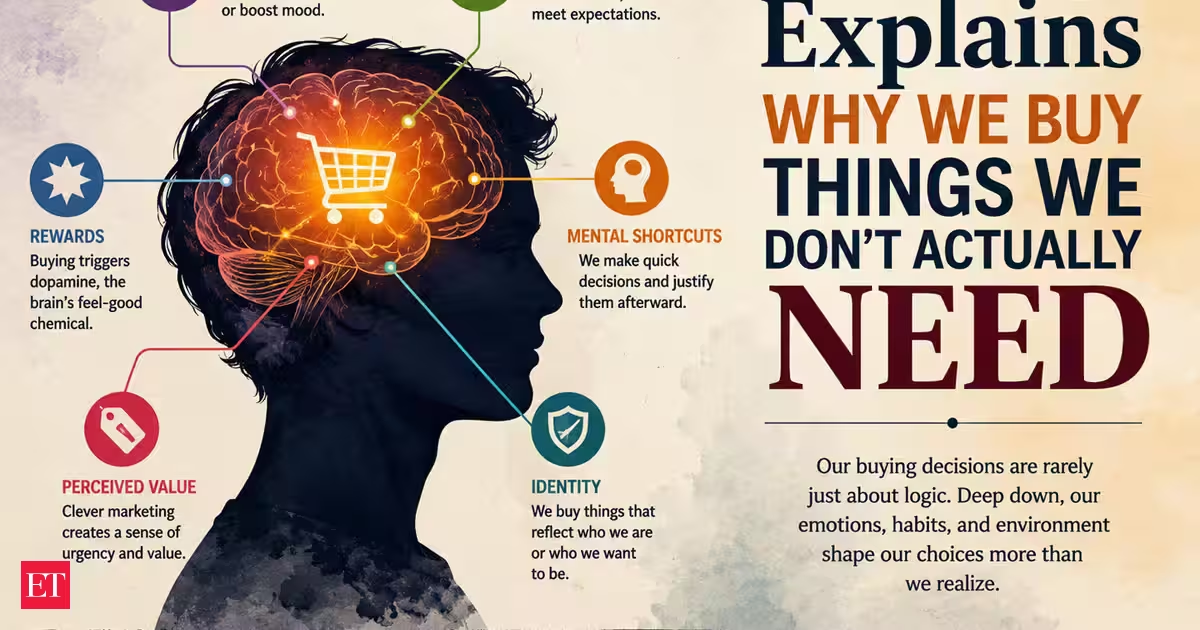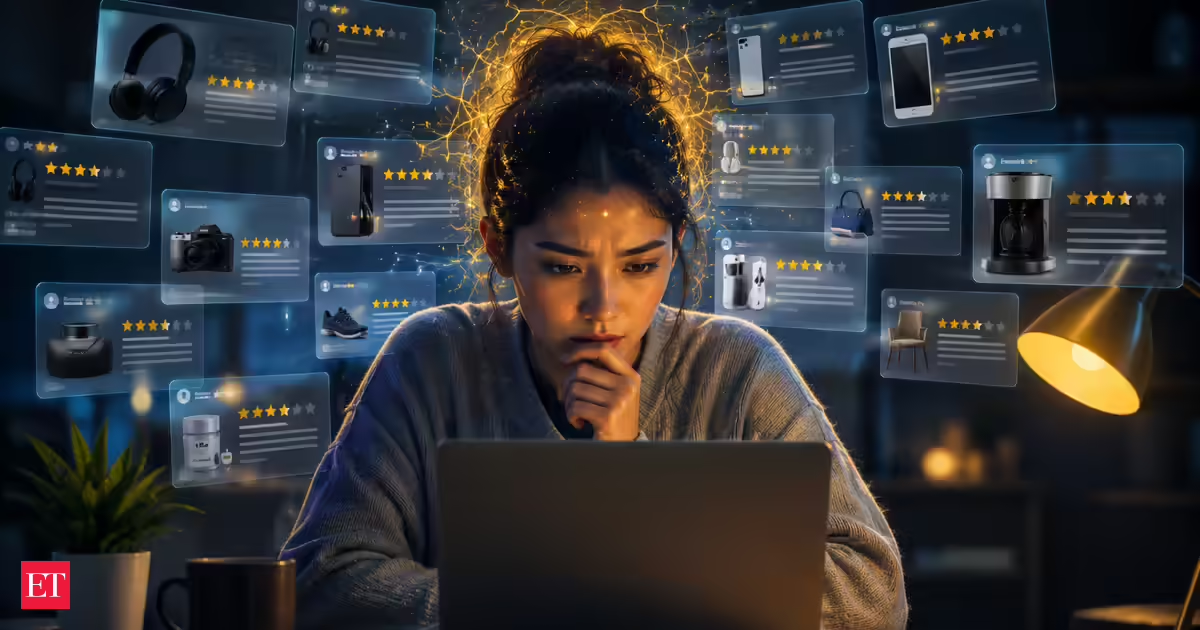
Buying a product today is rarely a simple process. A person might start on Amazon, then move to YouTube, Reddit, Google reviews, social media discussions, and independent websites before finally deciding whether to purchase a pair of headphones, a coffee machine, or even a skincare product. For some people, this process can take hours or even days. At first glance, this behavior may seem excessive. Psychology, however, suggests something deeper is happening. People who read reviews across multiple platforms are often searching for more than product information. They may be searching for certainty, reassurance, and emotional safety before making a decision.Psychology says people who keep reading reviews before buying a product aren’t indecisive or stingy: Why some brains need extra certainty before buyingIn a world where choices are endless and mistakes can feel expensive, the brain increasingly treats shopping as a psychological exercise rather than a financial one.Why The Brain Hates Making The Wrong ChoiceOne explanation comes from Loss Aversion Theory, developed by psychologists Daniel Kahneman and Amos Tversky. The theory suggests humans experience the pain of losing more intensely than the pleasure of gaining.This means buying the wrong product can feel far worse than buying the right product feels rewarding.For example, spending $100 on a disappointing gadget may emotionally outweigh the excitement of buying a product that works perfectly. As a result, many consumers gather excessive information to minimize future regret. The behavior is often protective rather than irrational.You Might Also Like:Why One Negative Review Feels More Powerful Than Fifty Positive OnesPsychologists also point to Negativity Bias. The human brain naturally prioritizes negative information because identifying threats historically improved survival. This explains why a shopper can read hundreds of positive reviews yet become fixated on a single one-star comment.Imagine someone researching wireless earbuds. After seeing dozens of favorable opinions, they suddenly encounter a review saying, "Stopped working after three months." That single sentence may become more influential than all the positive feedback combined. The brain interprets the negative possibility as a warning sign that deserves extra attention.Why People Jump Between PlatformsOne of the most interesting explanations comes from Information Verification Behavior. People no longer trust a single source of information.Consumers often believe each platform has a different purpose.You Might Also Like:Amazon reviews reveal product performance.YouTube shows real-life demonstrations.Reddit offers unfiltered experiences.Google reviews provide broader consensus.Social media creators showcase lifestyle integration.The brain treats these platforms like witnesses in an investigation. People are not simply shopping. They are gathering evidence. A person considering a robot vacuum, for instance, may watch ten videos, compare forums, and study user complaints before feeling comfortable enough to buy.The Role Of Decision AnxietyPsychologists also connect this habit to Decision Paralysis, sometimes called analysis paralysis. Modern consumers have access to thousands of products at every price point. Too many options can overwhelm the brain. Research on the Paradox of Choice, introduced by psychologist Barry Schwartz, suggests an abundance of choices can reduce satisfaction and increase stress.The more alternatives people see, the harder it becomes to commit to one decision. Ironically, more information does not always create confidence. Sometimes it creates confusion. This is why a person can spend three hours researching an air fryer only to postpone the purchase entirely.Why Some People Need Emotional Reassurance Before BuyingAnother explanation comes from Intolerance of Uncertainty Theory. Some individuals have a lower tolerance for unpredictable outcomes. They prefer to reduce ambiguity wherever possible. For these individuals, reviews function as emotional reassurance.Every positive comment lowers anxiety. Every detailed experience feels like a safety net. The shopping experience becomes less about ownership and more about emotional regulation. This pattern has become increasingly common in younger consumers who have grown up with unlimited information available at their fingertips.Social Proof Has Become The New Trust CurrencyPsychologist Robert Cialdini introduced the concept of Social Proof, which explains that people often rely on the actions of others to guide their own decisions. Consumers now trust strangers more than advertisements.A product described as "best-selling" by a company may be ignored. But if thousands of independent users share positive experiences, confidence increases immediately. This is why platforms like YouTube, Reddit, and online communities have become powerful shopping tools.People want authentic human experiences before committing. In many cases, they are not asking, "Is this a good product?" They are asking, "Did this work for people like me?"Why Younger Generations Research More Than Previous GenerationsMillennials and Gen Z have grown up during an era of endless consumer choices. Unlike previous generations that often relied on brand loyalty, younger consumers have learned to question marketing claims. A viral product can become a trend overnight and disappear just as quickly. This environment encourages skepticism.For example, a skincare product promoted heavily on social media may still send people searching through dermatology discussions, creator reviews, and consumer experiences before they trust it. The internet has transformed buyers into investigators.The Bigger Psychological TruthResearch from organizations such as the American Psychological Association suggests decision-making is closely tied to emotional well-being, risk perception, and anxiety management.The most important insight is that many people are not afraid of spending money. They are afraid of making a mistake. Reading reviews across multiple platforms often reflects a deeper desire to avoid regret, gain reassurance, and create certainty in an uncertain world.Perhaps that is why so many people continue researching long after they already know what they want. Their brain is not asking, "Is this product good enough?" It is asking, "Can I trust this decision?"FAQsWhy do some people read reviews on multiple websites before buying?Psychology suggests they are often seeking reassurance, certainty, and protection from making a costly mistake.Why does one bad review outweigh many good ones?This is called negativity bias, where the brain naturally pays more attention to potential risks than positive information.
Psychology says people who keep reading reviews before buying a product aren’t indecisive or stingy: Why some brains need extra certainty before buying
Psychology says the key takeaway is that many people are not necessarily worried about spending money, they are worried about making the wrong decision. Reading reviews across multiple sources often reflects a deeper need to avoid regret, seek reassurance and create a sense of certainty in an environment filled with uncertainty.
954 words~4 min read