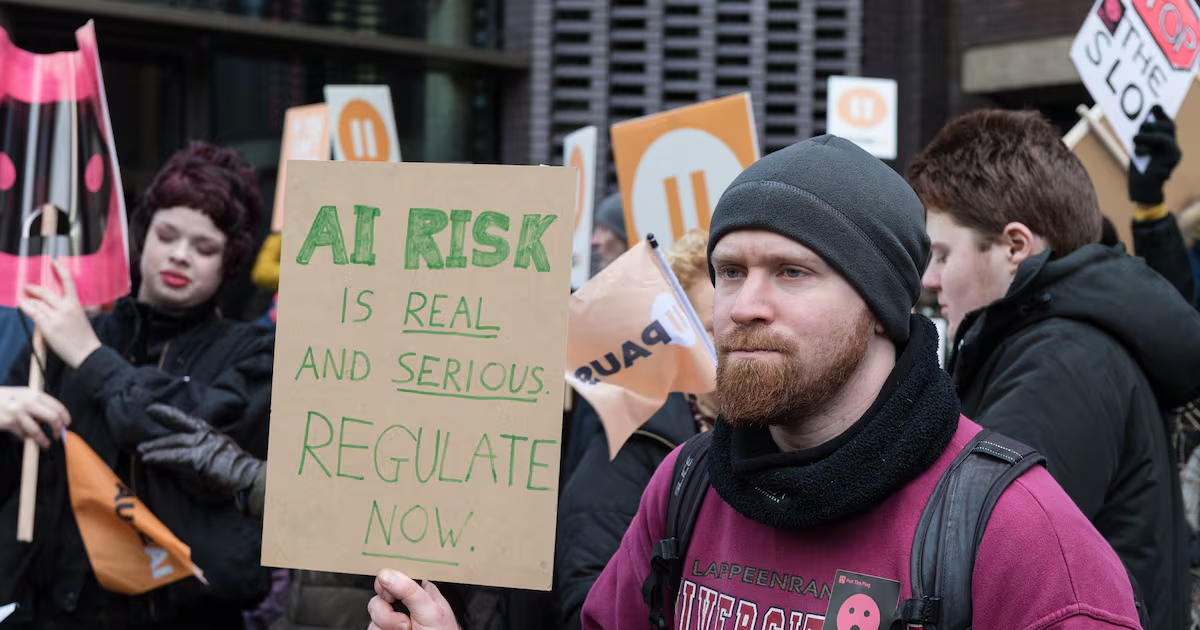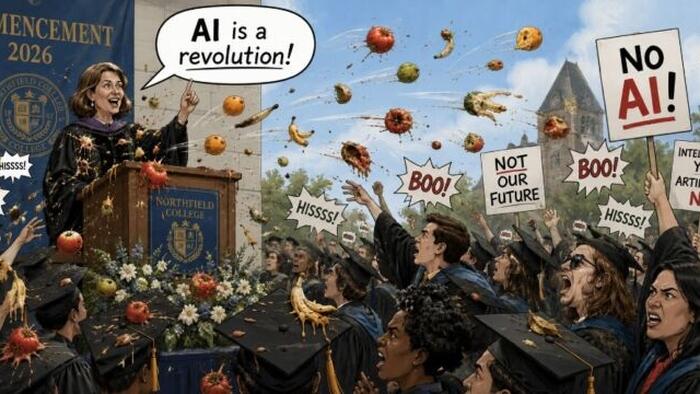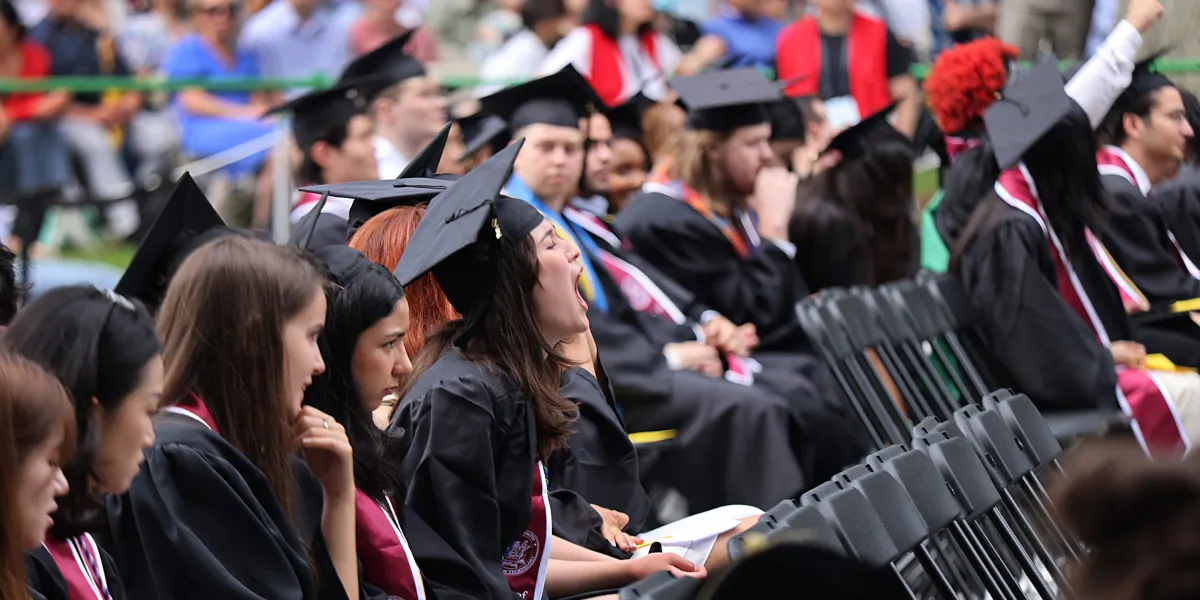
University commencement speeches in the US offer a glimpse into the cultural moment, and the vibe among graduates is that AI is a bad thing. Daily Show comedian Ronny Chieng went so far as to urge Harvard alumni to fight AI. Of all the things the young and energetic can disagree on, the next generation of leaders are united in their animus against AI. Graduates are entering a world that may not need them as much.The AI “doomer” versus utopian debate hinges directly on relative wages and indirectly on who will benefit from it. Doomers fear wage stagnation and limited material benefits as many jobs are automated, while utopians expect accelerating economic growth and declining costs of goods and services to offset wage stagnation. Utopians implicitly concede wealth transfer to capital owners away from labour, at least over the short term. Hence the cultural backlash against tech bros: the possibility of cheaper goods in the future is cold comfort to graduates facing high student debt and a historically expensive housing market.This is not the first time in recent history that rapid productivity gains upset the status quo. The 1990s globalisation contributed to the deindustrialisation of many regions in developed economies, and cheaper TVs and mobile phones do not make up for displaced communities. Even though globalisation utopians were right that average wages would rise relative to the cost of everyday goods, many working-class people were economically left behind, resulting in rising within-country inequality. Alex Imas from the University of Chicago argues the relative value, and cost, of human-centric goods and services such as rugby playing or executive management will rise dramatically, offsetting the aggregate wage impact of automation. Tasks that still require humans act as bottlenecks that constrain how fast the economy can grow and see their relative prices rise over time. This is known as Baumol’s Cost Disease. If AI can replace all human tasks, then capital owners’ share of income will rise and the labour share will decline over time. In the extreme, despite dramatic increases in total global wealth, a disproportionate share of income and capital would go to AI companies, hence “technofeudalism” a la Yanis Varoufakis. This is already happening in many fast-growing countries. Conversely, recent work by Chad Jones of Stanford University shows if not all tasks can be automated, AI will be more of a “business as usual” technology that sustains productivity growth and allows the economy to grow at something like its historical average. Regulation is another limiting factor to automation, while public sector employees are protected from market pressure to improve productivity. The ultimate tension will be between market-determined and regulated wages. We see this clearly in South Africa. The relative size of government has doubled compared to the 1960s and wage growth exceeded the private sector, while government’s contribution to economic growth has not risen. The historical expansion of South Africa’s inefficient government limits the economy’s dynamism and ability to adopt new technologies and absorb labour, with our productivity deficit growing worse over time.South Africa is unique for its relatively stable labour share of income, despite a marked increase in inequality. Our research suggests that, like the experience of other countries, technology and education have tended to make workers more productive. Rather than capital entirely displacing labour, we find capital deepening, such as providing an auditor with advanced software enhances efficiency, but automation efficiency is limited in manual trades. As such, only high-income wages tend to rise from investment in automation. The reason the labour share has not fallen in South Africa is the deterioration of our capital stock and a structural shift towards low-productivity sectors, especially government. As fast-growing economies are rapidly accumulating physical and intellectual capital for AI, South African companies are not investing in new technologies and accumulating their own intellectual property. We see the opposite in South Africa.Our estimates show this investment contraction owes to a matched decline in capital productivity in South Africa. Investors are getting a worse return on investments into buildings, machinery, and infrastructure than they used to. Put differently, South Africa gets less growth for a unit of investment than we did two decades ago. We also see strong evidence of Baumol’s Cost Disease in government-related activities in South Africa. Our research shows government-related sectors have had very weak productivity growth, while the prices of government-related goods and services have been increasing much faster than private sector goods and services. Government inefficiency, corruption and waste have worsened these relative price changes, and public sector unions have pushed for wage increases beyond productivity growth. The collapse of government capacity to deliver quality education, electricity and digital infrastructure is one reason why South Africans are getting poorer over time, not only relative to other countries.Government’s short-term protectionism might shield unionised workers, but it weighs on South Africa’s growth potential. Whether the doomers or utopians are right, South Africa’s relative income will continue to decline and our inequality rise unless we make a fundamental shift in our approach to regulation and the role of government. *Dr Steenkamp is CEO of Codera Analytics and a research fellow with the economics department at Stellenbosch University, and Roos is an associate with Codera.Business Day
OPINION | AI set to make South Africa’s inequality worse
Threatens to widen the gap as country lags in tech investment
865 words~4 min read