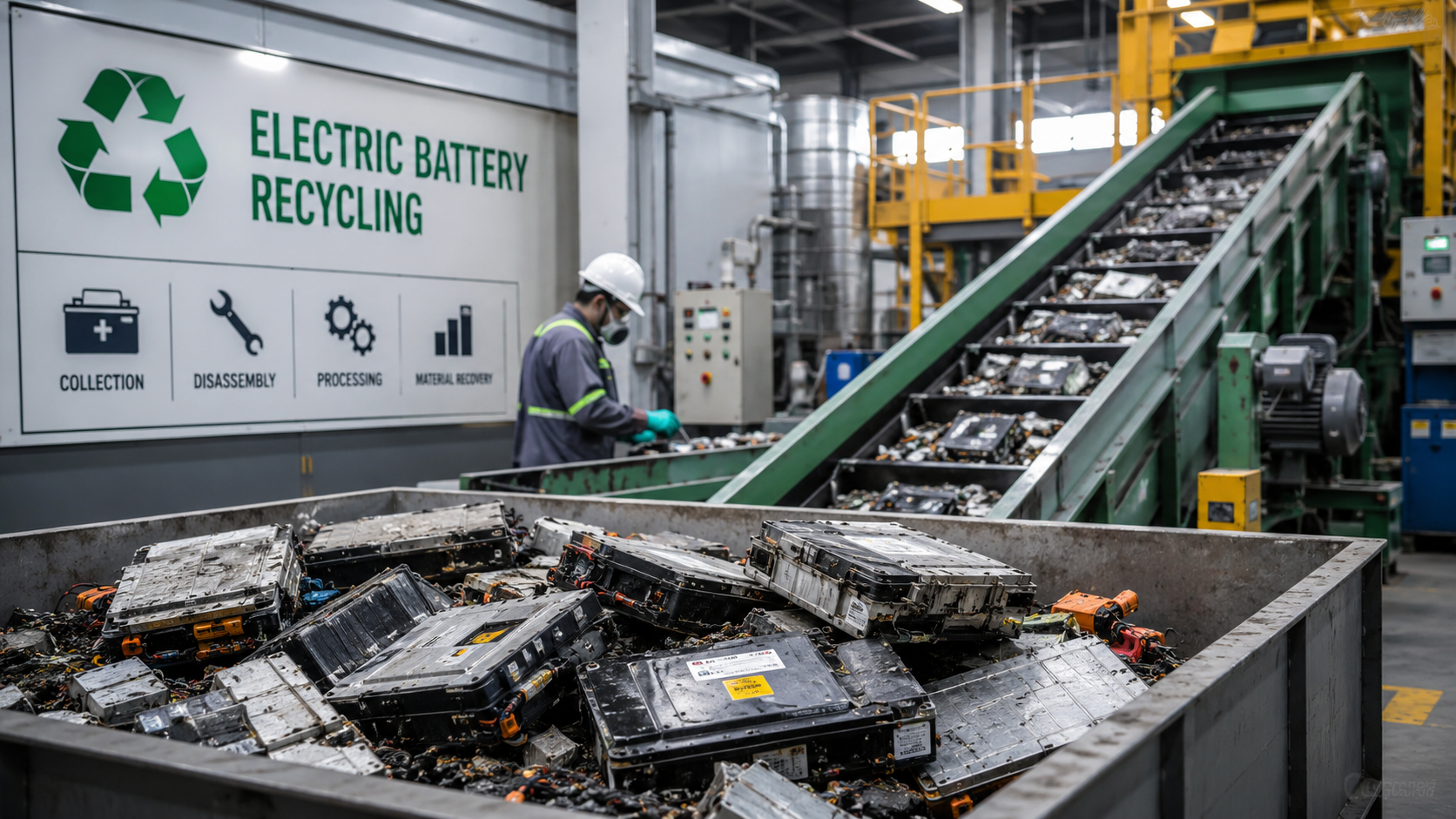
Artificial Intelligence (AI), clean energy, advanced electronics, defence systems--almost every technology defining this decade runs on rare metals, and demand is climbing fast. The market for them is projected to cross $21 billion by 2035, and a global scramble for supply is already under way. Yet digging these metals out of the ground is slow, costly and environmentally fraught. Which raises an awkward question: what if some of the richest deposits aren’t underground at all, but piling up in our drawers, offices and scrapyards?Artificial IntelligenceThat is the golden opportunity hiding in e-waste. India is now the world’s third-largest generator of electronic waste, behind only China and the US--which also makes it home to one of the planet’s richest above-ground mines.Every discarded smartphone is, in effect, a tiny ore deposit. A conventional gold mine yields roughly five grams of gold from a tonne of rock; a tonne of old handsets can hold 300 grams or more - 60 times richer, along with several kilograms of silver, over a hundred kilograms of copper, and traces of palladium, cobalt and lithium. Put another way, an estimated 7% of all the gold in circulation worldwide is already sitting inside electronic devices. The only real question is whether we bother to capture it. The scale is staggering. India generated roughly 1.4 million tonnes of e-waste in FY2024-25, according to Central Pollution Control Board data - nearly double the 2017-18 figure, and enough to fill some 200,000 garbage trucks. And that is the conservative count. A recent NITI Aayog assessment puts generation far higher, at about 6.2 million tonnes in 2024, and projects 14 million tonnes by 2030--growth of close to 17% a year, with computers and IT hardware making up the bulk of it. In one sense, this is a crisis. Dumped or crudely dismantled, e-waste leaches lead, mercury and cadmium into soil and water, while backyard recovery exposes workers to toxic fumes. Building a formal, regulated recycling ecosystem is not optional, it is a public-health necessity. But it is also a market. India’s formal e-waste recycling industry is already worth an estimated $1.6–2.8 billion, and the broader e-waste management market runs into the tens of billions and is forecast to roughly double by 2030. The more compelling number is strategic: Analysts reckon urban mining - recovering critical minerals from discarded electronics - could be worth up to $6 billion a year. The CPCB pegs the recoverable value of properly processed e-waste at ₹20,000–25,000 crore annually. And the jobs dividend is just as striking: NITI Aayog projects around 500,000 green jobs from a formalised sector that already sustains an estimated 2.5 million workers - almost all of them informal today.For a country that imports some $2.5 billion of lithium and cobalt a year, with almost no reserves of its own, the resource-security case is sharper still. Battery recycling alone, analysts estimate, could meet 30–40% of India’s lithium demand by 2030, just as that demand rockets from 16 GWh in 2023 toward 248 GWh by the mid-2030s. Every kilogram recovered at home is a kilogram not bought from a volatile global market.So, what is holding India back? Not technology, and not demand, but something far more basic: Collection. An estimated 90–95% of the country’s e-waste still flows through the informal sector - the kabaadiwalas and small workshops of hubs like Seelampur, Moradabad and Dharavi, who deftly recover copper and aluminium but, using crude acid-and-fire methods, let the rare metals literally go up in smoke. Meanwhile, India’s largest recovery lines sit idle, unable to source enough material to run at capacity. The treasure is everywhere; the system to refine it is missing.Policy is slowly tilting the economics in the right direction. The E-Waste (Management) Rules, 2022, in force since April 2023, cover 106 product categories, place Extended Producer Responsibility squarely on manufacturers, set recycling targets starting at 60%, and have created a market in tradable EPR certificates. But on-ground compliance status tells a messier story. Investigations have exposed numerous "ghost" plants and inflated volumes--a large number of ‘authorised recyclers’ issuing EPR certificates for material that is quietly rerouted to the grey market rather than genuinely recycled. Recycling, in effect, on paper!Three things will decide whether India seizes the prize. First, integrate the informal workforce rather than displace it: Bring the pickers and traders into traceable, safer supply chains, and you preserve their unmatched last-mile reach while lifting recovery rates. Second, build real infrastructure--India still has only a few facilities and scant capacity for the advanced hydrometallurgical processes that recover critical minerals, an area where China and the EU are well ahead. Third, enforce--EPR targets mean little unless producers genuinely collect, report honestly, and stop quietly auctioning their scrap to the highest bidder. The same strict enforcement on all ‘authorised recyclers’. The stars are aligning. A waste stream growing 15–17% a year, rising metal prices, a national push for critical-mineral self-reliance and tightening ESG disclosure norms all point to a sector that could scale into a multi-billion-dollar industry within this decade. We usually describe India’s e-waste as a ticking environmental hazard. It is just as truly a mine - one sitting in our living rooms, offices and scrapyards. The green gold is already here. All it is waiting for is a system smart enough to refine it.(The views expressed are personal)This article is authored by Masood Mallick, managing director & CEO, Re-Sustainability.
Why India’s e-waste could become a profitable industry
This article is authored by Masood Mallick, managing director & CEO, Re-Sustainability.
894 words~4 min read