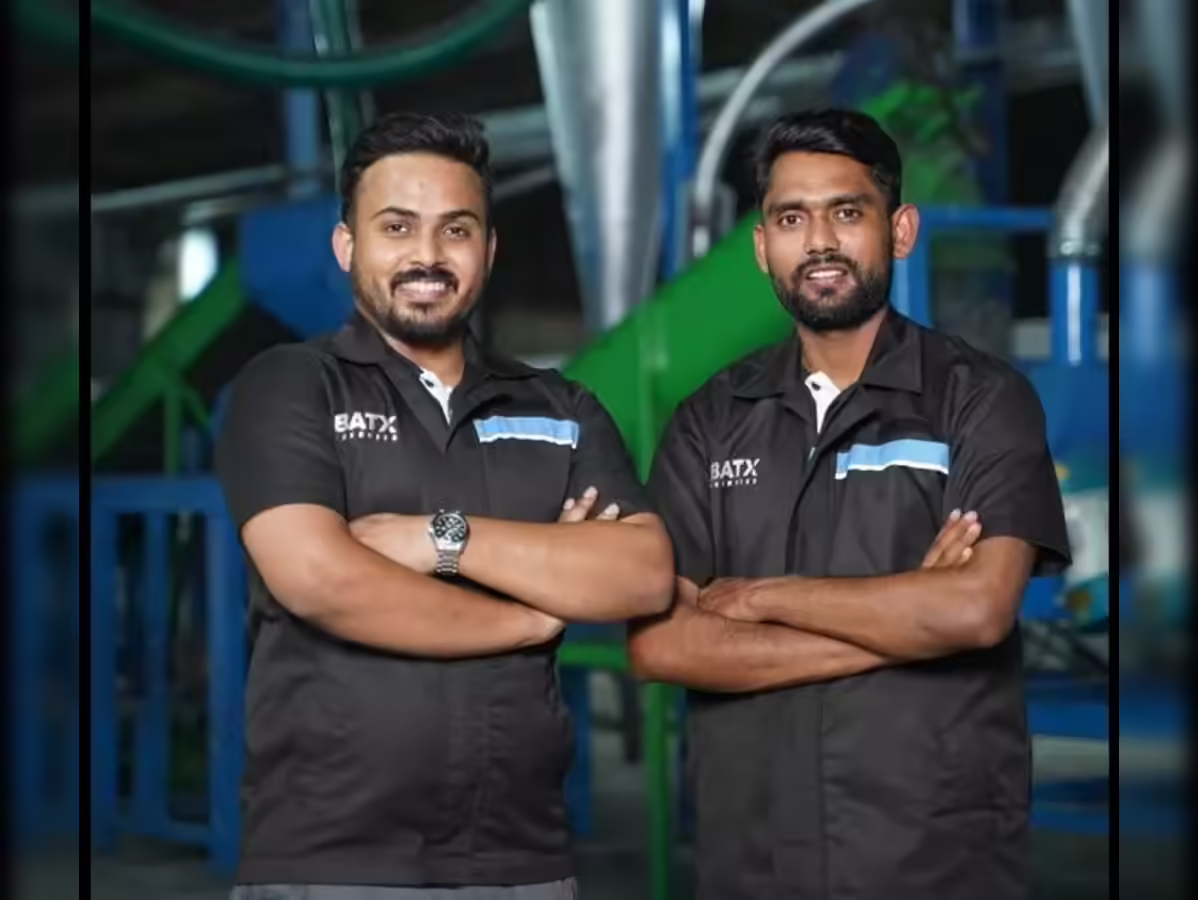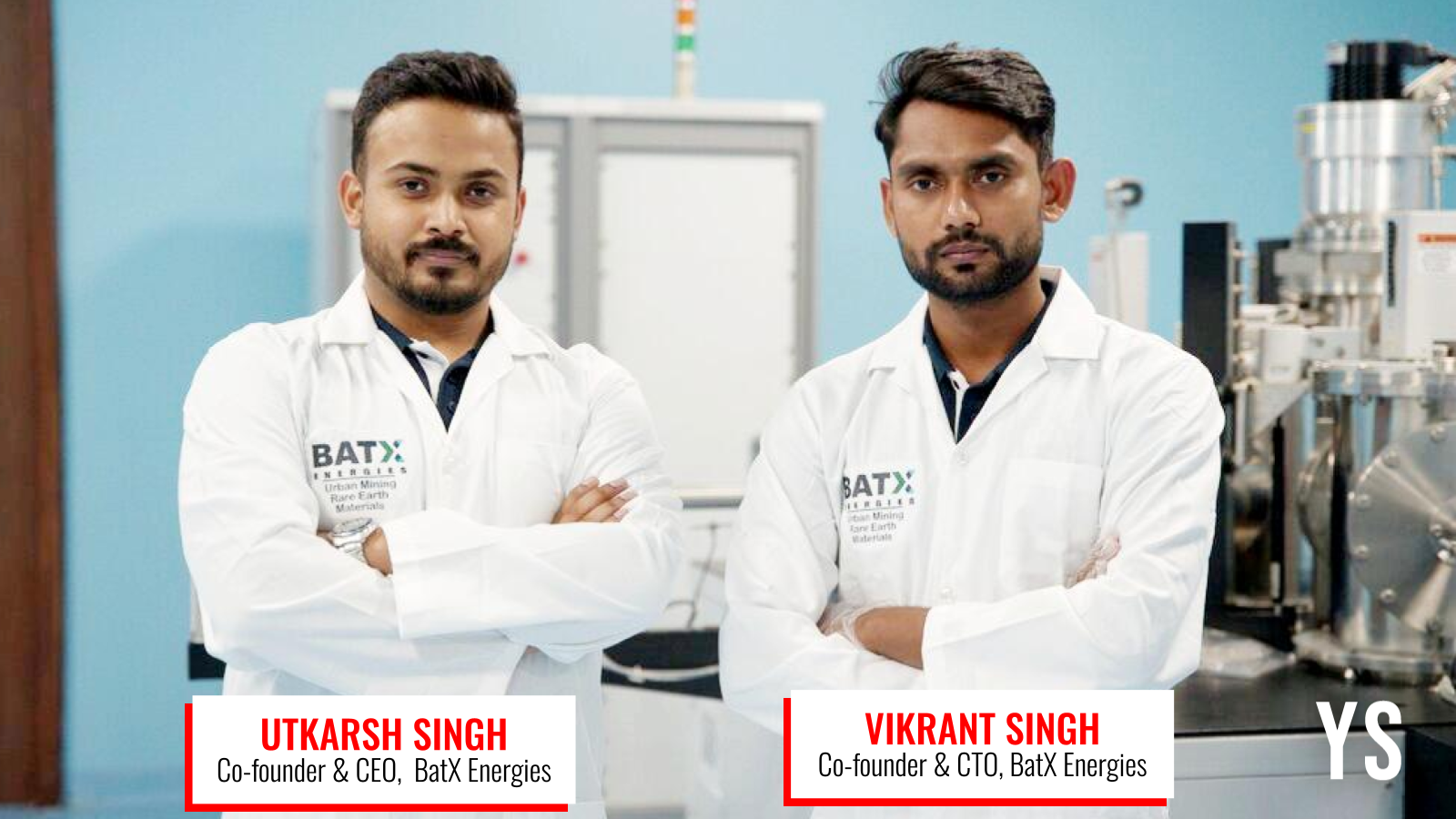
India’s battery recycling industry is entering what could be its biggest funding cycle yet, with industry estimates based on brokerage reports, thematic clean-tech analyses and renewable energy consultancy projections reviewed by businessline suggesting the sector could attract another $350-500 million (₹2,900-4,150 crore) in institutional capital over the next two to three years.The latest signal came on Thursday when Gurugram-based BatX Energies raised an $11 million (₹105 crore) Series A round led by IvyCap Ventures. IvyCap invested $8.4 million (₹80 crore), taking BatX’s cumulative equity funding to nearly $16 million.The round follows an estimated $180-195 million (₹1,500-1,620 crore) already invested by venture capital and private equity firms in India’s organised battery recycling sector. While organised recyclers have collectively raised only about ₹1,500 crore in equity, announced expansion plans by leading players already exceed ₹12,000 crore, with much of the gap expected to be financed through debt, structured finance and project funding. The industry is now moving beyond venture-backed technology development towards infrastructure-style capital.The inflection pointVikram Gupta, Founder and Managing Partner of IvyCap Ventures, said the investment was driven by India’s need to secure domestic supplies of critical battery materials rather than by waste-management economics.“India’s energy transition depends on securing sustainable access to critical minerals. BatX has built a strong technology-led platform for recovering, refining and reusing battery materials, addressing a challenge of both economic and strategic importance,” Gupta said.The investment also reflects IvyCap’s broader shift towards deep-tech manufacturing. Managing more than $650 million (about ₹6,190 crore), the fund has expanded beyond consumer internet into semiconductors, aerospace, industrial hardware, electric mobility and advanced manufacturing.Gupta said BatX’s integrated model differentiates it from conventional recyclers. Instead of producing only black mass, the company recovers battery-grade lithium, nickel and cobalt for reuse in battery manufacturing.“The real value lies in being an integrated player across the entire value chain,” he said. Companies selling only black mass typically operate on margins of around 4 per cent, while integrated refiners can generate 8-10 per cent margins as they scale.He believes battery recycling is approaching the same inflection point battery manufacturing witnessed a decade ago. While the domestic recycling market could reach around $3 billion by 2030 as EV batteries begin reaching end-of-life, Gupta estimates the longer-term opportunity could eventually grow into a $10-12 billion industry.Why investors are writing bigger chequeInvestors say three structural changes have significantly reduced the risks around battery recycling. The first is feedstock visibility. Earlier, investors questioned whether recyclers would receive enough used batteries to justify large investments. That uncertainty is easing as companies increasingly secure long-term supply partnerships with automakers.BatX has tied up with VinFast India for battery recycling and material recovery, JSW MG Motor India for second-life battery applications and LW3 for blockchain-enabled battery traceability and extended producer responsibility (EPR) compliance.Across the industry, companies including Attero, Lohum and RecycleKaro have signed similar partnerships with Tata Motors, Hyundai, Hero MotoCorp, Bajaj Auto, Mercedes-Benz Energy and Ather Energy.These agreements convert future battery waste into contracted industrial feedstock, improving long-term capacity utilisation and revenue visibility.The second driver is regulationIndia’s Battery Waste Management Rules and Extended Producer Responsibility framework are gradually shifting battery collection from the informal sector to organised recyclers. As recovery targets tighten, automakers will increasingly depend on organised recycling companies to meet compliance requirements.The third is the rapid growth of India’s EV market. Electric two-wheelers accounted for an estimated 8.3-8.7 per cent of overall two-wheeler sales during the first half of 2026, while electric passenger vehicles reached about 6.2-6.5 per cent penetration. Although these batteries are years away from retirement, investors increasingly view today’s EV sales as tomorrow’s recycling feedstock.BATX’S Scale-upBatX Co-founder and CEO Utkarsh Singh said the company reported revenue of about ₹55 crore in FY26 with EBITDA margins of around 7 per cent and PAT margins of 2-3 per cent. It is targeting revenue of ₹250-300 crore next year while expanding recycling capacity from 4,500 metric tonnes to 25,000 metric tonnes in phases.Rather than exporting black mass, BatX plans to recover and refine lithium, nickel and cobalt within India, enabling greater domestic value addition.For IvyCap, that demonstrates BatX has moved beyond proving its chemistry to building industrial-scale capacity.The next capital cycleGupta believes the sector is only at the start of a larger investment cycle.“If you look at China, they have invested billions of dollars into battery recycling and processing. We’re now seeing significant demand emerge, and I believe much larger pools of capital will begin flowing into this sector over the next two to three years,” he said.Published on July 3, 2026
BatX’s $11 million Series A signals India’s next $500 million battery recycling investment wave
BatX's $11 million Series A investment highlights India's potential for a $500 million battery recycling funding surge amid growing EV demand.
750 words~3 min read