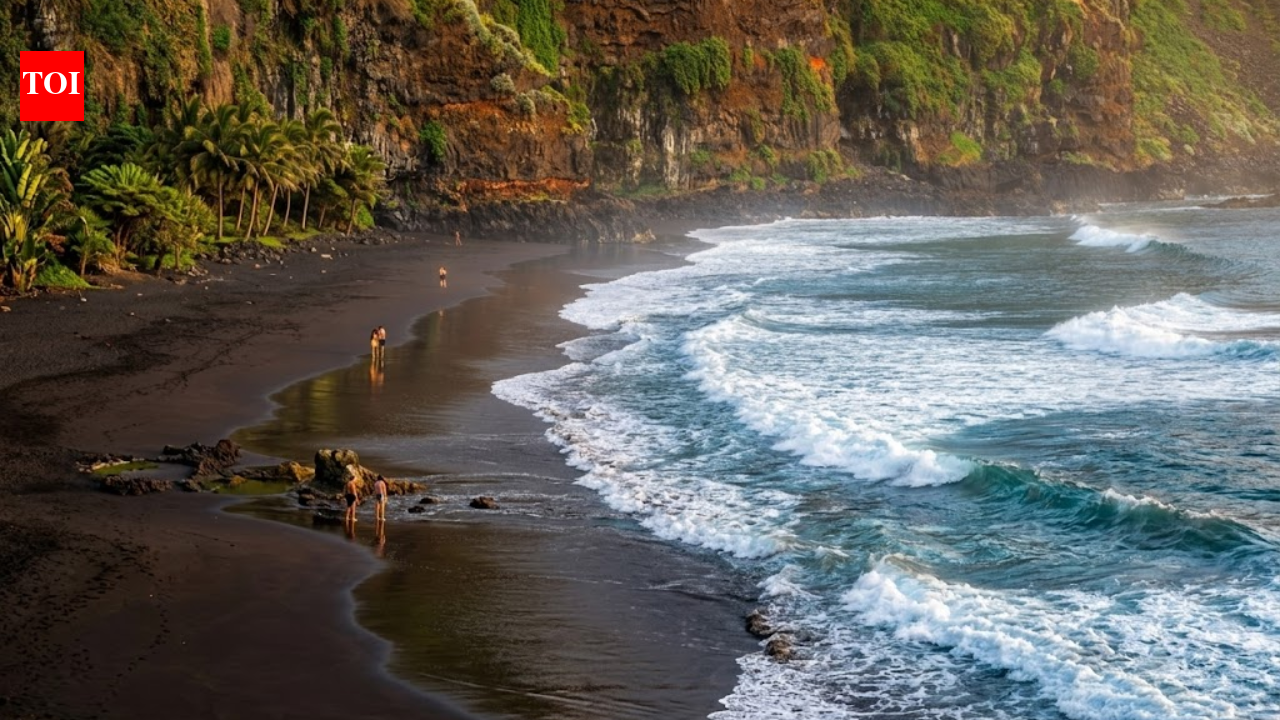
Hidden beneath towering cliffs on the north-eastern coast of La Palma in Spain's Canary Islands, Playa de Nogales is one of the archipelago's most dramatic natural landscapes.
At first glance, its sand resembles freshly ground black pepper, creating a striking contrast against the deep blue Atlantic Ocean.
Unlike the golden beaches found across much of mainland Spain, Playa de Nogales owes its unusual appearance to millions of years of volcanic activity that shaped the island from the seabed upwards.
As ancient lava cooled, fractured and gradually eroded, it transformed into countless tiny black mineral grains carried to the shoreline by waves and coastal currents.
The result is a beach that offers a remarkable glimpse into the geological forces still shaping volcanic islands today.Spain’s Playa de Nogales has black volcanic sand: Here’s whyPlaya de Nogales is located on La Palma, one of the youngest volcanic islands in the Canary Islands, an archipelago formed by repeated volcanic eruptions over millions of years.