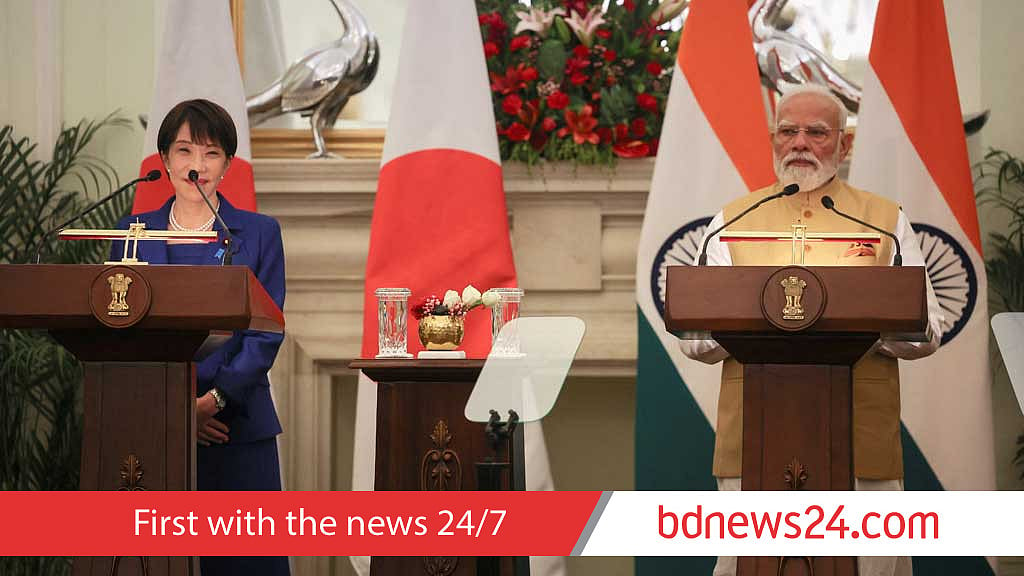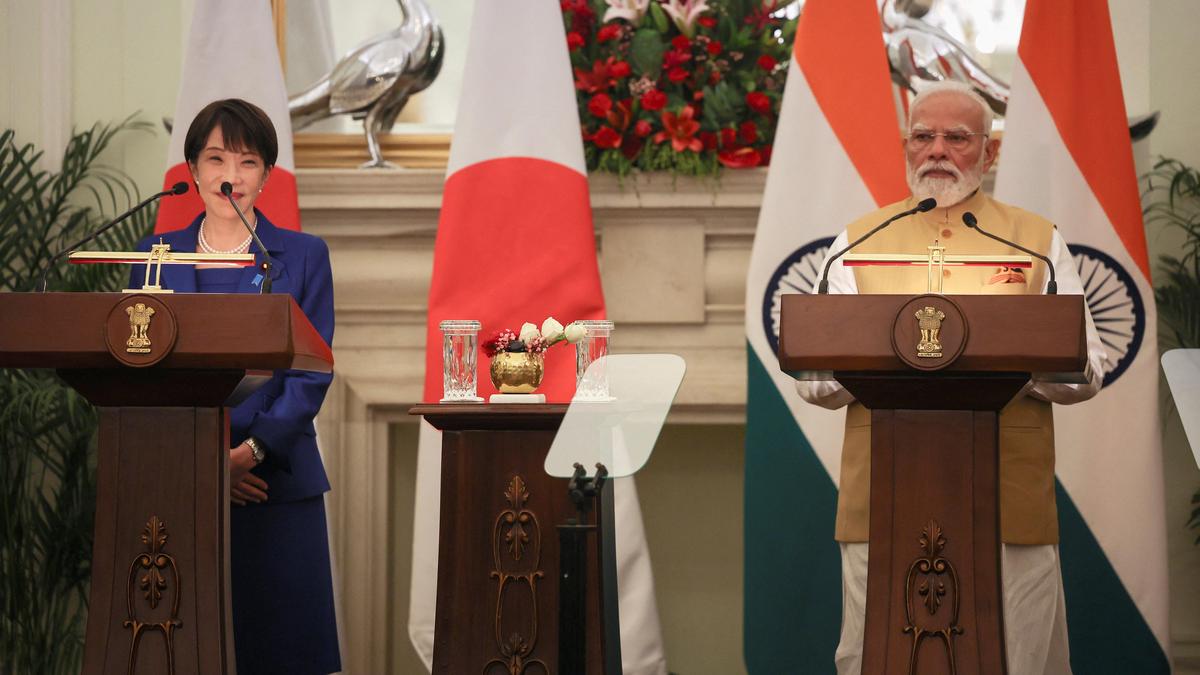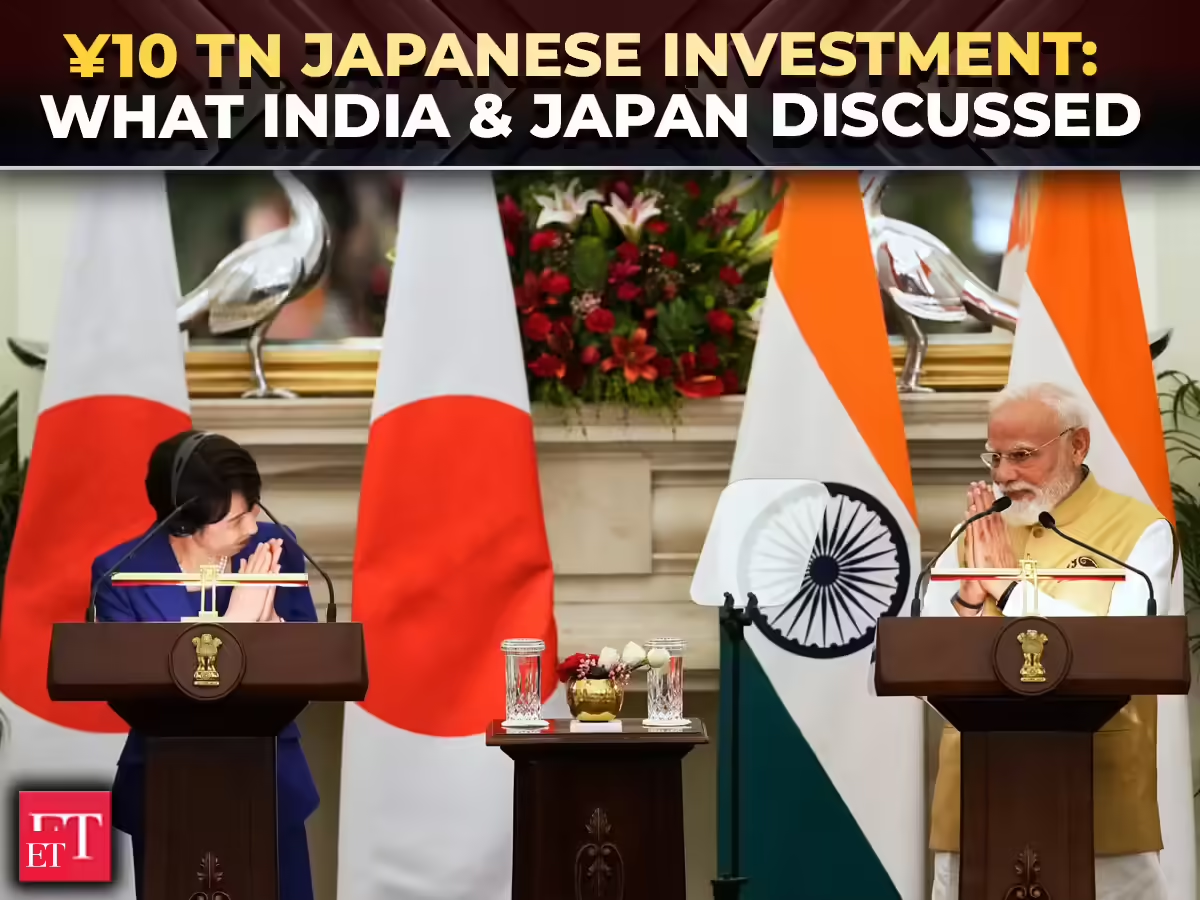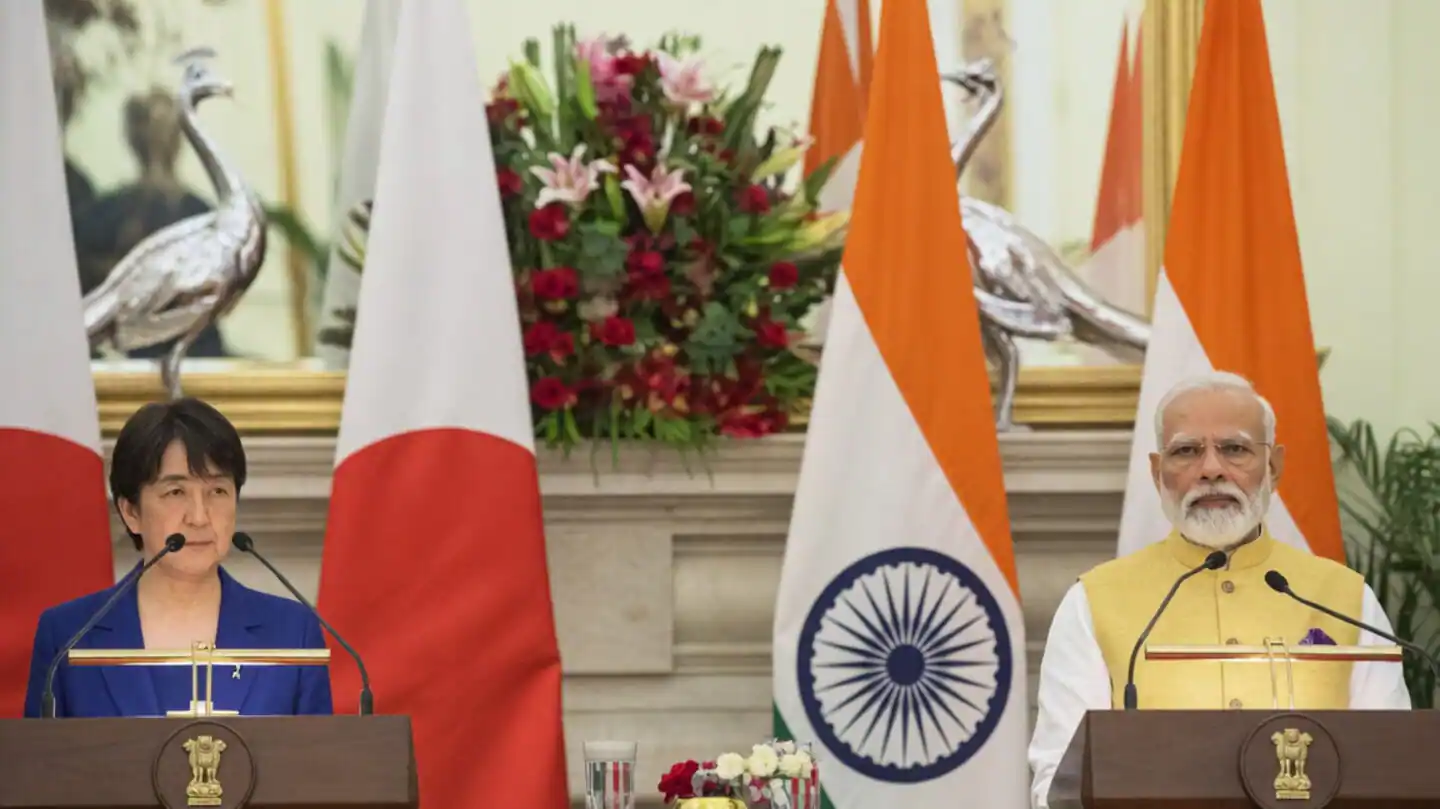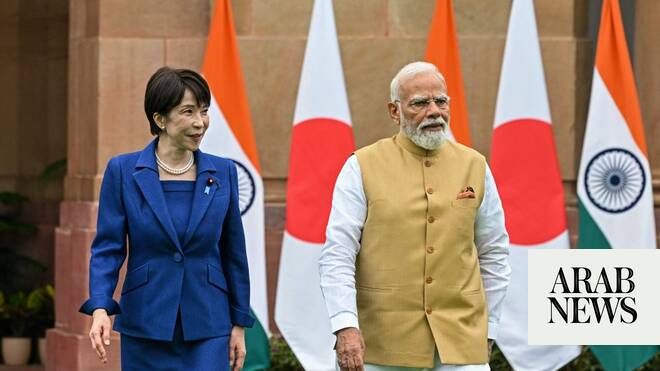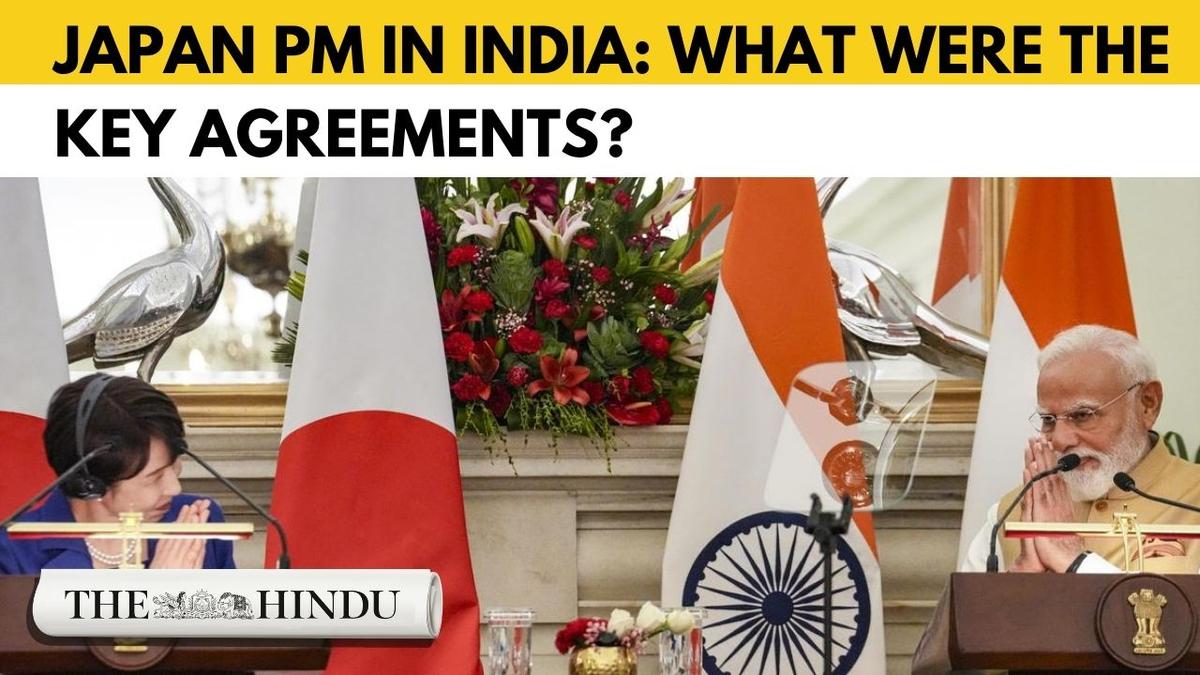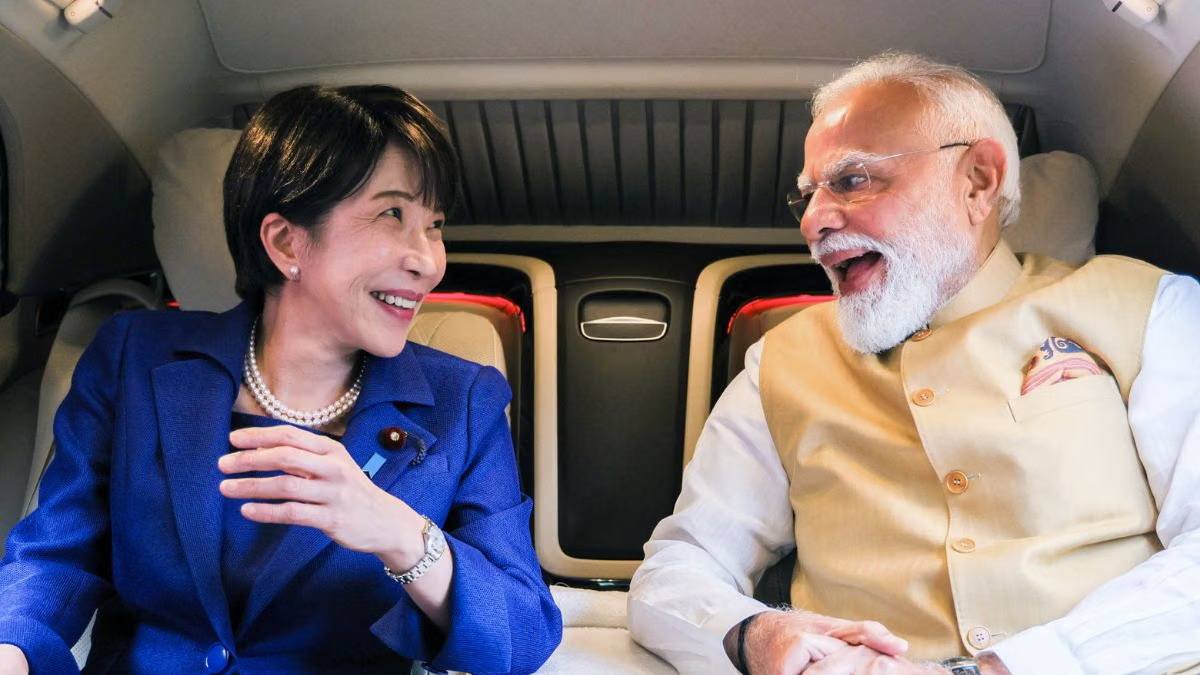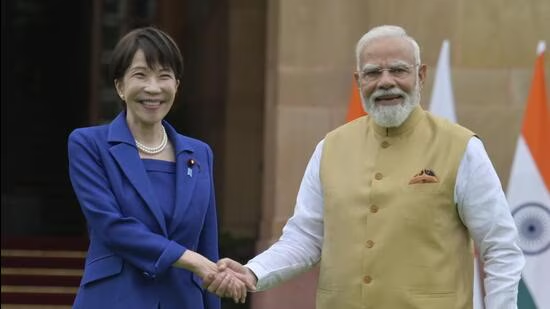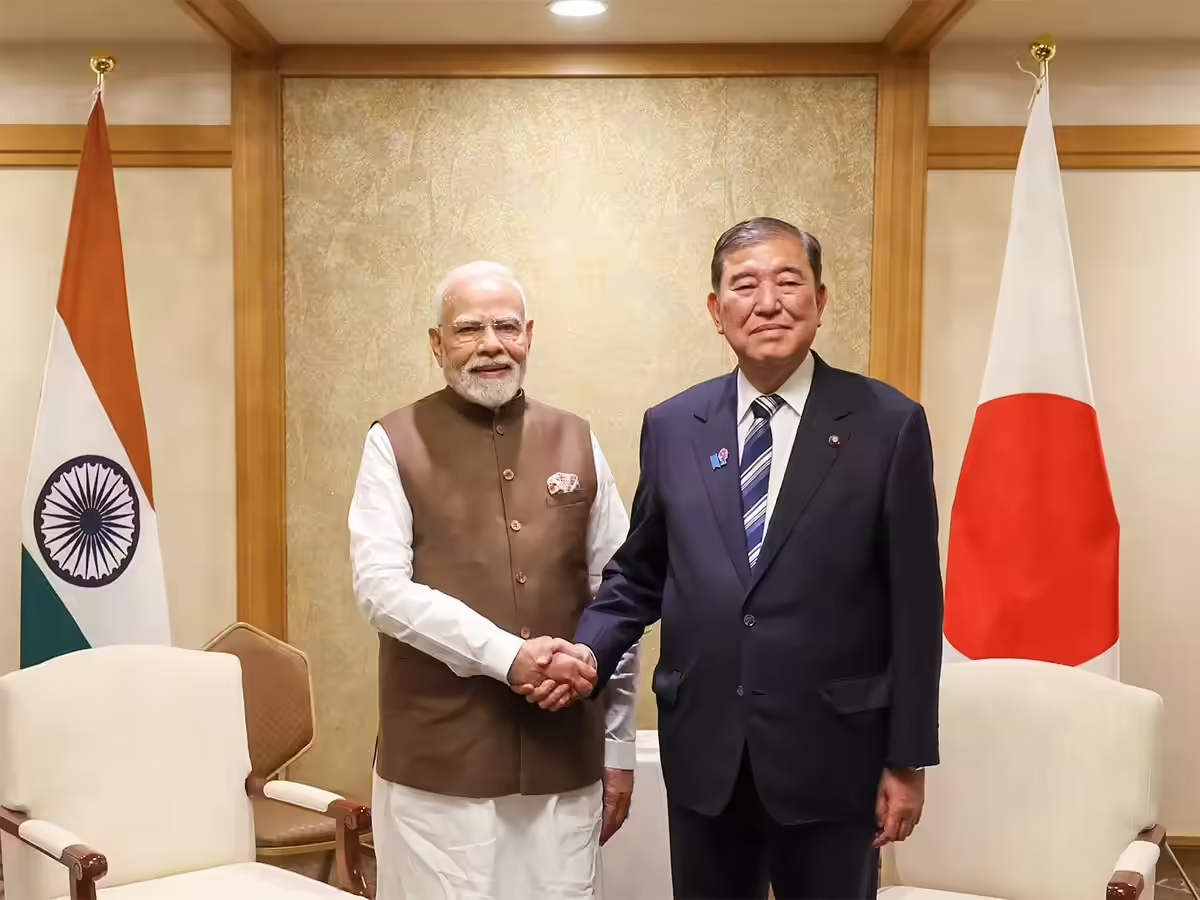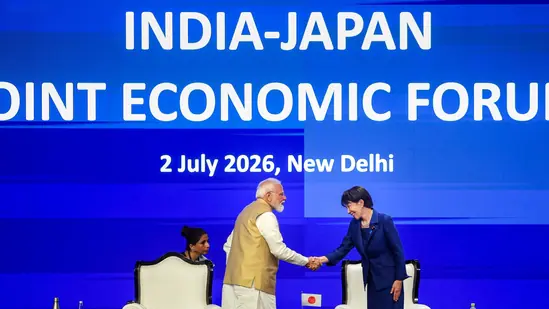
This article is authored by Saroj Bishoyi, senior fellow, Centre for Technology and Scientific Studies, Vivekananda International Foundation, New Delhi. Japanese Prime Minister (PM) Senae Takaichi’s first official visit to India from 1-3 July 2026 for the 16th India-Japan Annual Summit in New Delhi marked a major turning point in India-Japan defence cooperation and shaped the strategic dynamics between the two countries. The visit highlighted the signing of their first-ever joint defence technology co-development agreement which will transform buyer-seller defence relationship into a much broader defence and strategic partnership, encompassing technology transfer, joint development and co-production of advanced defence equipment. Prime Minister Narendra Modi greets Japanese Prime Minister Sanae Takaichi during the India-Japan Joint Economic Forum, in New Delhi. (DPR PMO)PM Narendra Modi and PM Takaichi solidified this cooperation through an ambitious 16-point strategic roadmap that significantly transitions the bilateral relationship from a traditional security dialogue into practical, high-tech military hardware manufacturing cooperation. This expanding defence cooperation is driven by their shared concerns over maintaining regional peace and stability amidst China’s growing military assertiveness. In a volatile and uncertain geopolitical environment, therefore, the two countries are strengthening their defence ties to counter common threats. Indeed, a strong defence cooperation between the two leading democracies and major economies of the world will be a force for regional peace, stability and prosperity.Defence technology transfer and co-development: marking a major shift from simply purchasing equipment to collaborative military manufacturing, the two nations are moving forward on technology transfer for advancing defence technology partnership. In the July 2026 joint statement, they agreed in principle on co-developing the Unified Complex Radio Antenna (UNICORN), an advanced naval stealth antenna designed for future Indian Navy warships. The UNICORN consolidates communication, radar, and electronic warfare functions into a single horn-shaped radar dome. This significantly reduces the naval vessel’s radar cross-section (RCS), making it much harder for adversaries’ ability to track and classify individual naval vessels. This project signifies Japan’s transition from a reluctant arms exporter to an active defence-industrial partner under India’s make-in-India initiative. It follows Japan’s review of its traditional pacifist Three Principles on the defence equipment and technology transfers, which has opened new avenues for defence technological cooperation. The co-development of next-generation unmanned weapon systems (AWS) and export of India’s BrahMos supersonic cruise missile could also be considered. Enhanced maritime security cooperation: India and Japan hold regular and multi-domain joint military exercises such as the JAIMEX, a high level bilateral naval warfighting exercise that operates alongside the multi-lateral Malabar exercise; Dharma Guardian, a tactical annual ground exercise between the Indian Army and the Japan Ground Self-Defence Force (JGSDF); and, Veer Guardian and Shinyuu Maitri, combat fighter jet manoeuvres and transport aircraft exercises between their respective Air Forces. These military exercises aim at enhancing operational synergy, interoperability, and joint military capabilities for countering shared security challenges. These exercises indicate increasing tri-service defence cooperation in recent years, which helped build mutual understanding, trust and strategic alignment. In addition, they are expanding maritime security through satellite-based maritime domain awareness (MDA) and naval maintenance, repair, and overhaul (MRO) cooperation.Military logistics support cooperation: India and Japan had signed the Reciprocal Provision of Supplies and Services (RPSS) agreement in September 2020, which is similar to the Logistics Exchange Memorandum of Agreement (LEMOA) that India has with the US, for advancing maritime cooperation. The operationalization of the RPSS agreement allows the Indian Armed Forces and Japan’s Self-Defence Forces to seamlessly share food, water, fuel, clothing, medical services, communications and maintenance assets during joint military exercises, United Nations peacekeeping operations, and humanitarian relief activities. Additionally, the 2015 India-Japan agreement on the protection of Classified Military Information (CMI) ensures secure handling of CMI exchanged between the two sides. They will now jointly develop and manufacture defence technologies that would further strengthen maritime security. Maintaining FOIP order: Amidst growing tensions in the East and South China Seas, India and Japan have reinforced their shared vision of a Free, and Open Indo-Pacific (FOIP). The July 2026 joint statement outlines their shared responsibility to shape and uphold an international order which is free, open, secure and based on the rule of law. In this regard, Modi welcomed the Japan’s updated FOIP vision and stated that it closely aligns with India’s Indo-Pacific Oceans’ Initiative (IPOI), and Mutual and Holistic Advancement for Security and Growth Across Region (MAHASAGAR), which aim at securing critical sea lines of communication against unilateral threats. Moreover, the two nations are closely working within the Quad framework along with the US and Australia to maintain a FOIP order. They are also working under the India-Japan-Philippines framework to stabilize the East and South China Seas, and the Japan-Australia-India trilateral to protect maritime security. In an increasingly volatile regional security environment, therefore, the two nations share a common strategic outlook and seek to develop a mutually complementary relationship in the region.Institutional framework: The growing India-Japan defence ties is guided by their Special Strategic and Global Partnership, and the 2+2 Foreign & Defence Ministerial Dialogue. While the ongoing defence collaborations between the two nations are actively builds upon the comprehensive Joint Declaration on Security Cooperation, adopted at the 15th India-Japan Annual Summit in Tokyo in August 2025. The fourth round of the 2+2 Ministerial Dialogue will take place in Tokyo later this year, which will further align their defence and strategic partnership. The two nations have thus institutionalised their expanding defence partnership based on shared concerns over regional security challenges and developing joint response capabilities in the evolving conflict scenarios. Challenges to defence tech partnership: Despite major strides, however, India-Japan defence industrial cooperation faces some structural and bureaucratic challenges including Japan’s strict protection of Intellectual Property (IP) rights and concern over diversion of technology to others. These apprehensions with regard to India are unfounded, given India’s impeccable track record of non-proliferation and protection of CMI. Moreover, India’s defence acquisition procedure (DAP) mandates local production and the transfer of proprietary technology, while Japan’s private defence sector is still adapting to the global arms market from legacy policies. Nevertheless, the UNICORN project indicate that the two nations are actively designing workarounds to these challenges. Therefore, India and Japan have elevated their defence relationship to a landmark defence technology partnership, focusing on technology transfer, co-development, maritime security and enhancing military interoperability in the Indo-Pacific. The regular defence and security dialogues have clearly progressed into concrete technological development, logistical integration and strategic alignment. Particularly, the evolution of Japanese defence postures on transfer of defence technology has created new opportunity for advancing bilateral defence technology partnership, which could span the entire spectrum from designing to production of cutting-edge defence equipment in the coming years. (The views expressed are personal)This article is authored by Saroj Bishoyi, senior fellow, Centre for Technology and Scientific Studies, Vivekananda International Foundation, New Delhi.
Advancing India-Japan defence technology partnership
This article is authored by Saroj Bishoyi, senior fellow, Centre for Technology and Scientific Studies, Vivekananda International Foundation, New Delhi.
1,124 words~5 min read