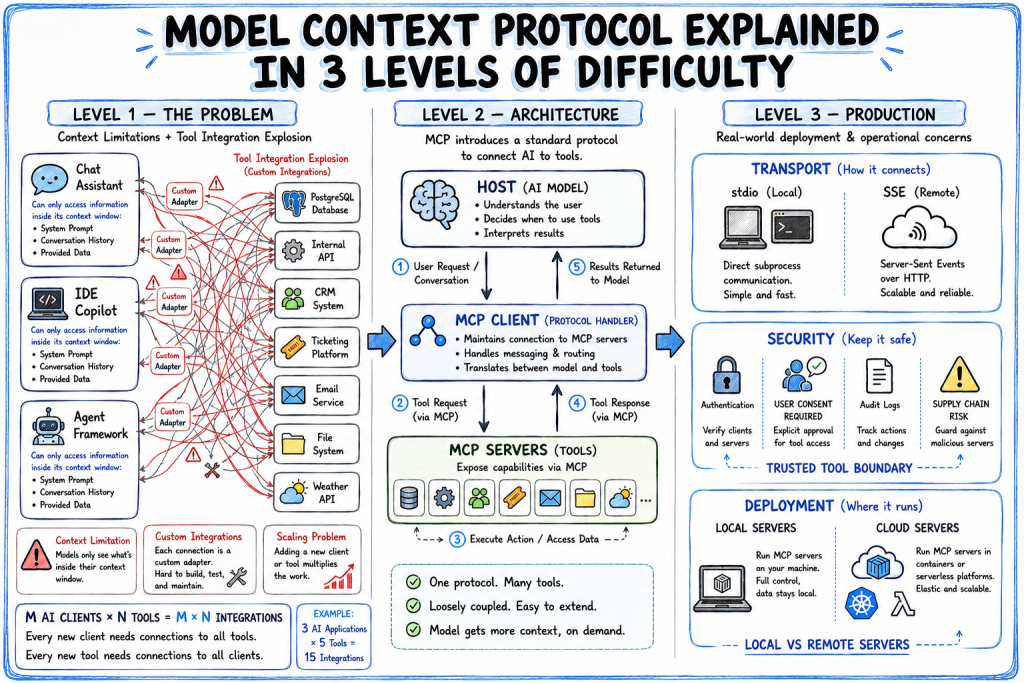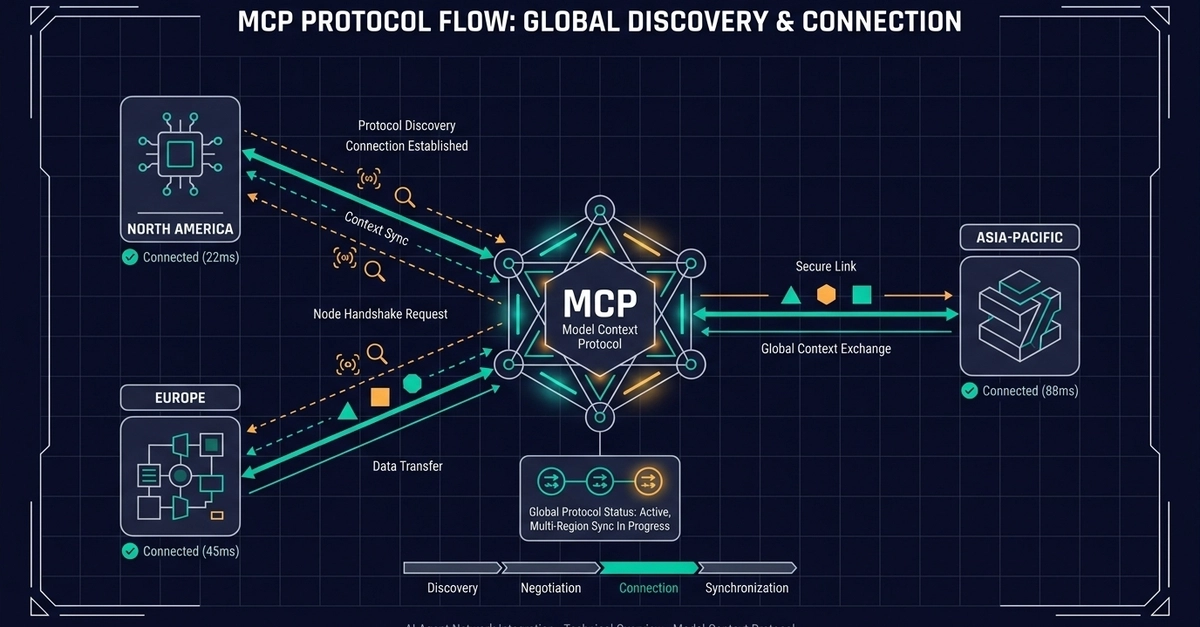
MCP stands for Model Context Protocol, and although most people treat it like just another API standard, the truth is that it is much more than that. At its core, it is a standardized protocol for context exchange between AI applications and servers, with built-in discovery and transport-layer authentication. It can be extended to serve as a compliance and governance layer depending on how you architect it, but its real power lies in the discovery mechanism and the standardization it brings. If you only use MCP to connect your agent to an API you are using 10% of what it can do. This article is for you to understand the other 90%, from the simplest concepts to the deepest ones, without needing to be a protocol expert, although by the end you will be a little more of one.
To understand why MCP is different, think about how a REST API works today, you have to read the documentation, understand the endpoints, build the calls, handle authentication, write code for every integration, and if the API changes your code breaks, with MCP the agent discovers everything in real time, you do not need external documentation because the MCP server describes itself, you do not need to hardcode URLs because the server tells you where it is, you do not need to handle authentication manually because the protocol injects the tokens for you, it is the difference between giving someone a map and giving them a GPS that updates itself, and when you understand this you realize that MCP does not compete with REST, it competes with the lack of standardization that makes every integration a new project.