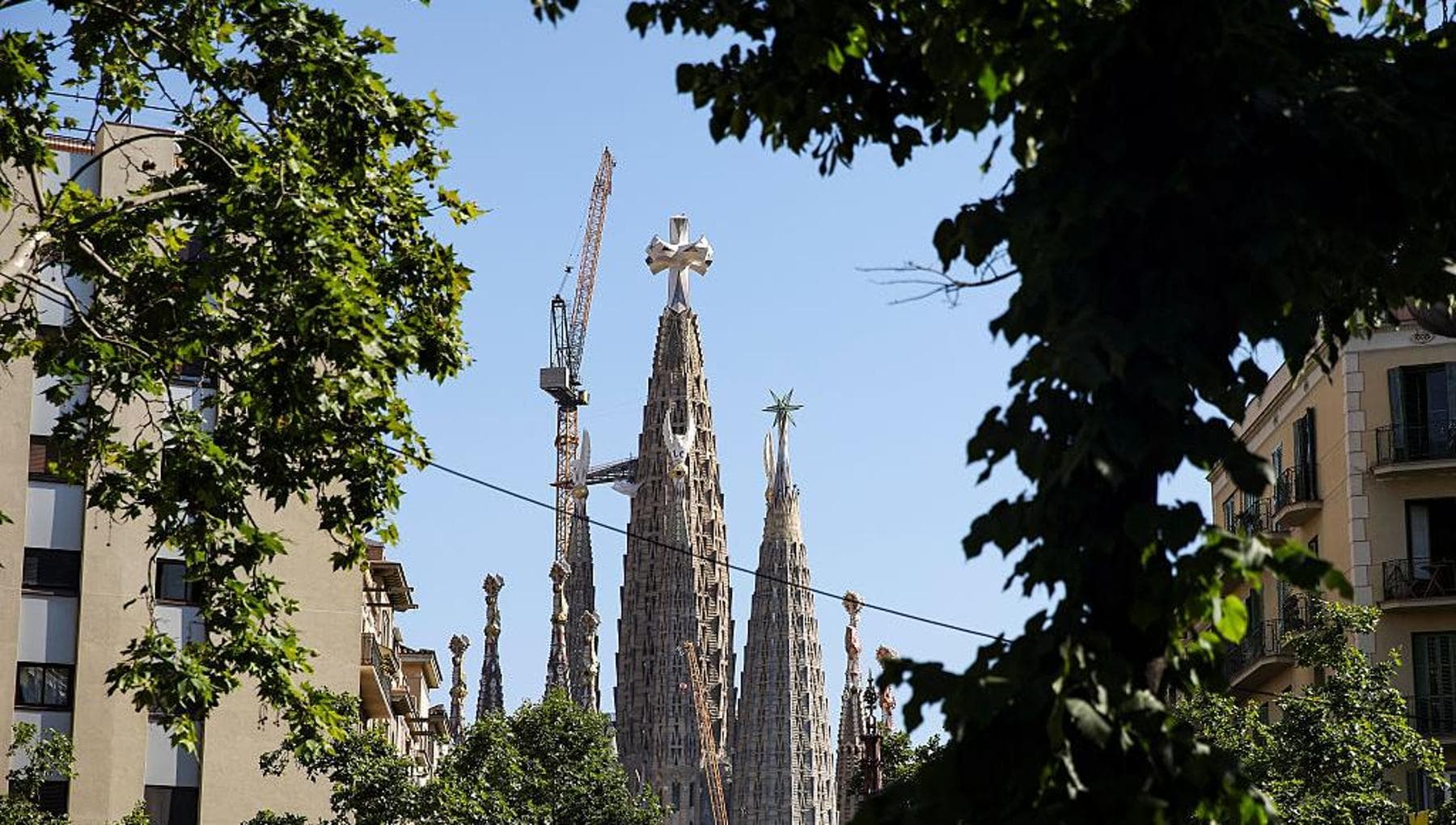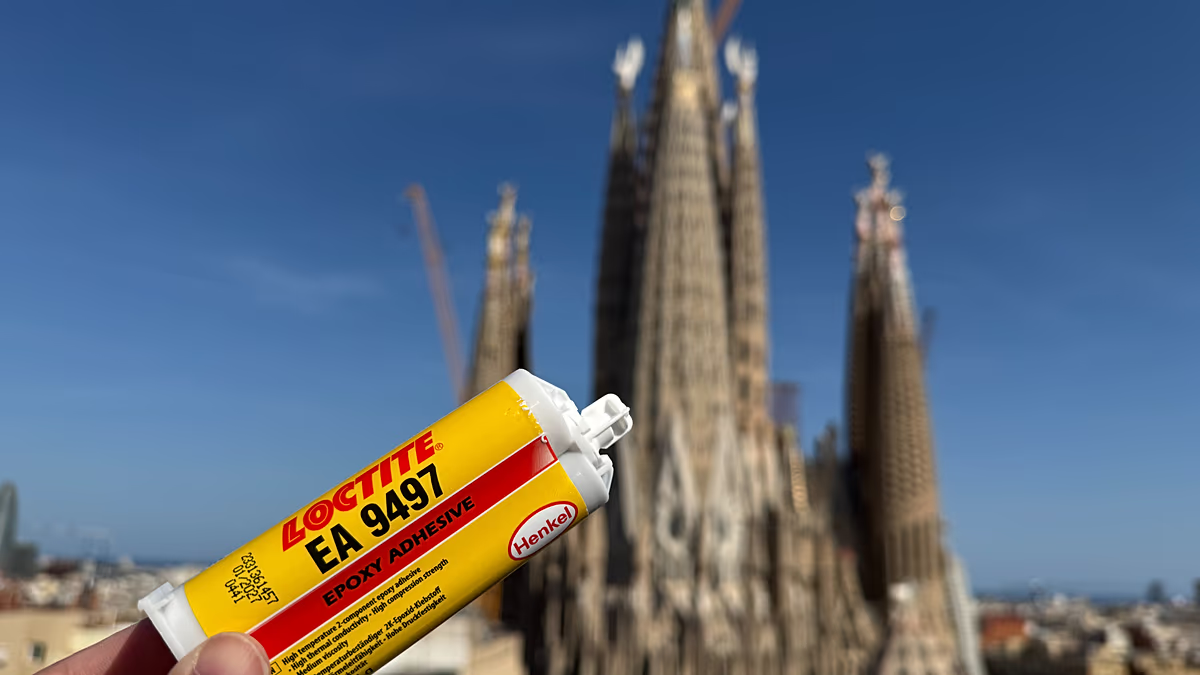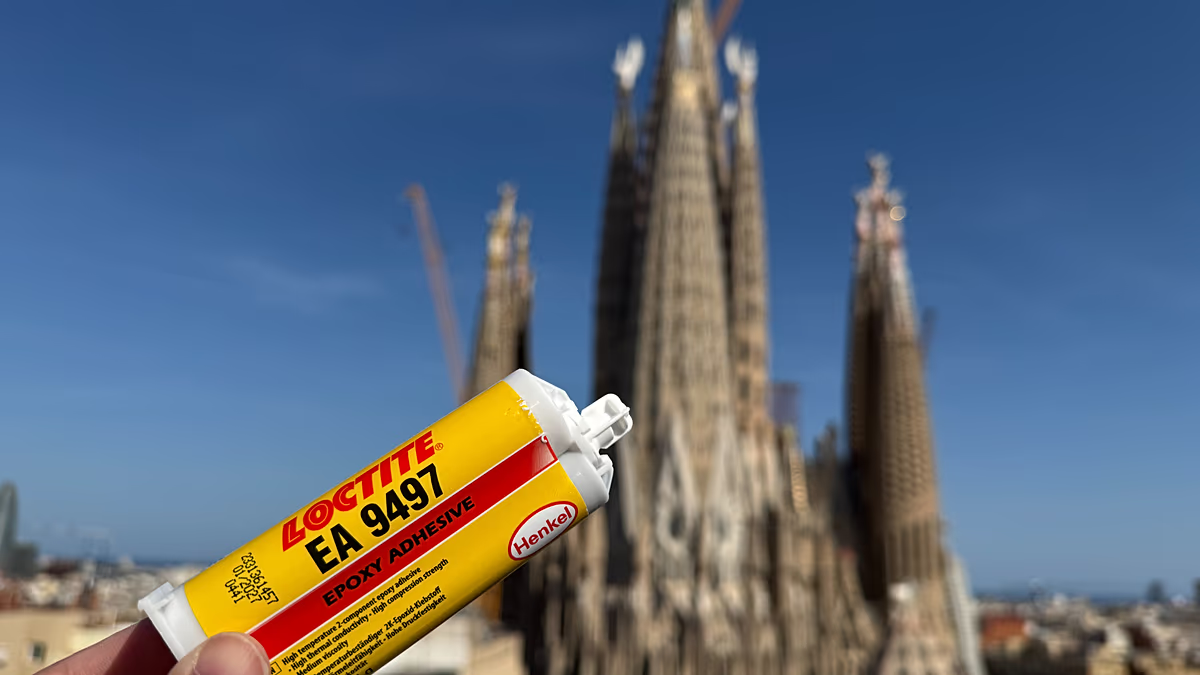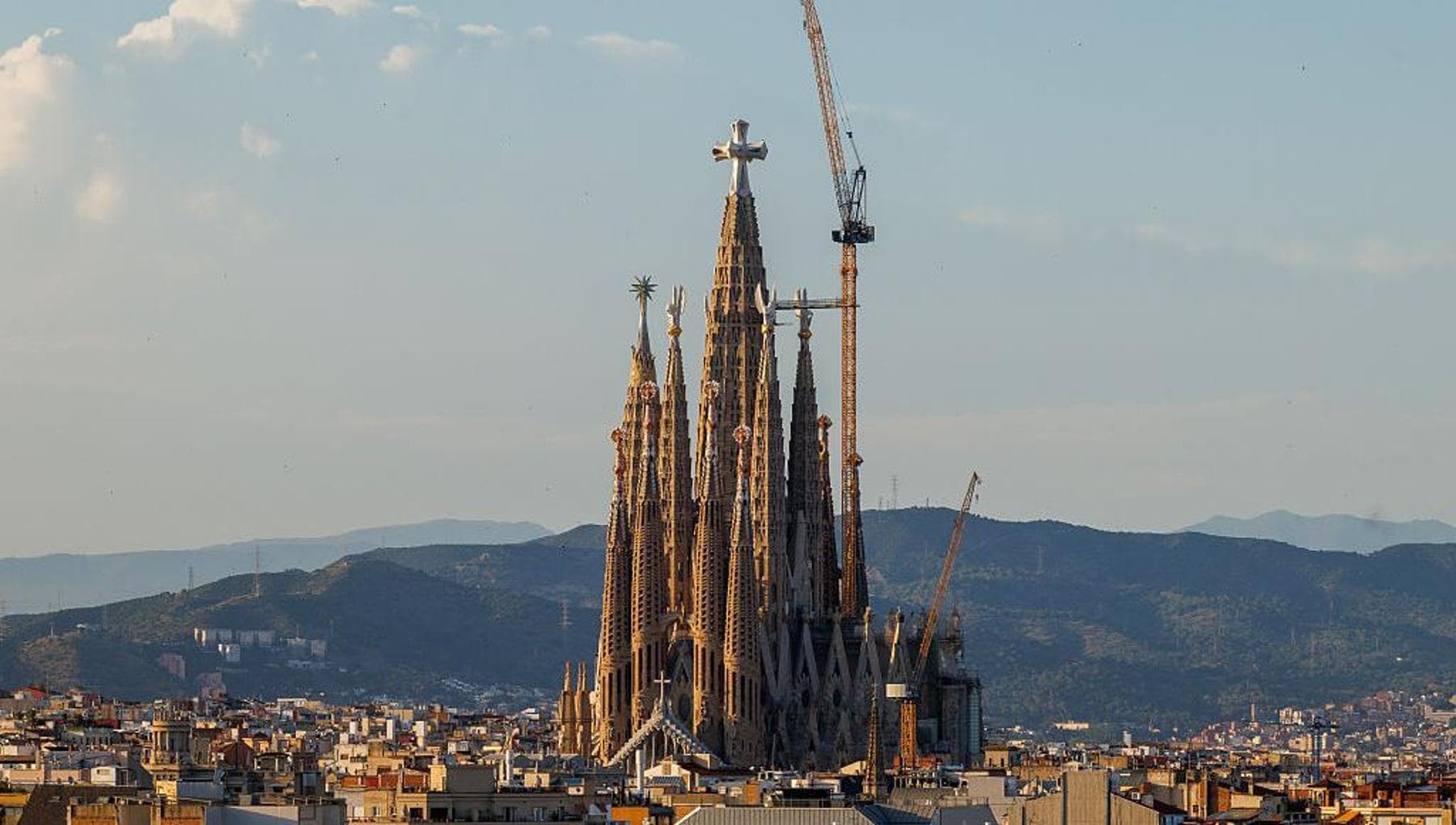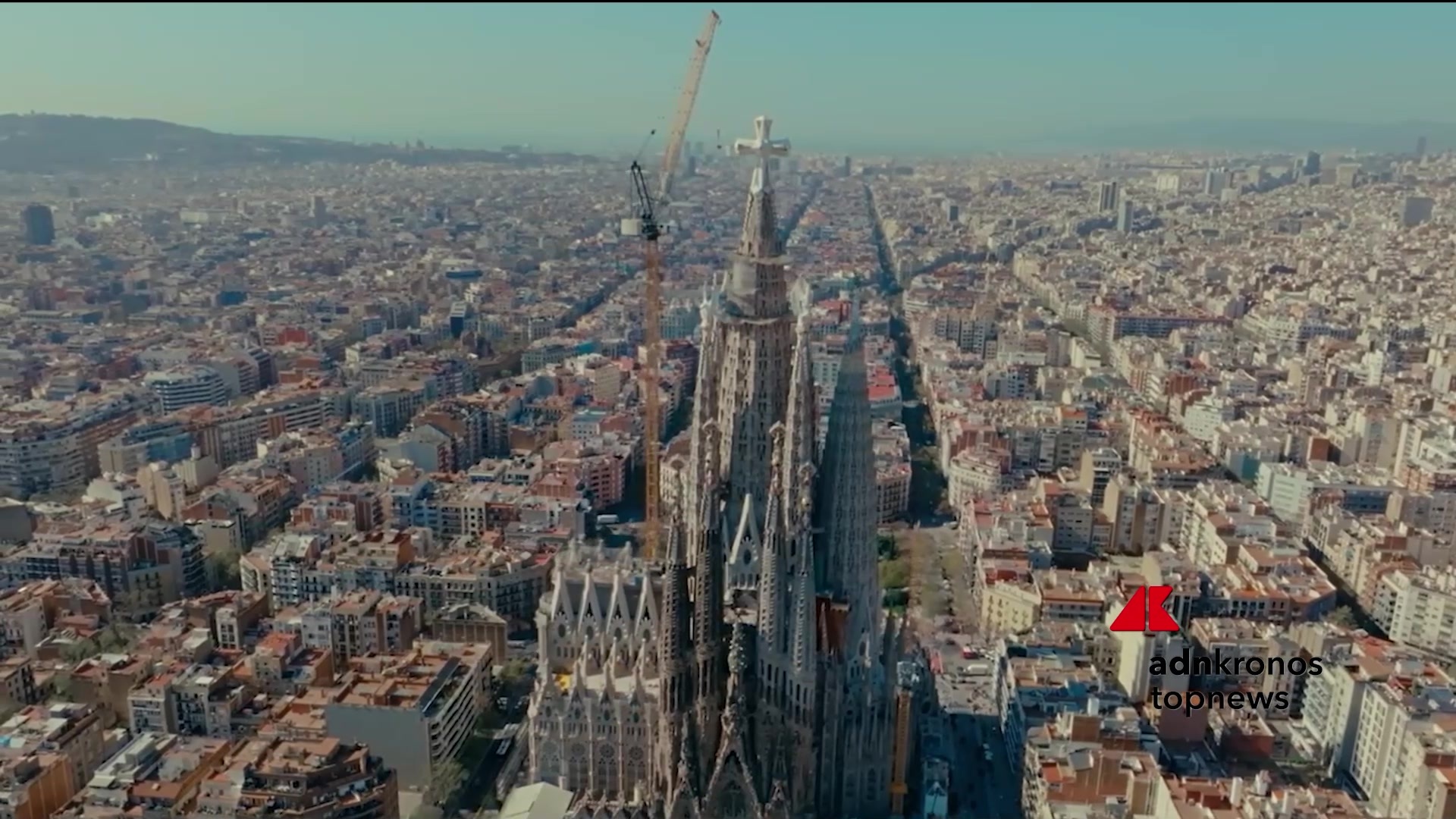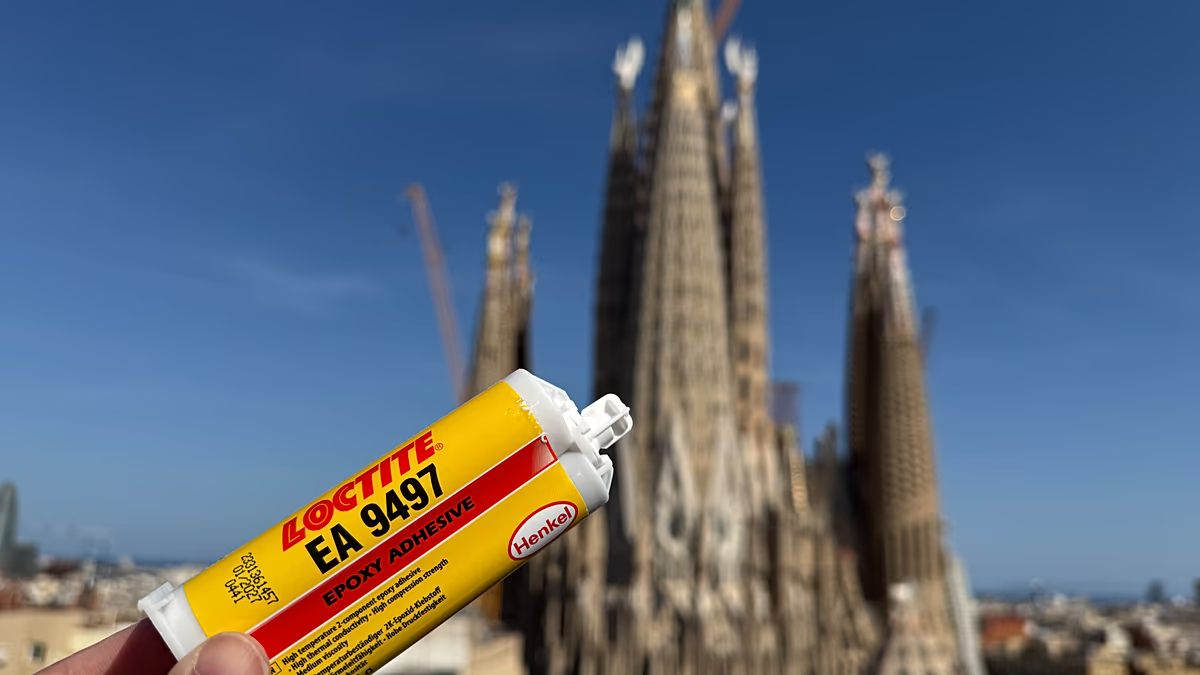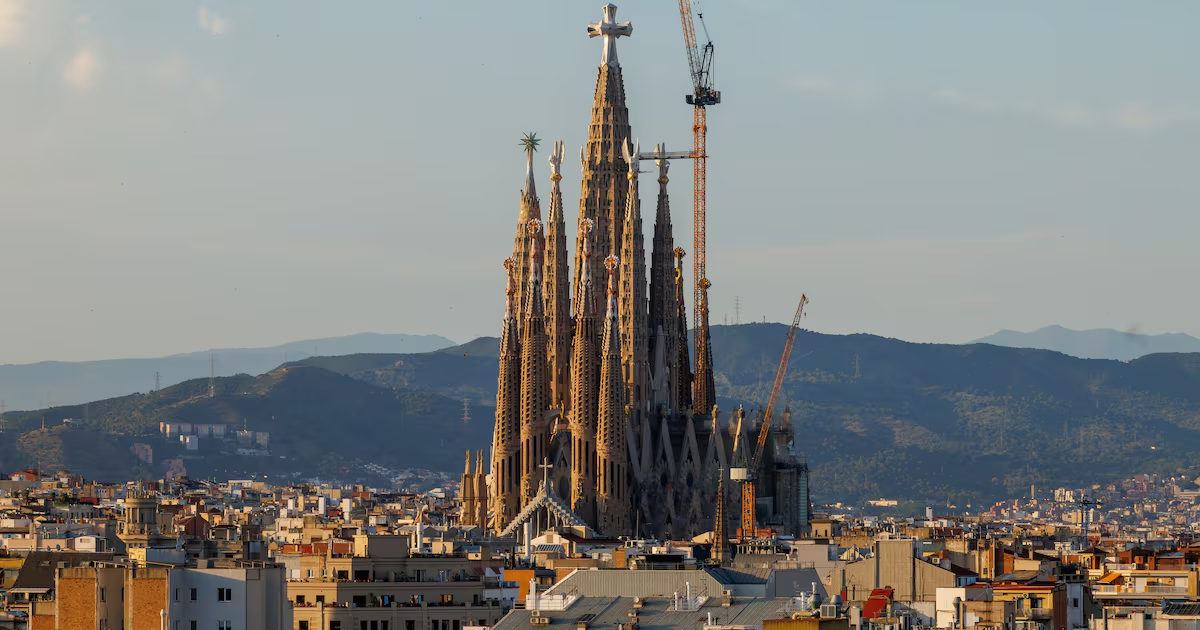
German glue innovator, with help from these shores, is literally holding up the mighty cross atop Barcelona’s famed basilica Antoni Gaudí's Basilica of the Sagrada Familia in Barcelona, with its recently completed Tower of Jesus Christ spire. The Tallaght laboratory of the German glue maker Henkel played a role in helping to glue the tower together. Photograph: Dan Kitwood/Getty Images Tue Jul 07 2026 - 06:00 • 5 MIN READIn 1882, returning from a visit to the Vatican, a Barcelona bookseller and philanthropist – José María Bocabella – decided that his hometown should have a mighty, towering place of worship to rival anything in Rome itself.A few short years before, in another famous site of pilgrimage – Aachen in Germany – Fritz Henkel, a then-28-year old merchant with a penchant for science, started a company making detergent, which still bears his name 150 years later. In 2026, those two, entirely separate, tales of genesis were, in a literal sense, joined together. The Sagrada Família basilica (it’s never officially been called a cathedral), which towers over Barcelona today and is one of the world’s biggest tourist attractions wasn’t initially designed by the famous architect Antoni Gaudí. In fact, Gaudí picked up the Sagrada reins in 1883, from the original architect, Francisco de Paula del Villar. Gaudí changed the cathedral’s design radically, and was entirely unbothered by the immensely long construction time envisaged, quipping: “My client is not in a hurry.” Gaudí died in 1926, with the church only around 25 per cent complete. He was certainly an avant-garde architect, as evinced by his sweeping, curving designs and the dramatic shapes he applied to the Sagrada’s 18 massive towers. Those represent the 12 apostles, the four evangelists, the Virgin Mary, and the tallest tower to represent Jesus himself.That tallest tower, with a massive multi-point cross atop, has only recently been completed, honouring a promise made by the Sagrada’s subsequent architects that it would be complete by the 100th anniversary of Gaudí’s passing. Pope Leo himself consecrated the final tower in June. That tower, all 172 metres of it (still slightly lower than the nearby hill of Montjuich, as Gaudí felt his creation should not eclipse that of God) is held together by glue. Glue with an Irish connection. The glue – technically an epoxy – is made by the Henkel company, which uses a series of laboratories around the world to design its products, all are linked via high-speed connections, so that the scientists and engineers can collaborate with ease and precision. Those centres include one in its HQ in Düsseldorf as well as global centres in Shanghai and Stamford, Connecticut in the US, and one in Dublin. [ Supermac’s Pat McDonagh: ‘If I were 25, I’d be on a flight to Sydney or New York tomorrow’Opens in new window ]Henkel’s Irish operations are centred in an unassuming industrial estate in Tallaght, but within the plain brick walls, there’s an incredibly high-tech series of laboratories in which staggeringly powerful adhesives are developed. Niamh O’Reilly is Henkel’s global head of innovation and application engineering, and returned recently to Ireland following a stint working in Henkel’s hometown of Stuttgart. Niamh O'Reilly of Henkel “It’s about way more than just the adhesive” O’Reilly tells The Irish Times about what it takes to glue a basilica together. “You’re trying to bring these different modules together and put them at the top of this very tall structure. Not only that, but you have stone structures, and you’re trying to put a metal insert into them, which holds up the cross at the pinnacle.”O’Reilly says it’s not actually about gluing individual sections together, which is far too simplistic a way of thinking about this. Instead, it’s about using the epoxy to join the stone of the tower and the metal of the cross into one complete, unbroken unit. Making an adhesive that’s strong enough in and of itself isn’t too difficult. After all, Henkel has 150 years’ experience of doing so, and in 2024 pulled off a stunt that saw a 208-tonne weight connected to a train by just 3g of glue, which was then successfully hauled up a track. The lab in Tallaght is also one of Henkel’s specialists in creating anaerobic glues, which are precisely what you need to bond metal to metal. You might be thinking Henkel would have needed to create a special, one-off adhesive for the Sagrada job, but no. In fact, it had one on the shelf, ready to go, known as Loctite EA 9497. However, while the glue would almost certainly do the trick, Henkel had to prove to the Sagrada’s design and engineering team that it could not only glue metal and stone together, but that the structure would stay solidly connected even in some extreme climactic conditions – Barcelona gets very hot in the summer and it’s right next to the sea, so the air and the wind that whips around that cross at 172 metres is laced with salt. “What you want is something that’s superstrong” says O’Reilly. “But which can also cope with different materials expanding and contracting at different rates in different temperatures. So you need the adhesive to be strong, but also a little bit flexible so that it can cope with that.”As for the testing, Henkel knew that the glue would hold its own in high temperatures – EA 9497 is used to repair high-speed pumping equipment, for example – but according to O’Reilly, that was only part of the puzzle. “When you go into this new thing, and this is why the job is cool, you go into a completely new application, you’ve got the product, but you’ve got to almost learn how to validate this completely new application in this completely new environmental system.” A Henkel employee testing one of its adhesives in a laboratory. O’Reilly says Henkel’s near 2,000 scientists, working around the globe, took eight months to test and validate the glue for the Sagrada project, when a normal consumer product would take around two months to adequately test. The final Tower of Jesus Christ is not the only place in the Sagrada in which Henkel’s glue has been used. In fact, there’s 24 tonnes of adhesive holding up the six central towers of the basilica, with around 30kg applied to each panel, of which there are 826 and more than 2,100 individual stone elements. Each section that is glued together has to be carefully cured for 24 hours, to ensure the adhesive has properly set (and it’s not just about hardening the glue – chemically speaking, these structures are now bonded at the molecular level) before it’s lifted into position. It begs the question – if you can superglue a cathedral or basilica together, then why aren’t we doing this with our houses? “It’s a great question, and I wonder, is it because we haven’t had the right problem to solve? We’re bonding metal to stone, so it’s a very specific application, it’s a very specific case study, and also you’re looking at that application in terms of super high performance requirements,” O’Reilly says. “Perhaps in your standard construction of a house you don’t need that high performance, you’re not bonding metal to concrete like that.”IN THIS SECTION
Henkel sticks the Sagrada Família together, with some Irish help
German glue innovator, with Irish help, is literally holding up the mighty cross atop Barcelona’s famed basilica
1,209 words~5 min read