Story audio is generated using AI
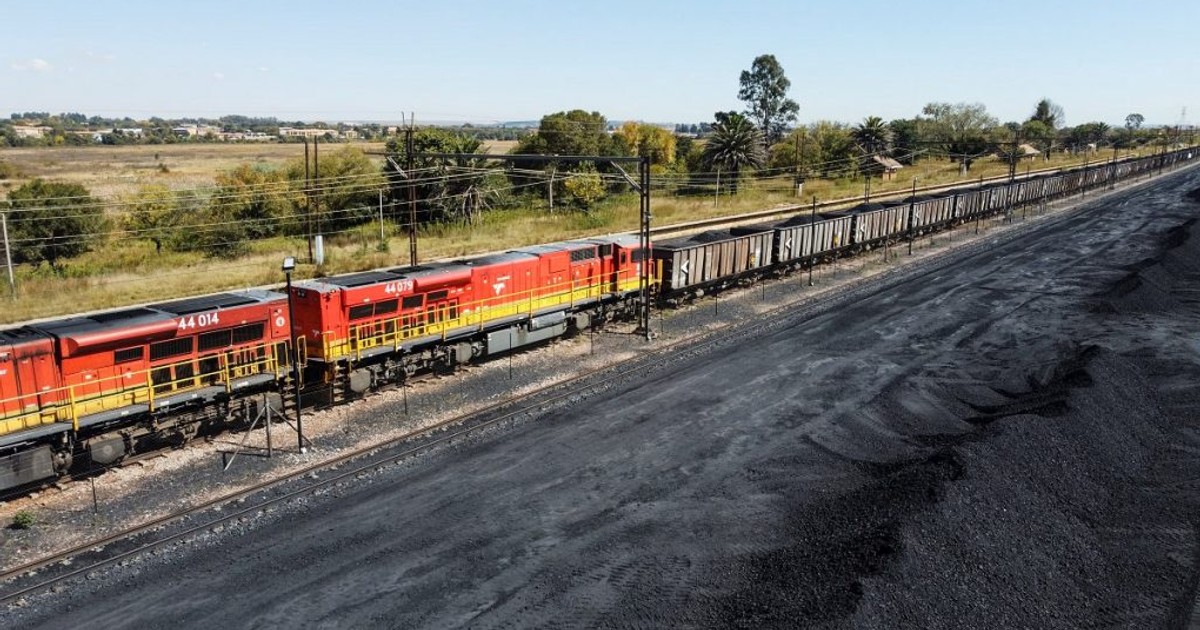
The Development Bank of Southern Africa (DBSA), tasked with co-ordinating a public sector platform capable of delivering strategically important private sector projects to ramp up the competitiveness of South Africa’s freight and passenger transport system, aims to speed up the process to rope in an investor at Transnet’s Richards Bay Dry Bulk Terminal (RBDBT).To this end, DBSA has issued a request for proposal, looking to procure the transaction advisory services to support the terminal in conducting the legal and regulatory feasibility, reviewing and updating the existing feasibility studies, and preparing procurement and contracting documents for the private partner.“The transaction will be structured as a terminal-focused private sector participation, centred on the ring-fencing of terminal operations into a separate, commercially viable entity. This will enable private sector equity participation and the introduction of operational expertise, technology, and capital investment to enhance capacity, efficiency, and service levels,” the request for proposal reads.“A key requirement of the transaction is the establishment of a clear legal and commercial framework governing the interface between the terminal operator, Transnet Freight Rail as the rail operator, and the broader port system under the National Ports Authority and any other relevant regulators. “This includes, without limit, defined access arrangements, performance obligations and co-ordination mechanisms to ensure reliable integration between rail delivery, terminal handling, and vessel loading.”It is expected that private sector partners will help to increase export capacity at the facility by 45%, boosting the fiscus.The terminal is one of South Africa’s largest and most strategic multicommodity dry bulk facilities, playing a critical role in supporting the export of commodities such as chrome, magnetite, coal, woodchips, chloride and alumina.Despite its strategic importance, the terminal’s performance has been constrained by ageing infrastructure, limited operational flexibility and rail bottlenecks on the Richards Bay corridor, all of which have restricted its ability to handle growing export demand efficiently. The terminal has an annual export capacity of 18.5-million tonnes (Mt), with plans to increase it to 26.9 Mt with a primary focus on chrome and magnetite, commodities that account for nearly 50% of the terminal’s existing export throughput.The two commodities have a robust long-term outlook due to global trends in steel production, stainless-steel consumption and the transition toward low-carbon, green steel manufacturing.The private sector partner Transnet is seeking will have a 49% stake in the terminal, with Transnet retaining a 51% stake in the venture as the state-owned entity moves at pace to introduce private sector expertise to bolster the country’s logistics infrastructure.The Port of Maputo has emerged as a strong competitor for chrome and magnetite volumes, particularly for road-hauled cargo, with South Africa looking to wrestle back the initiative from its neighbours.To get out of the starting blocks, Transnet wants prospective partners to show evidence they have at least R5.2bn in available capital, either from their own resources or banking facilities.The main pull factor in Transnet’s bid to increase capacity at Richards Bay is the investment case for chrome, of which South Africa has the world’s largest reserves.The request for qualification documents states that global demand for ferrochrome is forecast to increase steadily over the next decade, driven by infrastructure investment, construction growth and manufacturing activity in emerging markets, particularly in Asia and the Middle East.While Transnet sees a big lift in ferrochrome, South Africa’s industry is weighed down by high energy costs.Since 2005 South Africa’s electricity tariffs have increased 947%. The costs have made production unprofitable, particularly for high-cost smelters, with South Africa ceding its competitive advantage to China, whose electricity is 50% cheaper than that of domestic players. The Asian economic powerhouse is now the world’s leading beneficiator of chrome, despite South Africa’s vast reserves.Finding a long-term viable energy framework for the ferrochrome and chrome industries will present an appealing proposition to investors looking to participate in the private sector participation of the terminal.Eskom recently granted a request by chrome miners for a 54% reduction in their electricity costs for a year.