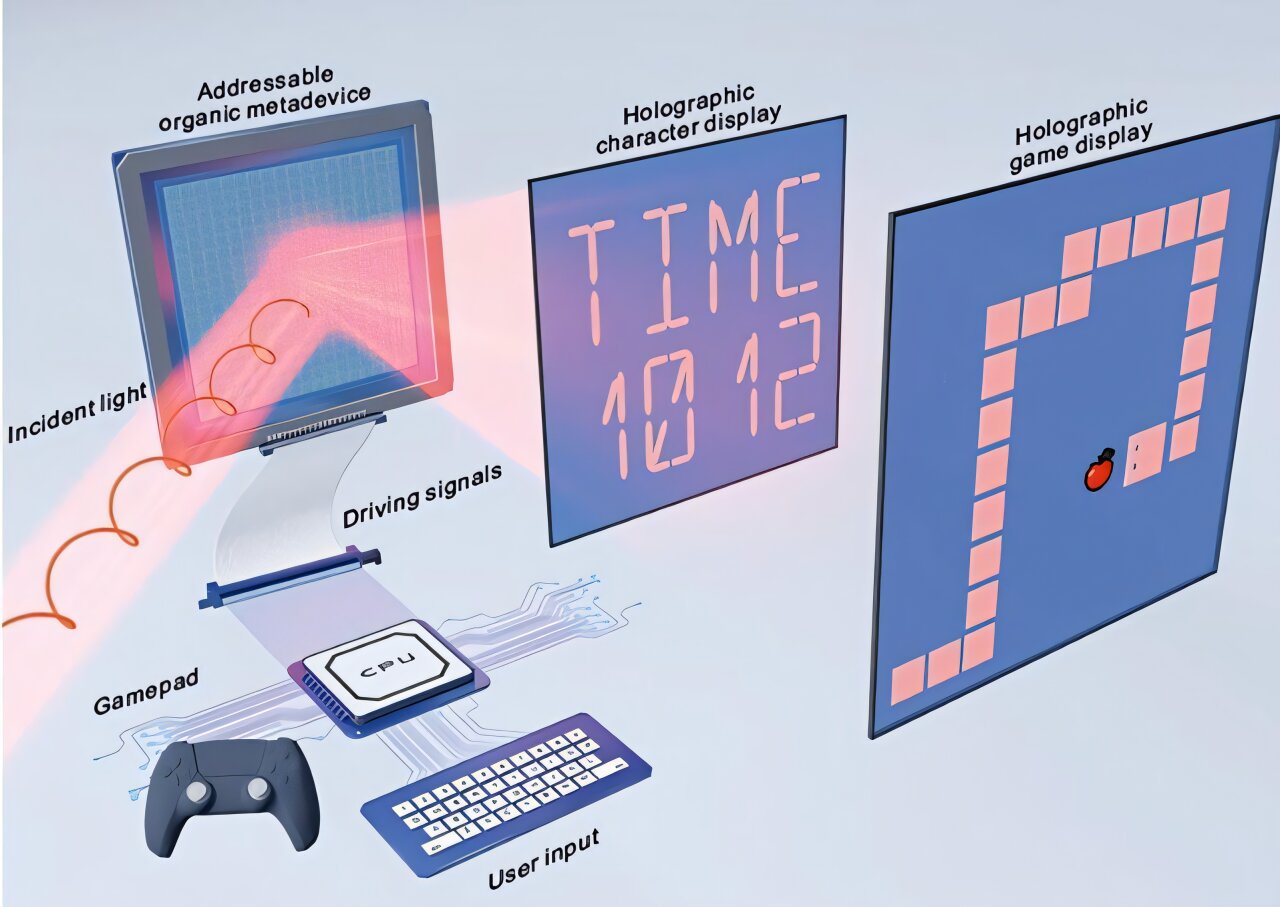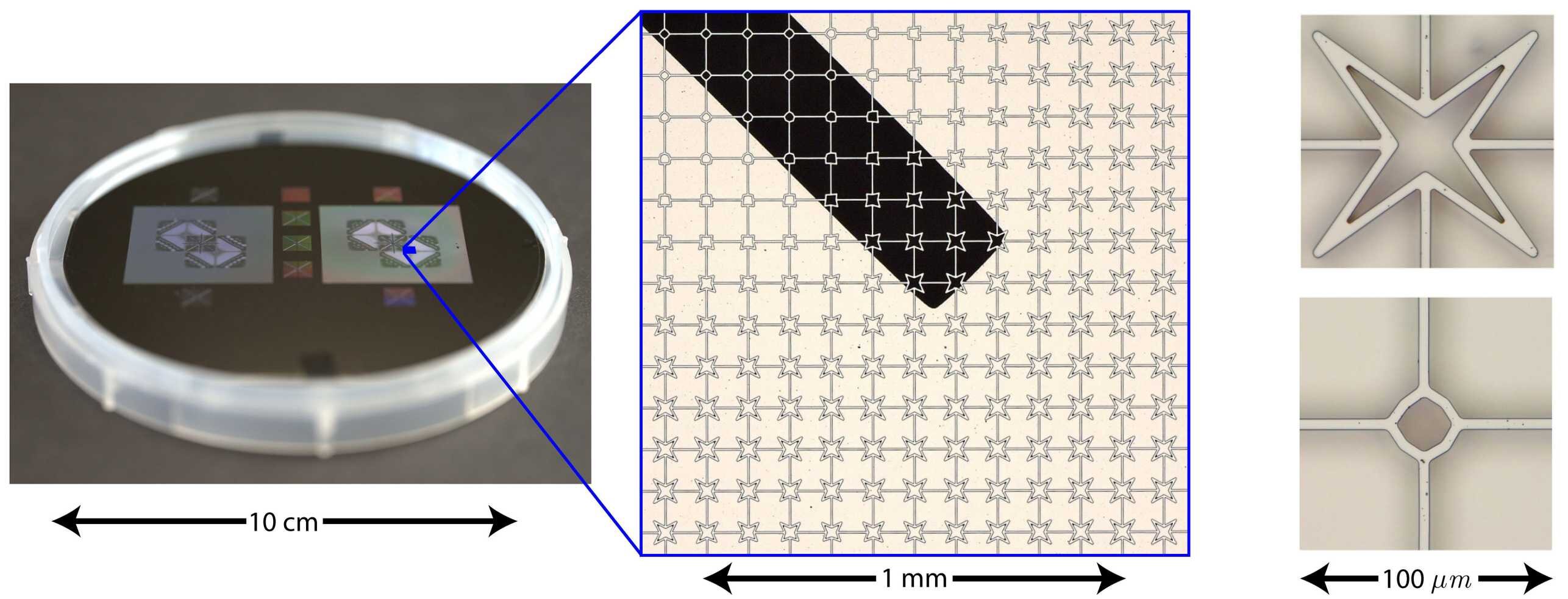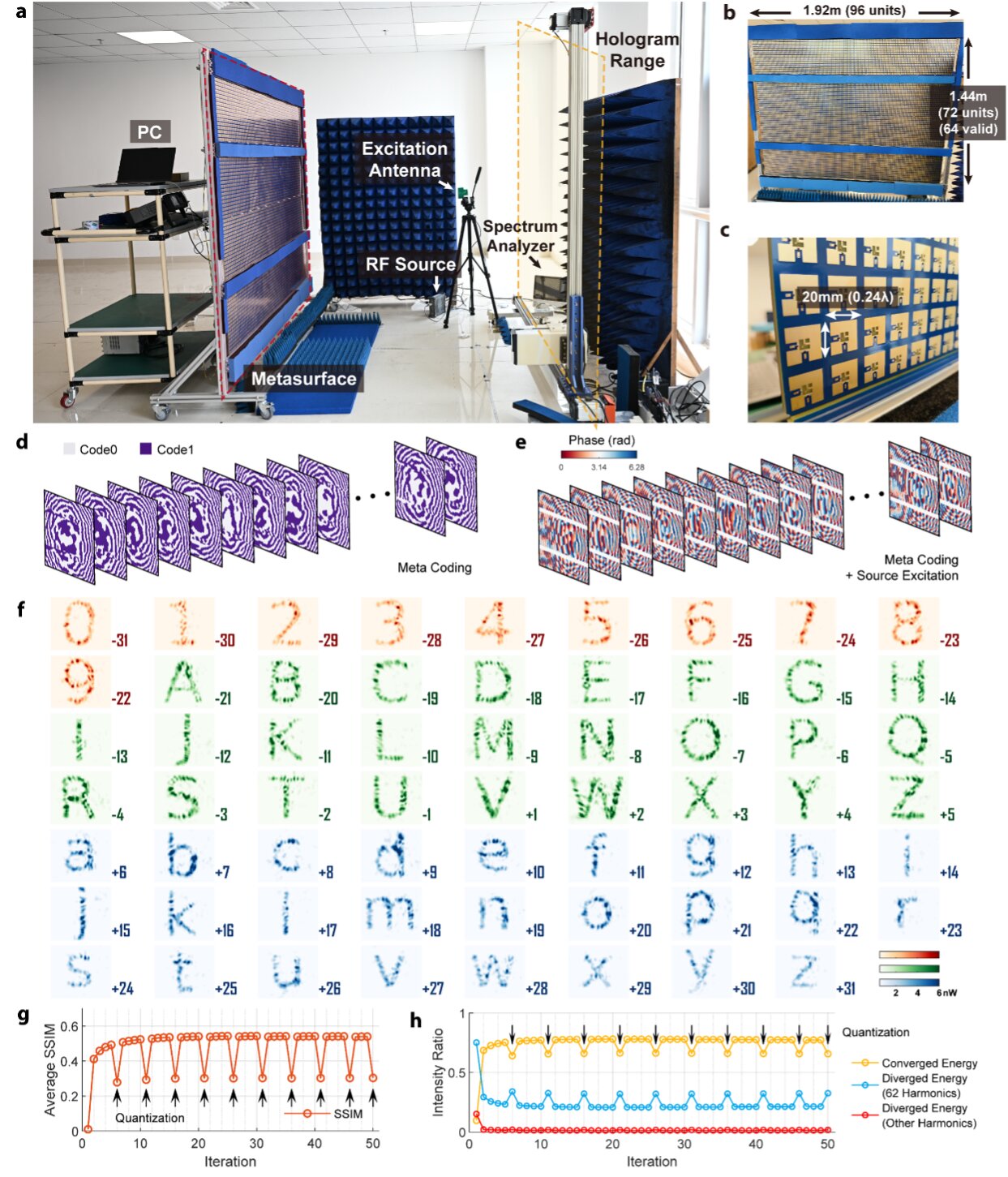
Experiments of 62-character STH generations based on the ST-GS algorithm. (a) The experiment setup. (b) Picture of the 6,144-unit STC metasurface. (c) Picture of the meta-units. (d) The generated 1-bit STC coding matrix. (e) The actual phase distribution of the modulated source field when the source excitation field is considered. Two white strips mark the positions of void units. These places are covered in wave-absorbing materials. (f) The measured STHs at 62 harmonics. (g) The average SSIM values across 62 STH patterns during the iteration inside the ST-GS algorithm. (h) The ratio of converged and diverged energy during the iteration. Credit: Gu et al.
Over the past few decades, engineers have developed various devices that can create holograms, three-dimensional (3D) or two-dimensional (2D) images produced by precisely controlling the shape and direction of traveling light waves. Holograms are now widely used to produce visual representations of objects and to measure their physical properties, authenticate documents or bank cards, and serve as visualization tools in some educational settings.
While the quality of the holograms that can be produced has improved significantly in recent years, most existing technologies can generate only one hologram at a time. To simultaneously generate several independent holograms, one would need to increase a device's so-called holographic channels (i.e., separate streams of independently controlled holograms), which tends to reduce the quality of the produced images or the speed at which they can be refreshed.