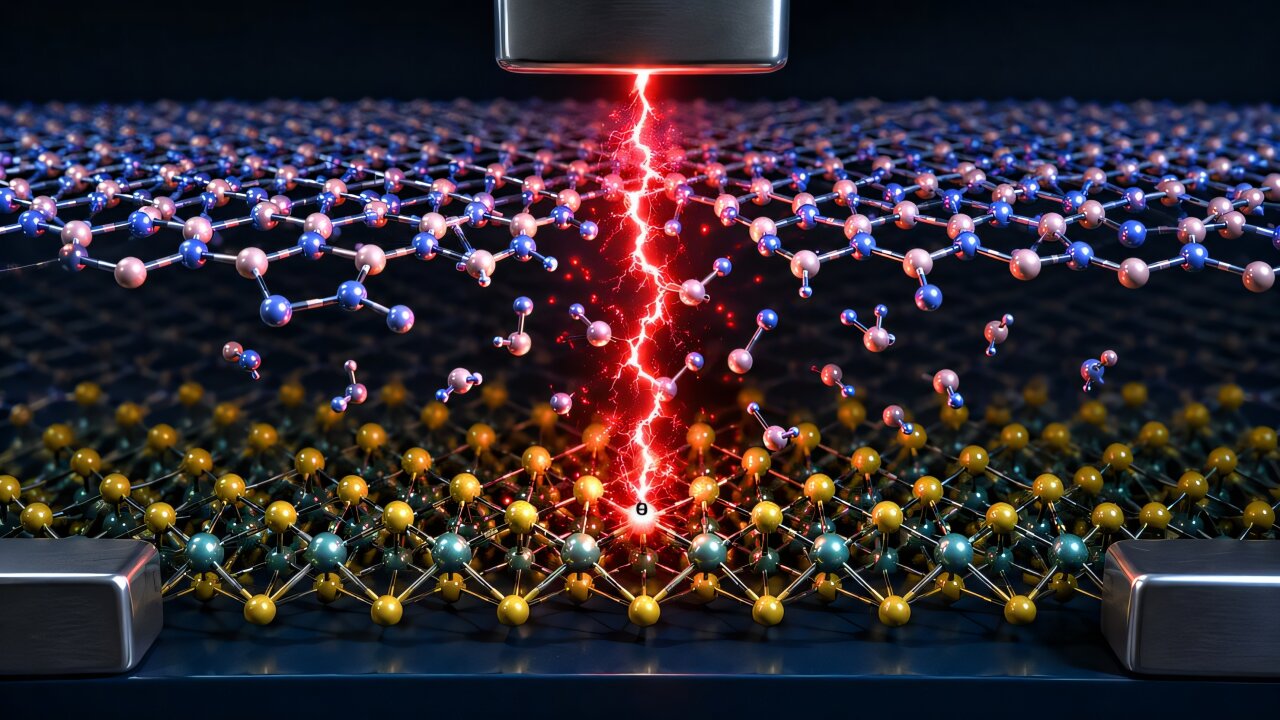
The crucial question: under what circumstances will the transistor material be destroyed? Credit: TU Wien
Microelectronics is currently undergoing major changes: The industry is working on promising new materials and chip architectures. But this also means that novel electronic materials must be tested carefully to ensure that they will function reliably for a sufficiently long time during operation.
Together with teams from IBM and the National University of Singapore, TU Wien has now shown that tests of novel insulators for semiconductor technology are almost always carried out in a way that does not provide reliable information. However, using a new practical method, suitable measurement data can be used to estimate the actual expected lifetime of electronic components. In research and development, this procedure can therefore help identify the right materials and manufacturing techniques more quickly and with greater confidence. The study is published in the journal Nature Electronics.
Measuring until it breaks
The lifetime of a transistor depends crucially on which insulating material is used and at which electrical voltages it is operated. "For thick insulating layers, you can simply apply a voltage, keep increasing it and measure the voltage at which it breaks down," says Prof. Tibor Grasser from the Institute for Microelectronics at TU Wien. "The voltage at which the material fails is then converted accordingly. Roughly speaking: If the insulating layer in the transistor is only one-tenth as thick, one assumes that it will break down at the same field strength and therefore withstand only one-tenth of the voltage."