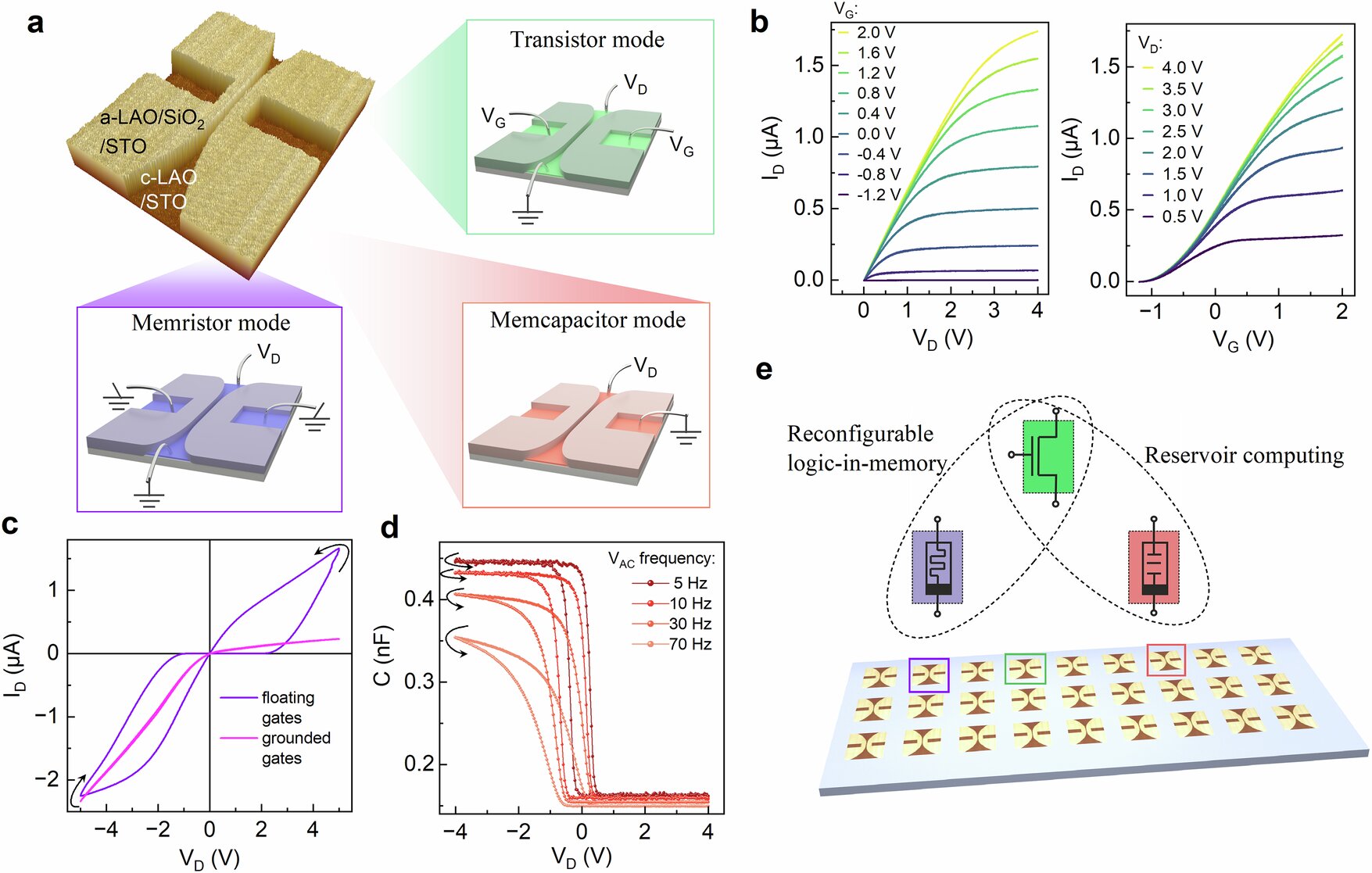
Polymorphic functionality of a runtime reconfigurable oxide interface-based device. Credit: Nature Communications (2026). DOI: 10.1038/s41467-026-71642-2
Neuromorphic computing is a computational paradigm that mimics the way the brain functions in terms of both architecture and dynamics. It creates electronic circuits that store and process information in an integrated manner, similar to networks of neurons and synapses.
With this goal in mind, an international network of researchers developed an electronic device, including Victor López-Richard, a full professor at the Center for Exact Sciences and Technology at the Federal University of São Carlos (CCET-UFSCar) in Brazil. The result, published in Nature Communications, represents an important contribution to the development of neuromorphic computing.
A transistor with memory built in
Unlike conventional computers, in which processing and memory are separate, neuromorphic computing seeks to integrate these functions onto a single physical substrate, similar to biological synapses.