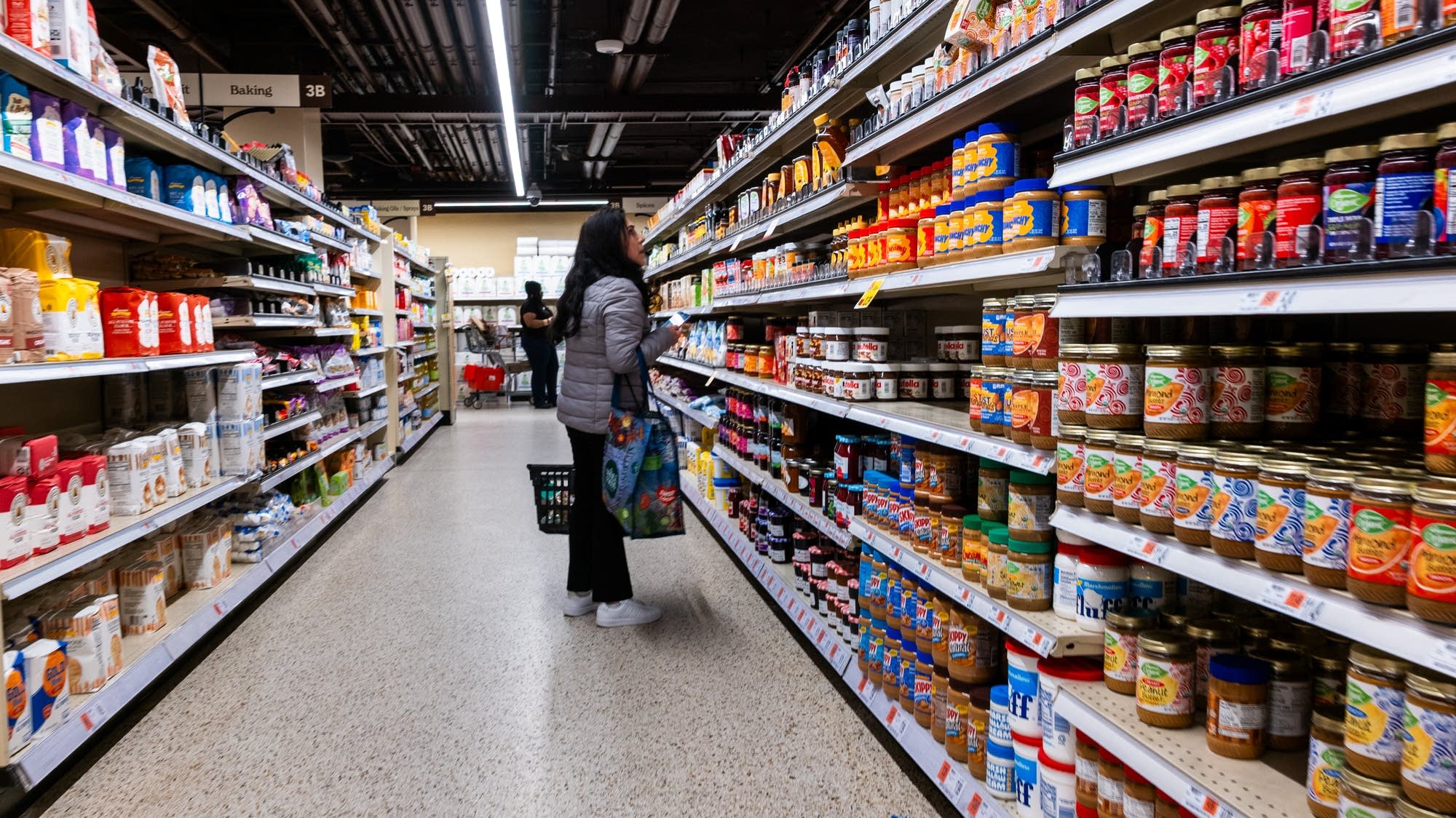
Economists — and “Marketplace” listeners — know that consumer spending drives around two-thirds of the economy. And historically, there has been a pretty close relationship between sentiment or confidence and consumer spending.But that relationship weakened significantly at the start of the COVID-19 pandemic and hasn’t fully recovered in the six years since. Scott Brave, senior economist and economic advisor at the Federal Reserve Bank of Chicago, published a Fed letter on this change.Consider the two primary ways to keep track of how Americans are feeling about the economy: the University of Michigan’s Surveys of Consumers and The Conference Board’s consumer confidence index. Since the pandemic, consumers have been feeling pretty consistently negative about the economy. The most recent Michigan consumer sentiment index was up from an all-time low in May, but still pretty negative due to the Iran war and oil prices. “If I were to put those low levels of consumer confidence or sentiment into a model, the model will tell me, ‘Oh my god, consumer spending is going to be, like, down below the earth,’” said Ernie Tedeschi, chief economist at Stripe. But consumer spending is mostly fine. It was actually up almost 1% in May, the same month that consumer sentiment reached that all-time low. So what’s driving the gap between how consumers feel and how they’re spending? It’s a big subject of debate for economists. Theory number one is vibes. “Really what’s going on, I think, is inflation, high prices, affordability, however you want to put it,” said Tedeschi. Remember: Inflation as measured by the consumer price index hit 9% in June 2022. That’s the largest annual increase since the 1980s. “Consumers have memories, so even as growth in prices has gotten better, they go to the grocery store and see persistently high levels of eggs, produce, whatever,” Tedeschi said. “And that is keeping their attitudes weak and low over this whole time.” Theory number two about the gap between feelings and spending is specific to the Michigan consumer sentiment index.“The survey used to be conducted by phone. And then in early 2024, they gradually transitioned to collecting all of their information online,” Tedeschi said. “People tend to be materially more negative when they answer things online, and we saw that immediately with the University of Michigan survey.” Tedeschi and economist Ryan Cummings analyzed this change and found that sentiment was 11% lower than it would have been if the survey were still conducted over the phone. This could help explain why sentiment has stayed low, making the correlation between sentiment and spending weaker than it was pre-COVID. “From an economic standpoint, we have seen empirically that the economy grows just fine throughout these negative vibes,” Tedeschi said. At the Chicago Fed, Scott Brave and colleagues created a new composite measure of how consumers are feeling that correlates more closely with consumer spending. It combines the traditional monthly measures — Michigan’s consumer surveys and The Conference Board’s consumer confidence index — with newer, daily data.“In one instance, it’s actually a survey that’s asking the same questions as one of the traditional indexes, but just doing it on a daily basis with a much larger sample,” Brave said. Brave said there’s no official release schedule for their new index yet, but they’ve been updating alongside those more traditional indexes’ release dates.
Chicago Fed launches a new consumer sentiment composite index
How consumers feel about the economy used to line up with how they spent. These days, not so much.
554 words~3 min read