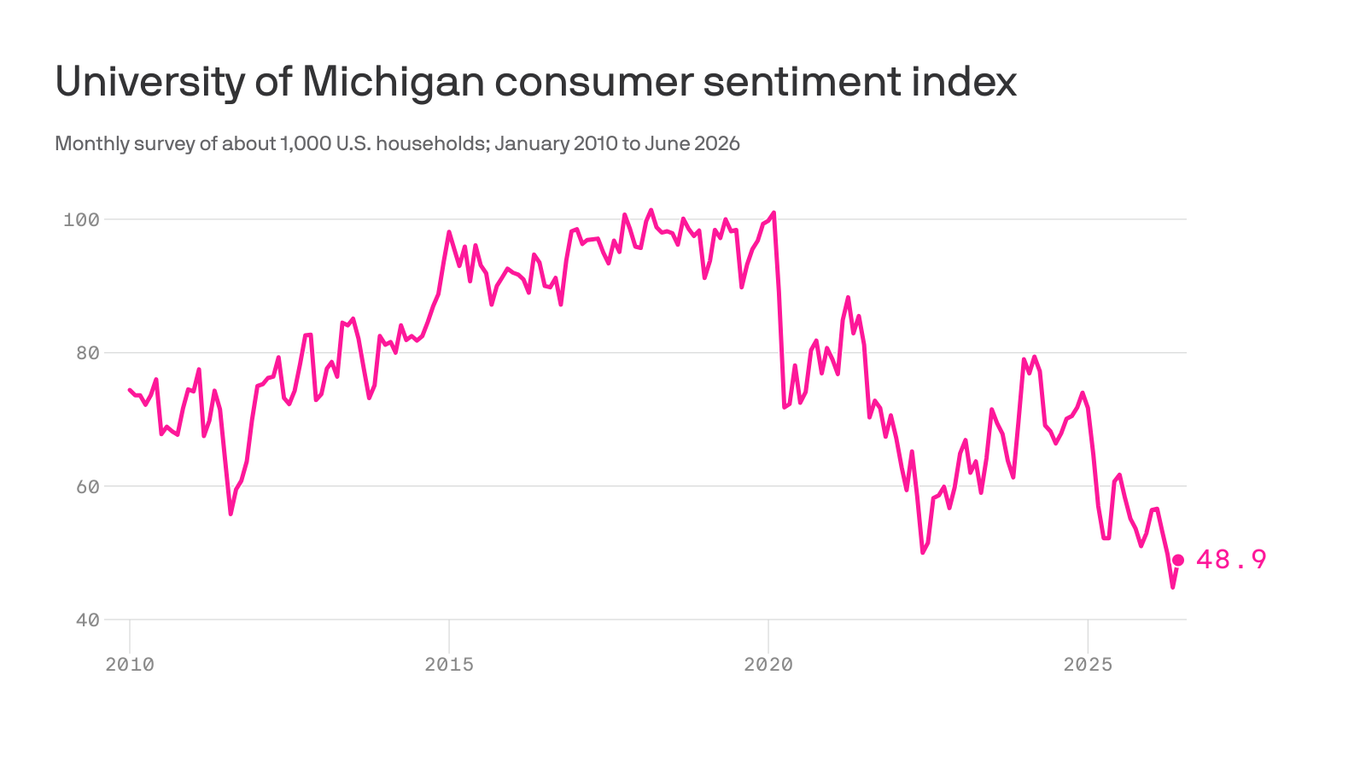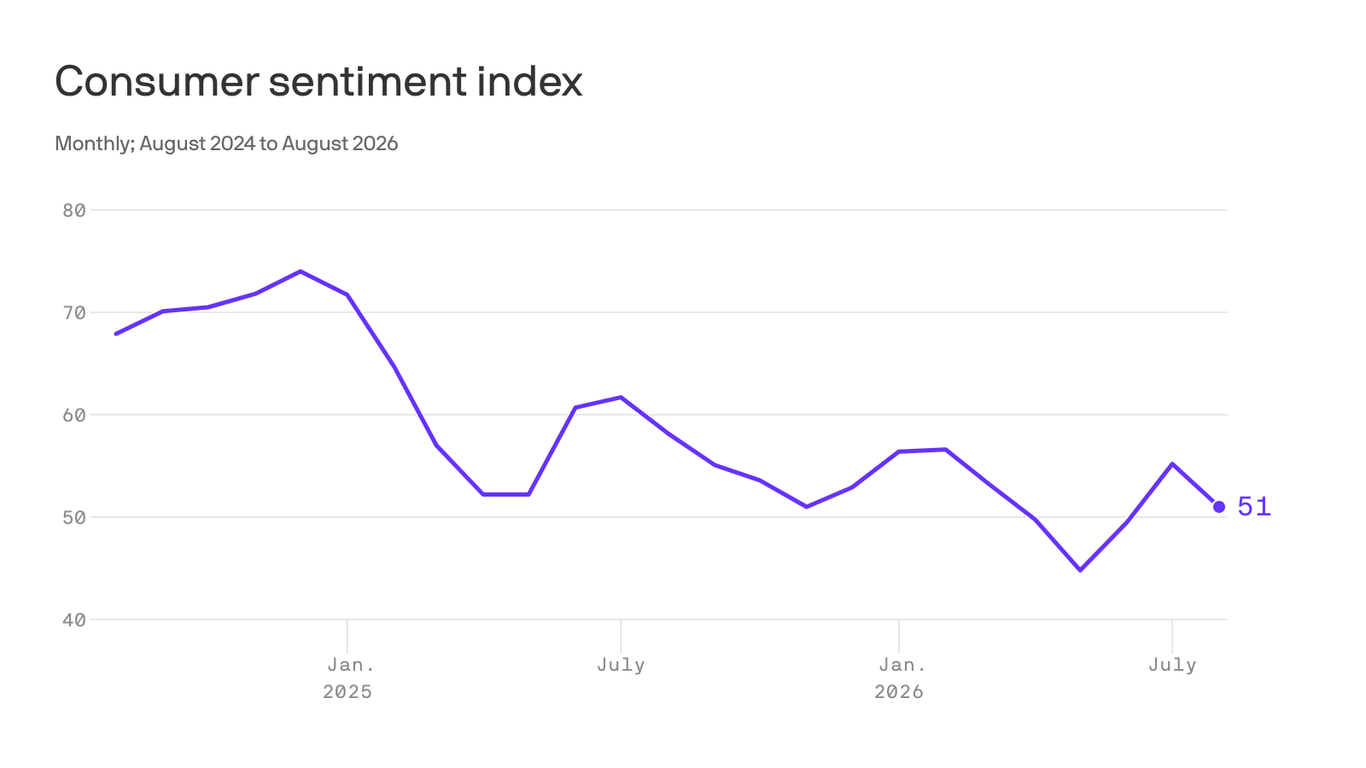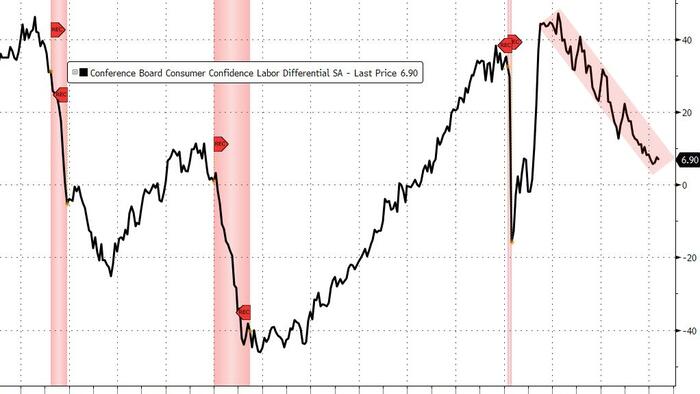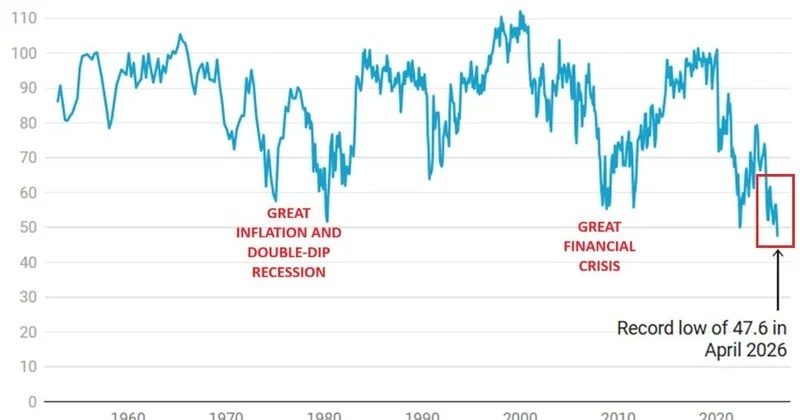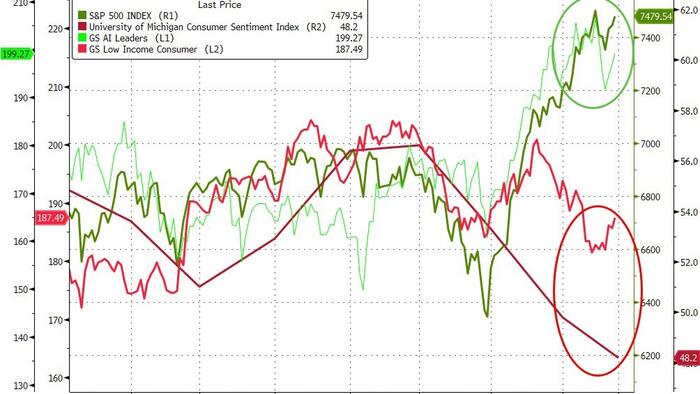
Courtenay BrownAdd Axios as your preferred source tosee more of our stories on Google.Consumer confidence soured in early May, according to the Conference Board, though the reading shows a far less bleak economic mood than its peer survey from the University of Michigan, which plumbed new lows Friday.Why it matters: Directionally, the two surveys send the same signal: Consumers are downgrading their economic views as the war-driven energy shock weighs on household budgets.But whether consumers feel worse about the economy now than at any other point in the past half-century depends on which survey you reference.Driving the news: The Conference Board's monthly consumer confidence index fell 0.7 percentage point in May, to 93.1. But it ticked down to a level that is still above where it stood as recently as January.A modest jump in future expectations nearly offset a pullback in how Americans view current conditions.Still, consumers' "references to prices and oil and gas increased in frequency for a second consecutive month, while mentions of war, geopolitics and conflict remained elevated—likely signaling consumers' underlying concerns about the inflationary impacts of the war in the Middle East on their wallets," the Conference Board said in a release.The survey cutoff was May 19, capturing a period when the war in the Middle East lifted global prices and before optimism over an Iran deal emerged in recent days. The bottom line: Consumers feel crappy about the economy. But just how crappy might have something to do with how the surveys are structured. The University of Michigan puts more emphasis on purchasing power and financial conditions, both of which have been meaningfully under pressure in recent years as inflation shocks reignited.But the Conference Board largely focuses its queries on the health of the labor market, which has held up despite some softening in hiring.
A tale of two consumer sentiment gauges
Just how crappy consumers feel about the economy might be related to how two confidence surveys are structured.
300 words~1 min read