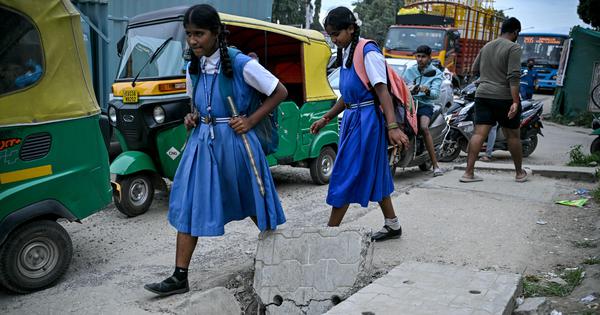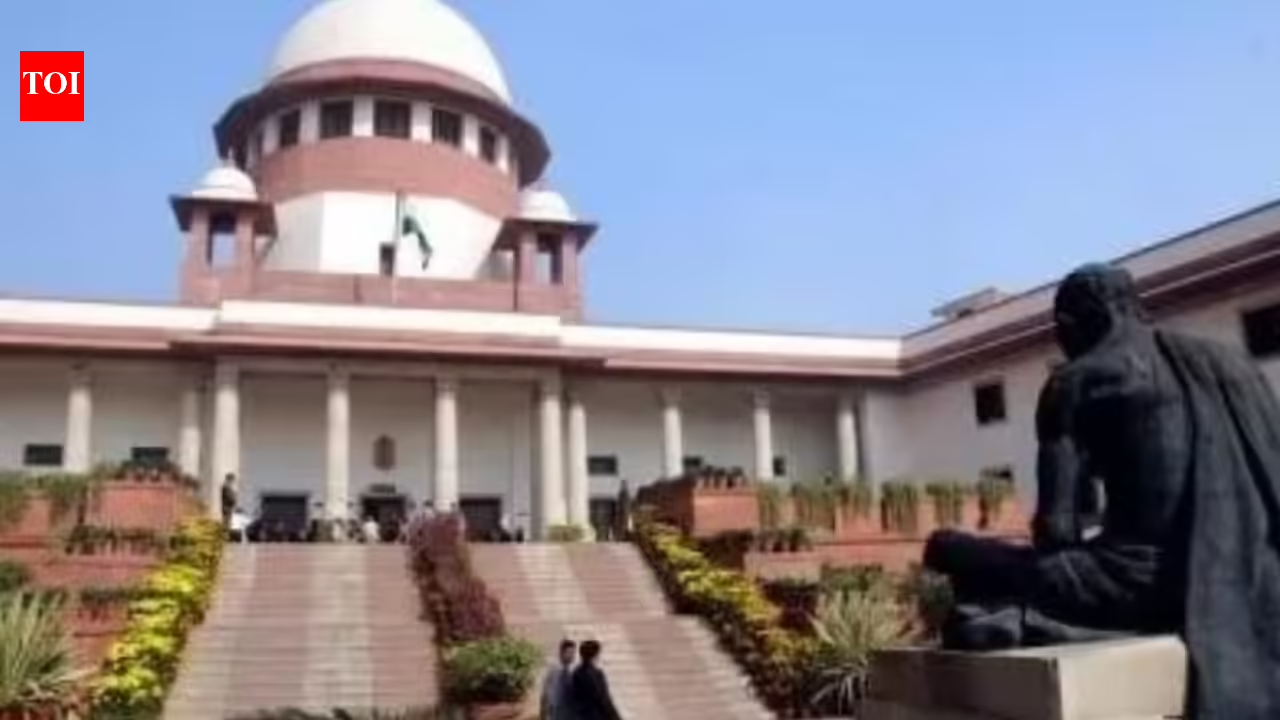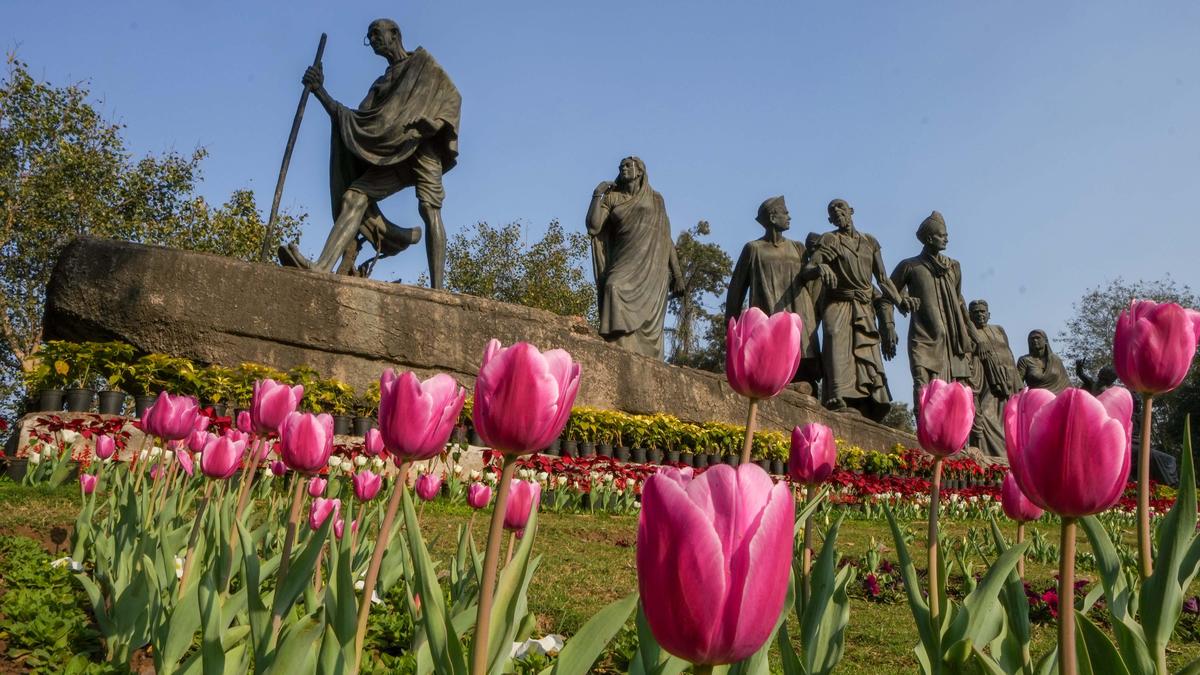
‘Five kilometres away from the Supreme Court... Gandhi was walking, his walk frozen into a statue along with others in the piece of sculpture called “Gyarah Murti”, built by Devi Prasad Roy Chowdhury’
| Photo Credit: PTI
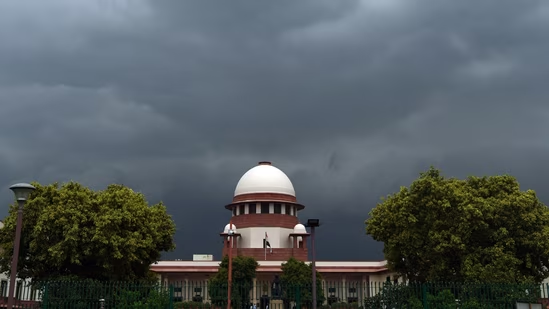
That we would need a court of law to remind us that the Right to Walk should be a fundamental right at this moment in history when activists are trying to stop government-corporations from restricting the natural flow of rivers cannot be just a coincidence. The Right to Walk on footpaths, to be specific. There is a restriction on the freedom of nearly all parts of the human body imposed by the state — the hands cannot touch whatever they want to, one can’t spit or defecate wherever one might want to, one cannot rest one’s back against every available wall, and our legs are prevented from taking us to anywhere the mind wants to. Hence the unnoticed privilege of having a mind — “Kothao aamar hariye jawar nei mana monay monay” (I can get lost anywhere, in my mind), is a Rabindranath song sung as much with hope as with the intuitive acknowledgement that only the mind has that kind of unrestrictive freedom. At the other end of the head are our legs, and one would imagine that they would also like a similar degree of freedom as the mind has in the Tagore song. It must be in acknowledgement of this need that the Supreme Court has asked for the Right to Walk on footpaths to be included as a fundamental right.Walking with(in) literatureIt seems almost tautological — the need for such a right. However, under a Facebook post from a decade ago, which detailed the experience of being a pedestrian in India, among the many disrespectful and inhuman responses was one by a young engineer. The pedestrian does not pay road tax and therefore cannot make a claim on the road, he said. The abrasive character of new capitalist energy soon became visible; he insisted that like the poor, the pedestrian was a burden on the Indian economy. What would he then make of the recent Supreme Court ruling that declared the Right to Walk safely on footpaths a fundamental right under Article 19(1)(d) (freedom of movement) and Article 21 (right to life), a ruling that gives pedestrians a claim on public pathways over automobiles?