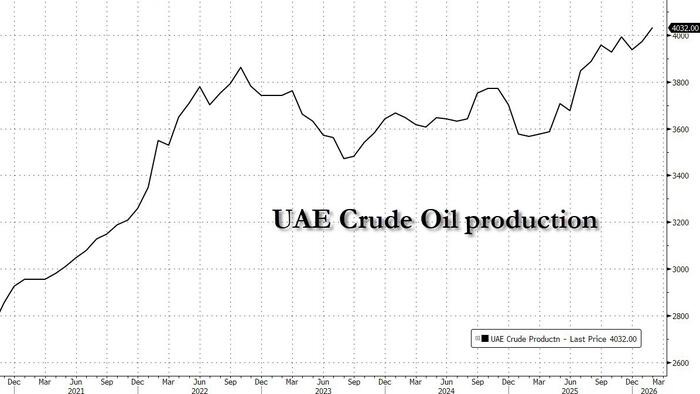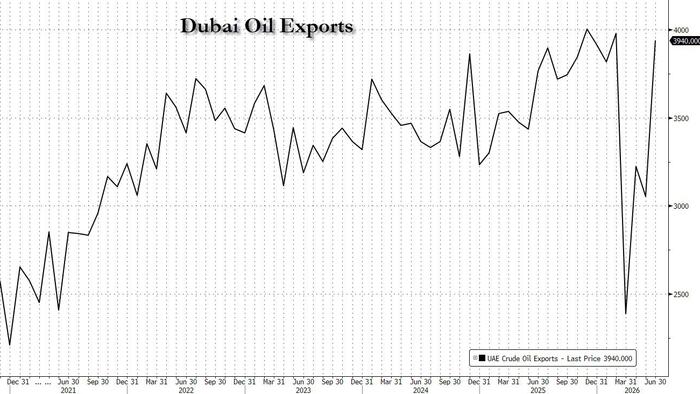
The UAE is wasting no time cashing in on its newfound freedom. Just weeks after formally exiting OPEC and OPEC+ on May 1, Abu Dhabi has pushed oil production above 3.8 million barrels per day in June, its highest level in more than six years.
Ship-tracking data from Vortexa paints an even more aggressive picture: crude loadings have surged to approximately 4 million bpd, while exports hit a record 3.7 million bpd. For context, the UAE’s previous OPEC+ quotas had capped output somewhere between 3 and 3.4 million bpd.
From cartel member to market disruptor
The UAE’s departure from OPEC ended nearly 60 years of membership. Abu Dhabi National Oil Company, known as ADNOC, spent heavily to expand capacity while OPEC quotas prevented the country from actually using it. ADNOC’s production capacity has increased nearly 40% over the last six years, reaching approximately 4.8 to 4.85 million bpd.
The International Energy Agency projects UAE oil output will exceed 5 million bpd by 2027, which would cement Abu Dhabi’s position as one of the world’s most significant non-OPEC+ producers.