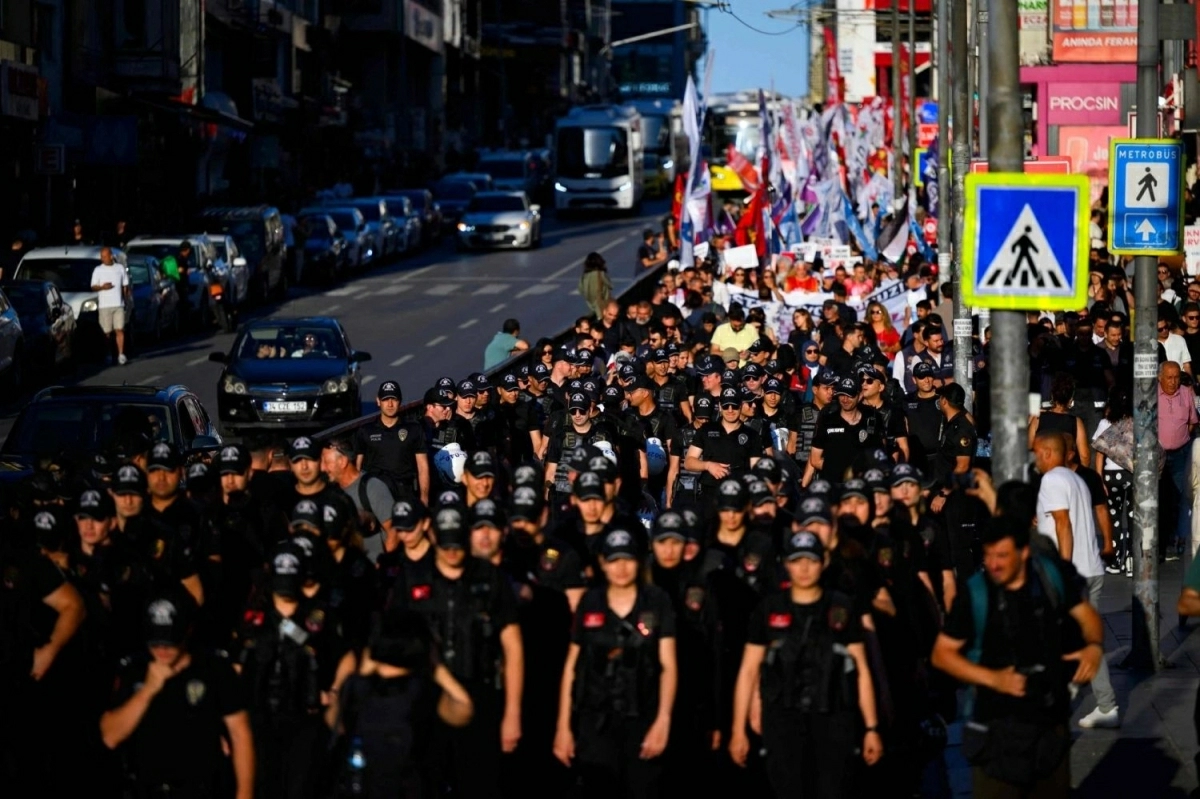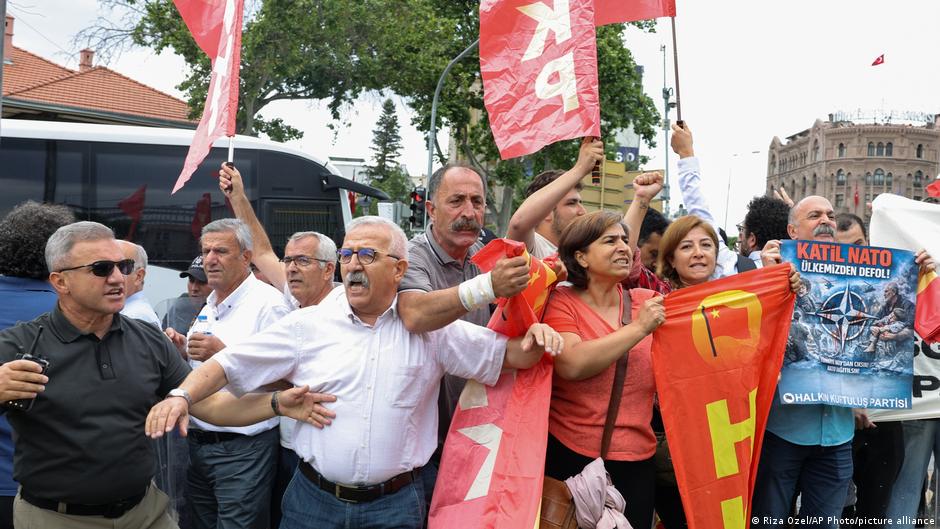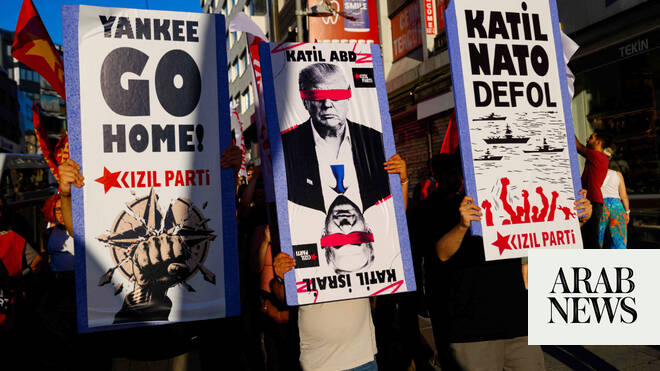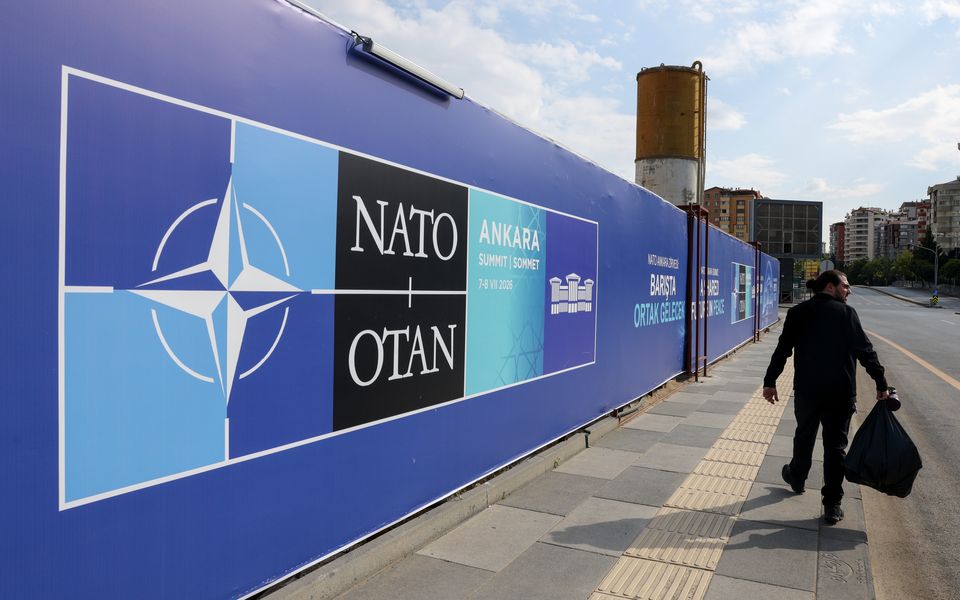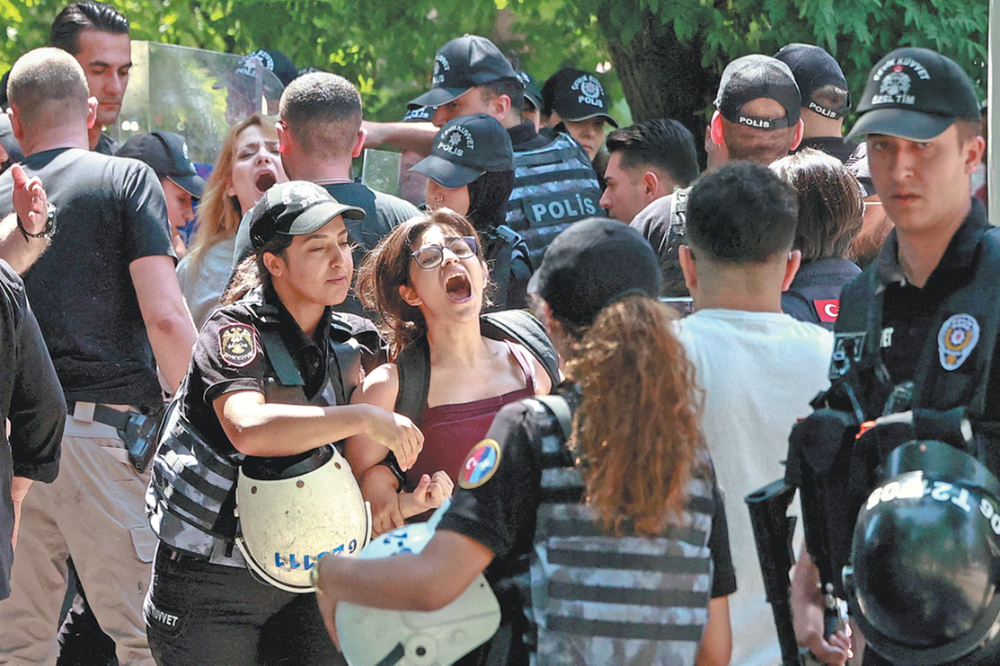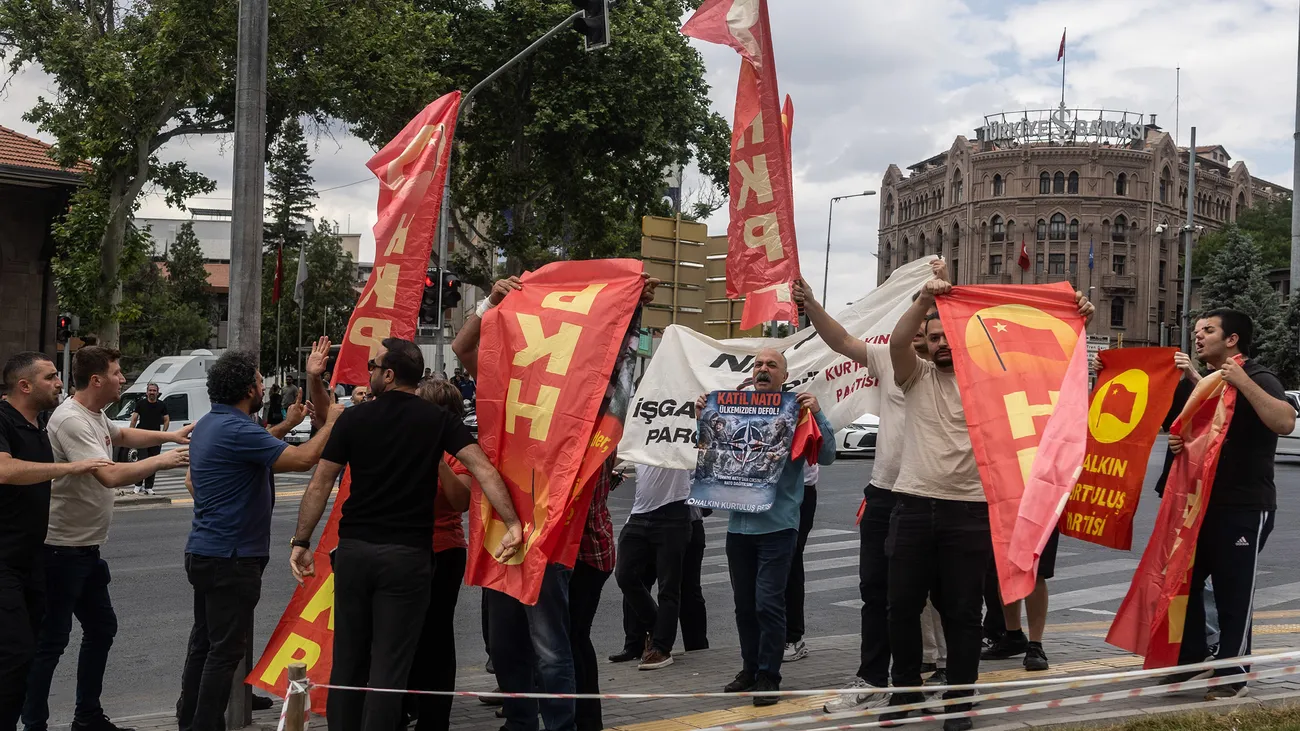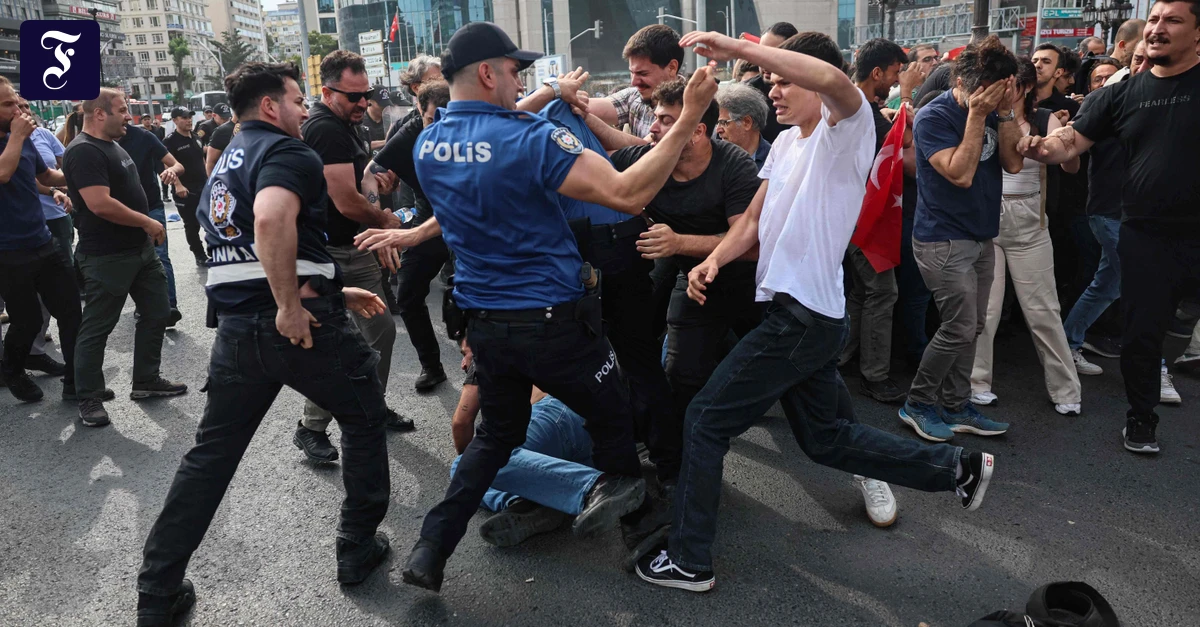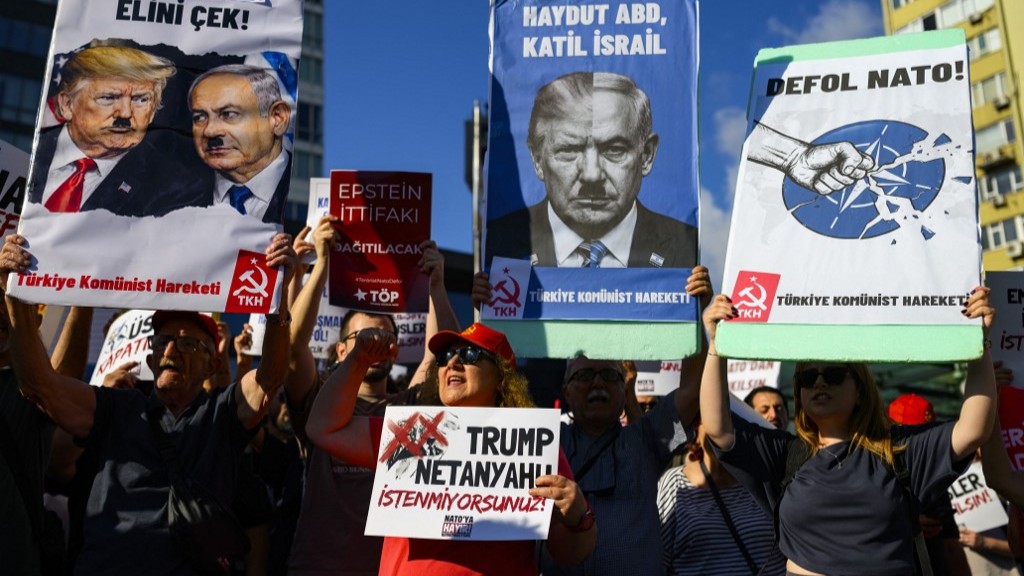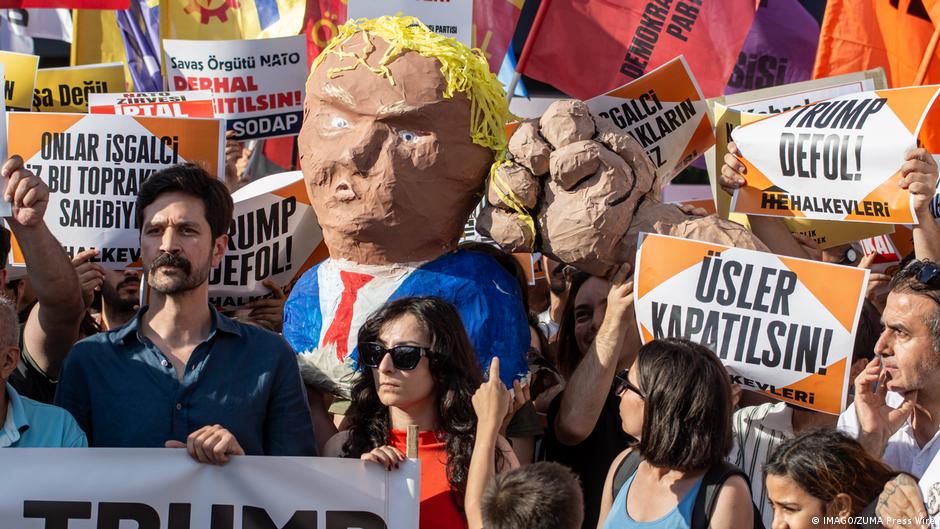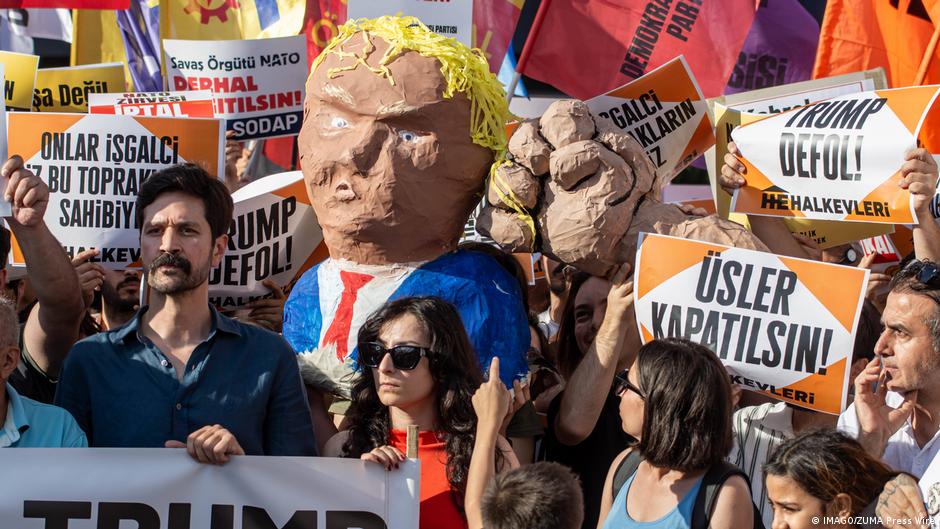
BySTEVEN GANOT/THE MEDIA LINEJULY 6, 2026 20:16Turkey’s detention of anti-NATO protesters before this week’s North Atlantic Treaty Organization summit in Ankara has raised a familiar question about President Recep Tayyip Erdoğan’s government: Where does summit security end, and where does a crackdown on dissent begin?For more stories from The Media Line go to themedialine.orgTurkish authorities detained more than 100 people on Sunday during an anti-NATO march organized by the Communist Party of Turkey, or Türkiye Komünist Partisi (TKP), in Ankara’s Kızılay Square, according to Reuters. Police used tear gas to break up the protest, while demonstrators carried party flags and chanted against NATO’s presence in Turkey. Similar protests were held under heavy police presence in Istanbul’s Taksim Square and Kadıköy district.The TKP is not a banned underground movement. It is a legally registered political party in Turkey. The party appears in the official registry of Turkey’s Court of Cassation Chief Public Prosecutor’s Office, which lists its short name as TKP and Kemal İbrahim Okuyan as its leader. That distinction matters: The protest was organized by a lawful political party, even as Turkish authorities separately cited investigations into armed groups in other raids before the summit.The arrests came just before the July 7-8 NATO summit, which is bringing leaders from all 32 member states to Ankara, including President Donald Trump. The meeting is expected to focus on defense spending, Ukraine, NATO’s military production capacity, the fallout from recent regional conflicts, and Turkey’s effort to expand its role in Western defense cooperation.Security concerns versus civil libertiesAnkara has an obvious security argument. A NATO summit brings heads of state, ministers, large delegations, journalists, and security teams from across the alliance. Turkish authorities have tightened controls in the capital, restricted movement in some areas, closed roads, increased policing around public spaces, and banned demonstrations ahead of the gathering.Turkish and NATO flags wave in front of the JW Marriott hotel where U.S. President Donald Trump is expected to stay during the 2026 NATO summit is seen on July 6, 2026 in Ankara, Turkey. (credit: Serdar Ozsoy/Getty Images)The harder question is how far those powers can go. Turkey’s constitution formally protects freedom of expression, association, and peaceful assembly. In practice, public demonstrations are heavily regulated under the Law on Meetings and Demonstrations, known as Law No. 2911, and provincial governors can impose bans on gatherings on public order or security grounds. Rights groups have long argued that these powers are used too broadly, turning legal guarantees into rights that exist on paper but are often blocked in the street.Human Rights Watch said Turkish police arrested at least 209 people in Ankara in overnight raids on June 22-23, ahead of the summit. Those detained included political activists, lawyers, an academic, and journalist and LGBT activist Yıldız Tar. Turkish authorities said the raids were linked to investigations into armed groups, including Islamic State and far-left organizations, but Human Rights Watch said the detentions showed Turkey’s “ruthless intolerance of freedom of speech and assembly.”Reuters also reported that Turkish prosecutors had issued arrest warrants for 241 suspects in investigations linked to Islamic State and far-left groups, including DHKP-C, MLKP, and TKP/ML. Opposition figures said the raids were part of a broader campaign against democracy and civil liberties.That is why the dispute is not only about whether Turkey needs security for a high-level summit. Of course it does. The more difficult question is whether the government is using that security need to justify moves against activists, journalists, political opponents, and lawful protest organizers.Turkey's role within NATOTurkey has always been an uneasy but vital NATO member. It joined the alliance in 1952, has one of NATO’s largest militaries, controls access between the Mediterranean and the Black Sea through the Turkish Straits, and sits between Europe, Russia, the Caucasus, Syria, Iraq, and Iran. NATO cannot treat Turkey as a side issue. Geography rarely allows that luxury.At the same time, Erdoğan’s government has faced years of criticism over arrests of journalists, opposition politicians, activists, academics, and civil society figures. Amnesty International has said freedom of peaceful assembly and association in Turkey remains arbitrarily restricted, with police using force against peaceful protesters and courts pursuing cases under protest-related laws. That record sits awkwardly beside a NATO summit built around collective defense, democratic language, and the rule-based order.The issue has also moved beyond anti-NATO activists. The Financial Times reported fresh detentions before the summit, including journalists, opposition campaigners, and comedian Deniz Göktaş, who was arrested after a YouTube comedy routine mocking Erdoğan. His case has added to concern over speech restrictions in Turkey and the government’s use of courts and police against critics.Rights groups say the pressure is not limited to street protests. Reuters reported that dozens of Turkish journalists from independent outlets were denied accreditation to cover the summit. NATO said accreditation decisions were based on guidance from the host country.Growing tensions ahead of the summitThe protests also reflect a long-running Turkish argument over NATO itself. Anti-NATO sentiment has deep roots among leftist, nationalist, Islamist, and anti-imperialist currents in Turkey.Critics see the alliance as a vehicle for US power and foreign military influence.Supporters see it as a source of military strength, strategic protection, and diplomatic leverage.That is the awkward setting for the Ankara summit. Erdoğan wants Turkey recognized as indispensable to NATO. Protesters want NATO out. Rights groups want Ankara pressed on civil liberties. Western leaders want Turkey’s help on Ukraine, defense production, Black Sea security, and regional diplomacy.The bargain is not new, but it is becoming harder to ignore. NATO needs Turkey, and Turkey knows it. That gives Erdoğan room to host the alliance on his own terms. The arrests show the price of that arrangement: a summit meant to project allied unity is also drawing attention to the limits of dissent in the country hosting it.Follow us on Google
Turkey arrests anti-NATO protesters ahead of NATO summit | The Jerusalem Post
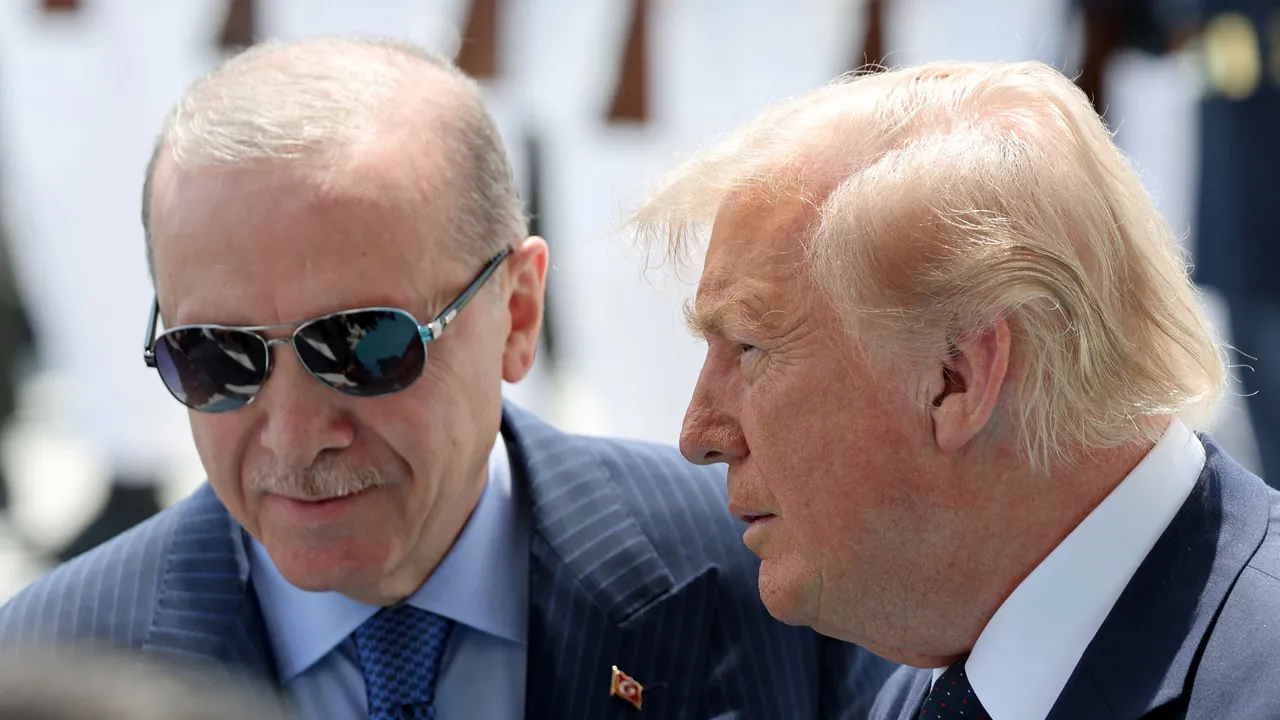
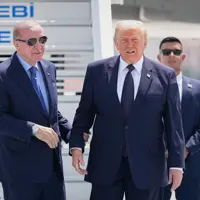
The arrests came just before the July 7-8 NATO summit, which is bringing leaders from all 32 member states to Ankara, including President Donald Trump.
966 words~4 min read