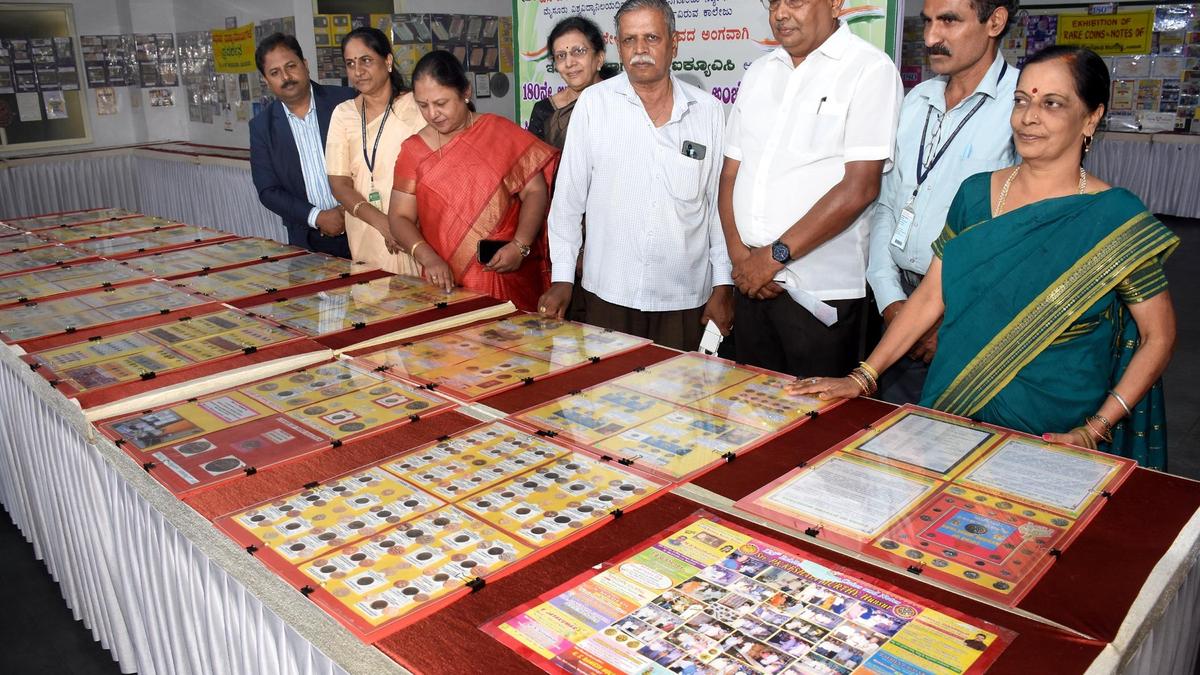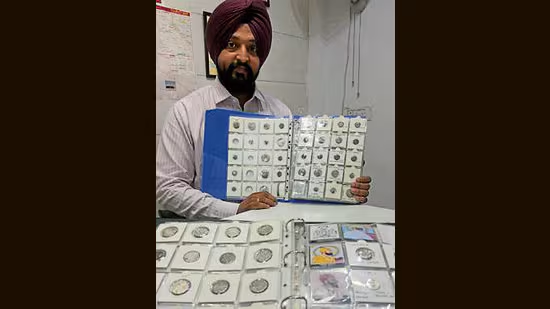
For most people, coins are merely currency but for 39-year-old Baljit Singh, they are windows into the past. To mark the death anniversary of Maharaja Ranjit Singh on June 29, the Gill Road resident opened part of his rare coin collection to the public at his home, offering history enthusiasts a glimpse into more than 2,600 years of Punjab’s political and cultural legacy.Baljit Singh with displaying his collection. (ht photo)Baljit, an engineer by profession, has built a collection of over 4,000 coins, spanning from the earliest tribal republics of ancient Punjab to the last coins issued under the Sikh Empire. The collection chronicles the succession of kingdoms, empires and dynasties that shaped the region over nearly three millennia.His interest in numismatics began during his school days after a cousin showed him a coin from Singapore. As his fascination with history grew, he started attending coin exhibitions, studying historical records and participating in online auctions. Over the years, the hobby evolved into preserving Punjab’s rich historical legacy through currency.Among the highlights are coins issued by ancient tribes of Punjab nearly 2,600 years ago and coins from 11 of the 16 Mahajanapadas, including Kashi, Kosala, Vatsa, Gandhara, Ashmaka and Kuru, representing some of the earliest known coinage in the Indian subcontinent.“I have coins from all the 12 Sikh misls, 12 sovereign military brotherhoods that governed Punjab during the 18th century, as well as coins issued during the reign of Maharaja Dalip Singh, the last Sikh emperor. I also have coins from the Phulkian princely states, including Patiala, Nabha and Jind,” Baljit said.“My aim is to collect coins representing every kingdom, dynasty and ruler who governed Punjab over the past 2,600 years,” he added.The collection also features rare coins of the Yaudheyas, Rajanyas, Malavas, Kunindas, Audumbaras, Kadas and Agroha republics. It includes more than 200 foreign coins alongside Indian coins dating back to around 600 BCE, tracing the rule of the Indo-Greeks, Indo-Scythians, Indo-Parthians, Kushans, Huns, Indo-Sasanians and Mongols, besides pieces linked to the era of Alexander the Great.Visitors can also trace medieval and colonial history through coins of the Delhi Sultanate, including the Slave, Khalji and Tughlaq dynasties, the Sur Dynasty, the Malwa Sultanate, the Mughal Empire, the East India Company, British India and the Indo-Portuguese, Indo-Dutch, Indo-French and Indo-Danish establishments.Baljit credited the National Numismatic Society for deepening his understanding of coins and history. Narinderpal Singh, the society’s general secretary, said the collection offers a rare opportunity to understand Punjab’s political and cultural evolution through its coinage and serves as an invaluable historical resource.
Ludhiana: Rare coin collection preserves Punjab’s 2,600-yr-old legacy
Baljit Singh's rare coin collection showcases 2,600 years of Punjab's history, highlighting ancient tribes and Sikh Empire coins, preserving the region's legacy.
422 words~2 min read