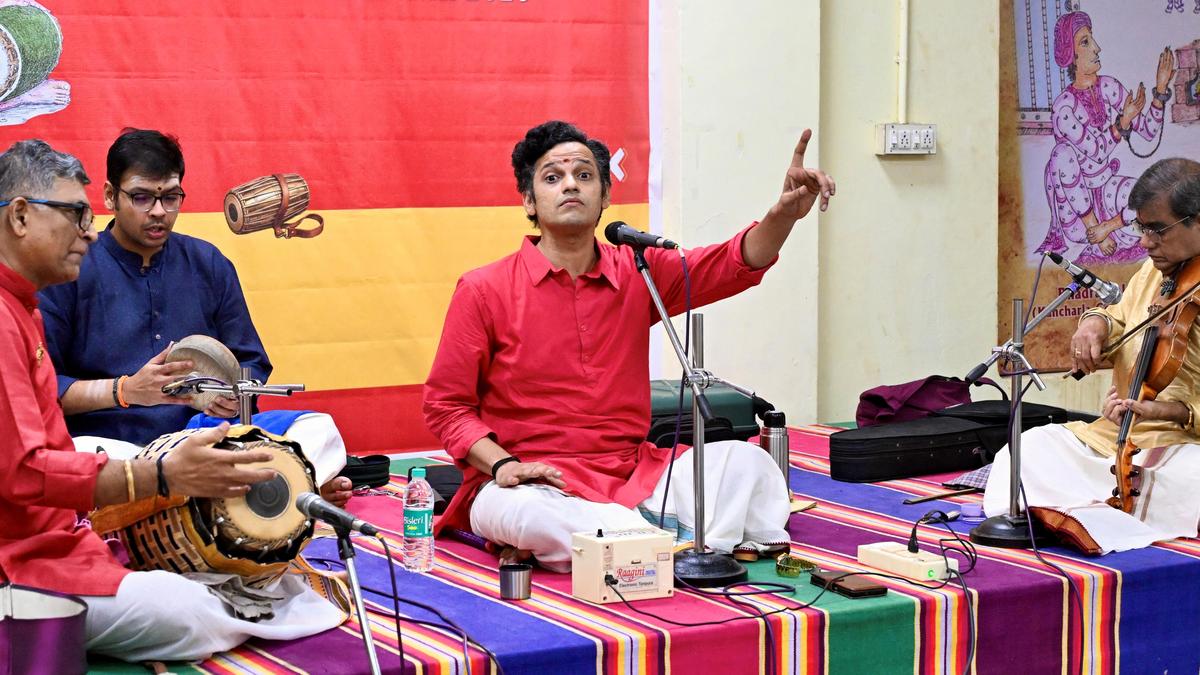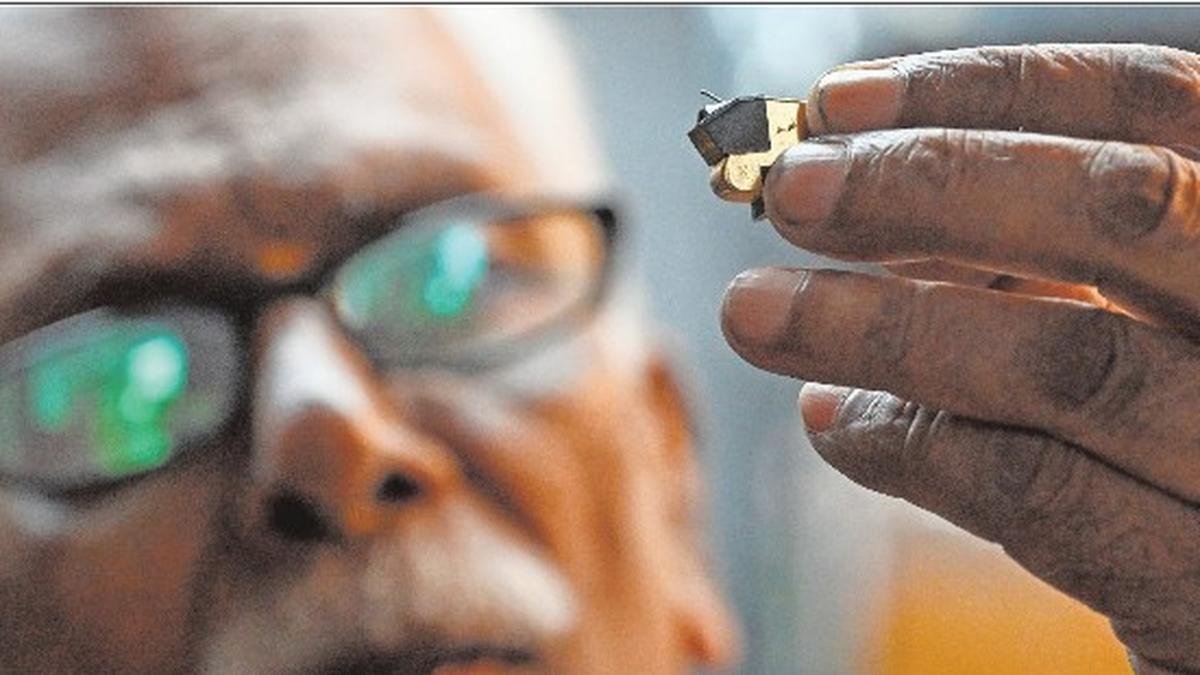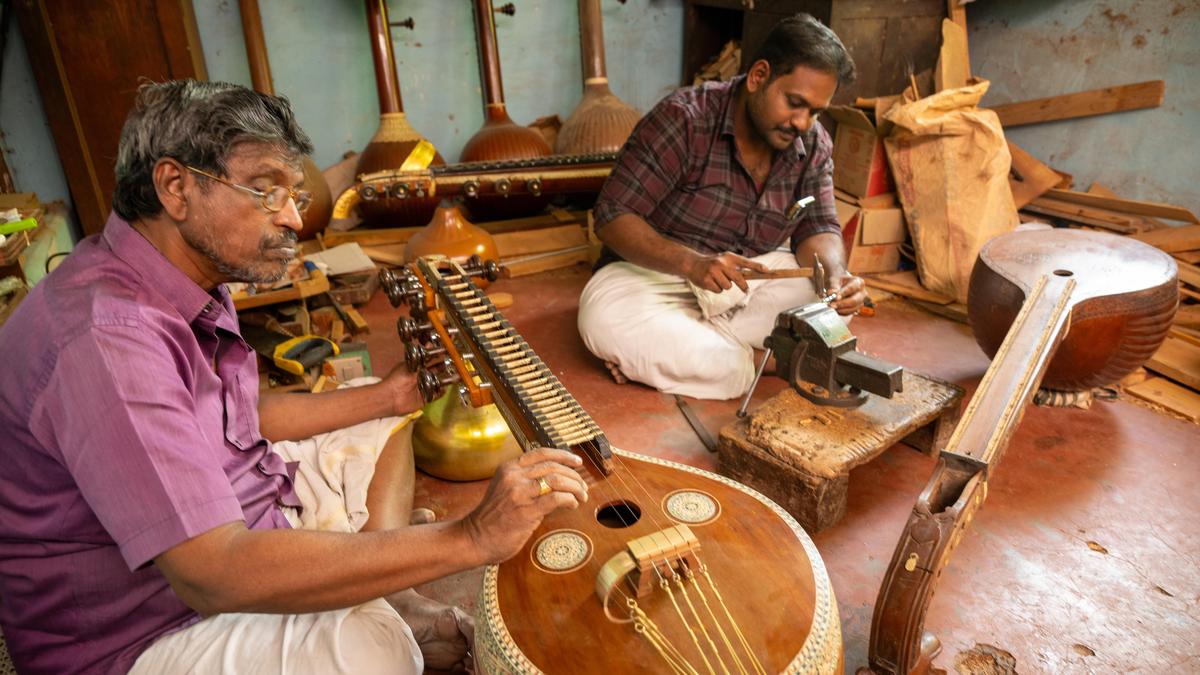
G. Venkatesan and his son Giridharan repairing veenas and other classical musical instruments in Srirangam.
| Photo Credit: R. VENGADESH
G. Venkatesan’s fingers display his years of experience as he strums the strings of a Saraswati Veena to test them at his home-based workshop in Srirangam.Having learned the art of repairing classical stringed instruments from his father R. Govindasamy Mudaliyar, Mr. Venkatesan is among the few artisans who can manufacture the veena and other classical stringed instruments from scratch.“We are originally from Arani in Vellore district. My father migrated to Madras as a 12-year-old and learned how to repair harmoniums and also make veenas from Krishnaswamy Naidu from the late 1920s. After his guru’s demise, my father began making veenas while servicing harmoniums for musical exponents,” Mr. Venkatesan, 72, told The Hindu.The patriarch moved first to Tiruchi, and then to Srirangam on the advice of Karaikudi Sambasiva Iyer and well-wishers E. Mani Sankara Sastri and Woraiyur Rengachari. “My father named his workshop as Renga Musical House and started operating from Srirangam. I joined him as a 17-year-old and learned mostly through observation. I was 30 when I started making veenas independently, after my father passed away,” he said.Mr. Venkatesan’s son V. Giridharan, 32, a Computer Science graduate, joined his father in 2014, to continue the family’s legacy. The artisans accept orders from across the State, and travel to collect damaged instruments for repair if required.It can take up to 20 days to make a veena, said Mr. Venkatesan. “Veenas are typically made from the wood of jackfruit trees that have aged over 40 years. We source our wood from Kolli Hills, Panruti, and Kerala. I usually begin by shaping the ‘kodam’ (pot-shaped resonator). A 50-kg block of seasoned wood has to be slowly hollowed out by hand to approximately 6 kg. Once this is done, work starts on the other parts such as the wooden ‘birdai’ (pegs), and the frets,” he said.The father-son team works with an antique set of tools to get the precise measurements and cuts of each part. “Every step is done by hand as there are no customised machine tools available,” said Mr. Giridharan.Among the modern elements, the artisans use imported metal guitar heads to ensure better string performance. Beeswax paste is supplemented with commercial epoxy glue to hold the different parts in place.The ivory and deerhorn decorative panels of yore have been replaced by plastic sheets that are etched out with the patterns and then stuck on the top portion of the veena. “We paint the inlays by hand to replicate the look of the older instruments. At least 10 different skills are needed to make one veena,” said his father.Veena artisans need to be expert in shruthi (pitch) and swaram (musical notes), said Mr. Venkatesan. “We may not be trained musicians, but exponents trust our knowledge of pitch and musical notes to give their instruments the right sound,” he said. Published - July 06, 2026 08:13 pm IST