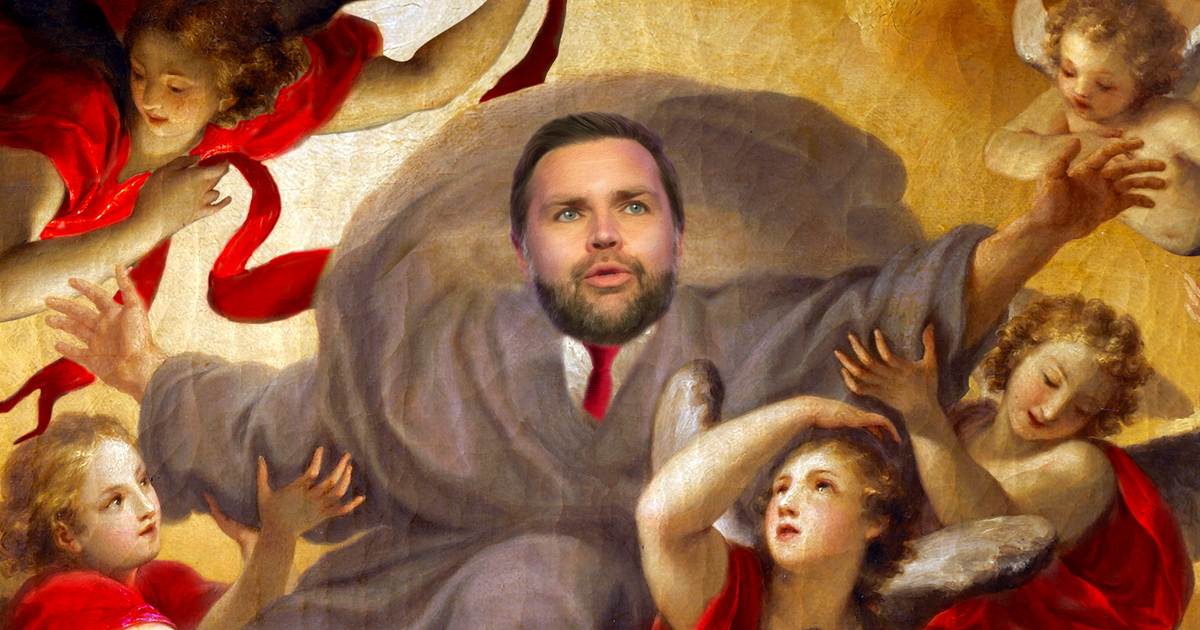
Illustration: Source images: Getty
This content can't be displayed right now.
To view this embed, please accept targeting cookies. It's loaded from a third party and requires that permission to appear.
On a muggy Saturday evening in May, 30 young men and a few women, all Christian and mostly Catholic, filed into a 19th-century redbrick building on Capitol Hill, part of Hillsdale College’s Washington, D.C., campus. The occasion was the monthly meeting of the Cicero Society, a parliamentary debating club committed, according to its terse website, to “developing excellence, preserving the Western intellectual tradition, and forming young leaders” — which in Washington is usually code for conservative job placement.
Despite the oppressive humidity, tweed jackets were the outfit of choice. The young men carried themselves like people twice their age or perhaps from a different era. One even had a cane, though it was hard to tell whether this was an accessory or a necessity. The setting was equally fusty. The debate was held beneath a large painting of the signing of the Constitution. Nearby were relics from the days of the Founding Fathers: an original copy of Thomas Paine’s American Crisis No. 1, a first edition of The Federalist.