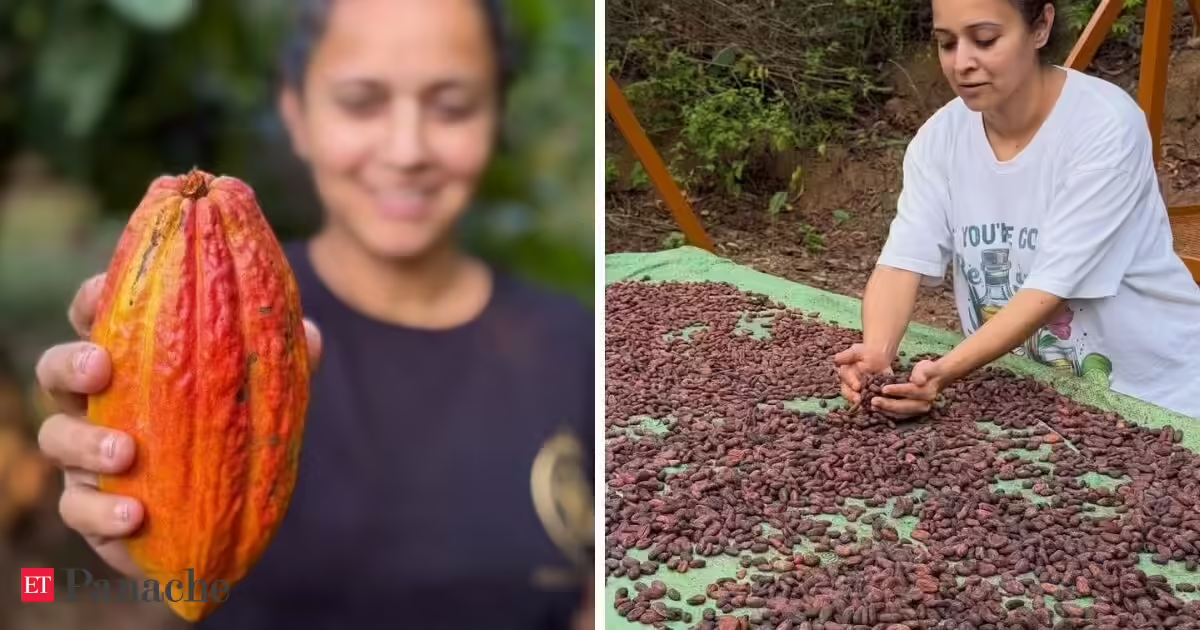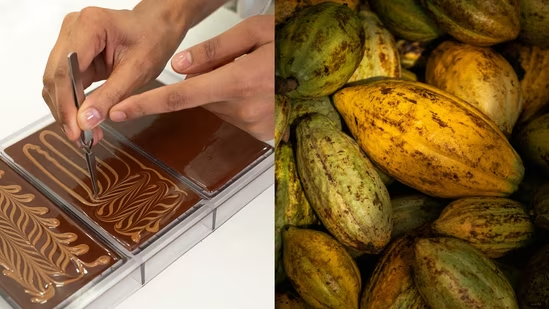
Ahead of World Chocolate Day on July 7, chocolate lovers have another reason to celebrate. While Swiss and Belgian chocolates have long dominated conversations around luxury chocolate, India is quietly carving out its own identity through a growing bean-to-bar movement. From cacao farms in Kerala and Andhra Pradesh to artisanal chocolate studios across the country, Indian makers are proving that premium chocolate can be grown, fermented and crafted entirely at home. The shift is also changing how consumers think about quality, origin and sustainability. World Chocolate Day is celebrated globally on July 7, a date widely associated with chocolate's introduction to Europe in the 16th century.How India’s bean-to-bar chocolate makers are taking on Swiss and Belgian giantsThe bean-to-bar conceptThe Indian chocolate market was valued at $3.05 billion (approx ₹29,112 crore) in 2025 and is projected to reach $5.6 billion (approx ₹53,325 crore) by 2034, growing at a CAGR of 7.01%, according to the International Market Analysis Research and Consulting Group. Artisanal and craft chocolates are the fastest-growing category, expanding at an 11.52% CAGR, driven by millennial and Gen Z consumers seeking handcrafted, high-quality chocolates made with organic cocoa, natural sweeteners and ethically sourced ingredients.The bean-to-bar chocolate-making model involves a single manufacturer overseeing the entire production process—from directly sourcing raw cacao beans from farms to roasting, grinding, conching and moulding the final chocolate bar. This differs from mass-produced brands that rely on industrial chocolate couverture before melting and moulding it into finished products.In India, the bean-to-bar movement began with Naviluna, launched as Earth Loaf in Mysore in 2012. Today, at least 20 such brands source cacao from the humid coastal regions of Andhra Pradesh, Telangana, Tamil Nadu, Kerala and Karnataka, where most of India's cocoa is grown."Indian cacao is incredibly diverse because it is grown across varied microclimates. This diversity allows for an exciting spectrum of flavour profiles. Depending on the region and post-harvest practices, you may find notes of tropical fruits, citrus, berries, nuts, or caramel," explains Chaitanya Muppala, founder of Manam Chocolate, which sources its single-origin cacao directly from over 100 farmers in the West Godavari and Idukki regions.Focus on originAccording to Chef-chocolatier Varun Inamdar, consumers today are increasingly curious about where the cocoa was grown, who cultivated it, how it was fermented and whether it was ethically sourced."Origin has become as important as craftsmanship. This is where India's story becomes exciting. Homegrown bean-to-bar and farm-to-bar makers are proving that Indian cocoa has a distinct terroir and flavour profile. With significant improvements in post-harvest practices, India is beginning to create chocolates that celebrate provenance rather than imitation," he says.Besides, a segment of consumers, mostly professionals aged 30 and above, is willing to pay a premium, either for health reasons or simply for indulgence.Ethical and eco-friendlyTransparency lies at the heart of the bean-to-bar chocolate movement. Ethical brands buy beans directly from farmers and co-operatives, often at a premium. They also disclose the exact origin of their beans and typically use fewer ingredients than mass-produced chocolates, which often contain palm oil and emulsifiers.Vikas Temani, Founder and CEO of Kochi-based Paul & Mike, says the bean supplier ecosystem is steadily evolving. "The profit for farmers who supply to companies like ours is almost twice what they would make if they sold in the bulk market," he tells us.When farmers receive recognition and better value for producing high-quality cacao rather than simply larger volumes, it changes the way cacao is perceived within farming communities, explains Muppala. He adds, "When the farmer succeeds, the chocolate becomes better, and the entire ecosystem benefits."A taste of IndiaSalted caramel and sea salt may be global favourites, but Indian chocolatiers are leaning into cultural nostalgia by experimenting with flavours consumers have grown up with. Think Alphonso mango, gunpowder, Bhut Jolokia chilli, coconut jaggery, thandai and filter coffee.Girish Nayak, Chief Mithaiwala at Bombay Sweet Shop, whose creations fuse traditional Indian mithai like kaju katli and patissa with chocolate, says the response has been equally encouraging from Indian and international consumers."I think good flavours travel well. Even if someone hasn't grown up eating mithai, they can still appreciate great chocolate, interesting textures, and thoughtfully balanced flavours. That's what makes these creations resonate across cultures," says Nayak.What lies aheadCraft chocolate makers believe consumers will become more discerning over the next few years, with conversations moving beyond sweetness or cacao percentage to terroir, fermentation techniques and craftsmanship.While Muppala believes India is still in the early chapters of its craft chocolate story, Paul & Mike's Vikas Temani expects speciality chocolates to become far more mainstream by the end of the decade.Muppala details, "Most importantly, I hope we'll see stronger collaboration across the ecosystem, from farmers and fermentaries to chocolate makers, chefs and the hospitality community. When that happens, India won't simply be part of the global craft chocolate movement; it will help define its future”.As Chef Inamdar puts it, "It's an opportunity to build an identity rooted in Indian farms, Indian cocoa, Indian craftsmanship and a 'Make in India' storyline."
World Chocolate Day 2026: How India’s bean-to-bar chocolate makers are taking on Swiss and Belgian giants
On World Chocolate Day on July 7, here's how Indian bean-to-bar brands are transforming locally grown cacao into premium craft chocolate
827 words~4 min read