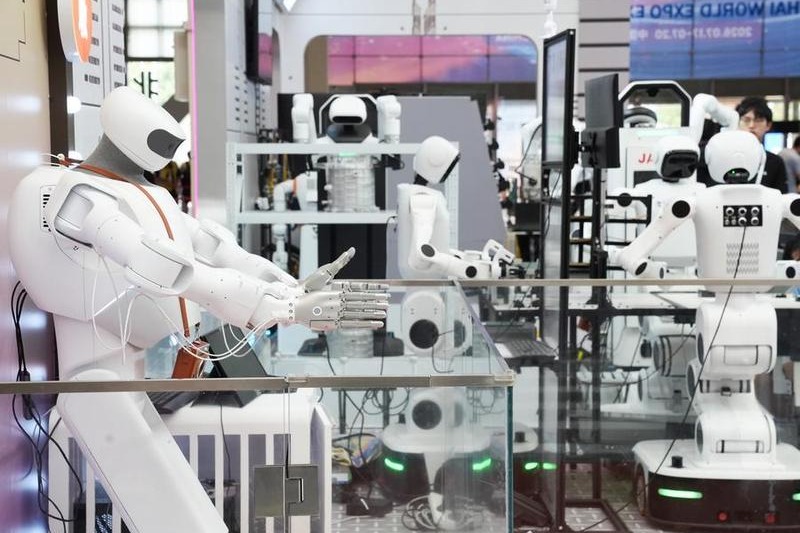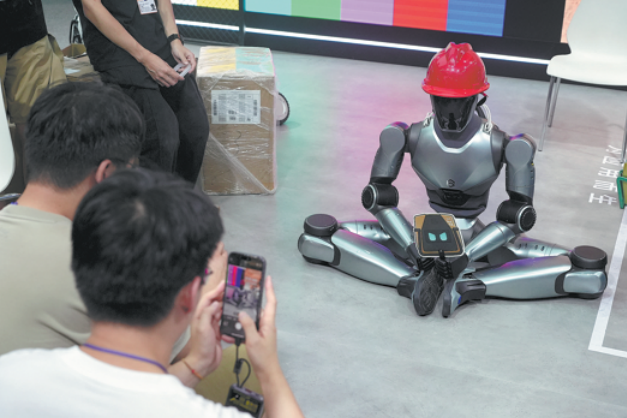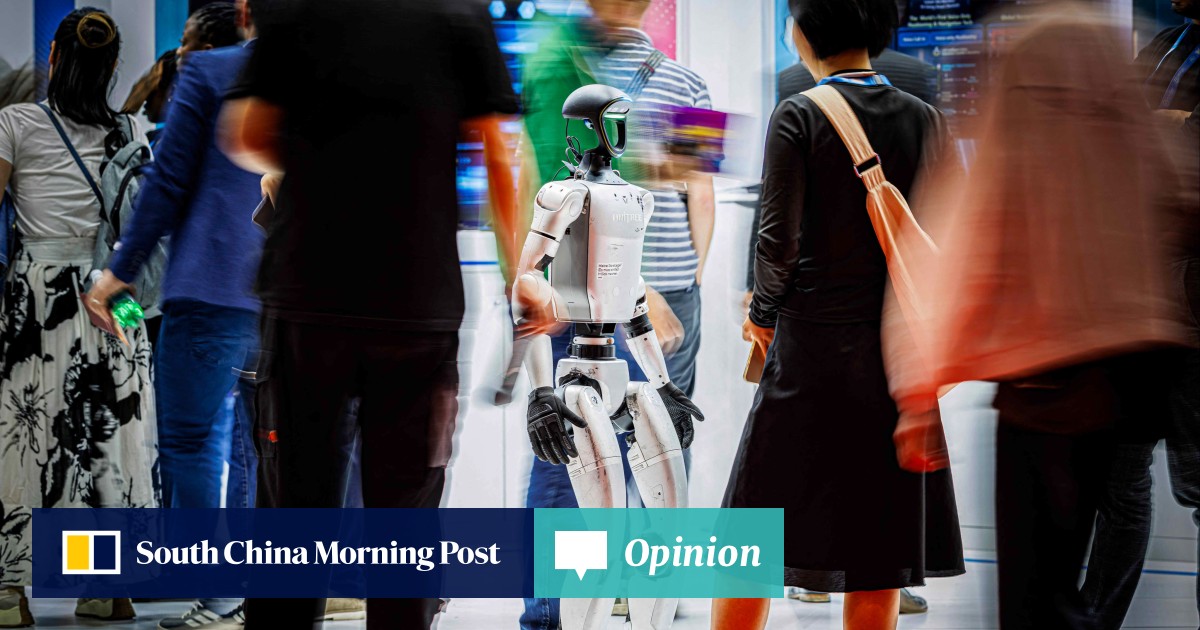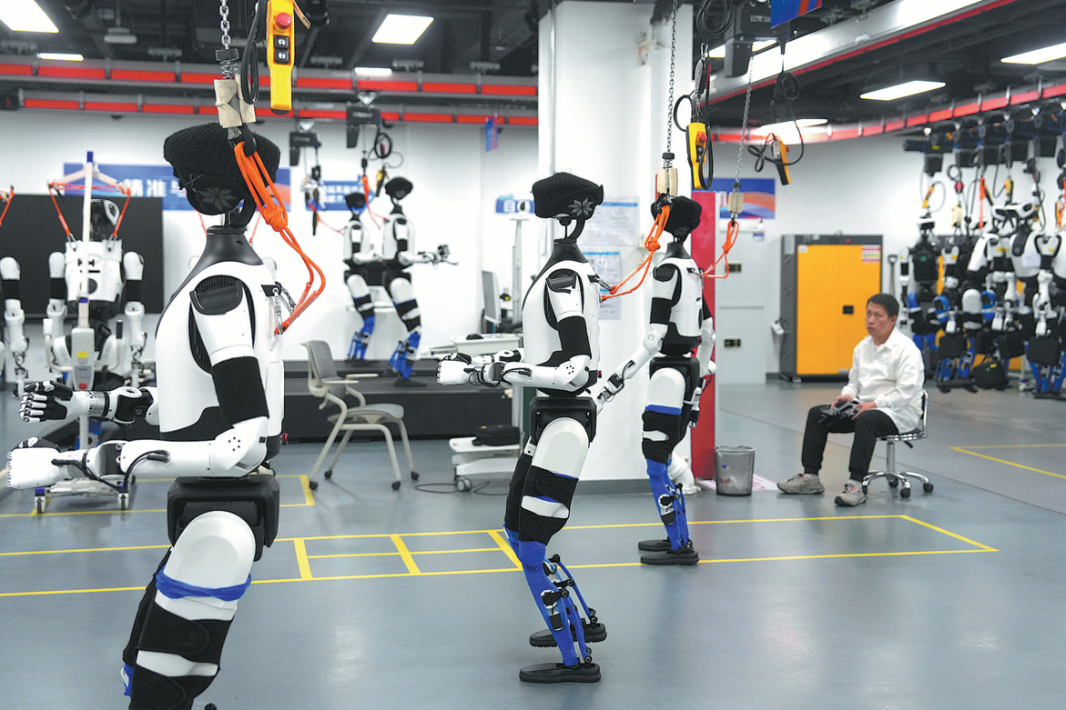
Humanoid robots are tested at the Beijing Innovation Center of Humanoid Robotics in the Beijing Economic-Technological Development Area on June 12. [HE GUANXIN/FOR CHINA DAILY]
Artificial intelligence has evolved from machine learning toward deep learning, becoming a transformative force that increasingly shapes our societies. However, this has also generated growing concerns about ethics, governance and human rights.
At the AI Impact Summit held in New Delhi, India, in February, the problems posed by the rapid deployment of AI were viewed from the perspective of the democratization of access to AI resources, which may be regarded as a new right. According to this new right, AI must have a clear social orientation directed toward basic sectors such as education, health and agriculture, and technological security must regulate those applications that pose an existential risk.
It was in this context that Secretary-General of the United Nations Antonio Guterres stated that "the future of artificial intelligence cannot be decided by a handful of countries or left to the whims of a few billionaires".
The human dimension of this debate was the focus of Magnifica Humanitas, Pope Leo XIV's first encyclical letter, which, while acknowledging that technological development has significantly improved human living conditions, notes that it has also revealed the ambiguity of tools that can cause harm when not oriented toward good.