Environment: Need for honest communication
| Photo Credit:
FilippoBacci
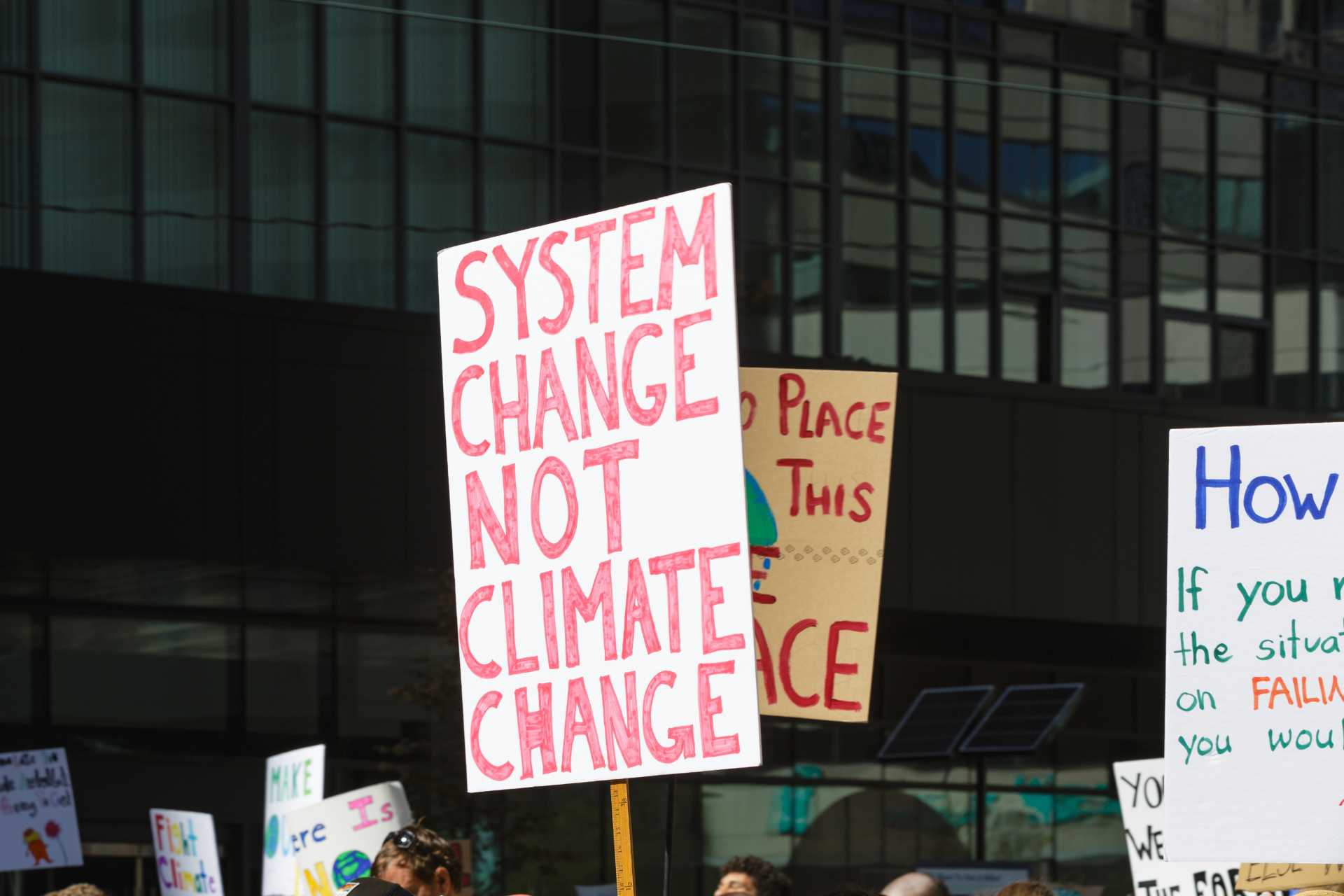
For decades, many of us grew up hearing that the Amazon rainforest was “the lungs of the Earth”. The phrase entered school textbooks, newspaper articles, television documentaries and environmental campaigns. The message was simple, memorable, and emotionally powerful: trees pump out the oxygen we breathe. Destroy the trees, and we suffocate.The narrative worked beautifully — until recently, where a growing number of articles are stating that mature forests are nearly oxygen-neutral over long periods because they consume almost as much oxygen as they produce.Similar clarifications have emerged regarding the oceans. While marine phytoplankton produce enormous quantities of oxygen, much of it is also consumed within marine ecosystems. Some scientists now remind us that the oxygen we breathe is largely a vast atmospheric reservoir accumulated over hundreds of millions of years.The dissonanceFor an informed reader, this is a beautiful refinement of scientific understanding. For an ordinary citizen, however, at best it sounds like we have done something wrong with the forests they are not adding to the reservoir and at worst a complete reversal. The reaction is predictable: “Yesterday forests were saving our breath. Today they aren’t. Why should we care about deforestation at all?, and how yesterday’s forests created the reservoir and today’s forests are failing”This is not a failure of science. It is a gap in scientific communication.The phrase “lungs of the Earth” was always a metaphor, not a scientific statement. Unfortunately, metaphors often escape their intended purpose fully and become accepted as literal facts.The problem arises when corrections eventually appear like the current oxygen neutrality of forests and oceans due to non-fossilization of forest and oceanic biomass (trees and algae), which created the oxygen surplus. What scientists consider nuance, the public may perceive as something gone wrong with nature’s phenomenon or at worst a contradiction in scientific studies..Info overloadIn an age of information overload, climate advocates often argue that simple, dramatic messages are necessary to mobilize action. Nuanced scientific caveats rarely fit into a headline or a slick social media campaign. Human beings respond to symbols far more readily than to data.But every oversimplification accumulates what might be called a trust debt and Public trust is a fragile resource.When people repeatedly encounter simplified narratives that require later revision, they don’t see “updated science”. They suspect exaggeration, or worse, manipulation. Environmental activism becomes a victim of its own marketing. Cynicism sets in, and a cynical public stops listening entirely.Ironically, forests remain utterly indispensable—not because they are giant oxygen factories, but because they are among Earth’s most sophisticated regulatory systems.Forests store immense quantities of carbon, act as massive thermal sponges that cool the land surface, generate their own rainfall patterns to sustain global agriculture, and shelter the planet’s biodiversity. These scientifically accurate arguments are far more robust than the “lungs” metaphor, yet we rarely lead with them because they require a few extra sentences of explanation. We have sacrificed precision for persuasion, and in doing so, we have made our defense of nature incredibly fragile.Intellectual honestyThe solution is not to flood citizens with dense academic jargon, but to cultivate intellectual honesty from the outset.We should stop calling forests the lungs of the Earth and start calling them what they truly are: the core of Earth’s life-support system.A life-support system such as rainforest or ocean does is far more than just supply oxygen. It stabilizes, regulates, repairs, and maintains the exact conditions that make human civilization possible and sustainable. It is a concept that is both simpler and truer.Climate communication must mature beyond dramatic, fragile metaphors. Citizens are entirely capable of understanding complexity if it is explained patiently and consistently. The ultimate objective of science communication is not merely to cause a temporary surge of panic or persuasion. It is to build a durable public understanding.In the long run, a deeply informed public is the only form of environmental activism that lasts.Bandyopadhyay is Visiting Professor and Independent Researcher, and Deverapalli is Director, National Productivity Council. Views are personalPublished on July 6, 2026