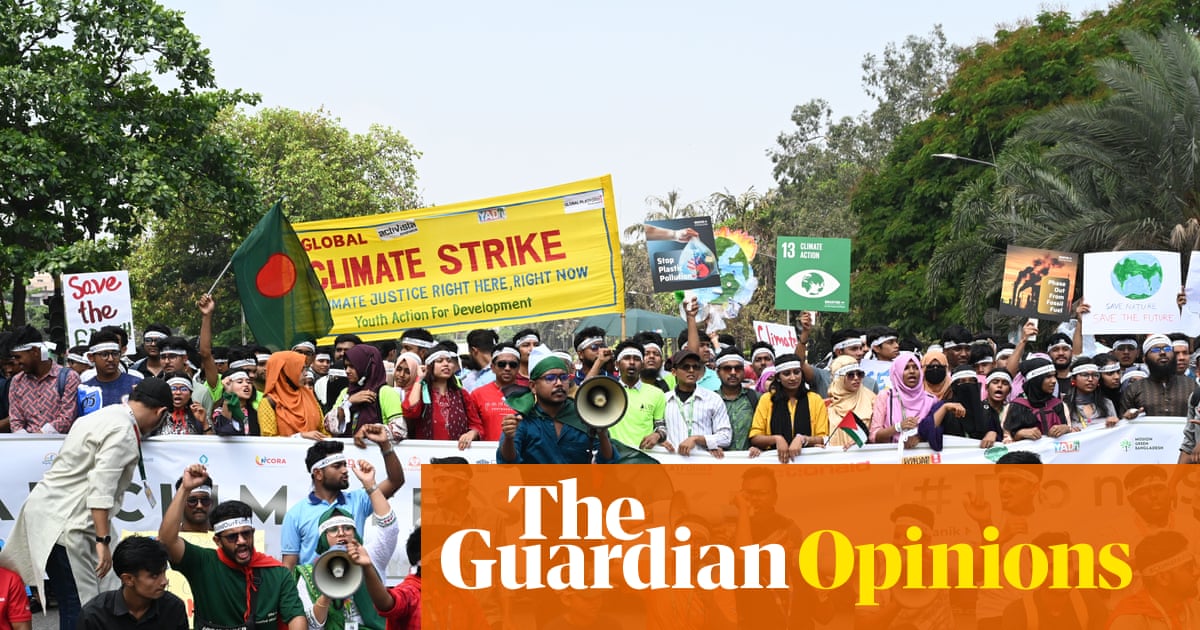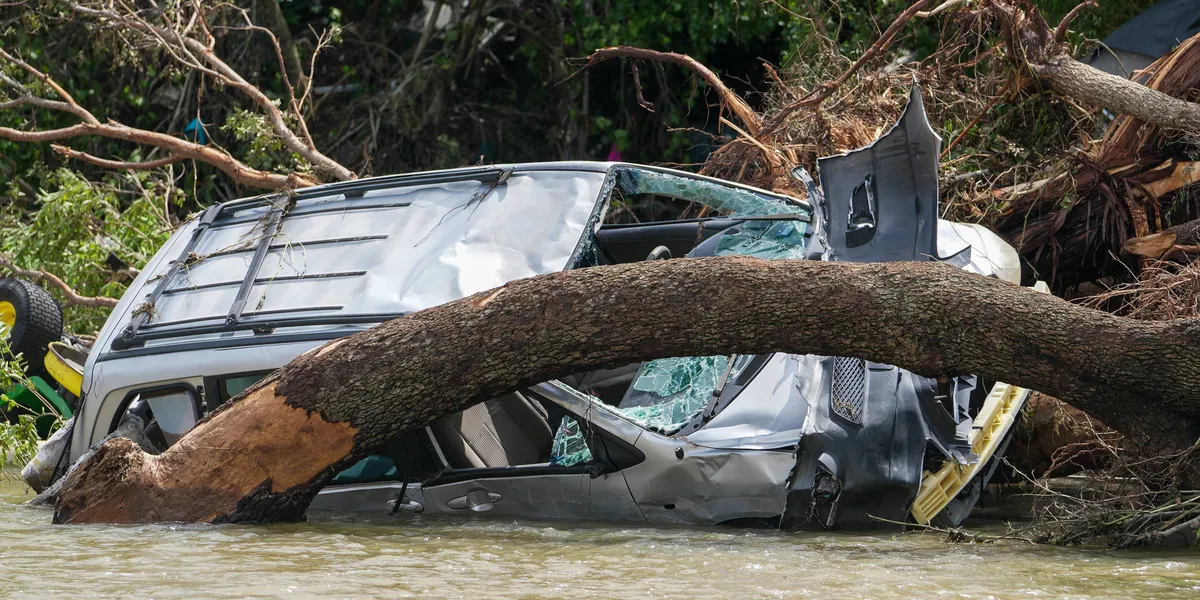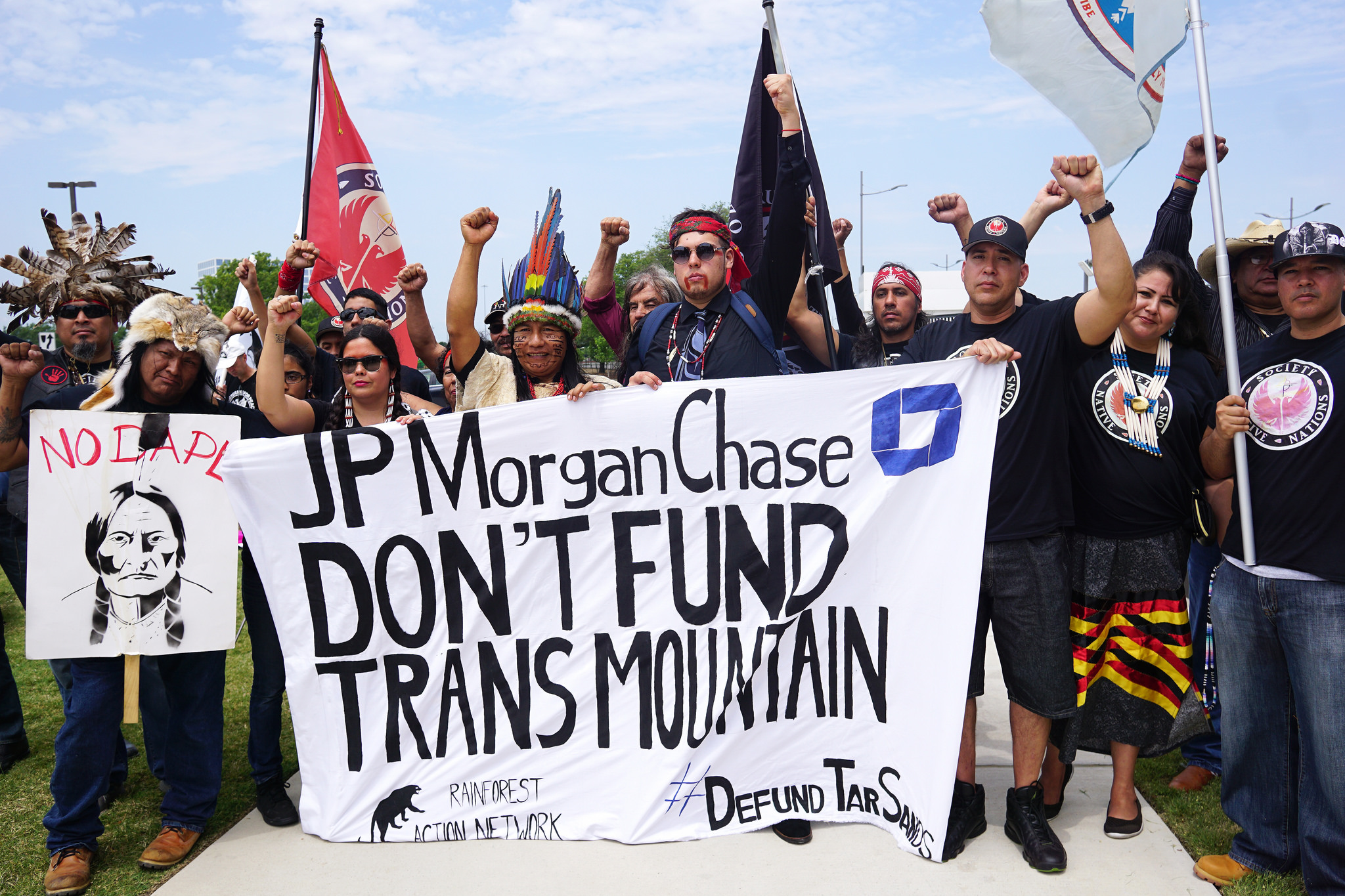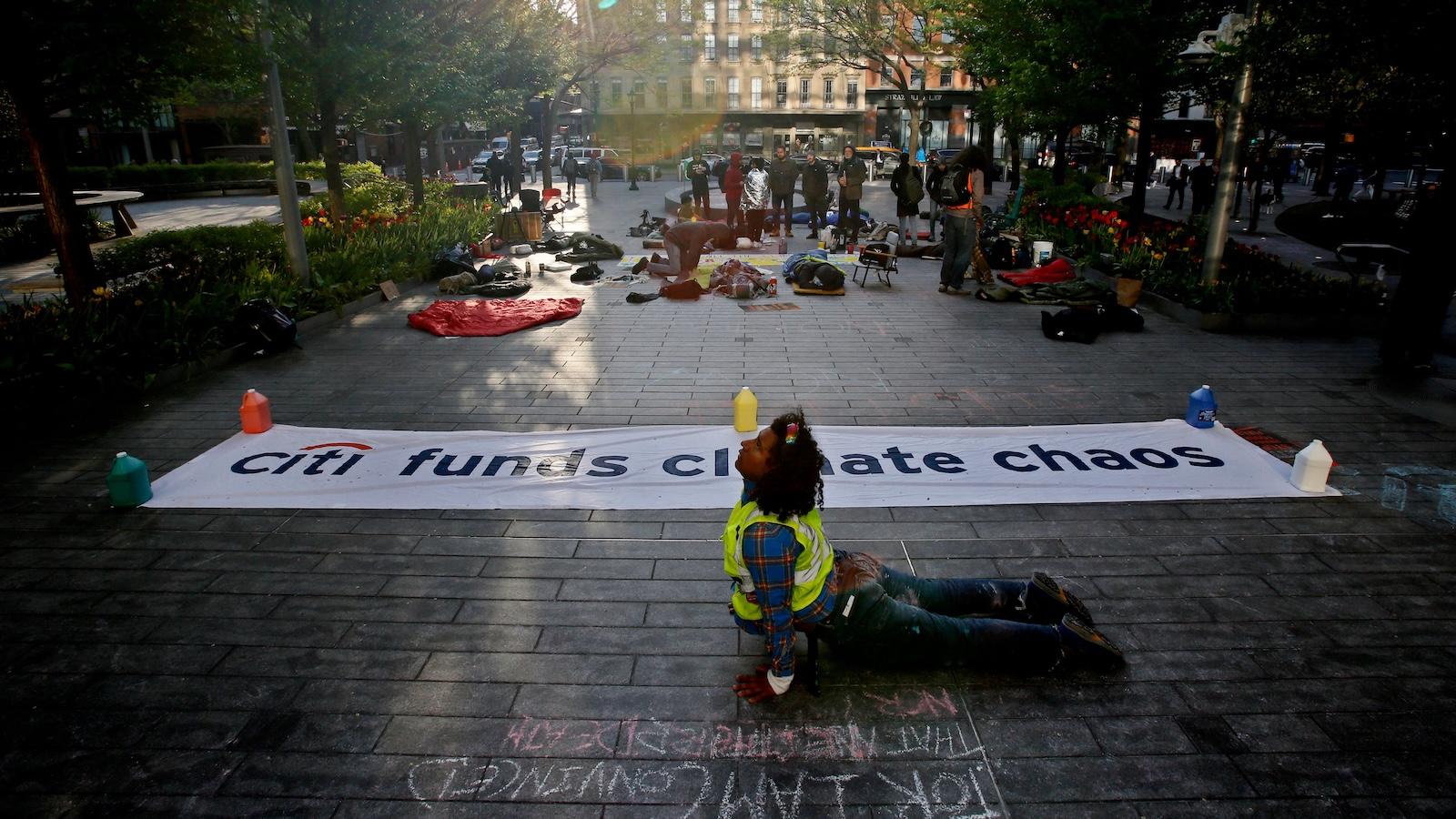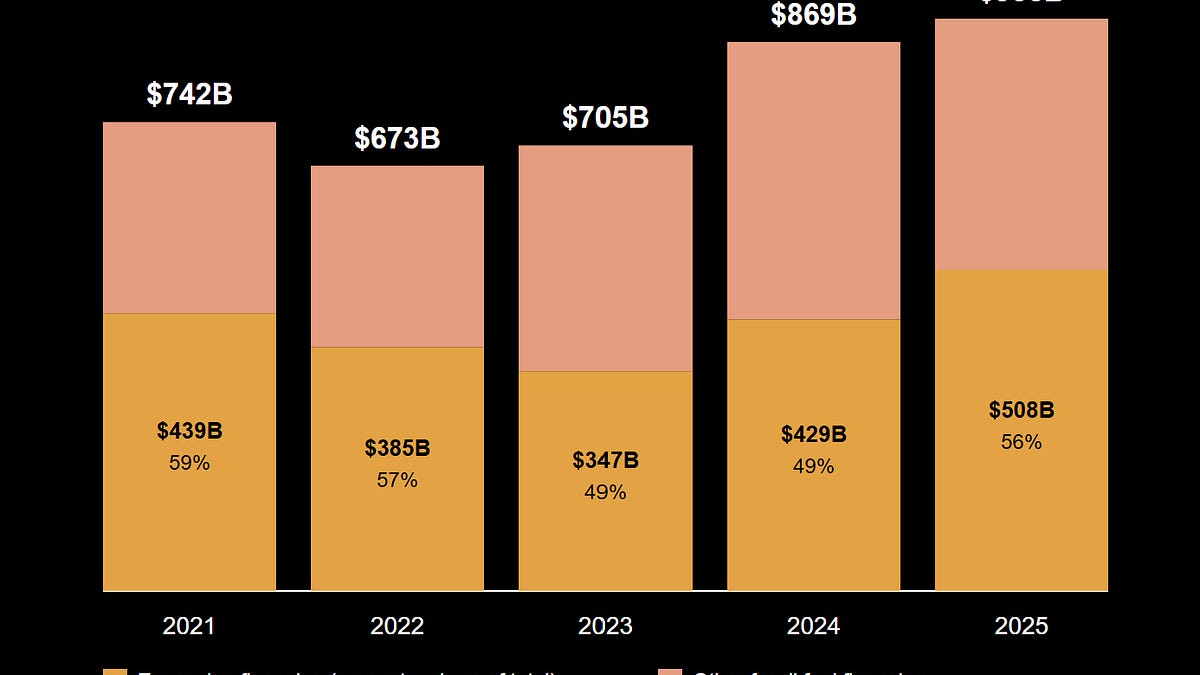
It takes time to create work that’s clear, independent, and genuinely useful. If you’ve found value in this newsletter, consider becoming a paid subscriber. It helps me dive deeper into research, reach more people, stay free from ads/hidden agendas, and supports my crippling chocolate milk addiction. We run on a “pay what you can” model—so if you believe in the mission, there’s likely a plan that fits (over here).Every subscription helps me stay independent, avoid clickbait, and focus on depth over noise, and I deeply appreciate everyone who chooses to support our cult.Help me buy chocolate milkPS – Supporting this work doesn’t have to come out of your pocket. If you read this as part of your professional development, you can use this email template to request reimbursement for your subscription.Every month, the Chocolate Milk Cult reaches over a million Builders, Investors, Policy Makers, Leaders, and more. If you’d like to meet other members of our community, please fill out this contact form here (I will never sell your data nor will I make intros w/o your explicit permission)- https://forms.gle/Pi1pGLuS1FmzXoLr6“A fire broke out backstage in a theatre. The clown came out to warn the public; they thought it was a joke and applauded. He repeated it; the acclaim was even greater. I think that’s just how the world will come to an end: to general applause from wits who believe it’s a joke.”-Soren Kierkgaard. My GOAT.Heat kills over half a million people every year, a number that is rising rapidly (up 63% since the 1990s, now averaging 546,000 annual deaths globally). In India alone, a single day of extreme heat causes an estimated 3,400 excess deaths. Europe buried 62,000 people from heat in 2024. And the Summer of 2026 seems to be breaking all records despite just starting. This article is the first of a multi-series investigation where we will look at the tech industry and its role in the climate crisis (consider it an updated version of our 2023 article on the Profiteering from Climate Change). In it, we will answer why — with all the pledges, commitments, and green marketing — the problem keeps accelerating. More specifically, we will cover how:Banks have funneled over $8.7 trillion into fossil fuels in the last 10 years — while marketing themselves as “Paris-aligned” (a farce they finally dropped recently after they had to stop pretending). This is especially given that it dwarfs the banks’ investments in renewables.Fossil fuel companies have publicly slashed their own climate pledges after posting record profits. Internal communications show decarbonization talk is PR, not strategy.Oil companies used the Ukraine-Russia war and other conflicts to price-gouge consumers. One company, Occidental Petro, saw a 721% profit increase in a single year.The revolving door between government and industry means civil servants pass favorable policy, then land cushy lobbying jobs — creating a self-reinforcing cycle. Over 90% of rainforest carbon offsets — the most popular corporate climate solution — are phantom credits that represent no real carbon reduction.Media platforms pledge to fight climate misinformation while running fossil fuel ads and branded content that launders industry reputations. This includes massive tech platforms.This article will cover each of the above in more detail.Part 2 will investigate data centers and AI’s climate impact — how much energy the AI boom actually consumes and whether the industry’s sustainability claims measure up to reality.Part 3 will follow Big Tech’s money trail to break down how Big Tech companies and their leaders are funding the climate crisis. If you want to share insights into either topic, feel free to reach out (either using my social media links at the end of this article or by replying to this email). Banks play a crucial role in the fossil fuel industry- they help finance expansions. The 17th edition of Banking on Climate Chaos (BOCC) report finds that the world’s 65 largest banks committed $906 billion to fossil fuel companies in 2025, an increase of 8% from the previous year. Since the Paris Agreement was signed a decade ago, these banks have channeled $8.7 trillion into oil, gas, and coal operations.Worst of all, we see an increase in the investments made specifically to expand existing fossil fuel developments—“The top 65 banks committed $508 billion to companies expanding fossil fuel developments in 2025 — a $108 billion increase since 2024, or roughly 27% in a single year. Expansion finance is uniquely consequential as it locks in decades of future carbon emissions, future localized pollution, future supply shocks, and future stranded-asset risk. Every dollar of new oil, gas, or coal capacity built now extends a system whose recent shocks — from Ukraine in 2022 to Iran in 2026 — have already cost households and economies dearly.”More than 50% of the money being funded is directed at expansion. This is particularly damming b/c even if we stuck to just extracting the fossil fuels already tapped, we would still go over the 1.5 °C limit.“We find that staying within a 1.5 °C carbon budget (50% probability) implies leaving almost 40% of ‘developed reserves’ of fossil fuels unextracted. The finding that developed reserves substantially exceed the 1.5 °C carbon budget is robust to a Monte Carlo analysis of reserves data limitations, carbon budget uncertainties and oil prices.”-Existing fossil fuel extraction would warm the world beyond 1.5 °CWhat about the regulation to make this happen? How are governments acting to keep this spike under control? That’s the neat thing, they aren’t. Instead, they are actively budgeting the failure in advance. According to the 2025 Production Gap Report, global governments are officially planning to produce more than double the amount of fossil fuels in 2030 than what is required to limit warming to 1.5°C. Governments plan to produce around 120% more fossil fuels in 2030 than would be consistent with limiting warming to 1.5°C, and 77% more than would be consistent with 2°C. Illustration: SEI and One Visual MindThe picture becomes even grimmer when we compare the share of money going to renewable energy with the share going into Fossil Fuels. Contrary to the marketing, the share of bank finance going to renewable energy rather than fossil fuels has little changed in six years (around 7% of their energy funds). Banks have gotten so apathetic to climate goals that they don’t even bother pretending anymore. The Net-Zero Banking Alliance quietly folded and voted to wind itself down after a mass exodus of major financial institutions, with JPMorgan becoming the last of the big six U.S. banks to walk out the door. In summary, banks contribute to the climate crisis in 3 ways: they finance fossil fuel expansion; they engage in greenwashing/token solutions instead of real solutions (such as having exclusion policies); and they haven’t increased the share of funding to renewable energy. All of this are incompatible with Climate Targets of keeping global warming under 1.5 Celsius and must be addressed if Banks actually care about hitting their goals.The briefing reveals that new oil and gas production approved to date in 2022 and at risk of approval over the next three years could cumulatively lock in 70 billion tonnes (Gt) of new carbon pollution. This is equivalent to almost two years’ worth of global carbon emissions from energy at current levels, 17 percent of the world’s remaining 1.5°C carbon budget, or the lifecycle emissions of 468 coal power plants.Investing in Disaster: Recent and Anticipated Final Investment Decisions for New Oil And Gas Production Beyond the 1.5°C LimitIf their PR is to be believed, Fossil Fuel Companies (henceforth FFCs for simplicity) are fully onboard the decarbonization and Paris-Agreement train. They will be the first to tell you how they are improving their processes, investing in alternatives, and phasing out their carbon dependency. These poor Big Oil execs can’t even use their yachts and private jets without weeping about the additional emissions. None will be happier than them when decarbonization is achieved.However (and I really need you to sit down for this), this might be a slightly distorted representation of reality. Internal communications highlight that these companies might be less excited about environmental sustainability than their public stance would imply.Perhaps those are isolated incidents, a few bad apples in an otherwise swell group of tree huggers. When we compare the intensity of the pledges of the Big 4 Oil Companies to the intensity of their actions- we see a gross mismatch. “We found a strong increase in discourse related to “climate”, “low-carbon” and “transition”, especially by BP and Shell. Similarly, we observed increasing tendencies toward strategies related to decarbonization and clean energy. But these are dominated by pledges rather than concrete actions. Moreover, the financial analysis reveals a continuing business model dependence on fossil fuels along with insignificant and opaque spending on clean energy. We thus conclude that the transition to clean energy business models is not occurring, since the magnitude of investments and actions does not match discourse. Until actions and investment behavior are brought into alignment with discourse, accusations of greenwashing appear well-founded”.These companies are lying to us so they can send neat little dividends to their shareholders. Who saw that coming?This unforeseeable, completely shocking betrayal doesn’t end here. Turns out that Oil has become so profitable for these companies that they’re walking back on their public commitments. Not just sneaking around not hitting their targets, but publicly slashing them.This might seem surprising at first- renewable energy production is increasing (especially in developed countries), so why are fossil fuels raking it in? The answer to that is in a little-known economics phenomenon known as Price Gouging. Price gouging occurs when suppliers decide to shoot up the prices of their goods/services, typically in response to a demand/supply shock. They know that people will have no choice but to pay these higher prices, so it’s an easy way to make money. Our oil dependency is a huge contributor to the recent inflation. Oil Companies capitalized on the Ukraine-Russia War to rake in record profits-One company, Occidental Petro Corp saw a 721.49% increase in profits in one year. Other FFCs didn’t have a bad year either.These revenues allow oil companies to act with a certain level of impunity. They have enough money to buy themselves out of trouble and have spent decades shaping societies to be more car and oil dependent. FFCs have shaped school syllabi to brainwash kids against climate change; engaged in media suppression (including lying to the government) about oil spills; and might have even paid hackers to target nonprofits working to uncover how much information ExxonMobil hid about their knowledge of fossil fuels and their role in climate change.The New Joint Bicameral Staff Report Reveals Big Oil’s Campaign of Climate Denial, Disinformation, and Doublespeak is a great read for a deeper look at all the ways companies have been manipulating messaging and PR ton continue pushing their agenda. For our purposes, there is one more avenue to focus on. Let’s now look into lobbying, and how FFCs have utilized lobbying to push laws in their favor. However, instead of looking at lobbying from a company perspective, let’s take look at lobbying from the perspective of civil servants. Why do they cater to the whims of these companies, even at possible personal and professional risk if they get caught? The obvious answer is money. But digging deeper actually gives us an interesting lesson in economic incentives. If nothing else, understanding how companies lobby (read- legally bribe) civil servants is very interesting. While I will be using data from the USA (just because it is more available and that’s where most of my audience is), the principles/methods are global.Of the roughly 2,200 lobbyists representing the energy sector in 2025, nearly half are former government employees (Inside Climate News / OpenSecrets). Half the industry's lobbying force walked out of government. Therefore any discussions around Climate Change will have to mention the lobbyists. Lobbying is an interesting subject. Even though lots of people know it happens, they don’t quite understand how it happens. Or comprehend the scale of it. Before we proceed, I’m going to ask a simple question. I want to note down the answer before you continue reading.If you know anything about American Politics, you know that the Clintons are a huge power-couple. Both Hillary and Bill have very established political careers, spanning decades. Here’s my question to you. How much money do you think they made giving speeches (729 speeches to be exact)?Sit with this question. Think about the number.No scrolling ahead till you have an estimate.Trust me, it’ll ruin the surprise.The answer is 153 million Dollars. No that’s not a typo.Between 2001 and 2016, the Clintons combined to make more than 153 Million USD just in paid speeches.What kind of wisdom do you think they were dropping in their speeches?The Clintons are far from the only ones. Politicians are often invited to give talks, sit on advisory boards, and get involved with industry groups in other ways. These lucrative positions are all perfectly legal ways for corporations to get the ear of politicians and influence policy decisions in their favor. This is why politics is one of the most lucrative careers in the world. If you’re curious, google the net worth of your favorite politician. It will surprise you.Let’s move from personal to professional. Aside from using highly lucrative positions to get access to politicians, companies have dedicated lobbying blocks to push their agendas. In 2025, the Oil and Gas Industry spent150 Milllion USD on lobbying. This sounds like a lot, but the ROI on this would make insider traders on Kalshi proud. The OECD’s inventory tracked over 1,700 government support measures globally, revealing that public subsidies and financial support to fossil-fuel producers and consumers hit $916.3 billion. So you, the random public grunt, pay in 3 places: you pay for their subsidies, you pay for their overcharged fuel (where they will actively try to eliminate alternatives), and you will also pay to deal with climate change. Isn’t this an inspring vision for the future. The other huge mechanism that companies use to influence politicians is campaign financing. People often overlook how expensive running a political campaign can be. When I was 14, I got to see a very hotly contested election from the front lines (I was observing the campaign of one of the contestants). I was too young to have any truly meaningful observations for you, but it is an extremely intensive endeavor (my first day, we started at 8 and ended at 2 AM). Money can swing the outcome of the election, as more money enables better campaign visibility and the capacity to drown out your opponent's narrative. FFCs are very active donors to the campaigns of various politicians-Most talk about Lobbying ends here. However, there is another kind of lobbying that is overlooked b/c it isn’t as flashy. But it is equally effective (it might even be more so). Funding politicians is a top-down approach, that can be useful for leverage. However, this needs to be complemented with a more bottom-up, boots on the ground approach to be truly effective. Allow me to introduce you to the concept of a revolving door.Let’s say you were a civil servant (politician, government employee, social worker etc.) working in the Oil and Gas sector. You see that you’re not as well-paid as you’d like to be. But you also don’t want to accept bribes. So, what do you do? Simple, you do your Oil Bros a solid and pass along policy/approve actions that make their lives easier. Do this for a few years and by the end you end up with an excellent job offer as a lobbyist for these FFCs. Now you get to live the good life, something your old colleagues in the public sector will see. Now they will start to follow suit, hoping to emulate your success. We have just created a culture where civil servants come in, enable policy to help corporate interests, and end up with cush jobs as lobbyists. That, my loves, is a revolving door.This can also work in reverse. Sometimes senior corporate people can end up transitioning to the government to influence policy. A high-profile example is Jerome Powell, head of the Federal Reserve, who was formerly an investment banker. He’s not the only one. The relationship between Blackrock and the US Government is also well known-These hires often come with expectations to ‘manage relationships’ (push favorable policy through). What a splendid example of Public-Private Partnerships!!!While researching corporate lobbying and the revolving door, I came across several interesting conspiracy theories regarding them. I want to keep this focused on the facts, but if you’re bored, they can make for an interesting read. For now, let’s move on to the last 2 sections of this article. We will now be covering the wacky world of (faux) green solutions.Remember how we talked greenwashing and how efforts taken by banks were inadequate. Time to get into that in more details-Among the most common solutions used by companies is to rely on carbon credits. The idea is straightforward: if companies plant enough trees to suck away 1 Ton of Carbon, then they have reduced their emissions by 1 Ton. In principle, this is a great idea. However, this comes with a huge loophole. Instead of planting more trees- companies just buy plots of forests and claim that as their reforestation efforts. Often these plots of forest land are very remote and were never going to be cut down in the first place. They buy these for peanuts and continue polluting, while patting themselves for being eco-friendly. God bless corporate doublespeak.The research into Verra, the world’s leading carbon standard for the rapidly growing $2bn (£1.6bn) voluntary offsets market, has found that, based on analysis of a significant percentage of the projects, more than 90% of their rainforest offset credits — among the most commonly used by companies — are likely to be “phantom credits” and do not represent genuine carbon reductions.- Revealed: more than 90% of rainforest carbon offsets by biggest certifier are worthless, analysis showsTo those of you that like videos, this one is a great look at how Net Zero became completely worthless.It seems like the Climate Tech/investing space is filled with such worthless ideas. Electric Cars, Monorails, and hyperloops are all touted as revolutionary ideas that will solve the climate issue. Much like FTX and Crypto, this is largely the result of VC funded Billion Dollar Hype Machines working overtime to present these as the future. Unfortunately, they face plant magnificently when introduced to reality. I don’t have the time to go into each of these in-depth, but the YouTuber AdamSomething has great videos on these topics and I highly recommend his channel here.Another favorite of companies is using vaguely defined terms to mislead “conscious consumers”. Companies love throwing tags like ‘sustainably made’ and ‘fair trade’ and charging you higher prices. Here’s a secret- these don’t mean anything. Often these terms have no legal definitions, and companies throw these on without really changing anything. There’s a good chance you’re losing all those extra dollars without even voting with your wallet.Unfortunately, even more established/proven solutions (turbines, solar cells, and lithium batteries) come with issues in the materials they rely on. These materials are toxic, mined through human labor exploitation, and can destroy the ecosystems around them. The following research paper is a good look at these issues and their solutions-However, there are critical sustainability issues connected to the production of wind turbines, solar photovoltaic modules, electric vehicles and lithium-ion batteries. These include the use of conflict minerals, toxicity, and finite availability or supply chain governance risks of rare earth elements, cobalt, and lithium, that need to be taken into consideration. “Conflict minerals” refer to tantalum, tin, tungsten and gold, and their current mining is frequently linked to human rights violations and the financing of violent conflicts.Critical sustainability issues in the production of wind and solar electricity generation as well as storage facilities and possible solutionsFor a more human/personal look at these issues- the following article by the Guardian is a great look at how destructive lithium mining can destroy local communities and biodiversity-In the mining installations, which occupy more than 78 sq km (30 sq miles) and are operated by multinationals SQM and Albemarle, brine is pumped to the surface and arrayed in evaporation ponds resulting in a lithium-rich concentrate; viewed from above, the pools are shades of chartreuse. The entire process uses enormous quantities of water in an already parched environment. As a result, freshwater is less accessible to the 18 indigenous Atacameño communities that live on the flat’s perimeter, and the habitats of species such as Andean flamingoes have been disrupted. This situation is exacerbated by climate breakdown-induced drought and the effects of extracting and processing copper, of which Chile is the world’s top producer. Compounding these environmental harms, the Chilean state has not always enforced indigenous people’s right to prior consent.- The rush to ‘go electric’ comes with a hidden cost: destructive lithium miningI don’t bring up these issues to discredit solar/wind power. On the contrary I believe that renewables will be the future (although I’m a huge believer in Nuclear Energy in the short-medium term). However, to fully leverage the potential of renewables, we can’t ignore major problems with them. We need to look at both their strengths and weaknesses, without agenda or bias and make informed decisions. Too much discourse around this issue either lionizes renewable energy or demonizes their problems. Neither is particularly helpful.Speaking of agenda free analysis, let us look at the bastions of bias-free information- media platforms (including Social Media). What role has the media played in climate exploitation?Media is considered one of the pillars of a healthy democracy. Ideally, the media serves to hold the powerful accountable and inform the regular folk about important ideas/developments. Information is power, and media helps level the playing field between the haves and have nots. That’s how it’s supposed to work. The reality is slightly different.There are several media organizations doing great investigations/pieces on climate change (a very special shoutout to the writers of The Guardian). But the for-profit model often creates conflict of interests. Notable media organizations often have a platform for Branded Content- which is just a nice way to say fluff pieces. People can come to these platforms and pay for publicity (a trick used to gain a lot of social proof). FFCs often use these to spread their agenda. Notable media organizations have a long history of reputation-laundering for fossil fuel companies. Below is an example by the Washington Post.These companies also must compete with Cat videos, Facebook, YouTube, Netflix, and edutainment behemoth AI Made Simple for your attention. Thus, they often rely on polarizing content, clickbait, and outrage to keep your attention. With topics as contentious as climate change and fossil fuels, this leads to muddied water and misinformation- preventing meaningful action.It’s not only for-profit news organizations that are spreading the fossil fuel industry’s misinformation. If you listen to NPR podcasts, there’s a good chance that you’ve heard ExxonMobil touting the miraculous benefits of carbon capture, a technology that strips heat-trapping carbon dioxide molecules from smokestacks and other emissions sources. ExxonMobil’s ad, which has run on the Invisibilia, Up First, and Throughline podcasts, directs you to its website, which asserts that carbon capture technology could remove 90 percent of the greenhouse gas emissions from power plants, a claim wildly out of step with current or projected performance of the technology.Is Your Favorite News Source Shilling for Big Oil?This also extends to social media. Even though all social media companies have committed to fighting climate misinformation, they are happy to take oil money to spread the agenda. The article, Climate Misinformation on Social Media Is Undermining Climate Action, has great information on this.This creates an interesting conflict- media platforms both act as a place where essential information about climate change is shared, and where misinformation runs rampant. And unfortunately, the clickbait/sensationalized versions tend to be more attention grabbing, attracting most of the attention.When combined with Oil Industries’ deep pockets, much of what gets propagated is noise. And unless it stops being profitable for these platforms to run the propaganda, it’s not likely that they will stop.After 100+ reports, talks, and documents, the conclusion I couldn’t escape is this: none of what we covered is a knowledge problem. The banks know — they’ve read the same carbon-budget math we just walked through and committed $508 billion to expansion anyway. Governments know — the Production Gap Report is built from their own published production plans. Verra knew. The platforms cashing the ad checks know. Every actor in this article is responding rationally to their incentives. Which means the fixes are incentive fixes, not awareness campaigns:Banks need exclusion policies, not alliances. A binding “no financing for new fossil expansion” rule would have stopped $508 billion last year. The NZBA’s quiet death showed exactly what voluntary pledges are worth.Governments need to stop paying for the fire. End the roughly $900 billion in annual producer and consumer subsidies, and close the revolving door with multi-year cooling-off periods for officials who regulated the industries hiring them.Offsets need hard verification or they don’t count. When 90% of rainforest credits are phantom, the burden of proof belongs on the credit, not the critic.Media platforms need ad transparency. Disclose fossil fuel ad revenue, label branded content as the advertising it is, and apply misinformation policies to the industry that pioneered climate misinformation.You and I can’t pass any of these. What we can do is reject the framing that this is about your straws and your showers — a framing BP’s ad agency built when it popularized the “personal carbon footprint.” Individual action counts where it aggregates into pressure: what you vote for, what you push your city to build, and which green claims you refuse to let slide.Kierkegaard’s clown had it easier than we do. His audience simply didn’t believe him. Ours believes the fire is real — the people applauding loudest are the ones selling tickets. That’s the through-line of everything above, and it’s one sentence long: the climate crisis is not being ignored. It is being financed. $906 billion last year, growing 8% a year, with subsidies, lobbying, and branded content as the scaffolding.Part 2 takes this lens to the industry I actually cover. Every hyperscaler building the AI boom has a net-zero pledge that predates the buildout. We’re going to check whether tech’s climate math is any better than the banks’. Early spoiler: the pledges are aging badly.I put a lot of work into writing this newsletter. To do so, I rely on you for support. If a few more people choose to become paid subscribers, the Chocolate Milk Cult can continue to provide high-quality and accessible education and opportunities to anyone who needs it. If you think this mission is worth contributing to, please consider a premium subscription. You can do so for less than the cost of a Netflix Subscription (pay what you want here).If you liked this article and wish to share it, please refer to the following guidelines.ShareUse the links below to check out my other content, learn more about tutoring, reach out to me about projects, or just to say hi.Small Snippets about Tech, AI and Machine Learning over hereAI Newsletter- https://artificialintelligencemadesimple.substack.com/My grandma’s favorite Tech Newsletter- https://codinginterviewsmadesimple.substack.com/My (imaginary) sister’s favorite MLOps Podcast-https://machine-learning-made-simple.medium.com/My YouTube: https://www.youtube.com/@ChocolateMilkCultLeader/Reach out to me on LinkedIn. Let’s connect: https://www.linkedin.com/in/devansh-devansh-516004168/My Instagram: https://www.instagram.com/iseethings404/My Twitter: https://twitter.com/Machine01776819
How Big Banks (and their Friends) Fund the Climate Crisis
How fossil-fuel financing, lobbying, greenwashing, and weak regulation keep climate action stuck.
4,575 words~21 min read