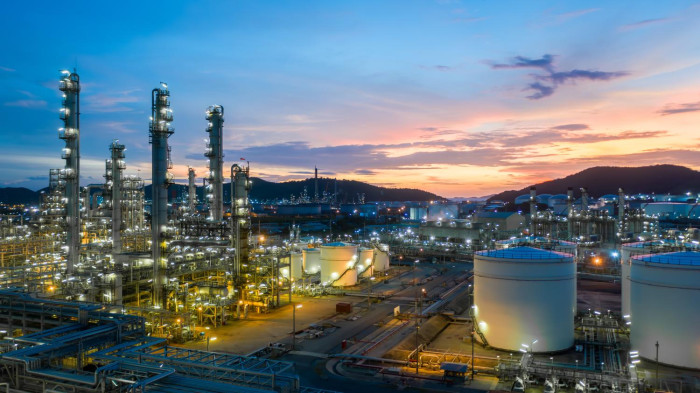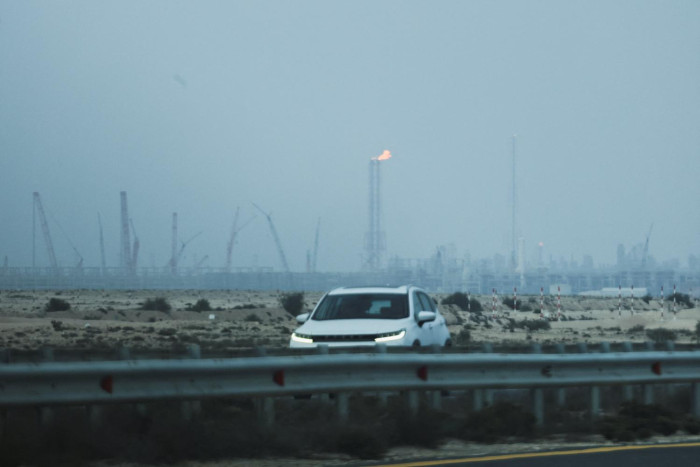
A car passes near QatarEnergy's liquefied natural gas production facilities, amid the US-Israeli conflict with Iran, in Ras Laffan Industrial City, Qatar. Reuters
Thailand's automotive industry and supply chain may continue to feel the strain of conflicts in the Middle East despite peace negotiations, says Omoda & Jaecoo (Thailand) Co, a subsidiary of Chinese state-owned electric vehicle (EV) maker Chery Automobile.The prospect of Washington and Tehran fully halting hostilities remains uncertain, fuelling concerns over a drawn-out conflict.
Such instability is expected to exacerbate semiconductor scarcity and push global prices higher, said Cedric Cui, president of Omoda & Jaecoo (Thailand).
The war has already disrupted critical resources. Attacks on Qatar's Ras Laffan facility earlier this year knocked out nearly one-third of the world's helium supply, a key input for semiconductor production, according to media reports. The shortage threatens chipmakers that support Thailand's automotive industry.
Although a 14-point memorandum of understanding between the US and Iran was announced on June 17 to pave the way for peace, both sides quickly accused each other of violating the interim ceasefire.