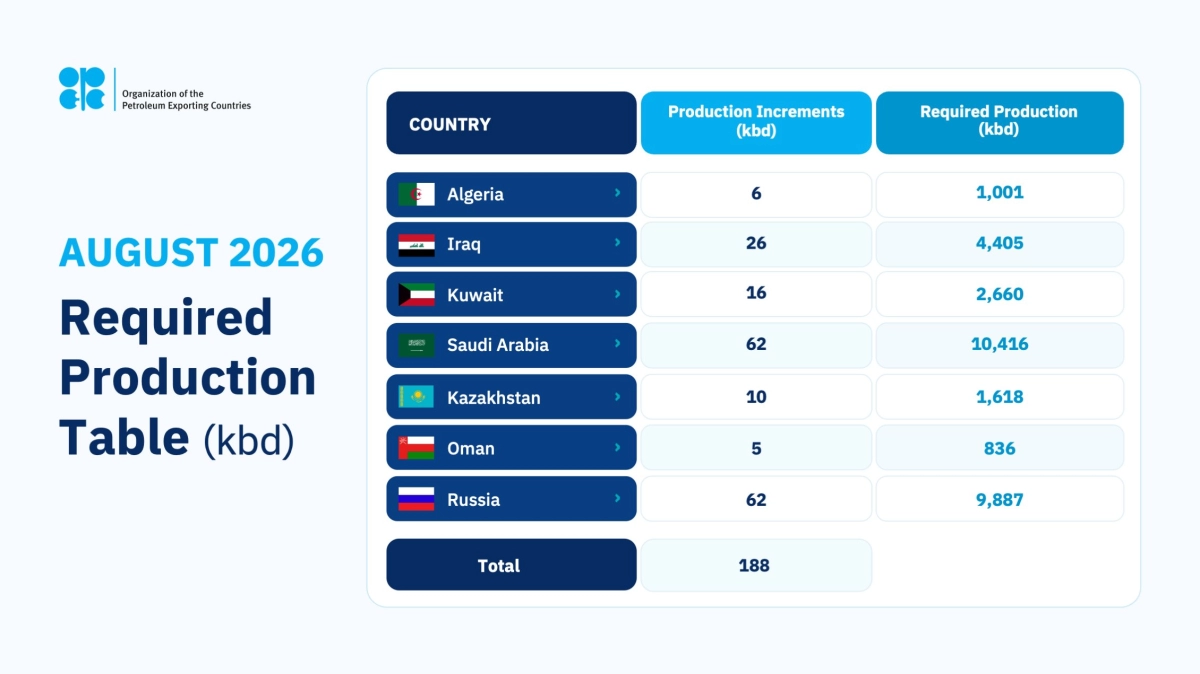
OPEC+ just agreed to pump more oil. Again. The group approved an additional 188,000 barrels per day starting in August 2026, bringing cumulative quota increases since the start of the US-Iran conflict to 940,000 barrels per day. That’s roughly 1% of total global oil demand, which sounds small until you remember that oil markets move on margins measured in fractions of a percent.
The decision came out of a virtual meeting on July 5, with Saudi Arabia and Russia among the key members signing off. It continues a pattern of monthly quota hikes that started back in May 2026, with individual adjustments ranging from 188,000 to 411,000 barrels per day across that stretch.
More quotas, same bottleneck
Here’s the thing. There’s a meaningful gap between what OPEC+ says it will produce and what it can actually get to market. The Strait of Hormuz, through which a massive share of global oil flows, remains constrained by geopolitical tensions tied to the ongoing US-Iran conflict. Writing bigger numbers on a whiteboard doesn’t move more tankers through a contested shipping lane.
This means the 940,000 bpd figure is more of a ceiling than a forecast. Actual production increases have been muted relative to the quota changes, and that distinction matters enormously for anyone trying to price oil-linked assets or gauge downstream energy costs.