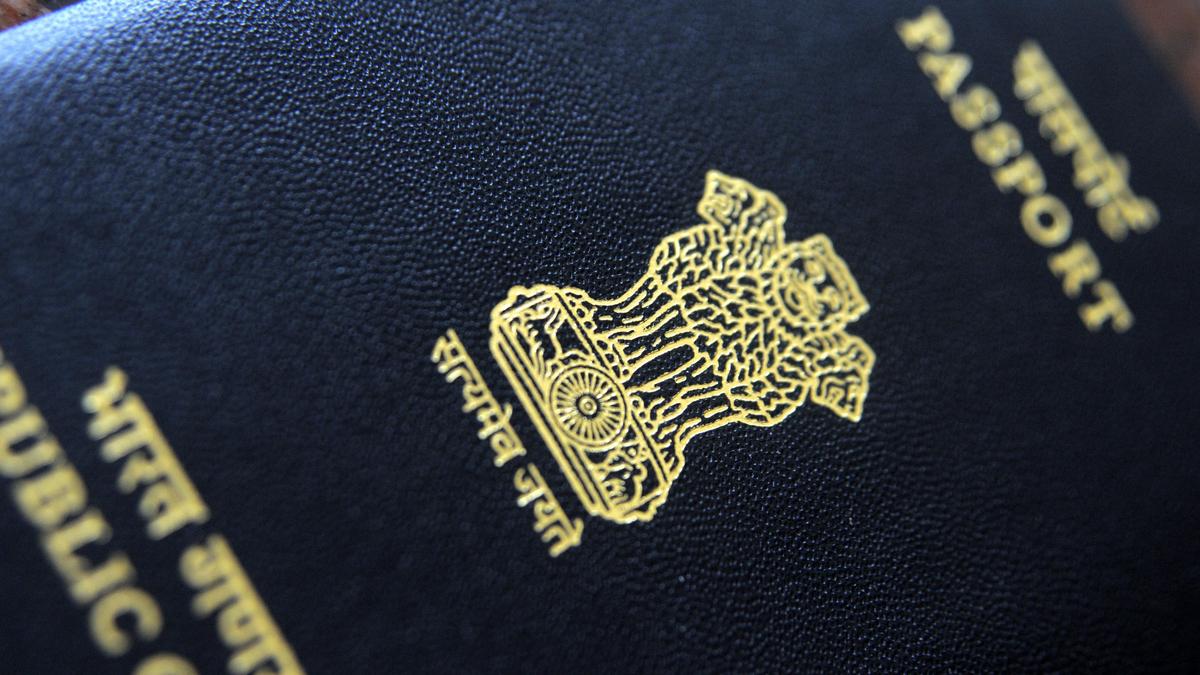
On June 24, 2026, a member of India’s Ministry of External Affairs (MEA) released a startling statement. The Indian passport, the person said, is a “travel document” and not a “citizenship document”. The assertion set off a minor storm. The reasonable question that followed from many was if the passport would not do it, what document would?Posed this way, the MEA’s statement and the questions it raises become something of a red herring. A passport can only be issued to a non-citizen in exceptional circumstances, where the Government of India is of the opinion that it is necessary to do so in “public interest”. Surely, therefore, barring those cases where this power is exercised, a passport must be seen as conclusive proof of a person’s citizenship.No doubt, it might be open for the government to establish under law that a person obtained the document by concealing the true status of his or her citizenship. But that does not mean a passport can be dismissed as merely a travel document.Citizenship under scrutinyThe MEA’s statement takes on an ominous heft when set against the milieu in which it was made. It arrives in the middle of the Election Commission of India (ECI)’s Special Intensive Revision (SIR) of electoral rolls in various States. It also comes in the wake of a pair of pronouncements by the Supreme Court of India, most recently on the validity of the SIR in Bihar and the ECI’s power to scrutinise citizenship, and, before that, on the Assam Accord, in which the Court had much to say on how it conceives republican ideas of citizenship. Moreover, since an amendment to the Citizenship Act in 2019 (made operational in 2024), rules of naturalisation have been rewritten along religious lines. Taken together, all these developments must prompt us to ask an elementary question: what does it mean to be a citizen of India, who belongs, and on what terms?The Constitution’s answers to these questions, even if some find them indecisive, were reached with some amount of care and caution. Part II to the document, comprising Articles 5 to 11, settled the citizenship of those caught amidst the tragedies of Partition. Article 11 reserved to Parliament a seemingly plenary power to legislate and “make any provision with respect to the acquisition and termination of citizenship and all other matters relating to citizenship”.On a plain and literal reading, it might seem like the Union legislature was accorded unlimited authority to determine what factors can govern citizenship. Indeed, much of the contemporary defence of religiously founded citizenship laws has rested on such an interpretation. But a careful construal of the Constituent Assembly debates, as Gautam Bhatia has shown, suggests that the framers did not treat citizenship as a matter on which Parliament could do as it pleased.The foundations of citizenshipConsider, for example, an amendment moved to the draft provisions of the Constitution by P.S. Deshmukh. He sought to include an express stipulation “that every person who is a Hindu or a Sikh by religion and is not a citizen of any other State, wherever he resides shall be entitled to be a citizen of India”. The effort was met with sharp resistance. Among those opposing the move was Jawaharlal Nehru, who rejected the amendment outright, finding it “absurd on the face of it”.Alladi Krishnaswami Ayyar provided the most forthright response to it. He argued that India was plighted to the principles of a secular state. Therefore, there was simply no question of making a distinction between one kind of person and another on any “racial or religious” ground. Ultimately, Deshmukh’s proposal was defeated, and B.R. Ambedkar’s neutral citizenship clause was affirmed.Thus, freestanding as the words in Article 11 might be, they must be understood in the context of their wider framing. They have in them an implied limitation drawn from the Constitution’s most cherished and foundational commitments to secularism, equality, and non-discrimination. Parliament can decide the modalities of citizenship, but it cannot make religion a condition for entry.At its conception, India adopted the principle of jus soli, that is a form of citizenship predicated on residence and birth. The Citizenship Act, 1955, saw the principle as its primary governing creed. But over time, the legislature moved away from the theory. First, in 1985, Section 6A was introduced into the Act to give effect to the Assam Accord, suspending the conferment of citizenship based on the dates on which people of “Indian origin” had come into India. Second, in 2003, the statute was further amended to deny citizenship to persons born in India even when only one of the parents of such person was an “illegal migrant”.In upholding Section 6A, the Supreme Court in October 2024, appeared to fortify two principles. It effectively saw no implied limitation in Article 11 and instead viewed the grant of power to Parliament to be virtually unlimited. It also appeared to lend constitutional respectability to an idea first promulgated by it in Sarbananda Sonowal vs Union Of India & Anr. (2005), that migration into Assam constituted “external aggression” against the State.This rationale carried into its judgment in Association for Democratic Reforms vs Union of India, delivered in May this year, where the Court upheld the SIR exercise in Bihar, holding that the ECI may enquire into a person’s citizenship, for the “limited” purpose of deciding eligibility for the electoral roll. The Court described the distinction it drew as “principled”, between an adjudication on citizenship and on the administrative satisfaction concerning the continuation of a person’s name on the electoral roll. Where the ECI is not satisfied with a person’s assertion of citizenship, it ought simply to refer the case to the “competent authority” under the Citizenship Act.But we have been down this road before. In Assam, during an earlier revision, voters marked “doubtful” were despatched to foreigners’ tribunals and consigned to an endless bureaucratic maze to establish their citizenship. Today, therefore, we have ourselves a machinery in which a person need not be declared as a foreigner to be stripped of their basic rights. Instead, they are placed in a vacuum, neither confirmed nor cleared, with their rights being held in indefinite suspension.Against this backdrop the MEA’s clarification appears menacing. Running through all these exercises to establish citizenship is a common thread over the burden of proof. Where a resident could once rely on the state to take their citizenship as given, the onus today has been quietly shifted onto them. Almost any document adduced is seen as inadequate evidence. The Aadhaar card, we are told, is proof only of residence; the voter ID, only of prior registration; and now the passport, only of a right to travel.The primacy of personhoodUnder the Constitution, many of our basic privileges are premised on personhood. Article 14 guarantees equality before the law to “any person”, and Article 21 the right to life and personal liberty to all. Citizenship is built on this foundation. It allows one the freedoms guaranteed under Article 19, to speech and expression, to carry on any trade or business, and to assemble peacefully. And it is the status of citizenship that guarantees one the statutory right to vote, to choose one’s lawmakers, and to decide how one ought to be governed. Therefore, to be cast out of the position is to forfeit what Hannah Arendt called the right to have rights.In a constitutional order where personhood comes first, the rules that determine who qualifies as a citizen must rest on more than the accident of paperwork. They must be built on what the Constitution most cherishes, on the equal dignity of every person and the right of each to equal protection of the law.Suhrith Parthasarathy is an advocate practising in the Madras High Court
The right to belong beyond official documentation
In a constitutional order where personhood comes first, the rules that determine who qualifies as a citizen must rest on more than the accident of paperwork
1,287 words~6 min read