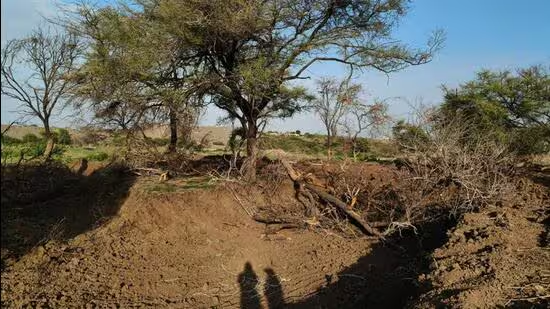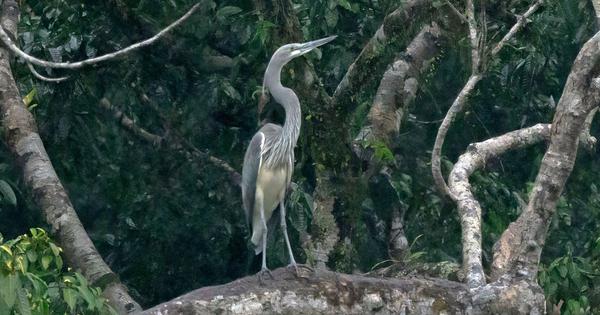
The environment minister’s Forest Advisory Committee has granted “in principle” approval to a hydropower project in a region of Arunachal Pradesh that is inhabited by the white bellied heron, a critically endangered bird whose species number was estimated to be less than 60, globally, in 2015. To compensate for the forest loss resulting from the project, the Forest Advisory Committee approved afforestation thousands of kilometres away, in Madhya Pradesh, a decision experts termed futile for the bird’s conservation.The Forest Advisory Committee, a statutory body under the environment ministry which evaluates project proposals on forest land, gave its approval to the Kalai II hydroelectric power plant in a meeting on May 8.The 1,200-megawatt run-of-the river dam is planned on the Lohit river, a tributary of the Brahmaputra, in the border district of Anjaw. The river’s catchment area is flanked by tropical wet and dense mixed forest types and sits in the Eastern Himalaya biodiversity hotspot. A total of 33,338 trees are proposed to be felled within this landscape for the dam.
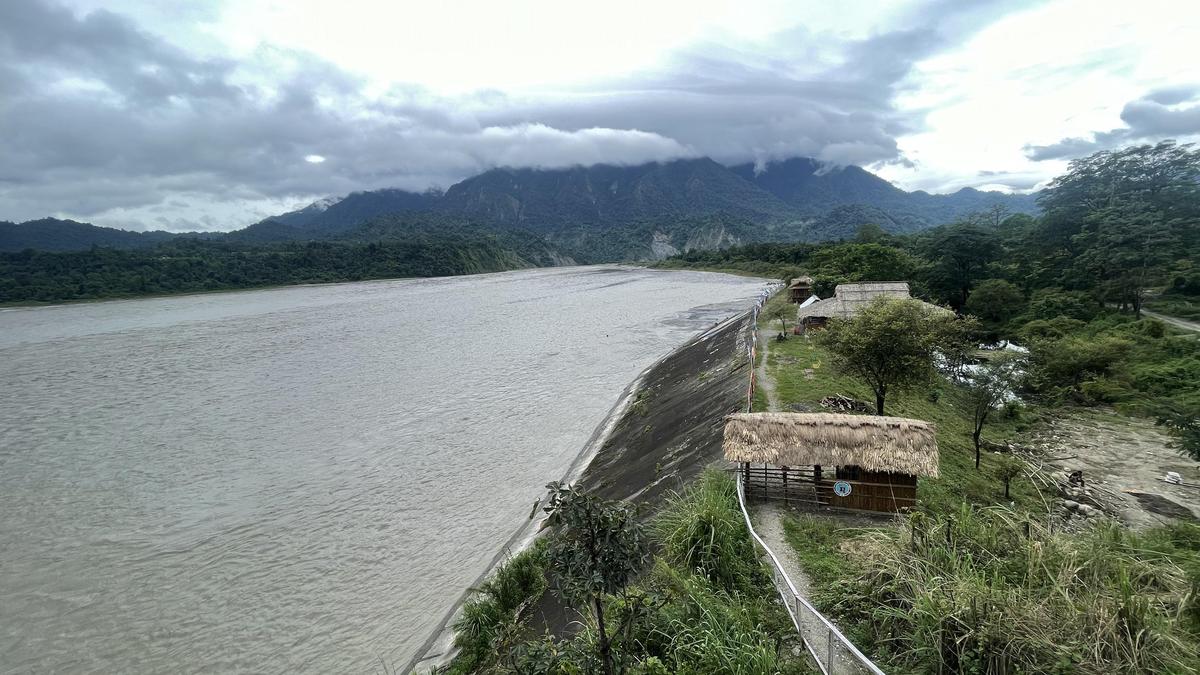
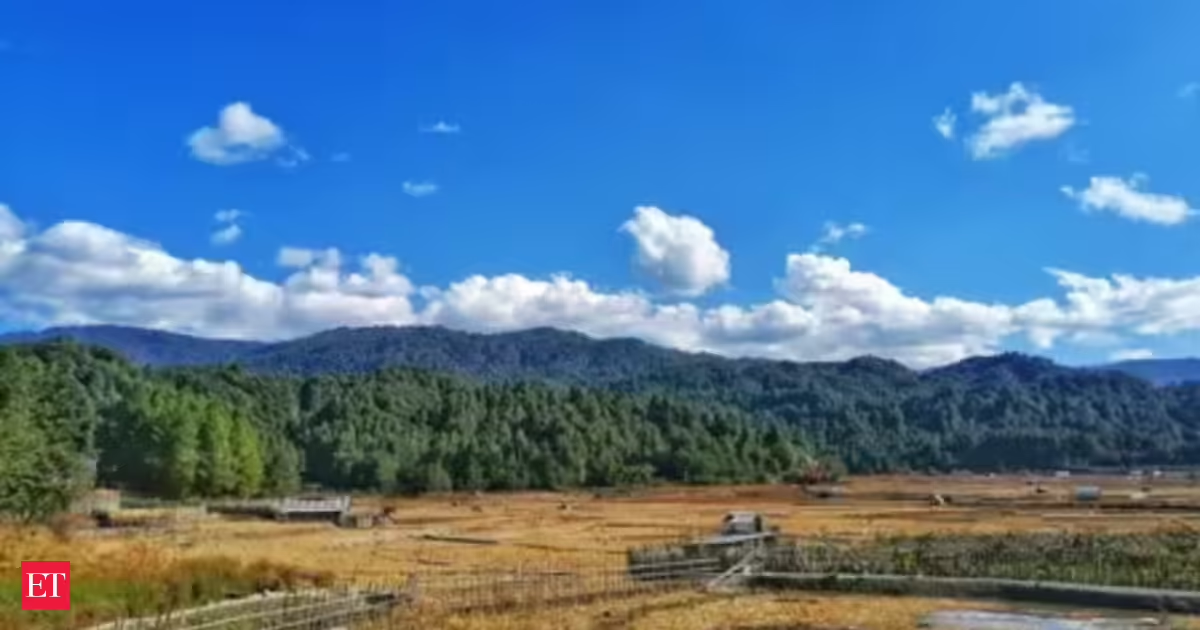
Lohit river in Arunachal Pradesh. Credit: Kanishk2811, CC BY-SA 4.0, via Wikimedia CommonsIn its meeting, the Forest Advisory Committee noted that the white-bellied heron was absent in the list of important species that could be impacted by the project, and granted its approval on the condition that the Wildlife Institute of India vet the project’s Wildlife Management Plan.The Forest Advisory Committee insisted that the assessment put a special emphasis on conserving the bird’s habitat. However, conservation experts say that the hydropower project is likely to cause major disruptions to the species’ survival in India. Approximately six to nine individuals are estimated to exist in Arunachal Pradesh.“The white-bellied heron needs clear, shallow, and fast flowing river streams to fish. They wait for the fish to come, and unlike other herons, they don’t move around too much. Their inability to adapt to changing habitats comes down to this foraging behaviour,” explained Yumlam Benjamin Bida, a project manager at ATREE who has studied the bird. “Fish is their only form of nutrition, and if there is any disturbance, it will reduce their energy intake drastically,” he added.Environmental impact assessmentThe white-bellied heron is listed in the first schedule of the Wildlife Protection Act, granting it the strictest protections under the law. While it was never found in abundance, its distribution and population have shrunk sharply in recent decades.In the early 1900s, the bird was found across Nepal, Sikkim, Arunachal Pradesh, Bangladesh, and Myanmar. Today, it is found only in parts of Arunachal Pradesh, Myanmar, and Bhutan, in regions that are relatively undisturbed by [development]. “The white bellied heron is an indicator species of a pristine habitat,” said Bida. Significantly, the bird found no mention in the Environmental Impact Assessment for the Kalai II project.The dam is being developed by THDC Limited with the state government, and the Environmental Impact Assessment report was prepared by WAPCOS, a consultancy firm under the ownership of the Ministry of Jal Shakti. In the Forest Advisory Committee’s minutes, a state official said it wasn’t included because the bird was not recorded at the project site. Conservationists have found its presence 50 kilometres upstream along the Lohit river, in Walong.