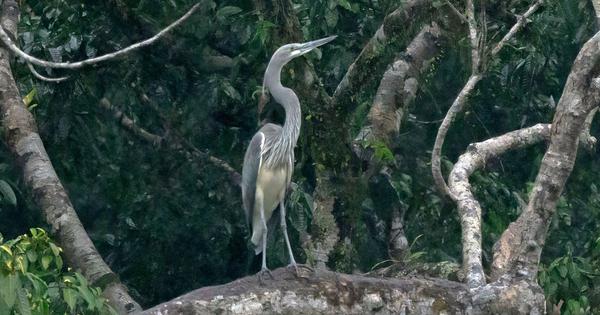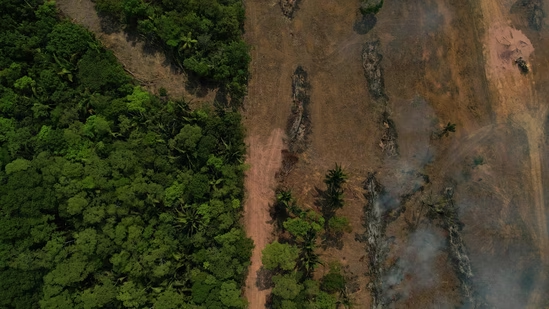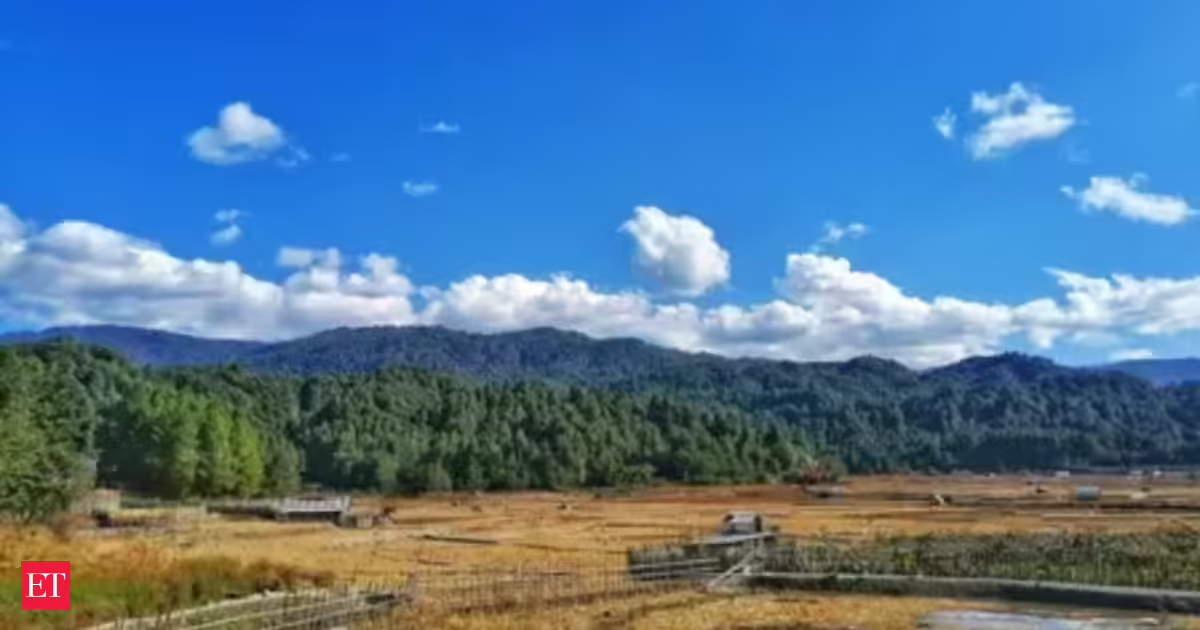
New Delhi: The Environment Ministry's forest advisory committee (FAC) has given in-principle approval for diverting more than 860 hectares of forest land for constructing the 1,200 MW Kalai-II hydroelectric project on the Lohit river in Arunachal Pradesh.The project will require cutting 33,338 trees -- 16,848 trees in Namsai Forest Division and 16,490 in Anjaw Forest Division. Also, critically endangered white-bellied heron is found in the forest landscape of the project area, according to the minutes of the FAC meeting held on May 8.While the state government's nodal office told the committee that the heron species is not spotted in the area, the FAC recommended that the Wildlife Institute of India (WII), Dehradun, should vet/review the project's wildlife management plan.Also read | Global growth to weaken, India stands out with strongest growth prospect: WEF surveyThis will ensure "landscape-level ecological coherence and consistency with mitigation measures prescribed for downstream projects", the FAC said.The FAC added that the plan should include a special emphasis on conserving the white-bellied heron's habitat.Other important wildlife such as Hoolock gibbon, leopard, deer, capped langur, and Assamese macaque are also found in and around the project area.Also read | Insolvency recoveries nearly halve in FY26 due to rising delays: ReportDuring the meeting, the FAC recommended granting Stage-I (in-principle) approval for diverting forest land for the project.The Stage-I clearance stipulates conditions, including compensatory afforestation, which must be fulfilled before Stage-II formal diversion approval can be granted.
Environment Ministry's advisory panel gives nod for forest diversion to build Kalai-II hydel project in Arunachal
The Environment Ministry's forest advisory committee has given the green light for the Kalai-II hydroelectric project in Arunachal Pradesh, which will result in the clearance of over 860 hectares of forest land. This development comes at a cost, as it entails the destruction of more than 33,000 trees.
237 words~1 min read