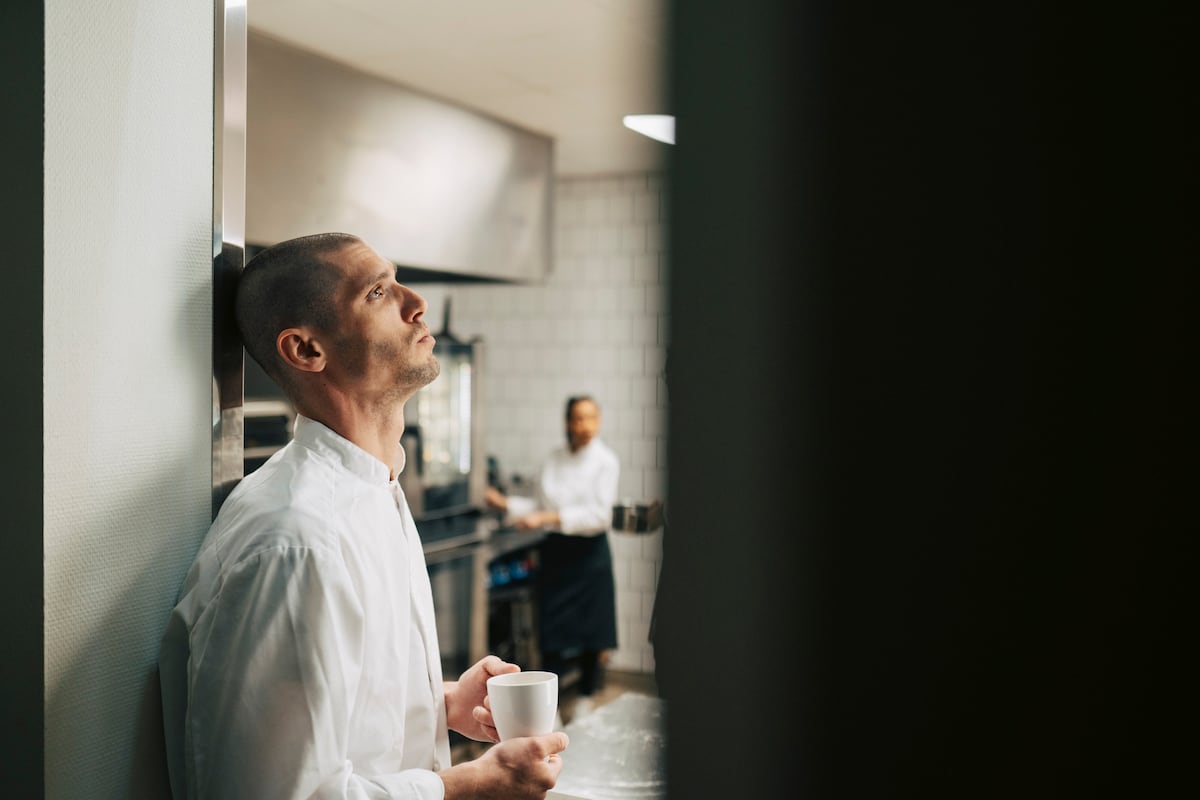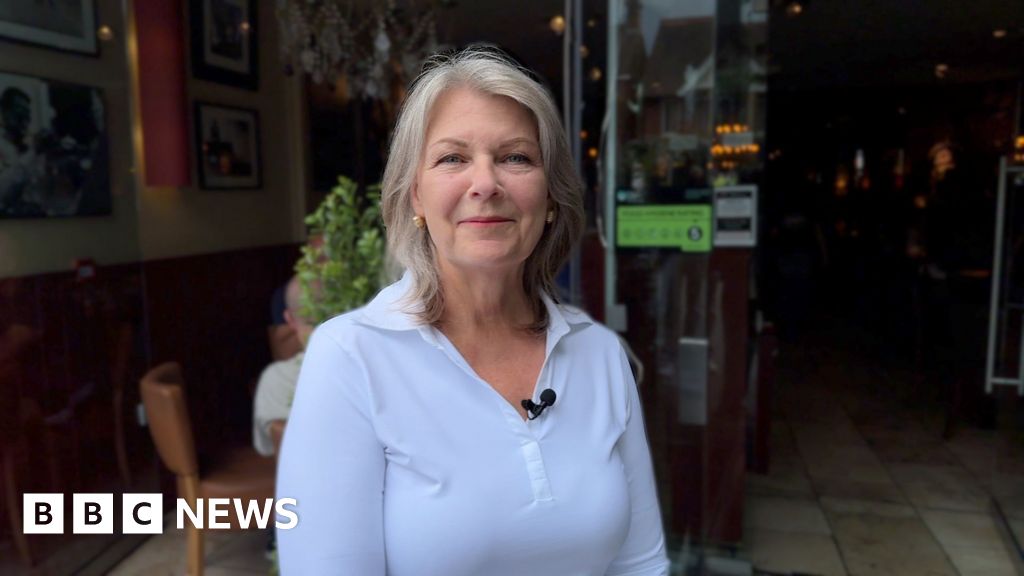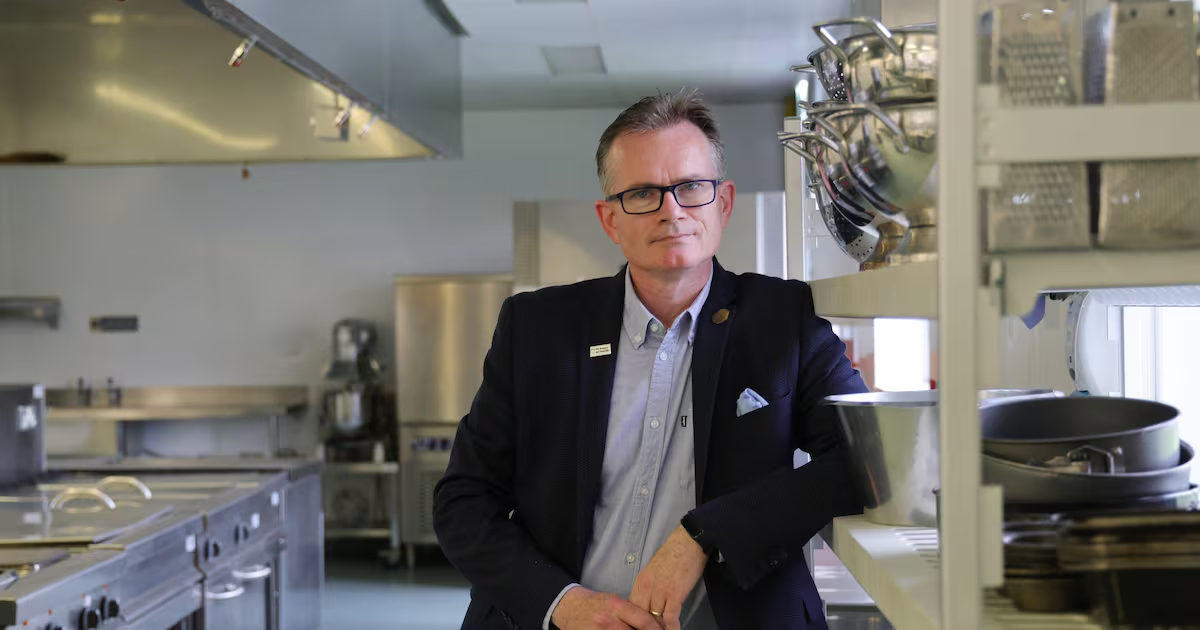
Academic Deirdre Curran recalls a summer long ago when she went to the US on a student visa and worked in a busy bistro. “I was the worst waitress in the place,” she says.Curran, who lectures on management at University of Galway, was “100 years younger” back then. Decades later, however, she retains an interest in what goes on behind the scenes when food is served in restaurants and hotel dining rooms.In recent research on work conditions in that world, she found “disconcertingly high” numbers of people being treated badly and “unacceptable levels” of bad behaviour.The survey, titled The Lived Experience of Hospitality Workers in Ireland: A 2025 Snapshot, looked at 736 workers – 220 of the respondents worked in five- and four-star hotels, 24 were chefs or cooks in managerial roles and 37 were chefs or cooks non-managerial roles.Although 72 per cent agreed or strongly agreed they were treated with dignity and respect, many did not. “That’s actually an improvement because I did a similar project in 2021 and it was worse,” Curran says.Her report was stark, stating: “A large proportion of respondents report ill-treatment, bullying and harassment – witnessed or experienced: 53 per cent of respondents stated that they had witnessed bullying or harassment in the previous two years.“Of these, 40 per cent of respondents stated that they witnessed verbal abuse while 17 per cent stated that they had witnessed psychological abuse. Of the 38 per cent who stated they had experienced bullying or harassment, the most common forms reported were verbal abuse (41 per cent), psychological abuse (22 per cent) and racial abuse (9 per cent).”Restaurant kitchens can be volatile, with top-end places even more so. Food and decor must be excellent, but chefs and cooks work in conditions that are often cramped and dimly lit – and heat blasts like a furnace. Time is short, tempers too. Turbulent chefs – unsavoury creatures who leave staff with a sense of dread and foreboding – may be a cultural cliche, but they’re out there. “There have been problems over the years but it’s not every kitchen and it’s not all high-end kitchens,” says Alan Fitzmaurice, president of the Panel of Chefs of Ireland, a two-time member of the national team at the Culinary Olympics and now head chef at The Glasshouse hotel in Sligo.Alan Fitzmaurice, head chef at The Glasshouse, has had challenging times in the kitchen. Photograph: Bryan O’Brien/The Irish Times “I remember being roared at,” he says of his junior days in other establishments. “I remember having a silver salver thrown at me,” he adds, describing an ornamental tray used for serving food.“I remember one of those being thrown at me and it was thrown at me to hit me. It wasn’t kind of like ‘I’m mad and I’m throwing it against the wall’ – ‘I’m mad and I’m throwing it at you’, you know. A big difference.”Stories of nasty behaviour in kitchens are nothing new, although they vary considerably by degree. In April, the acclaimed Danish chef René Redzepi, founder of the world-renowned Noma restaurant in Copenhagen, stepped down after the New York Times reported accusations he inflicted physical and psychological violence on staff for years. Still, Redzepi has since declared plans to return as “creative director” of Noma with a focus on long-term projects.The late writer and chef Anthony Bourdain, author of classic memoir Kitchen Confidential, once described gastronomy as the science of pain. This might not be very inspiring as you tuck into a romantic meal with your beloved, but Bourdain’s vivid descriptions of the crazed, hothouse underworld of the restaurant scene made him a global celebrity.“Professional cooks belong to a secret society whose ancient rituals derive from the principles of stoicism in the face of humiliation, injury, fatigue, and the threat of illness,” he wrote.“The members of a tight, well-greased kitchen staff are a lot like a submarine crew. Confined for most of their waking hours in hot, airless spaces, and ruled by despotic leaders, they often acquire the characteristics of the poor saps who were press-ganged into the royal navies of Napoleonic times – superstition, a contempt for outsiders, and a loyalty to no flag but their own.”[ Working conditions in hospitality ‘improving, but not by enough,’ study findsOpens in new window ]If Michelin stars are the ultimate status symbol, a veteran Irish hotelier says the pursuit of such garlands is demanding to the point that it doesn’t make sense. “Madness,” he says.“There’s no return on it, absolutely zero. It’s a dream project but commercially it makes no sense at all. Most guys who get a Michelin star – getting it is one thing, trying to hold on to it is another. The level of investment in both people and premises totally outweighs what you’ll get in revenue.”Pressure inevitably follows. “If you lose it, it’s like if you had two stars and you went to one. I mean, they perceive it as being a complete disaster,” says Fitzmaurice.This can lead to serious problems, with a lack of staff delegation that only adds to the intensity as food is prepared to exacting standards. “You have that one goal in these Michelin star places and, you know, this is where the frustrations boil over,” Fitzmaurice says.Richard (not his real name), an accomplished chef in his early 30s, recalls a shattering moment with a big-name head chef when he was starting work in high-end dining rooms in Dublin and around the country.As he walked in the door he was given a little kick in the assWorking in a swish city restaurant, he came to know a young kitchen porter who carried out basic food preparation. One morning the porter was asked to split delicate pea shoots in a particular way. But he found this task difficult, accidentally breaking some of the peas, meaning they could not be used in what was supposed to be an expensive signature dish that day. This, according to Richard, triggered a fiery response from the boss.“He laid into this guy,” says Richard, going on to describe a walk-in fridge often seen in professional kitchens. “Basically he was told to go into the fridge and a get a new box of these peas – and as he walked in the door he was given a little kick in the ass and the door was shut behind him and they locked the door.”The porter, a South American student new to Dublin, was trapped inside for 15 minutes “with a group of the senior chefs standing outside the door laughing and jeering”. When the chef finally opened the door, he threw his arm around the terrified worker: “Now you won’t make that mistake again.” The moment stayed with Richard, who declined offers of work under the same chef but went on to cook successfully in several high-level restaurants. Although he speaks warmly of colleagues in that high-octane world, the fridge incident was a prelude to brutish behaviour he himself suffered in another Dublin establishment.After opening his own regional restaurant pitched at a level below the Michelin market, Richard felt the need a couple of years ago to sharpen his fine-dining skills. This led to a miserable spell in a ritzy city place, where an aggressive head chef singled him out repeatedly with accusations that he was off the pace. It was a humiliating experience, eventually prompting him to quit before dinner service finished one night. “I cried my eyes out.”On the night of the first dinner service with a new menu, Richard was working on starters but was directed to work faster. “I can remember clearly it was an oyster dish. He walked over to me, grabbed my arms and pulled me from the section and he said: ‘Am I going to have to f**king do this for you?’”Worse followed the next day when he was badgered during busy lunch service – and again at dinner. “We had just started. We were on our second table and the abuse started then, shouting across the kitchen at me about the speed – not the standard – of the food. At this point I’m told to get off the section and he puts another chef on to that section,” he says.[ Food Food and drink festivals: 21 of the best across Ireland this yearOpens in new window ]Richard was moved to the kitchen pass, where the head chef brings together the complete dish on the plate to be handed to waiting staff. “I was told: ‘You move when I f**king tell you to move.’”All this while the chef, a man in his 50s, made sexually suggestive remarks to young female waiting staff about the shape of certain vegetables.“I tried to use my own initiative passing him sauces or various utensils, to which at one point he proceeded to tell me not to move my f**king hands unless I’m spoken to.”Deciding he’d had enough, Richard replied that he would not accept such treatment. “I basically started wrapping up my knife bag,” he says, noting the head chef’s dismissive response: “Oh you’re going to leave are you?”He was still gathering his equipment when the chef confronted him directly. “He grabbed me by the collar of my chef jacket or the strap of my apron and pulled me towards him and said: ‘If you want to work here you need to learn to do things this way.’ To which my reply was: ‘No, thank you.’”Some colleagues quietly uttered words of encouragement but none stood up for him publicly. As Richard describes it, this was a culture of “respect through fear” of the chef’s toxic attitude. “These people would roll over and die for him, but they were so afraid.”Similar strains can prevail in hotel kitchens, where five-star properties charge a premium for fine food, fancy tablecloths and extensive wine lists.Marian (not her real name), a trainee in her 40s, describes a difficult period working recently under an intimidating hotel chef who would not refer to her by name with colleagues: “Get her to do this. Get her to do that.” She also faced antagonism from a different senior chef, who confronted her aggressively over the way she was cutting bread because five-star hotel sandwiches should be cut to a particular measurement. “No, that’s not the way you f**king do it. You do it this way,” she was told.“He put me on another task and he put his two fingers to his eyes and went to me: ‘I’m watching you.’ Excuse me, I said. Please don’t speak to me like that.”Marian soon left that job but it was a bruising experience. “It was like I had been mugged.” Deirdre Curran, lecturer in management at University of Galway. Photograph: Bryan O’Brien/The Irish Times Curran describes “closed conversations” in the industry. “You can have very quiet periods followed by very intense periods so there’s a lot of characteristics of hospitality that make it a particularly challenging environment in terms of the employment relationship,” she says.Anonymised comments from survey respondents – which Curran provided to The Irish Times – set out why they would not report bullying and harassment.“Because nobody would care enough and nothing would be done about it anyways. I reported bullying behaviour from a manager to HR once and they told me I was lying,” one said. Another said it was “normal”. For others it was a cultural problem: “Everyone knows it’s happening and is turning a blind eye.” Some cited a tendency to “suck it up and move on” or that it was “normal”.However, such concerns contribute to difficulties engaging and keeping kitchen staff.“I have interviewed around 25 working chefs and former working chefs and almost everybody had problems with retention or recruitment,” Kevin Ward, a Technological University of The Shannon lecturer on hospitality who was a hotel chef for decades. “They had problems hiring them and when they could hire them they couldn’t keep them.”Kevin Ward says there is 'a stoic type of attitude' in the industry. Photograph: Bryan O’Brien/The Irish Times Ward goes on to cite concerns over long working hours, pay and conditions and people talking about kitchen work in “40-degree heat in the summer”.What about abusive behaviour? “It does come up. I have had interviewees talking about going into work while they were sick and it’s not that they’ve been asked to go to work, they just feel that they have to. It’s that culture of sacrifice. A few of the well-known authors on the subject talk about a fellowship of sacrifice. It’s almost an idea that suffering is viewed as a necessary means of elite chefs meeting their true potential.”Is this the elite chef or those around them? “It’s both,” Ward says. “There is this idea of suffering it well – it is a stoic type of attitude where you suck it up, you don’t complain, you just get on with it. It creates a kind of a hard-nosed person and I was probably that kind of person as well.”Ward says this is part of a phenomenon he calls “institutionalised isomorphism”, which he describes as a combination of forces leading people in a particular industry to act and behave in a similar way. Kitchen structures reflect military culture, he says. “You get extreme discipline and nobody questions the instructions of the head chef. The head is the general.”Fitzmaurice cites similar concerns. “We want it to be better, not just because it looks good for us, but because we want longevity out of our staff,” he says.Alan Fitzmaurice recently attended a kitchen leader programme with industry colleagues. Photograph: Bryan O’Brien/The Irish Times “It would have been perceived as being the more you were able to work, the more burns you had on your arms, the more cuts you had on your fingers, the better a chef you were, the more hours you could do. You know, if you could outwork people, then you were perceived as better, as opposed to giving them quality,” he says.“They have to give themselves the permission to take the time off and go away because it actually makes a better industry.”He recently attended a kitchen leader programme with industry colleagues, saying “it probably dropped more stuff into us psychologically than we would like to admit”. “I think every one of them would have admitted that it helped them to be a little bit calmer, a little bit easier to approach, and, yes, give yourself the permission to take that time and pass on to do the delegation.”For her part, Curran says she has been “accused of ruining the industry” by highlighting ill-treatment. “But my argument is always, if we have evidence, we can have an evidence-based conversation and we can have a constructive conversation towards positive change,” she says.“That’s the motive – and what I find with hospitality workers is they know what’s wrong and they know how to make it right, but nobody’s listening.”
Abuse in top Irish restaurants: ‘I remember having a silver salver thrown at me - to hit me’
Research on conditions in Irish restaurant kitchens has found ‘disconcertingly high’ numbers of staff reporting poor treatment, but how deep does the problem go?
2,477 words~11 min read