What is needed is the political will to act on what is already known, and a zero-tolerance approach to corruption.
| Photo Credit: Getty Images/iStockPhoto
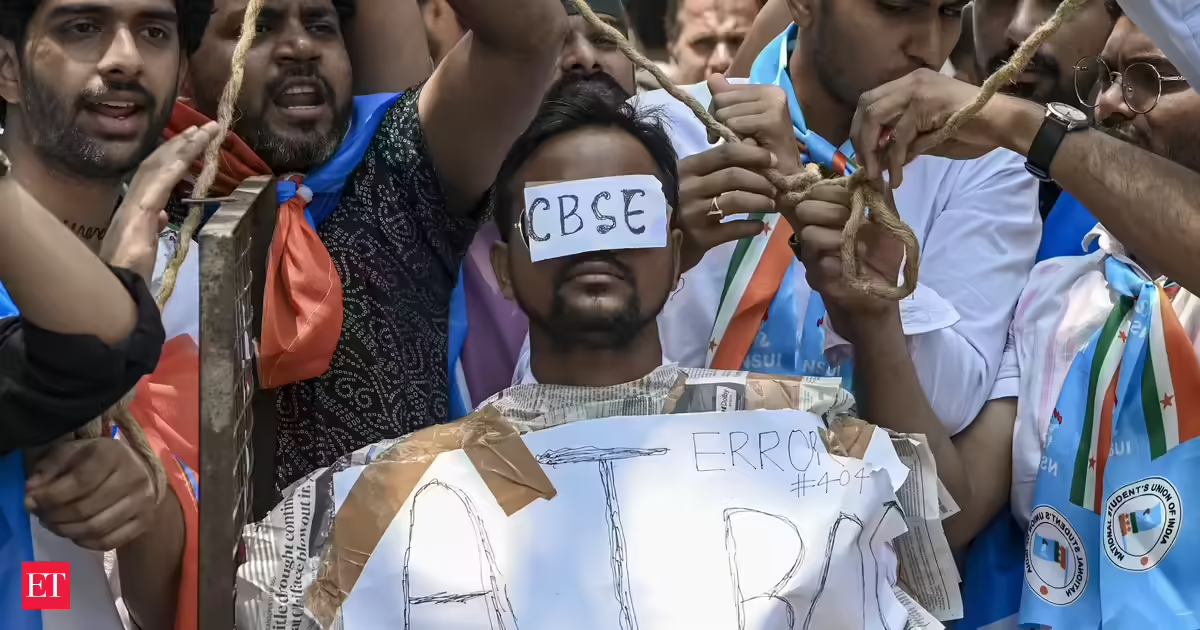
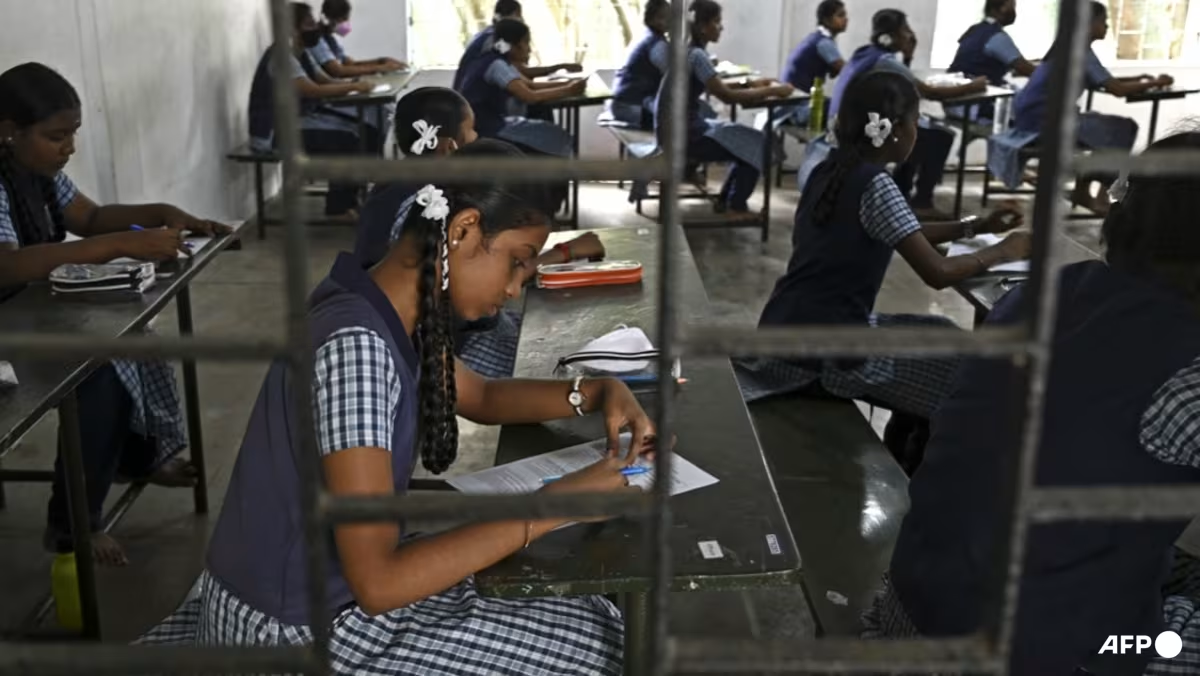
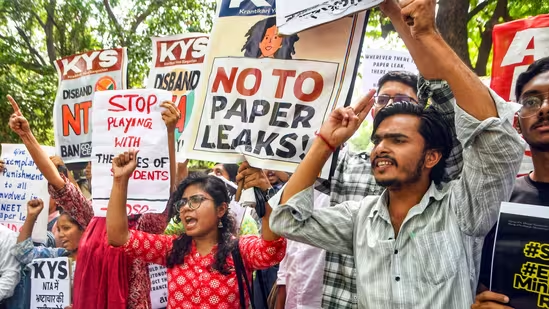
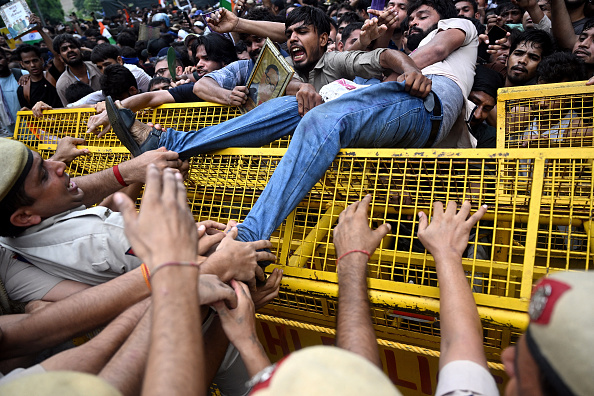
The recent exam paper leaks have rightly provoked public outrage. But treating them as an isolated scandal is to mistake a symptom for the disease. The rot runs far deeper and, until we are willing to confront its full extent, no amount of crisis management will produce lasting change.Black teachingIndia’s education system is in structural distress. In 1966, the Kothari Commission recommended that public expenditure on education should reach 6% of GDP. Six decades later, we still hover between 2.9-3.5%; a figure that speaks not only of neglect but also of a settled national indifference to learning as a public good. The consequences are everywhere visible: crumbling infrastructure, overcrowded classrooms, and schools so starved of resources that even blackboards and functional toilets cannot be taken for granted. The entire educational process in the country can be termed “black teaching”, a situation in which learners are deprived of their legitimate share of learning.Consider a single staggering statistic: India has more than one lakh single-teacher schools, serving more than 33 lakh students. In these schools, one teacher often teaches up to 18 subjects across five grade levels simultaneously. The Right to Education Act mandates a very different reality. The distance between that mandate and the ground truth is the measure of our collective failure.The problem does not end with infrastructure. Much classroom instruction remains trapped in the lecture method; passive, rote-driven, and largely indifferent to whether students are actually learning. The evidence is damning. Many students completing Class 8 cannot read a simple text or write a few coherent sentences in their mother tongue. Yet they are passed along, year after year, through a system that has quietly abandoned them.Parallel educationWhere public institutions fail, private ones have stepped in at a price. Coaching academies and nationwide chains that prepare students for engineering and medical entrance exams are not aberrations. They are the logical response to a system that no longer delivers. But access to this parallel education is determined entirely by income and this is a profound injustice. The children of the poor are doubly failed by schools that do not teach, and by markets they cannot afford.Corruption compounds every other failure. Mass copying in board examinations, inflated marks in practicals, and manipulated internal assessments have hollowed out whatever credibility the system had. The nationwide paper leaks are shocking in their scale; what is more troubling is that they are entirely consistent with a culture of impunity that pervades education at every level. When students witness corruption as a routine feature of institutional life, what kind of citizens are we cultivating?The answer to all of this is not another commission report. The shelf of unimplemented recommendations is already long enough. What is needed is the political will to act on what is already known, and a zero-tolerance approach to corruption in institutions that are, quite literally, the foundation of the nation’s future. Every instance of wrongdoing, however minor, must be met with swift and visible accountability. Anything less is complicity.Education was never meant to be a money-making enterprise. It was meant to make human beings. It is time we governed it accordingly.The writer is a retired Associate Professor of English. Published - July 04, 2026 02:00 pm IST