Traditional robot programming is hard to scale. It requires orchestrating multimodal perception, physical contact dynamics, diverse configurations, and execution failures by hand. Code-as-policy systems let language models compose these into executable robot programs. That makes robot behavior inspectable, editable, and debuggable.
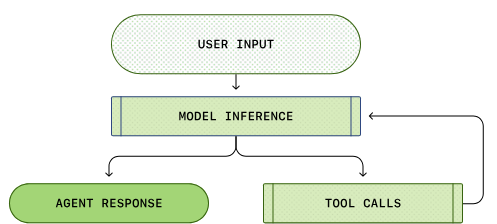
But existing robotic coding agents run in naive execution environments. They receive only coarse, task-level feedback. A failed rollout signals that the task failed, not why. The root cause can be perception, motion planning, grasping, contact dynamics, or long-horizon coordination. These systems also discard fixes once a task ends. So the agent solving its hundredth task is no more experienced than at its first.
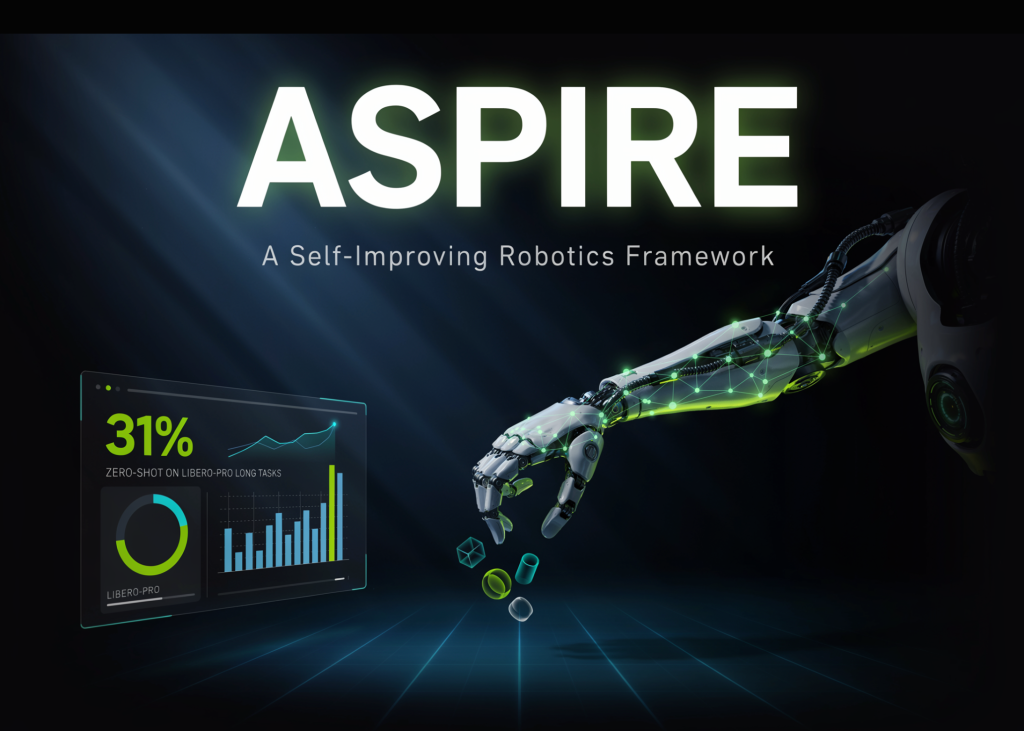
A team of researchers from NVIDIA, University of Michigan, UIUC, UC Berkeley, and CMU introduces ASPIRE (Agentic Skill Programming through Iterative Robot Exploration). It is a continual learning system that writes and refines robot control programs. It also distills validated fixes into a reusable, transferable skill library.
How ASPIRE works
ASPIRE runs an open-ended learning loop with three components. It uses a coordinator–actor architecture. A central coordinator manages the shared skill library and dispatches actor coding agents to tasks. Actors do not exchange full chat histories or raw trajectories. Only distilled skills move between them.