The concept of recursive self-improvement (RSI) dates back to I. J. Good (1965), where he defined an “ultraintelligent machine” as a system that can surpass humans in all intellectual activities and design better machines to improve itself. Yudkowsky (2008) used the phrase “recursive self-improvement” for a specific feedback loop: an AI uses its current intelligence to improve the cognitive machinery that produces its intelligence.
This feedback loop in modern AI may indicate the model rewriting its own weights directly, or more broadly the model improves the training pipeline and the deployment system, which in turn enables a better successor model with improved performance across economically valuable tasks. The speed of research development in AI has been shown to drastically accelerated in frontier labs (Anthropic; OpenAI).
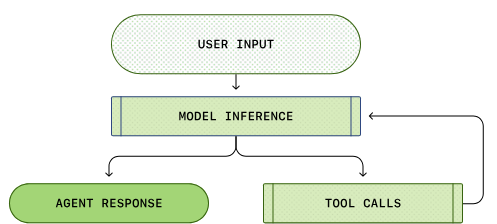
I explicitly mention “deployment system” because the layer between the raw model and the real-world context seems to be as important as the model’s raw intelligence (i.e. the evals right after pretraining). Harnesses are important components of AI deployment, as shown by successful coding agent products such as Claude Code and Codex. A harness is the system surrounding a base model that orchestrates execution and decides how the model thinks and plans, calls tools and acts, perceives and manages context, stores artifacts, and evaluates results.