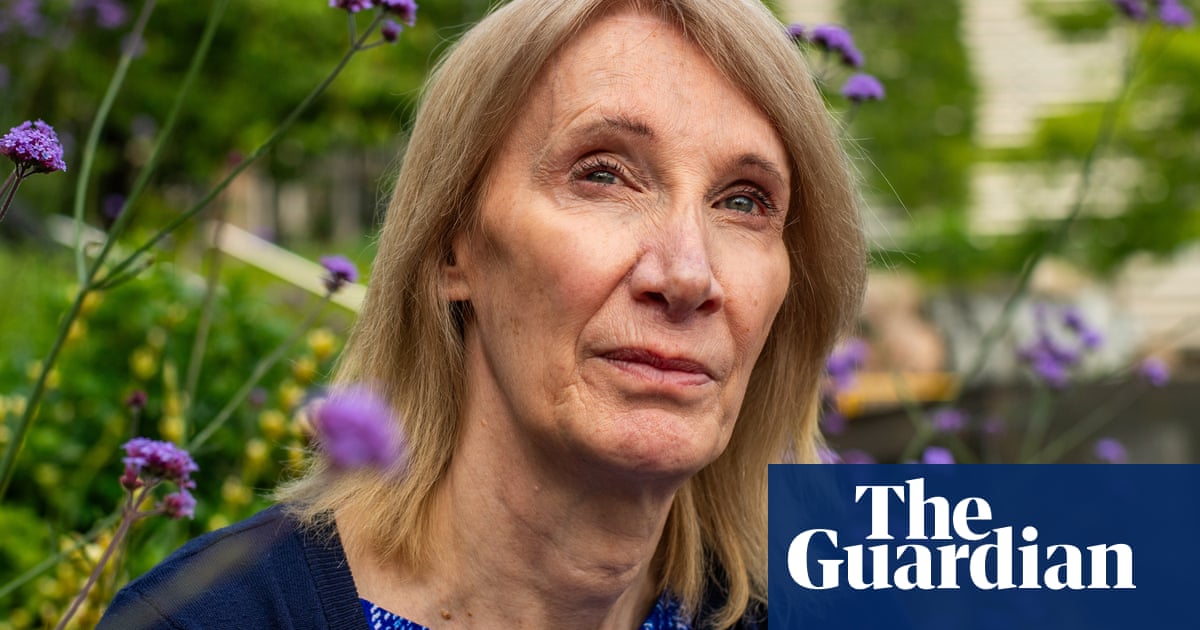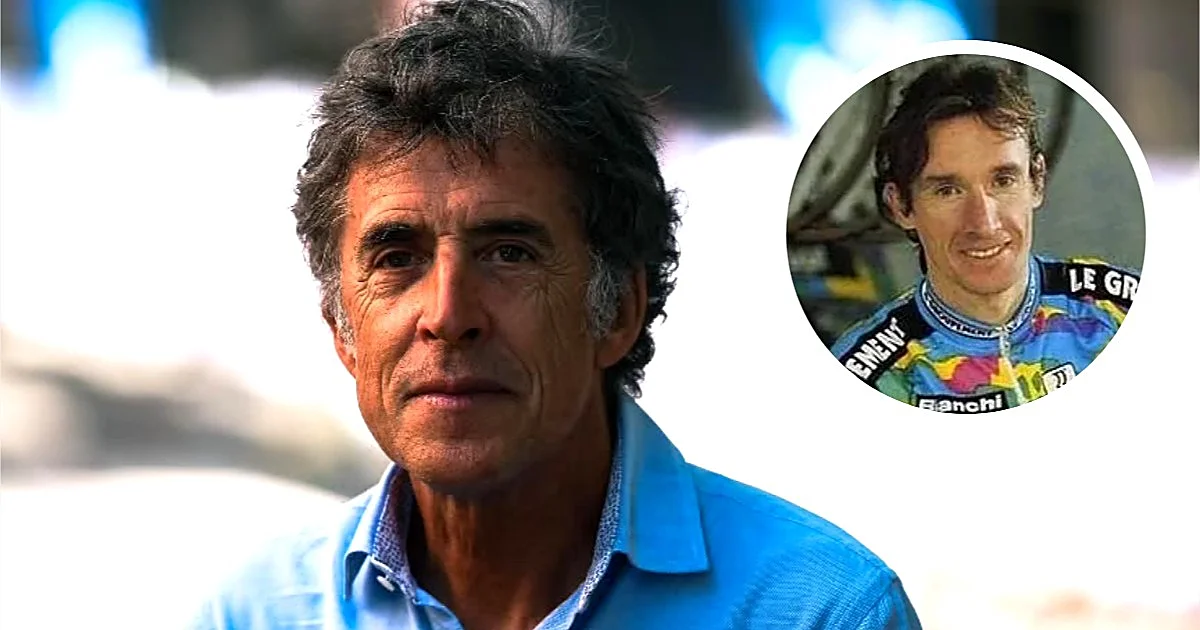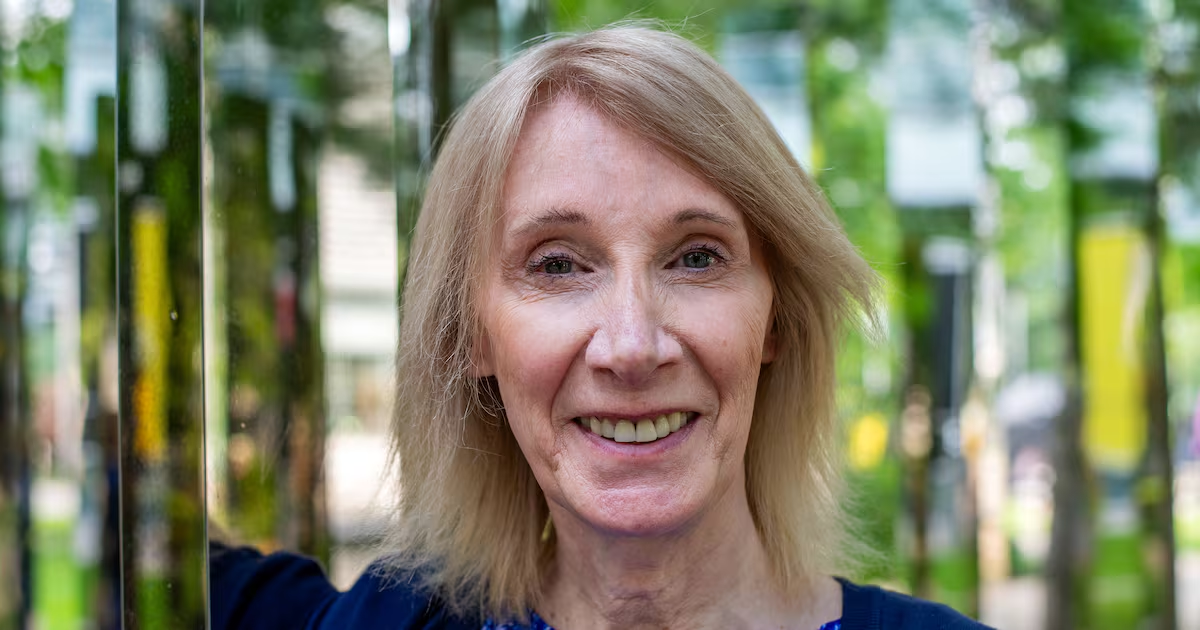
As a bike rider, Robert Millar was often misunderstood. It would take some time for Pippa York to fully understand why.The deliberately blurred image on the cover of her book, The Escape, speaks volumes. It shows the cyclist, among the hardest of pros and a former King of the Mountains winner in the Tour de France, riding up a mountain while the crowd cheers – but the figure on the bike is so out of focus as to be unrecognisable.The book, co-written with the journalist David Walsh, tracks sports writer and rider as they follow the Tour de France, revisiting their vastly different perspectives on the race and shared against the backdrop of York’s transgender experiences in becoming the woman she has lived as for the last two decades.Despite the complexity of her story, The Escape is drenched in humour, while being a deeply thoughtful and tender read that went on to win the William Hill Sports Book of the Year last November. The reception was of some relief to York, who admits she had initial concerns about collaborating with Walsh – “the guy who brought down Lance Armstrong” – and where exactly that might take her. “Maybe people have been surprised by some of the content,” York says from her home in Dorset. “But generally it’s been favourable. I haven’t had anyone tell me they wasted their money. Or tell me, ‘you shouldn’t have done that’.“And with David we just got on very well. He can still phone me up and within a minute we’ll be laughing about something we shouldn’t be laughing about. There are a lot of things in the book I didn’t necessarily want to revisit, but I understand that people want to know about. Once you write it down, and then people ask you about it, it doesn’t challenge me as much as it used to.”As unfailingly honest as The Escape is – York says being trans is “complicated”, sometimes “awful” – it also presents a lingering question of whether the York of today, at age 67, can or even wants to identify with Millar in any way, or whether that person is completely gone for her.“Generally when you transition there isn’t a video of you riding up Alpe d’Huez,” she says, smiling. “So I can go back and revisit those days and see who I was before. I have to put that in a compartment, where that part of my life is over, but I can’t deny it existed. Because in my case, anybody can go on to YouTube and there I am climbing mountains in the Alps and the Pyrenees. “I can say that part is over, but I can’t say I didn’t like that part. Because I was successful, I liked being in competition, having an influence on the races. But that might have been the only part of the day I enjoyed. Then there was the rest of the day to get through.”York was born of the Gorbals slums in Glasgow, raised under strict Orange Order loyalties, and took on the alpha male world of the pro peloton with fearless determination. That career prospered into riding the Tour de France 11 times, winning three mountainous stages, plus that polka dot jersey in 1984 when finishing fourth overall.After retiring in 1995, five years later she began the process of transitioning, at age 41. Having essentially disappeared off the cycling radar, she re-emerged in 2017 as a cycling commentator, starting with ITV4 on the 2017 Tour, before joining Walsh to cover three successive Tours – in 2020, ’21, and ’22 – which form the basis of The Escape.York says she’d recognised her gender dysphoria by the age of five or six, but it was impossible to act on given the world in which she existed. Even at the peak of her success her life was about “95 per cent unhappy”.“The bike racing was okay, it was the rest of my life that I wasn’t generally happy with. You can be successful and unhappy. Cycling was important, it was my career, but it’s not who I am as a person. I still don’t identify as a cyclist, if you want to put it in those kind of terms.“There’d be days where I’d rather be somewhere else, be someone else. And that could be in a bike race. “Because you’re under a lot of scrutiny, and you’re not allowed show any weakness, or difference, or anything. There’s an image which is projected, and you have to stick with that image. Otherwise the system eats you.”I got angry about it before, and it almost killed me. So I’ve let go of that, I’m past it— Pippa York on the International Olympic Committee's decision to ban transgender women from competing in the female category of events****In her previous life as Robert Millar, her cycling career rode parallel to Stephen Roche, Seán Kelly and Paul Kimmage, and the relationship with Roche was particularly close. It was the Scot who first recommended the young Dubliner join the team at the ACBB club in France, the sort of feeder school to a pro contract with Peugeot, which they shared for three seasons.“Stephen is one of those riders who is immensely talented,” she says. “He’s like a thoroughbred racehorse. But as with all thoroughbreds, he has weaknesses. When it’s all going well, great. But it doesn’t all go well all the time. But I liked him, he could be charming, the happy-go-lucky Irishman.”Later, during the 1987 Giro d’Italia, Roche was considered by some Italian cycling fans to have betrayed his Carrera team-mate Roberto Visentini. Millar was riding for the rival Panasonic team, yet stood by Roche during one of the final mountain stages to the ski resort of Canazei, protecting him from mouthfuls of rice and red wine that were being chewed and spat out in Roche’s direction. “[It was] partly because I’d been through that situation the year before, at the Vuelta,” she says, referring to the 1985 race when the entire peloton ganged up in favour of Spain’s Pedro Delgado on the final stage, at a point where Millar looked poised for overall victory. “I’d seen the reaction from the partisan crowd. Spitting at people. Shouting abuse. I didn’t like that. Maybe that was a weakness in me, allowing my emotions to get involved.”[ The trials of Stephen Roche: ‘There are things I’ve done the last few years I’m not proud of’Opens in new window ]Roche went on to win the 1997 Triple Crown – the Giro, the Tour and the World Championships – and Millar finished that Giro second overall, also winning another King of the Mountains jersey.Three years after that, Kimmage published Rough Ride, a book that also won the William Hill Sports Book of the Year, in 1990. In breaking the omerta around doping in pro cycling he was perceived by fellow riders as cracher dans la soupe, “spitting in the soup”. “Is there anything in the book that’s not true?” asks York. “No. So, that tells you, why are you defending something? But that was the system, and I would term that doping culture as abuse of the people involved. I see myself as a victim, this willing victim, because you want to stay there, be competitive and you’re being told this is how it works. Robert Millar competing on stage 11 of the 1990 Tour de France from to Saint-Gervais to Alpe d'Huez. Photograph: Graham Watson/Getty Images “So my ambition and ego says I’m not going to be cheated by them, so I’m going to cheat as well. That’s the ludicrous part of it, the whole system relies on the naivety of the participants.“Then Paul writes his book, and the French describe it as spitting in the soup. Even in English it’s not a great thing to say. So people are annoyed with him, but is your soup already clean? No. But I can see for the Irish guys why it was difficult.”York is entirely unapologetic about her own journey into doping, including her frequent use of testosterone. The turning point for her came with the introduction of EPO, in 1993.“By then it became a training aid, whereas before, the medicalisation was limited to competition. If you had to take amphetamines to go training, basically you’d lost the plot. So when it moved on the era of EPO and growth hormone, from 1993 onwards, my attitude was ‘what the f**k are you doing?’ “I’m not in the same bike race here, I’m at the end of my career, and thinking ‘I don’t want to die in my sleep at night’. Even if it’s just a myth, I’ve had enough of this shit. But it’s only changed now because the reporting mechanisms and the surveillance are a lot better. Whereas before that wasn’t there. The attitude back then was, if you can’t stand the heat, get out of the kitchen.”****If York still harbours some anger about the way doping was allowed to persist throughout her cycling career, she appears less upset about the International Olympic Committee’s decision in March to ban all transgender women from competing in the female category of events starting from the 2028 Games in LA.“Well, I got angry about it before, and it almost killed me,” she says. “So I’ve let go of that, I’m past it. I would understand if trans people were in any way competitive. Now I just say, ‘what’s the trans world record for 100m?’ Because if the trans myth of athletic domination did exist, then we would have seen it. “The whole process of transition removes all the aspects of performance from you. Everything changes.“But it’s difficult to explain unless you are actually trans. And even then, people have different needs. It’s a whole spectrum, it’s like sexuality, it’s not just black and white.” She says that if puberty-blocking drugs had been available during her teenage years, she would undoubtedly have pursued the treatment. “The young me, at 13 or 14, would be the person [affected because] the UK government have [outlawed] the use of puberty blockers. It’s not going to stop me being trans later on, it’s just going to be a whole load of shit I’m going to have to deal with in terms of surgery.The cover of Pippa York's award-winning book The Escape “But that doesn’t frighten me, it’s a regret ... that I didn’t get to be that young teenage woman.”As for the current state of cycling, and the prospect of Tadej Pogacar chasing a record equalling fifth Tour de France when the race starts on Saturday, York is comfortable in saying such domination can be entirely natural.“It’s not his fault. There’s always been dominant riders. In all sport, there’s always been periods where someone comes along who is better than everybody else. They’re recognised as the greats, because they’re great. “In the 80s and 90s, there was the expectation to cheat, but that only happens when you run out of talent, and have been through that system. It doesn’t come at age 19, 20. “So when I see someone like Pogacar turn up, and they’re competitive straight away, there’s no way the medical part would have went to them, and said, ‘this is what you need to do to be a little bit better’. They’re already good enough, why would you f**k with that person? They don’t have to go there.”
Pippa York on being Robert Millar, riding in the Tour de France and doping
In a wide-ranging interview the 67-year-old discusses her transgender journey, her past as a successful cyclist - ‘I can’t deny it’ - doping and the undoubted talents of Stephen Roche and Tadej Pogacar
1,900 words~9 min read