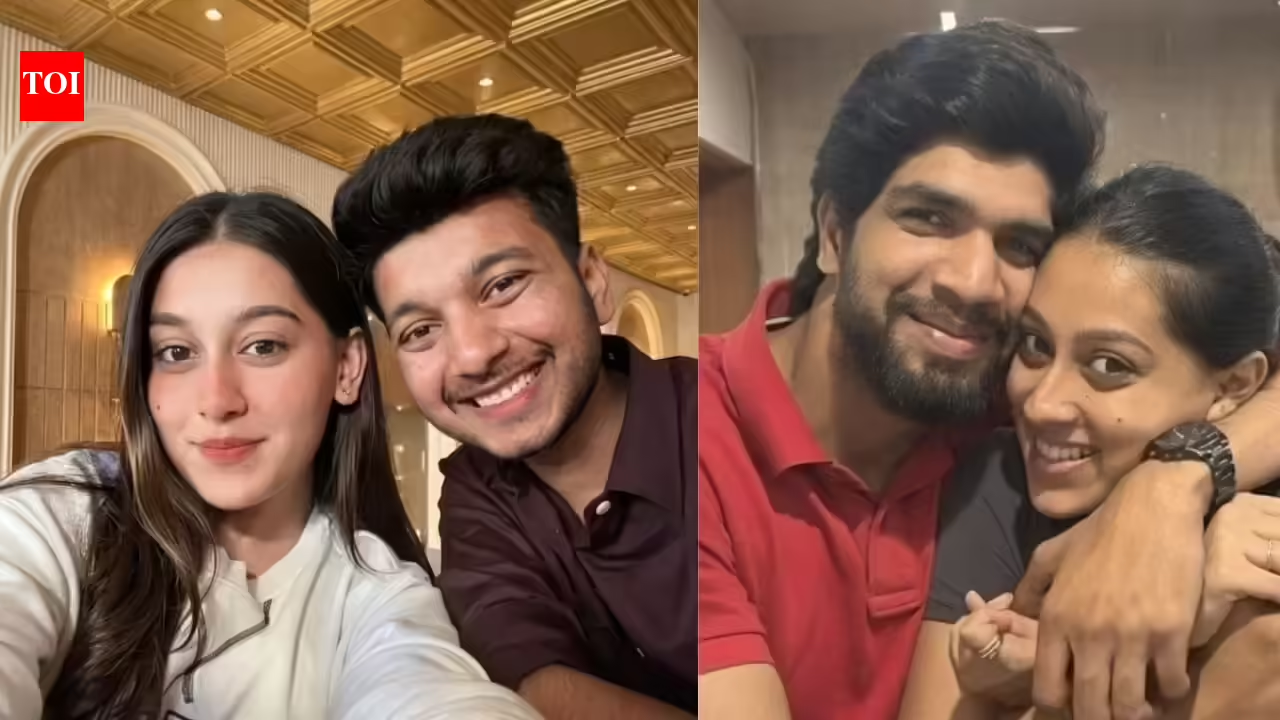
At first glance, the two women who have occupied India’s headlines, energy and imagination for the last few weeks are mirror images of each other’s lives — both sordid tales of macabre domestic violence and abuse.Siya Goyal, 20, is in jail on allegations of conspiring with her supposed romantic partner, Chetan Chaudhary, in the death of her fiancé, Ketan Agarwal. (Photo credit: ANI)Twisha Sharma, 33, was found mysteriously dead in the home of her in-laws in Madhya Pradesh. Her death — her family says she was killed and there is mounting evidence for why it was not a suicide including ante-mortem injuries — uncovered the underbelly of influence peddling. Giribala Singh, Twisha’s retired-judge mother-in-law, and husband Samarth Singh, a lawyer who went absconding, used every trick in the book to tamper with the evidence and malign her character.And Siya Goyal, 20, is in jail on allegations of conspiring with her supposed romantic partner, Chetan Chaudhary, in the death of her fiancé, Ketan Agarwal. The police say Ketan was deliberately pushed down the cliffs of Lohagad Fort in Maharashtra by Siya and Chetan, with Siya presenting it as an accidental fall. This was after her first alleged attempt to kill him failed four days earlier, at the very same spot. That day, Ketan survived apparently by holding onto a bush for support and Siya claimed she had jumped because she saw a snake.Also Read | Thieves break into home of Twisha's mother-in-law Giribala Singh; her family fears crime scene tamperingCrime, abuse, conspiracy and, likely, murder are at the heart of both of these cases. And water-tight investigations must end with exemplary punishment in both cases — no “ifs and buts” on that score in either case.But, scratch the surface, and there is another theme that unites these cases: Indian society’s unhealthy obsession with the institution of marriage at all costs and the clear inability of young people, especially women, to tell their parents the truth without fear of being judged.Despite the media chatter around destigmatising divorce and encouraging choice in romantic partnerships, the truth is that there continues to be both spoken and unspoken shame around ending a marriage or relationship, even, in some cases, a betrothal, and opting to be single or in any way embarrassing your family over choices that you are conditioned to believe they are entitled to make for you.Don’t get me wrong. I am not presenting Siya as a victim of cultural patriarchy and, therefore, someone we should see through a softer lens. If she has wilfully conspired to kill the man she was to marry, she is a murderer and will be treated by the law as such.Likewise, in the Twisha case, I share the disquiet and despair of so many of my readers and viewers when you ask why she didn’t leave an unhappy marriage and return to her paternal home.Also Read | 'Siya, Chetan used sign, coded language in chats': Cops reveal while asking for extended police custodyBut don’t you wonder how a young woman who could evidently be brazen enough to plot the killing of her fiancé did not find the courage to tell her parents she did not wish to marry the man they had chosen for her? Siya’s parents say they had absolutely no clue that she was in a romantic relationship with Chetan and was reluctant to marry Ketan.In the Twisha case, her father, Navnidhi Sharma, told me he deeply regrets not extricating her from her five-month-old unhappy marriage sooner. In Twisha’s case, she chose the man she wanted to marry, finding love — or what looked like it — on a dating app. But the coercive control that is the trademark of so many marriages was established right from the get-go.Navnidhi Sharma has spoken of Giribala Singh making imperious demands during the ceremony and other functions. Soon their daughter was sending them texts about the “living hell’ that her marital home was, but it is only now that he realises the mistake he made in not asking her to get out of there immediately.Yes, family is a cornerstone of all that is wonderful and emotionally rooted in our society. And yes, that sense of community feels all-important when contrasted with the lonely, isolated lives of people in many western nations. But surely, that sense of belonging cannot come from social mandates, peer pressure, and the fear of disappointing your parents?Marriage, for an overwhelming number of Indians, continues to be an alliance between families, whether arranged or love or “arranged love”, as a particular kind of marital union is called in contemporary parlance. A widely cited PEW Centre survey in 2021 revealed that two-thirds of Indians opposed inter-faith unions and 63% were against marrying outside of caste.Also Read | No money for personal needs, ₹2 lakh dowry: CBI FIR's shocking revelations in Twisha Sharma caseIndian families, who lack economic resources, continue to take loans or dip into life-savings to spend on weddings, especially the “bride’s side”. Frankly, oftentimes, this is nothing but a respectable cultural camouflage for dowry. And as we saw in the Twisha case, even if you don’t overtly demand dowry, your asks during the celebrations, sangeets, countless dinners and so on can often be exactly dowry by another name.Above all, why are we not obsessed with making our children economically self-reliant? Why are professional careers considered dispensable, especially for women?Twisha, her friends and family now reveal, was made to delete all her social media handles by Giribala Singh. Siya’s videos at night clubs are really neither here nor there, beyond establishing the likely presence of a romantic partner in her life.Both young women should have been focused on building a professional life and career. It’s chilling to read that Siya possibly killed her fiancé because she found his hair-wig an ick. But don’t you also wonder why the family of a 20-year-old was not more focused on her having a job, charting out a career or acquiring skills? Siya, reports say, had tried her hand at a home baking business.When will we understand that, without professional focus, economic independence and a sense of purpose, marriage alone cannot give a person a sense of self-worth? And when will the shadow of shame over ending relationships truly shift?Barkha Dutt is an award-winning journalist and author. The views expressed are personal
Siya, Twisha & the wages of society’s focus on marriage
Scratch the surface, and Indian society’s obsession with marriage and the inability of young people to resist without the fear of being judged becomes clear
1,052 words~5 min read