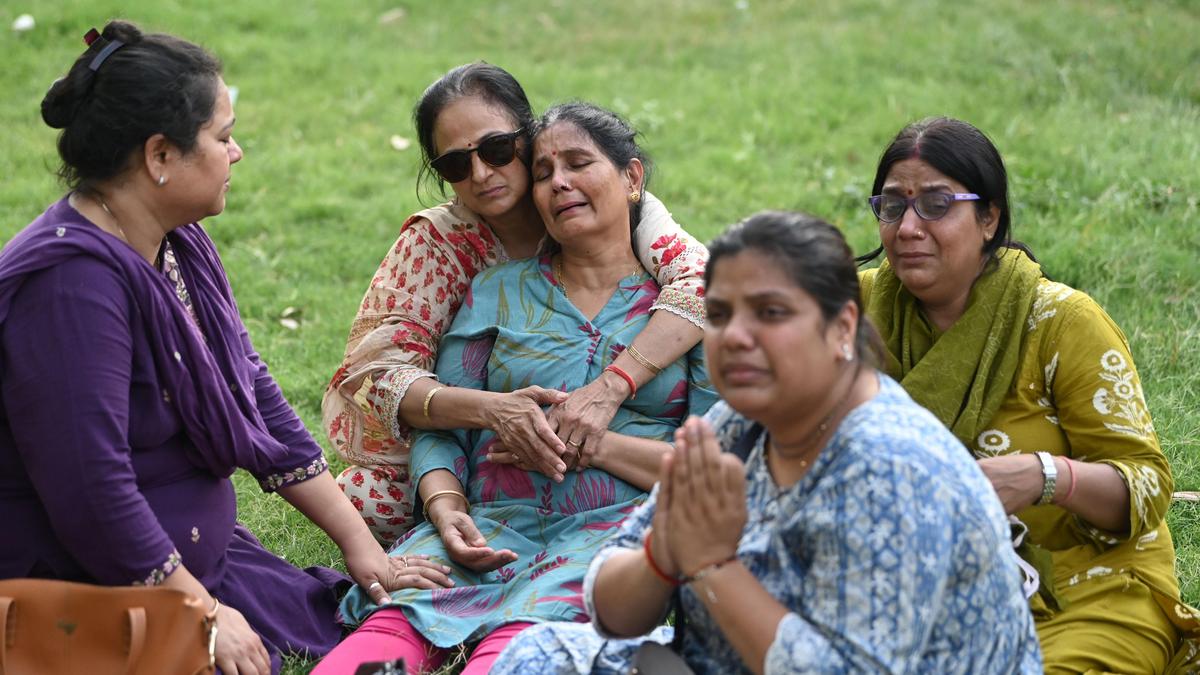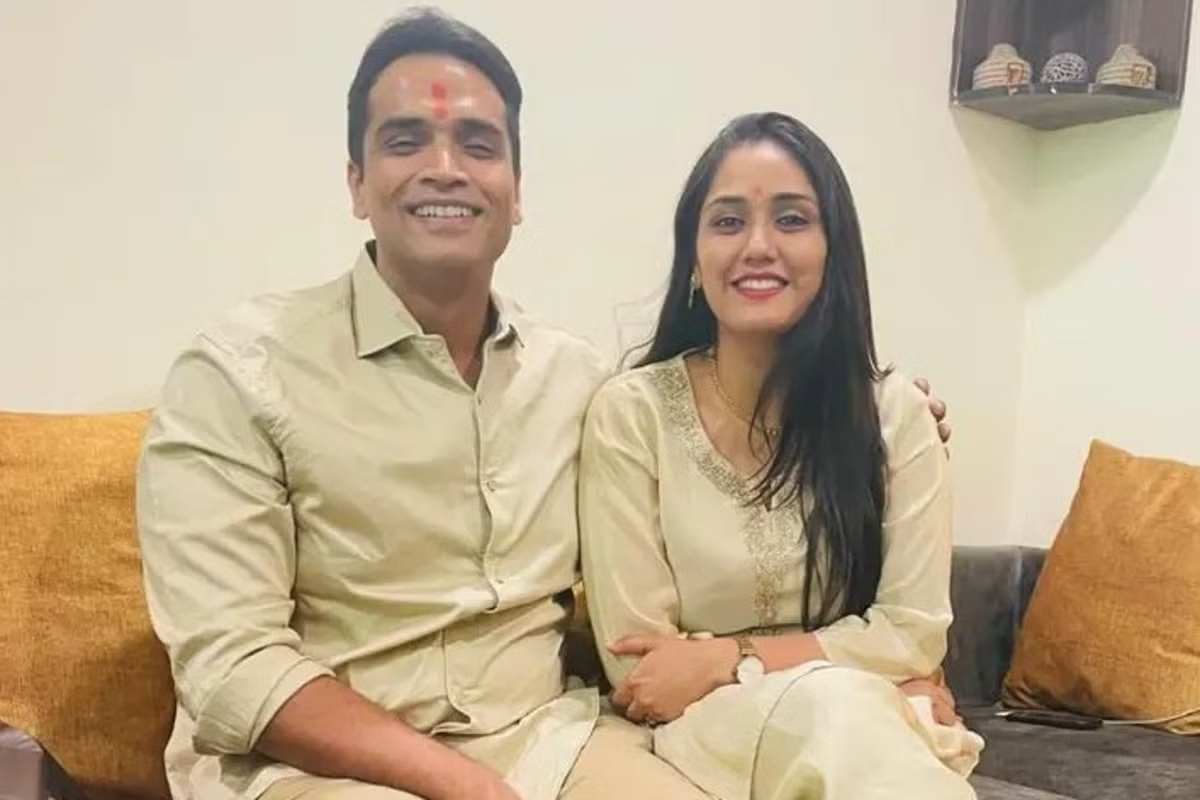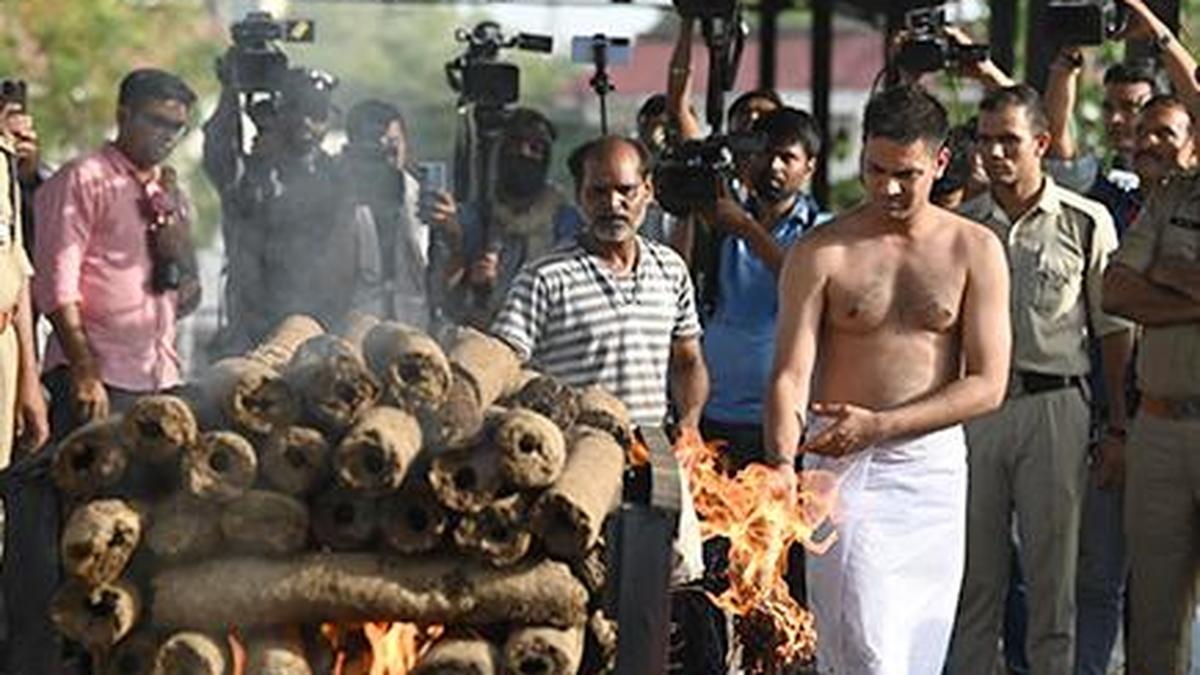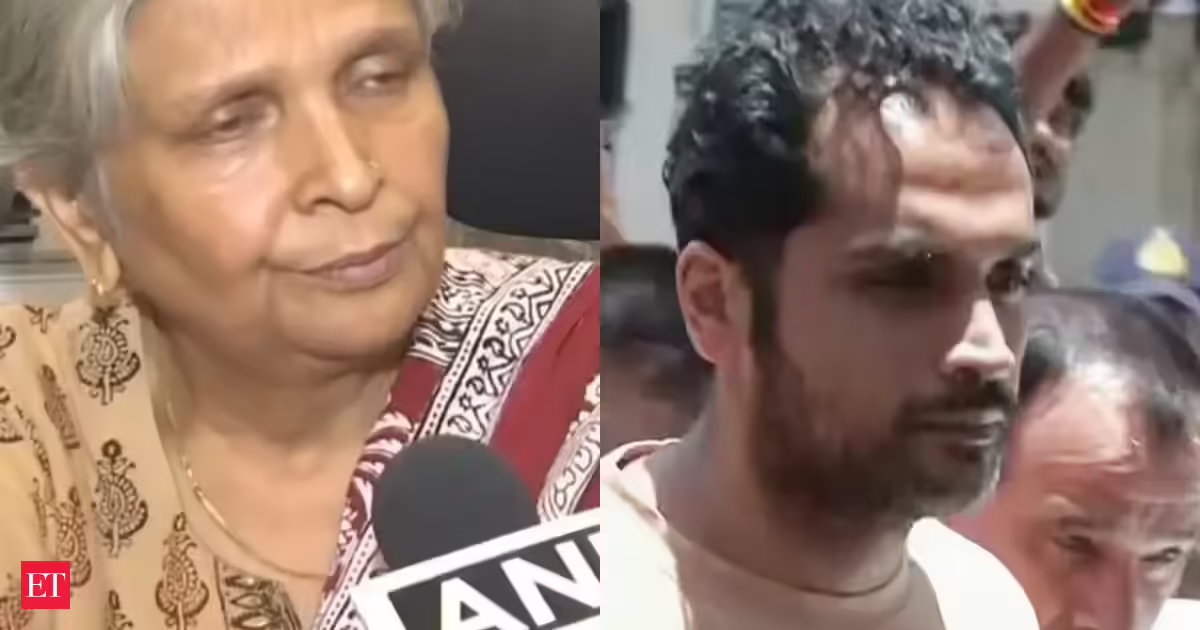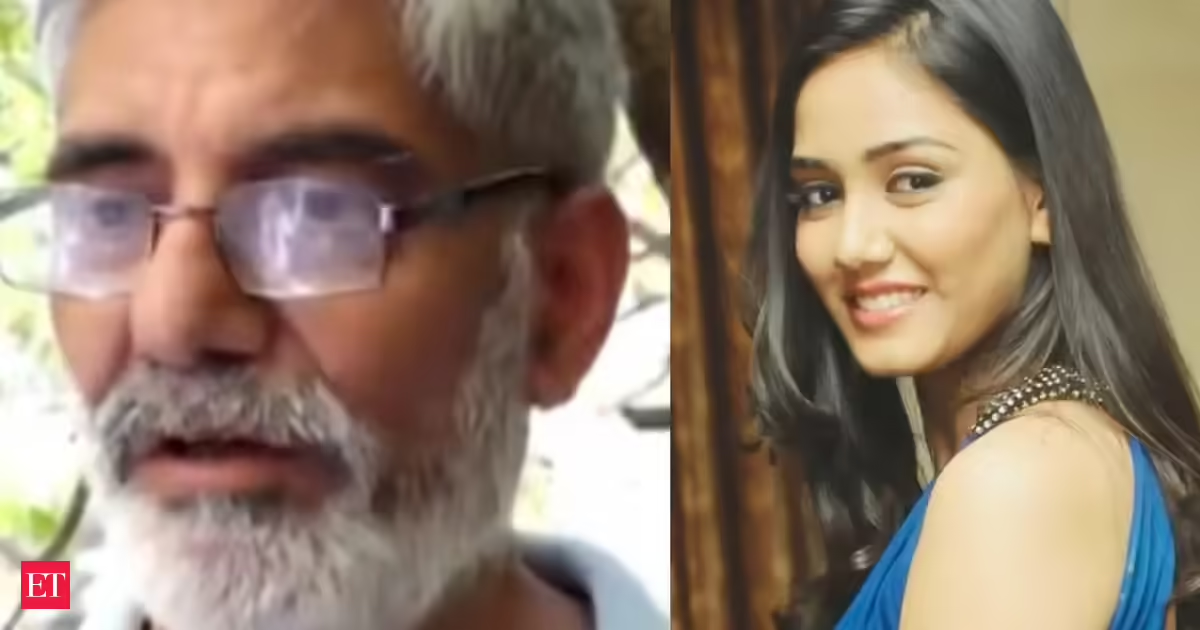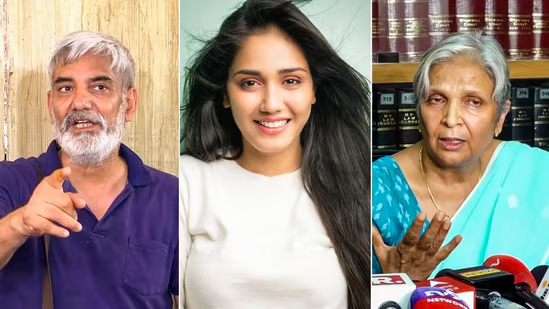
Twisha Sharma is dead. Deepika Nagar is dead. Sixteen women die every day in India because of dowry. The question is not whether we have laws. We do. The question is whether we have the will to make sure they work.Twisha Sharma case LIVE updates: Twisha Sharma’s father seeks videography of second autopsy, alleges bid to ‘suppress’ probe by ex-judge mother-in-law Giribala Singh (ANI, Instagram and PTI)Twisha Sharma had an MBA. She worked in marketing and communications, competed in beauty pageants and acted in films. She was in her early thirties. She married Bhopal-based advocate Samarth Singh in December 2025. On May 12, 2026, she was found dead at her marital home.Five days later, 24-year-old Deepika Nagar died after falling from the third-floor terrace of her in-laws' home in Jalpura village, Greater Noida. Her family contends she was beaten and thrown from the roof over unmet dowry demands -- a Toyota Fortuner and ₹51 lakh in cash. The autopsy found a blood clot in the brain, a ruptured spleen, a pale left kidney, a 12cm contusion on the right side of her face, bleeding from the left ear, and circular injury marks around her right hand.A Toyota Fortuner. Fifty-one lakh rupees. That is what someone decided Deepika Nagar's life was worth.The NCRB's Crime in India 2024 report recorded 5,737 dowry deaths last year. Sixteen women every single day. Conviction rates have historically ranged between 11% and 17%. More than 90% of cases remain pending in courts.This is not a failure of law. It is a failure of will. So consistent, so entrenched, it has become invisible.Twisha had lost nearly 15 kg after marriage. Her messages to friends and family described feeling trapped and pleaded to be taken back home. She had a ticket to return to Noida on May 15 -- three days after she died. She knew. She was trying. But she died anyway.This is not a failure of intelligence. It is what abuse does to a person. It escalates gradually. It is interspersed with normalcy. Victims internalise blame. In India, they carry the additional weight of family honour, the shame of a failed marriage that attaches to the woman, and the dread of being returned as goods. An MBA does not immunise you against trauma bonding.The more important question is not why she didn't leave. It is: Why, when she was sending messages saying she was trapped, did no one come for her immediately? When your daughter says she is trapped, the answer cannot be waiting a little longer. It must be: come home. Now.Twisha's mother-in-law, Giribala Singh, is a retired district judge. Her son Samarth is a practising lawyer. The home Twisha entered was a household of law.An audio recording has surfaced of a conversation in which Giribala allegedly calls her daughter-in-law promiscuous, references having "worked with prostitutes," and interrogates Twisha's relationships and whether she monetised them to advance herself. A retired district judge. Interrogating the sexual history of a dead woman. Asking none of these questions about her own son.Twisha's family alleges Giribala made 46 calls to judiciary and police contacts in the hours after her daughter-in-law's suspicious death. The FIR took three days. A sessions court granted Giribala anticipatory bail -- overnight. Samarth absconded for ten days before surrendering. Giribala was arrested only after the Madhya Pradesh High Court cancelled her bail, noting multiple ante-mortem injuries requiring closer scrutiny. Both are now in CBI custody, with investigators probing alleged manipulation of evidence. The network worked. It bought time. And time, in cases involving powerful families, is the ally of impunity.There is a predictable arsenal deployed when a woman dies under suspicious circumstances and powerful families need to reframe the story. In her bail plea, Giribala alleged Twisha was a drug addict and raised questions about her mental health. At least one doctor made public statements about Twisha's mental health -- a deceased person who could not consent, respond, or seek professional recourse. Mental illness labels -- schizophrenia, depression -- are invoked not as conditions deserving compassion but as tools to explain away inconvenient deaths. Sexual history is interrogated. Professional choices are questioned.This needs to be said plainly: A medical professional who makes public statements about a deceased patient's mental health outside any formal clinical or evidentiary process is not contributing to the truth. They are participating in a character assassination of someone who cannot answer back. Medical councils should treat it as what it is -- a violation of professional ethics and patient confidentiality that does not end at death.The Madhya Pradesh High Court ordered a second post-mortem by a four-member AIIMS Delhi team after Twisha's family raised concerns about the first examination. The Supreme Court took suo motu cognisance of the case under the heading "Alleged Institutional Bias and Procedural Discrepancies." When the judiciary itself uses that language, it is not a marginal concern. It is an indictment.The Supreme Court directed both families to refrain from media interviews as the CBI took over. This is understandable. But it arrived after weeks in which Giribala Singh had already made extensive public statements -- alleging drug addiction, questioning mental health, casting herself as a victim -- while her anticipatory bail was still intact and the CBI probe was still being ordered.The gag came after the narrative had been shaped. Twisha's family, whose daughter was dead, found the same restriction applied to them.More importantly: Without sustained media coverage, this case would likely not have reached the Supreme Court at all. The FIR took three days. The CBI came only under public pressure. The suo motu cognisance followed national outrage. A free press in a country with a 17% dowry death conviction rate is not a nuisance. It is often the only accountability mechanism that functions before evidence disappears.Deepika Nagar's husband and father-in-law were arrested. Her case received an FIR and NCW attention. There was no CBI, no Supreme Court, no second autopsy. Her in-laws had no judiciary networks to mobilise.The difference in institutional response between two cases from the same fortnight -- same crime, comparable evidence of ante-mortem violence -- is not a coincidence. It is a data point. Powerful families get CBI scrutiny because media pressure forces it. Ordinary families get a local FIR and a slow queue. Sixteen women die every day. Most of them are Deepika.The Dowry Prohibition Act has existed since 1961. Section 498A since 1983. Section 304B since 1986. The law alone is not the answer.Mandatory 24-hour FIR registration in all suspicious married women's deaths -- regardless of the professional standing of in-laws. A three-day delay is a window for evidence to vanish and phone calls to be made.Automatic independent investigation when accused family members have professional connections to the system. The 46-call problem requires a structural solution, not a case-by-case intervention.A clear, enforceable code governing public statements by medical professionals about deceased individuals in active legal cases. Posthumous character assassination using clinical language is an abuse of professional standing and should be treated as such.And beyond the State: Every family that has ever told a distressed daughter to adjust a little more is part of this story. No legislation fixes that. Only we can -- in what we tell our daughters, and in how quickly we act when they tell us they are not safe.Twisha had her ticket. She was three days away from coming home. That she didn't make it is not only the failure of a system. It is the failure of every norm that told her, and everyone around her, to wait a little longer.That is what must change. Not when the next name trends.(The views expressed are personal)This article is authored by Urvashi Prasad, public health professional, former director, NITI Aayog and senior fellow, Pahle India Foundation, New Delhi.
She said she was trapped, we asked her to adjust
This article is authored by Urvashi Prasad, public health professional, former director, NITI Aayog and senior fellow, Pahle India Foundation, New Delhi.
1,292 words~6 min read