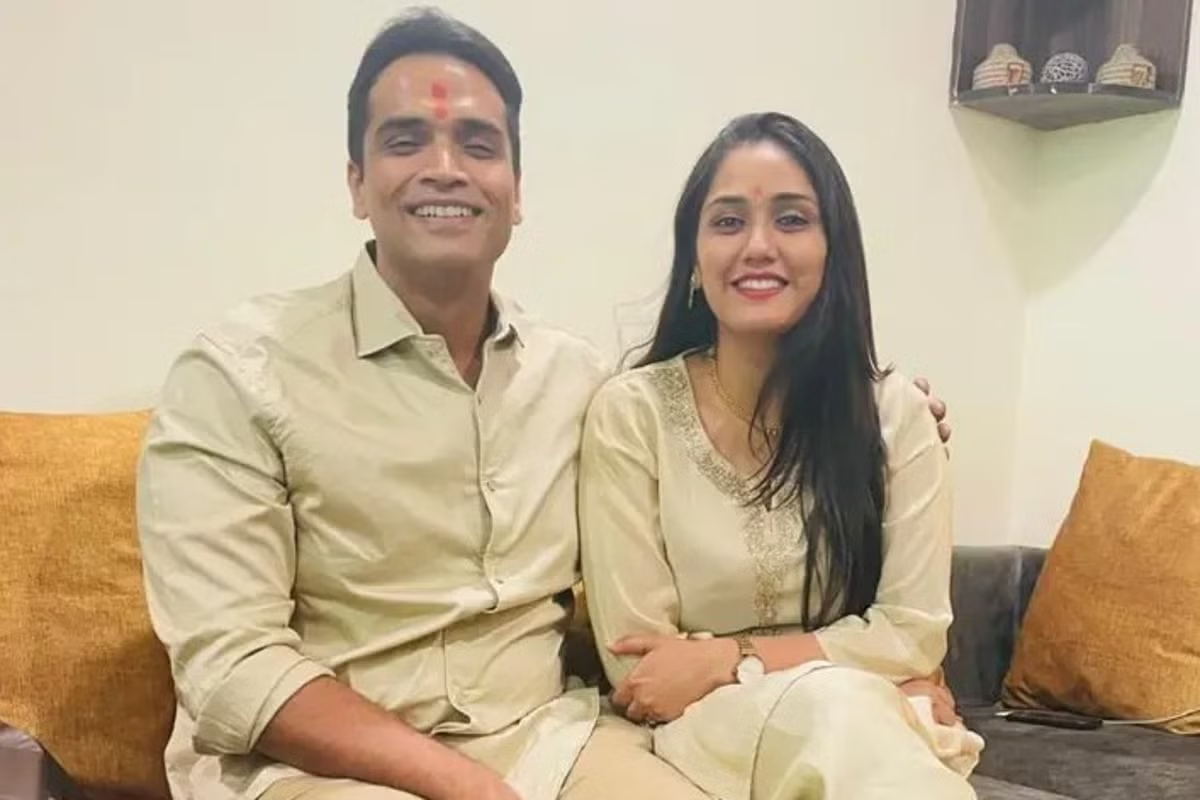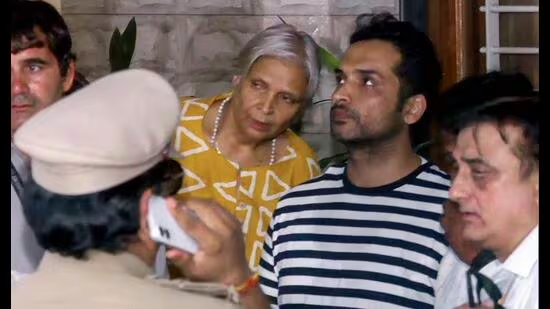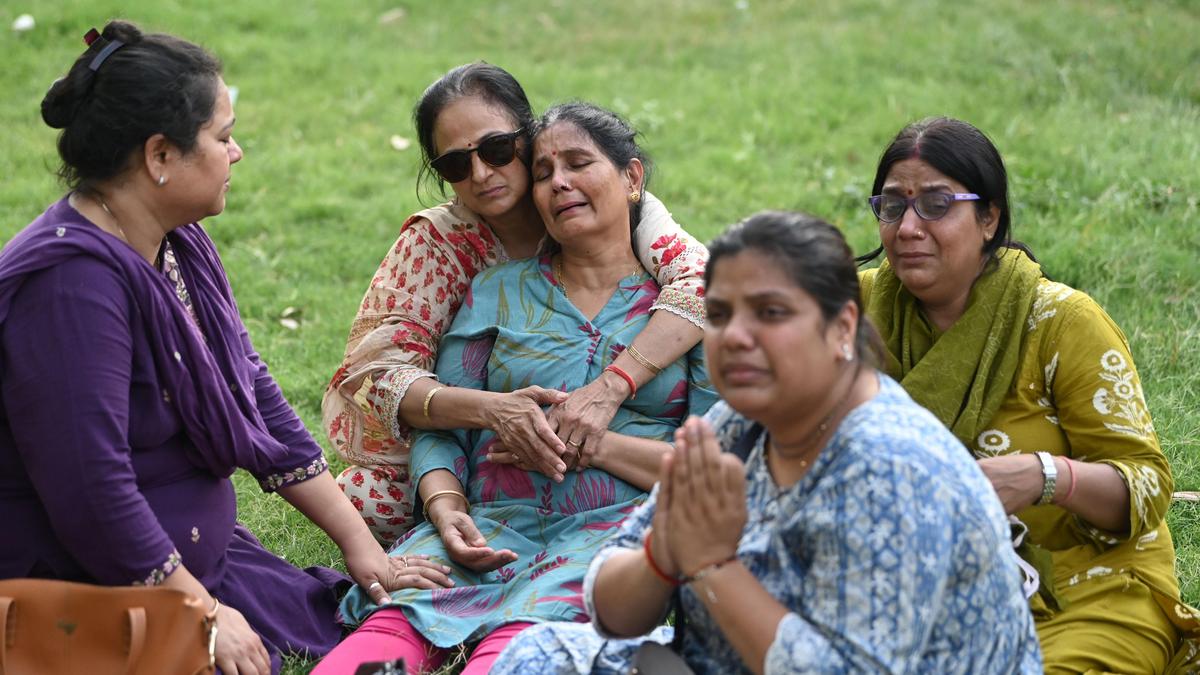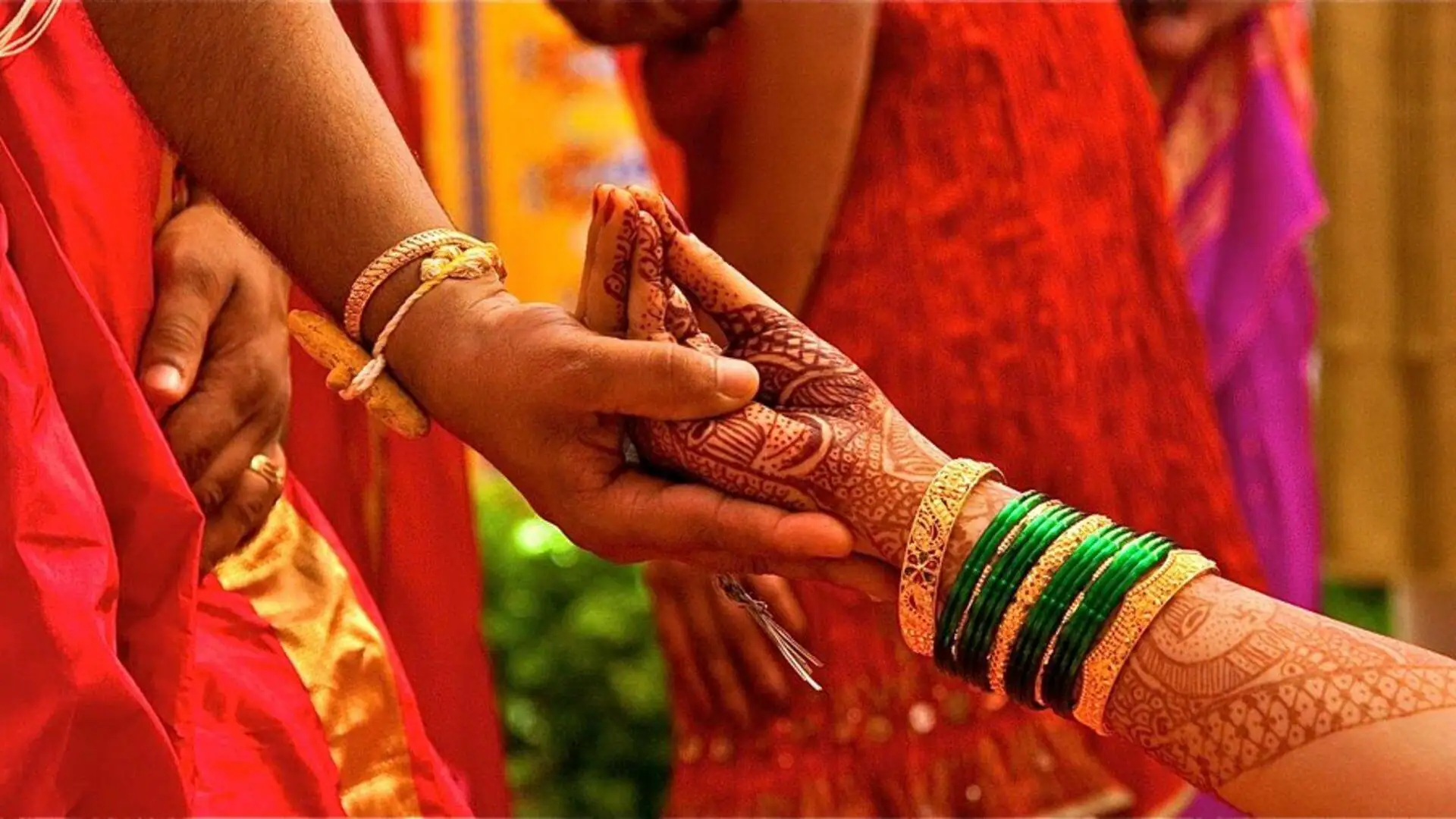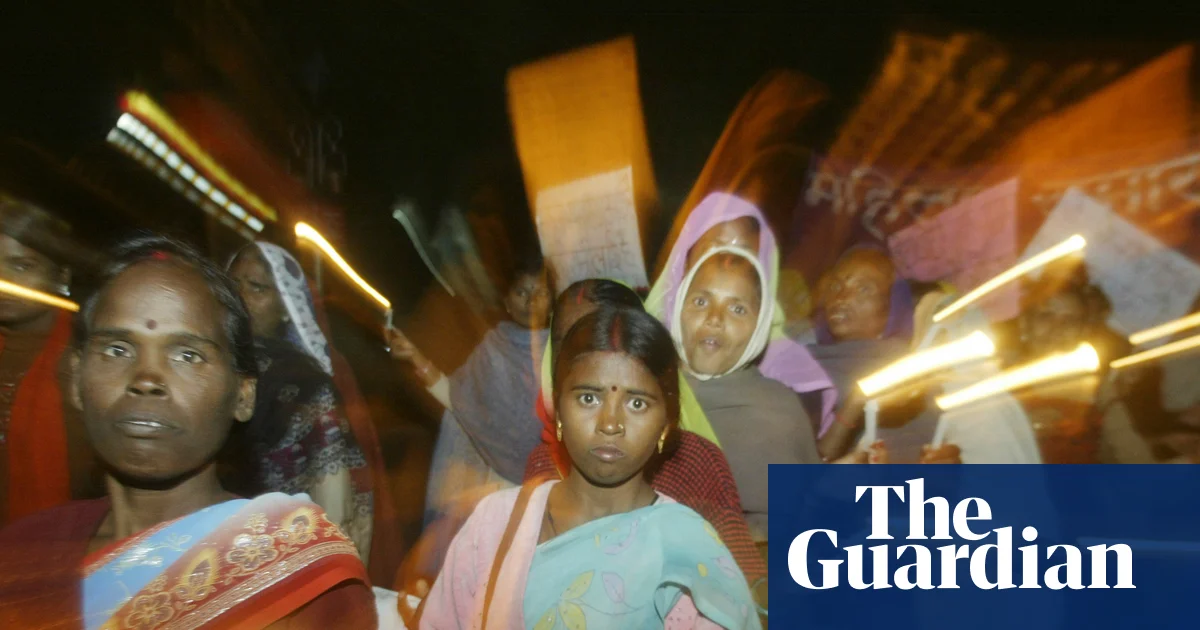
India’s recent debate over dowry deaths echoes the same concerns that were supposed to have been addressed by stricter laws and criminal provisions passed in the early 1980s.After 33-year-old Twisha Sharma was found dead in her home in Bhopal on May 12, six months into her marriage, a series of “dowry deaths” involving newly-wed brides have been reported from across India. Sharma’s husband and in-laws claim she died by suicide. But her parents have alleged that she was murdered and that her in-laws and husband subjected her to domestic abuse and kept demanding dowry. Sharma’s husband, lawyer Samarth Singh, and mother-in-law Giribala Singh, a retired judge, were arrested soon after. In the late 1970s and early 1980s, cases of “bride burning” in North India consequent upon alleged dowry demands galvanised into the early women’s movement in India, highlighting violence in the marital home. In some of these incidents, newly-wed brides and young women were doused with kerosene and set on fire. But now, like before, these concerns are overshadowed by a subject that remains undiscussed: the dominance of marriage in Indian society. Feminist scholar Mary E John describes this as “compulsory marriage”, a force that is almost universal.It is the idea that only marriage can guarantee social meaning, stability, safety for women and it is the sole acceptable space for reproducing children. The latest available National Family Health Survey, 2019-’21, affirms this: “Marriage is nearly universal in India.” By the age of 45-49, only 1% of women and 3% of men in the country have never married.The current discussion about dowry fails to examine this outsize role of marriage in social life. There is also surprise that Sharma, an ambitious career woman, could not navigate her way out of the marriage. Rinku Ghosh notes in The Indian Express that Sharma’s anguished messages to her family about being trapped resonated with Indian women: “For all the spiel and advertisement of the modern marriage as one of companionship, equality and independence, the institution itself remains deeply conservative in its expectations of women.”In Western and East Asian countries, economic development has afforded women better opportunities beyond family life and weakened the centrality of marriage. But this has not happened in India. Population and social scientists K Srinivasan and KS James describe marriage in the country as a “golden cage”.Based on their data analysis, James and Srinivasan say that the institution of marriage is becoming irrelevant in Western countries, with people preferring to live together and have children outside marriage.In the more conservative East Asian countries, women are choosing to remain single. In South Korea, for instance, some women are boycotting marriage and even men.In India, the average age of marriage has risen but marriage is the norm, even among developed states like Kerala and Tamil Nadu, where women marry late. “Women in India, as of now and in the near future, seem to be safely trapped in a golden cage of marriage propped up by religion, caste and economic forces,” write James and Srinivasan.Some answers to this puzzle can be found in the nature of India’s economic growth, which economists say has been “jobless”. In fact, unemployment increases with education levels. This means that India’s incredible gains of gender equality in higher education have not translated into an increase in women working in the formal economy.Economist Ashwini Deshpande points out that part of the problem is the devaluation of women’s labour and how it is measured. “Women are getting educated at a faster rate,” she had said in an earlier interview. “But jobs that would be suitable, commensurate with their qualifications either don’t exist or they’re not able to access them.”Compared to the stability and safety that marriage is seen to offer, the pathways of education, work and independence are a less secure investment for women. Parents and families seek out the safety net of marriage for their children, no matter the cost – even going into debt to pay for extravagant weddings.But the unwillingness to question marriage has meant that when cases of marital discord or domestic violence and dowry deaths make the news, the old themes of women’s rights, legal overreach and despair over regressive and patriarchal practices circulate all over again.Feminist scholars have long contended that dowry, and related concerns of domestic violence and cruelty in the marital home, is entangled with marriage and women’s inheritance rights in India. As anthropologist Srimati Basu writes, “Marriage is at the core of gender trouble.”Part of this has to do with how Indian families and marriage unequally distribute social and economic resources. Property remains the entitlement of male relatives. Though women’s labour in raising children and caring for family members is essential, it is devalued, granting them precious little economic security. Basu, who has extensively researched India’s marriage and inheritance laws, makes a striking observation while reflecting on her fieldwork and watching friends and colleagues get married. Wedding gifts, writes Basu, represented the only substantial expenditure for female children, the only culturally acceptable female entitlement to the fund of family wealth.With marriage at the centre, Indian society is also suspicious or downright hostile to single people, especially unmarried women, refusing them houses to rent or questioning their sexual choices. Even if women, defying the compulsions of family, caste and religion, are able to secure jobs and some degree of independence, they are likely to struggle in leading a safe and dignified life on their own terms.The Indian state is just as invested in marriage. State governments have been passing laws making it mandatory to register live-in relationships. Is marriage really a choice when it is positioned as the only viable way to build a life?Here is a summary of last week’s top stories.Proving citizenship. The Supreme Court upheld the legality of the special intensive revision of electoral rolls conducted by the Election Commission, saying that the exercise “advances the constitutional imperative” of free and fair polls. The Election Commission has constitutional powers to conduct the exercise, the bench said.However, the court noted that the Election Commission’s inquiries for the purpose of including a person in the voter list do not mean that it can decide on whether the person is an Indian citizen.It directed the poll panel to forward to the Union government within a week the names of the persons who had been deleted from Bihar’s electoral rolls on account of doubtful citizenship, so that their citizenship could be adjudicated upon.Gaurav Mukherjee lists three reasons why West Bengal’s SIR exercise was unconstitutional.Alleged unnatural demographic changes. The Union government set up a high-level committee on demographic change to study changes in population patterns allegedly “arising from illegal immigration and other abnormal reasons”. Union Home Minister Amit Shah claimed that “unnatural demographic change” caused by alleged “infiltration” and other reasons constitutes a big challenge for the country.The committee will be headed by retired Supreme Court judge Justice Prakash Prabhakar Naolekar. The other members will be the Census commissioner, former Uttar Pradesh Chief Secretary Durga Shanker Mishra, former Bureau of Police Research and Development chief Balaji Srivastava and economist Shamika Ravi.The panel will analyse the “patterns of abnormal population changes at the level of religious and social communities” and will present solutions to address the problem, Shah said.A change of guard. Congress leader Siddaramaiah resigned as the chief minister of Karnataka, saying that he was following the party leadership’s decision. “I am making way for a new chief minister,” he added.Siddaramaiah said that he had submitted his resignation letter to the governor’s office and that it would be accepted in due course. He said that the Congress leadership had offered him a Rajya Sabha seat but that he declined it as he wants to remain in state politics.Shivakumar is reportedly expected to become the next chief minister.UCC in Assam. The Assam Assembly passed the Uniform Civil Code bill seeking to ban polygamy and make the registration of live-in relationships compulsory. The draft legislation was passed even as the Opposition demanded that it should be sent to a select committee for scrutiny.It paves the way for Assam to become the third state, after Uttarakhand and Gujarat, to introduce such a code after independence.Chief Minister Himanta Sarma said that the state’s tribal population would be kept outside the purview of the code.Also on Scroll last weekWhy parents from Bihar’s poorest district send children to madrasas hundreds of miles awayHow false trafficking charges led to detention of hundreds of Bihar children going to madrasasWhy INDIA bloc is welcoming the Cockroach Janta Party – but Congress is notWhy workers in rural Jharkhand are wary of the new VB-G RAM G programme‘Let me die at home’: Back from Bangladesh, an Assam woman struggles to recover from ‘pushback’Cockroach Janta Party is doomed to fade fast – unless it goes beyond meme politicsMango mania: Why India is promoting kesar to US consumers rather than AlphonsosAnand Teltumbde: Modi is asking Indians to make sacrifices for an economic crisis he oversaw‘The Great Grand Superhero’ review: Aliens meet hilarious kids and a sporting granddad‘Kattalan’ review: An unrelenting parade of slaughterFollow the Scroll channel on WhatsApp for a curated selection of the news that matters throughout the day, and a round-up of major developments in India and around the world every evening. What you won’t get: spam.And, if you haven’t already, sign up for our Daily Brief newsletter.
India’s dowry problem is actually a marriage problem
The current discussion about dowry fails to examine the outsize role of marriage in social life.
1,566 words~7 min read