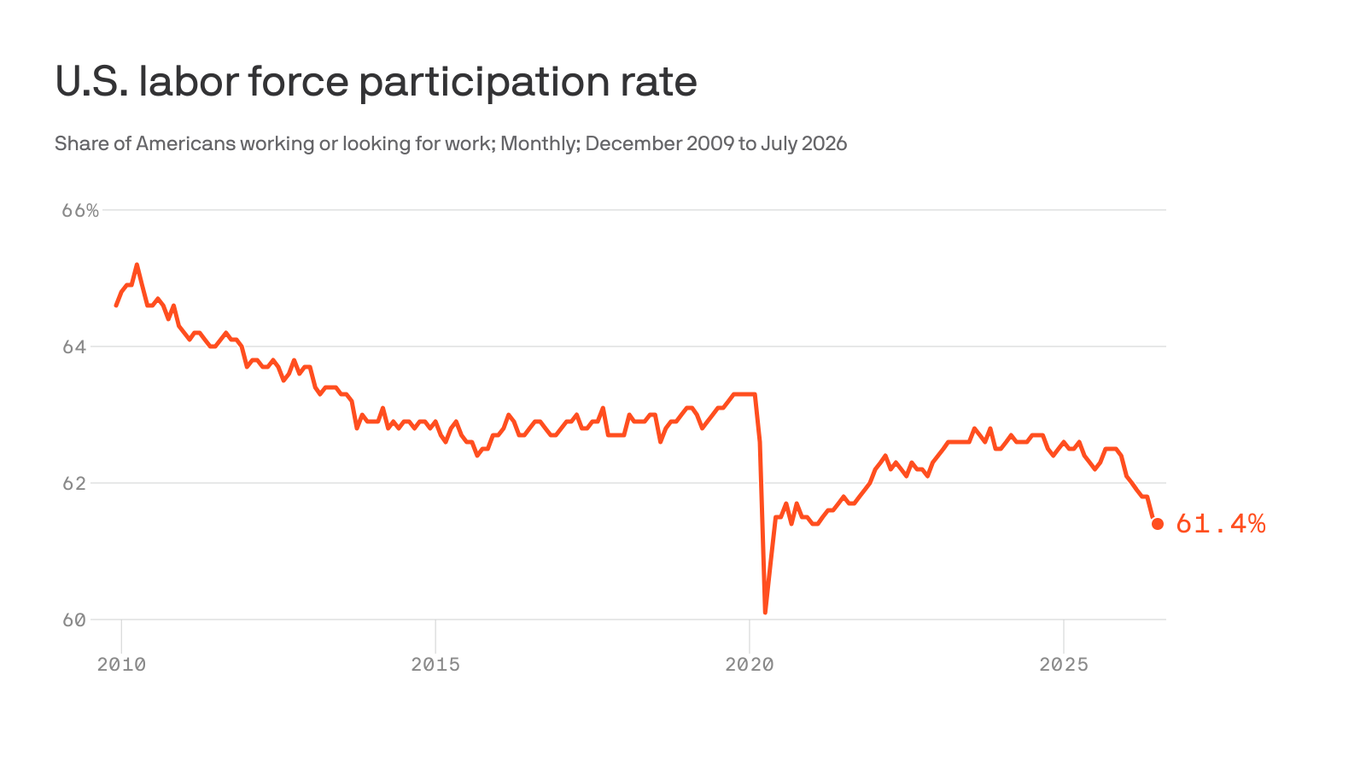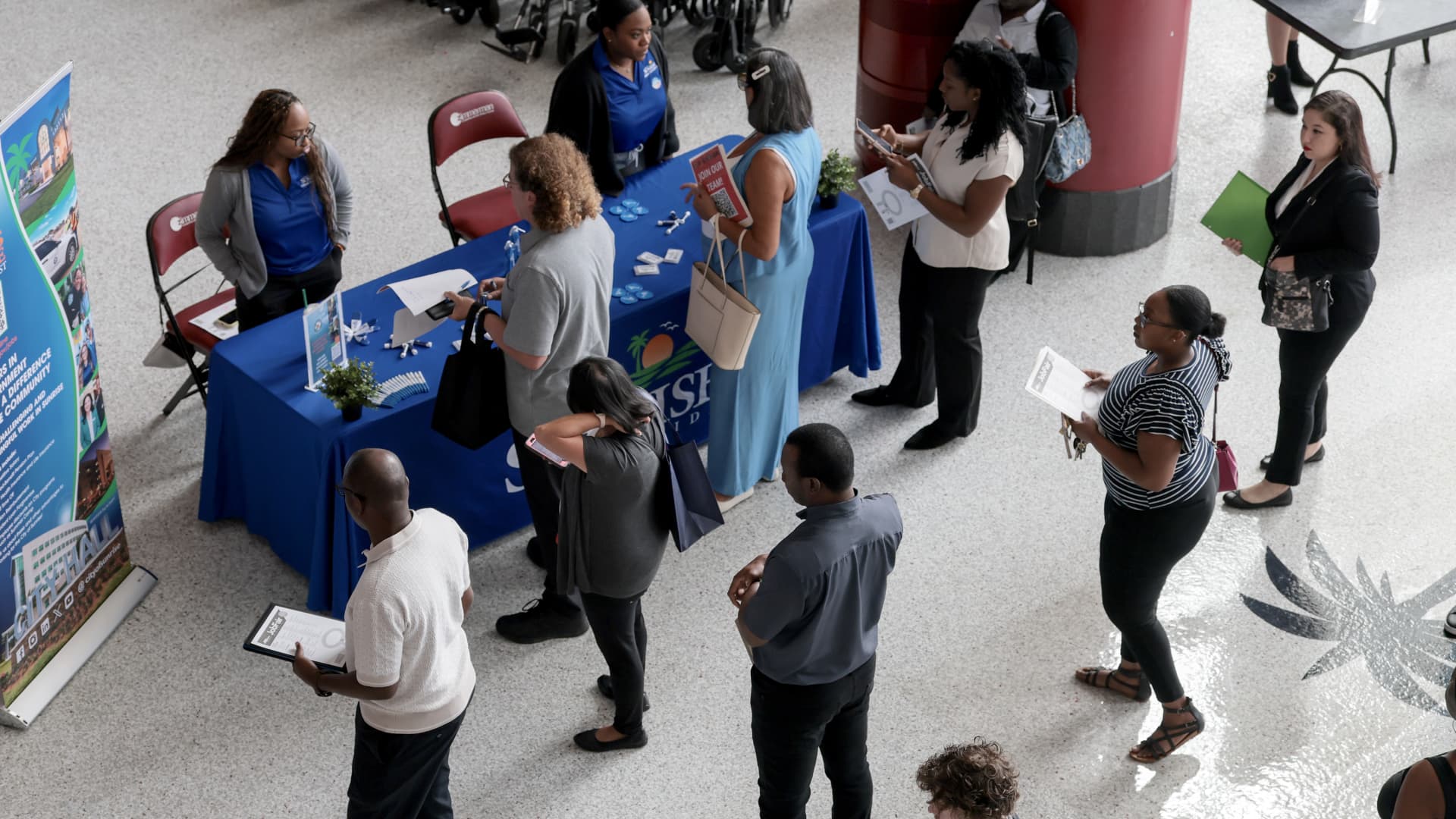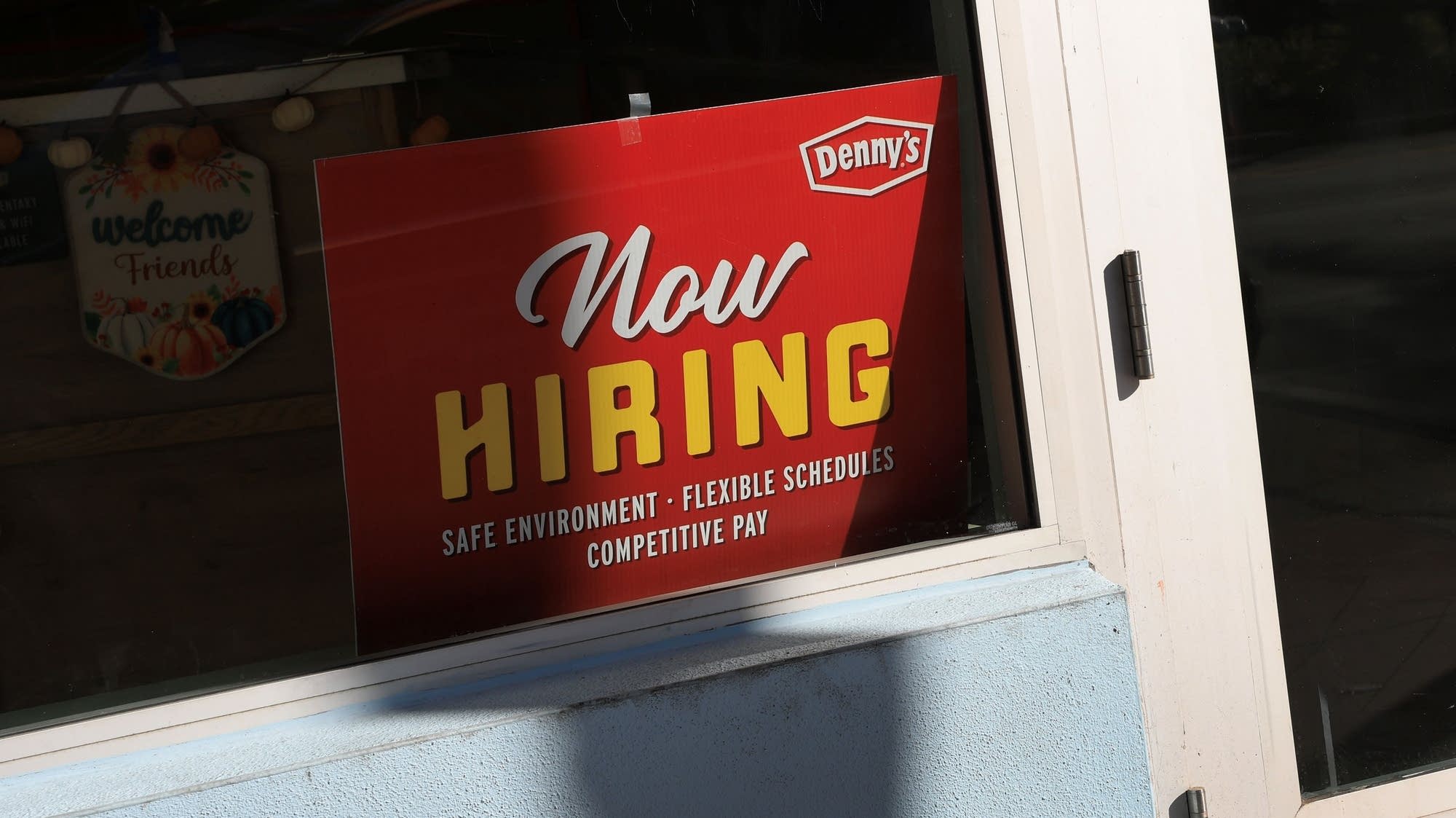
Thursday’s June jobs report from the U.S. Bureau of Labor Statistics painted a less-than-optimal picture. The economy added 57,000 new jobs (which was much lower than expected) and wage growth picked up a little (but it’s still not keeping up with inflation).It also demonstrated an ongoing trend in the job market — namely, that fewer people are participating in it. The labor force participation rate — which keeps track of how many people are either working or actively looking for work —has been trending lower for several years now.“So if you’re retired, or if you’re a stay-at-home parent, or you’re a young person who maybe hasn’t started looking for a job yet, you just wouldn’t be included,” said Laura Ullrich, director of economic research at Indeed.Ullrich said one reason the participation rate has been declining is because of the crackdown on immigration.“And that’s because many immigrants come to the US specifically for work,” she said.As a result, she said the number of immigrants in the labor force can affect the labor force participation rate.“So, if you have fewer immigrants, overall, you’re going to have a lower labor force participation rate,” Ullrich said.Ullrich also said this tends to affect the participation rate for younger workers, since immigrants typically skew younger. But a bigger issue that’s pushing down participation rates is that the population is getting older.“As you have a larger portion of your population that’s over the age of 65, naturally, you’re going to have more people that are retired, and you’re going to have lower labor force participation,” said Preston Mui, senior economist with the advocacy group Employ America.The thing is that all those people who’ve retired still consume goods and services, and Mui says in order to produce those goods and services, we need people to work.“So, as the population ages, there’s potentially an issue where you have fewer workers, and you still have to supply a lot of goods and services,” he said.Mui said there are a few ways the economy can step up to meet that demand. For one, more people in their prime working age could enter the labor force. Existing workers could also become more productive.“If you can do more with fewer workers, then you need fewer workers in order to supply that consumption,” Mui said.Otherwise, Mui said, the economy could slow down.
Why labor force participation has been trending lower for years
One major factor is that the population is aging — and therefore retiring out of the workforce. Another factor is the crackdown on immigration, since immigrant communities have some of the highest labor force participation rates.
388 words~2 min read