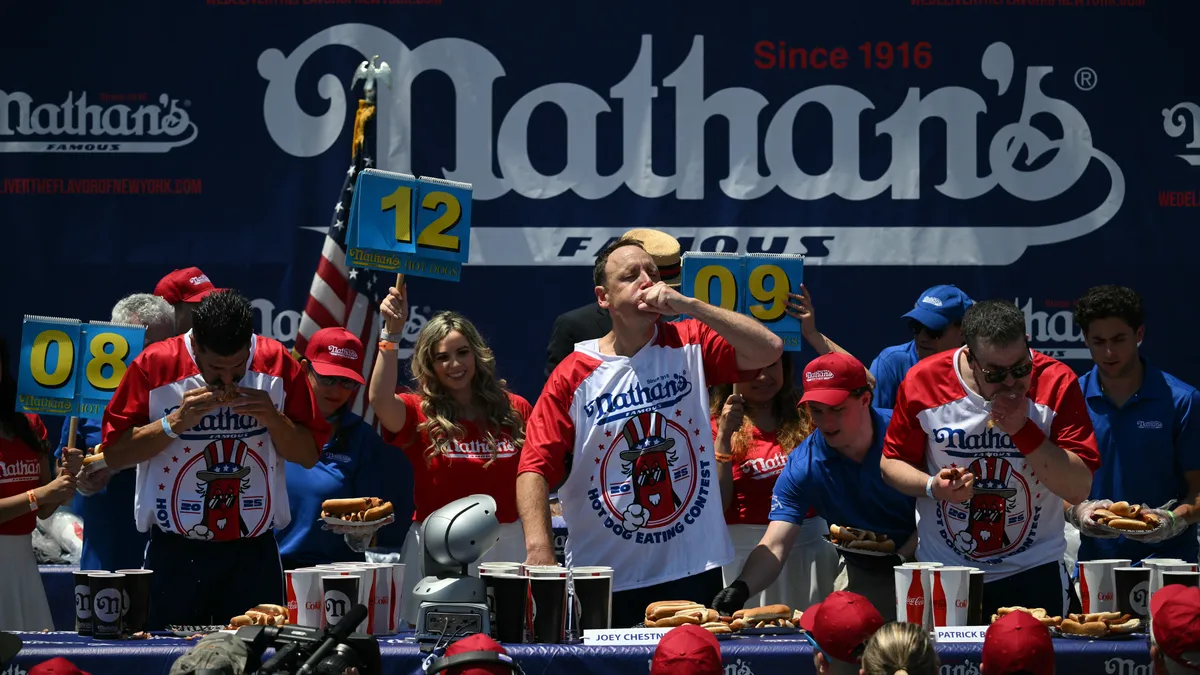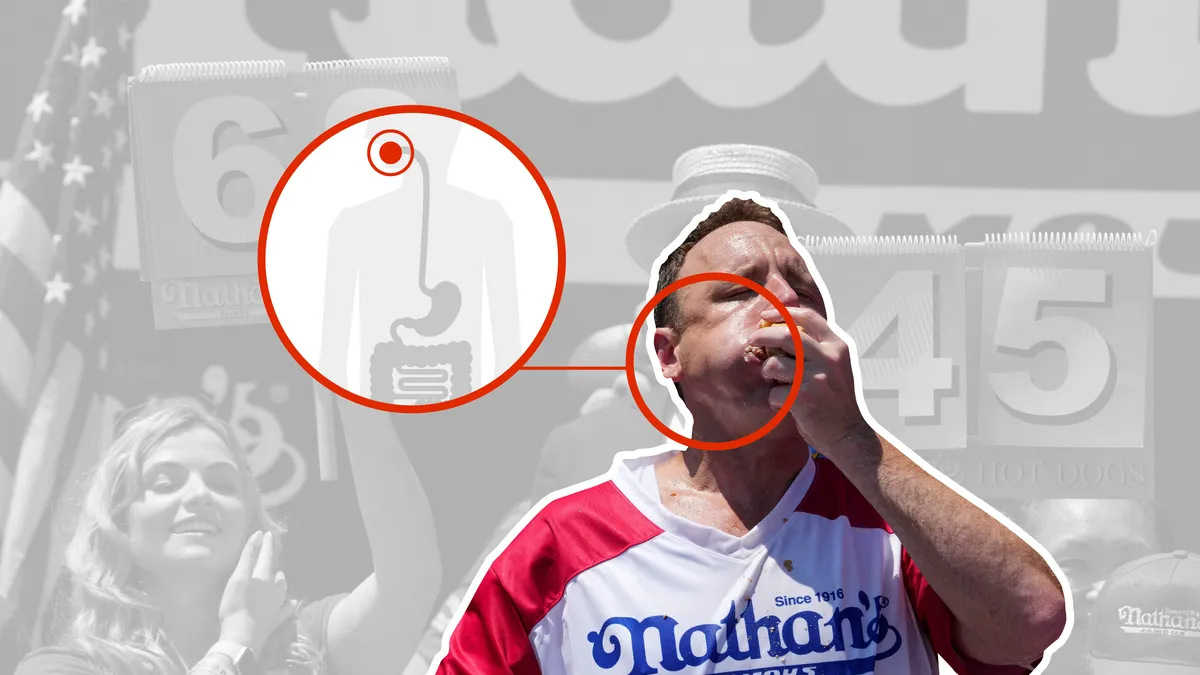
As fireworks and Independence Day celebrations take center stage across America on July Fourth, a different kind of event — competitive eating — will unfold on Coney Island.Defending champions Joey Chestnut and Miki Sudo return to Nathan’s Famous Fourth of July International Hot Dog Eating Contest, where the world's top competitive eaters push the limits of human consumption in a 10-minute race against the clock.Chestnut, a 17-time champion, is chasing another Mustard Belt after reclaiming the men’s title in 2025. Sudo enters as the dominant force in the women’s division, seeking her 12th victory.What looks like summer fun is, in reality, an extreme and sometimes painful test of the human body. Competitive eaters expand their stomach capacity to hold vast amounts of food. During contests, their stomachs stretch, heart rates rise, and digestion struggles to keep up, causing intense physical stress. Afterward, competitors often deal with bloating, nausea, and dehydration, requiring hours or even days to recover.How many hot dogs have been consumed in the Nathan's Famous hot dog contest?The Nathan’s Famous contest is a mix of athleticism and testing human limits. Since 2016, Joey Chestnut has eaten an average of 69.15 hot dogs in the 10-minute contest — that's nearly the average an American eats in an entire year, which is 70, according to the National Hot Dog & Sausage Council.Winners of the Nathan’s Famous hot dog eating contest have eaten a total of 2,541 famous franks, give or take a few, since the contest began in 1982.How do speed eaters prep for the contest?Chestnut, the reigning champ, holds the Nathan's Famous hot dog eating contest record for the most hot dogs eaten at 76. That’s equivalent to almost 17 pounds. That kind of record requires you to train your body and your mind for game day. Many competitive eaters, like those in the Nathan’s Famous contest, practice stretching their stomachs for the main event by drinking large amounts of water quickly and eating large volumes of low-calorie foods such as watermelon, grapes, and cabbage. In the Netflix special "Unfinished Beef: Live," Joey Chestnut stated that he begins training eight weeks prior, conducting "full contest simulations" using the same food in preparation for the event.The goal is to make the stomach able to hold more food before the brain signals that the competitive eater is full. Despite consuming mass quantities of high-calorie foods during competition season, most professional competitive eaters are very lean.In an interview with Mental Floss, competitive eater Yasir Salem discusses how speed eaters will chew gum to strengthen their jaws to avoid fatigue during competitions.What happens to the body as you speed eat?During a hot dog eating contest, the food moves fast. From rapid swallowing in the mouth, down an overworked esophagus, into a massively expanded stomach, then slowly through the intestines, where the body spends hours processing an amount of food it would normally consume over several days.MouthCompetitive eaters have a unique approach to eating that differs significantly from that of the average person. They quickly take large bites of food, often dunking buns in water to soften them for easier swallowing. As a result, they chew very little and sometimes engage in a behavior known as "chipmunking," where their cheeks puff out as they stuff their mouths full.They chew just enough to break the food into manageable pieces before swallowing, according to Gastroenterology & Endoscopy News.EsophagusDuring a contest, swallowing occurs almost continuously as large amounts of food and water repeatedly stretch the esophagus. This forces the lower esophageal sphincter, the valve between the esophagus and the stomach, to open and close rapidly in succession.This practice carries risks, such as choking and aspiration, or food entering the airway. In rare cases, extreme pressure can cause tears in the esophagus.StomachPublished in the American Journal of Roentgenology (2007), the study "Competitive Speed Eating: Truth and Consequences" evaluated the physiological impacts of speed eating by analyzing a world-class champion. Research on elite competitive eaters revealed that some individuals can train to increase the elasticity of their stomachs. During competitions, their stomachs expand significantly, with decreased muscle tone that allows them to accommodate vast volumes of food and liquid. Their stomachs function more like large, expandable bags rather than tight muscular containers. The abdomen may significantly protrude, pushing the diaphragm upward and making breathing more difficult. Elite eaters appear able to tolerate or suppress the pressure-build-up sensation that lets their brains know when they’re full.Small intestineThe stomach gradually releases partially digested food into the small intestine. During this process, enzymes begin to break down proteins, such as those found in hot dogs, while carbohydrates from the buns are converted into sugars. As large amounts of sodium, fat, and calories enter the bloodstream, gastric emptying may take significantly longer than a typical meal. Many competitors often report feeling sluggish, sleepy, or uncomfortable afterward.How to watch Nathan's Famous hot dog eating contestThe women's competition streams at 10:45 a.m. ET via ESPN+ and the ESPN app.Live television coverage of the men's competition starts at 12 p.m. ET on ESPN2, with the main men's event simulcast on ABC at 12:30 p.m. ET.Contributing: Jim Sergent, USA TODAYSources: USA TODAY Network reporting and research; Reuters; Nathan's Famous Hot Dog Eating Contest; American Journal of Roentgenology; National Library of Medicine
70+ hot dogs in 10 minutes. How the body handles Nathan's contest
Nathan’s Famous Hot Dog Eating Contest is set for July Fourth. What happens to your body during a speed-eating competition?
877 words~4 min read