AFP, GENEVA
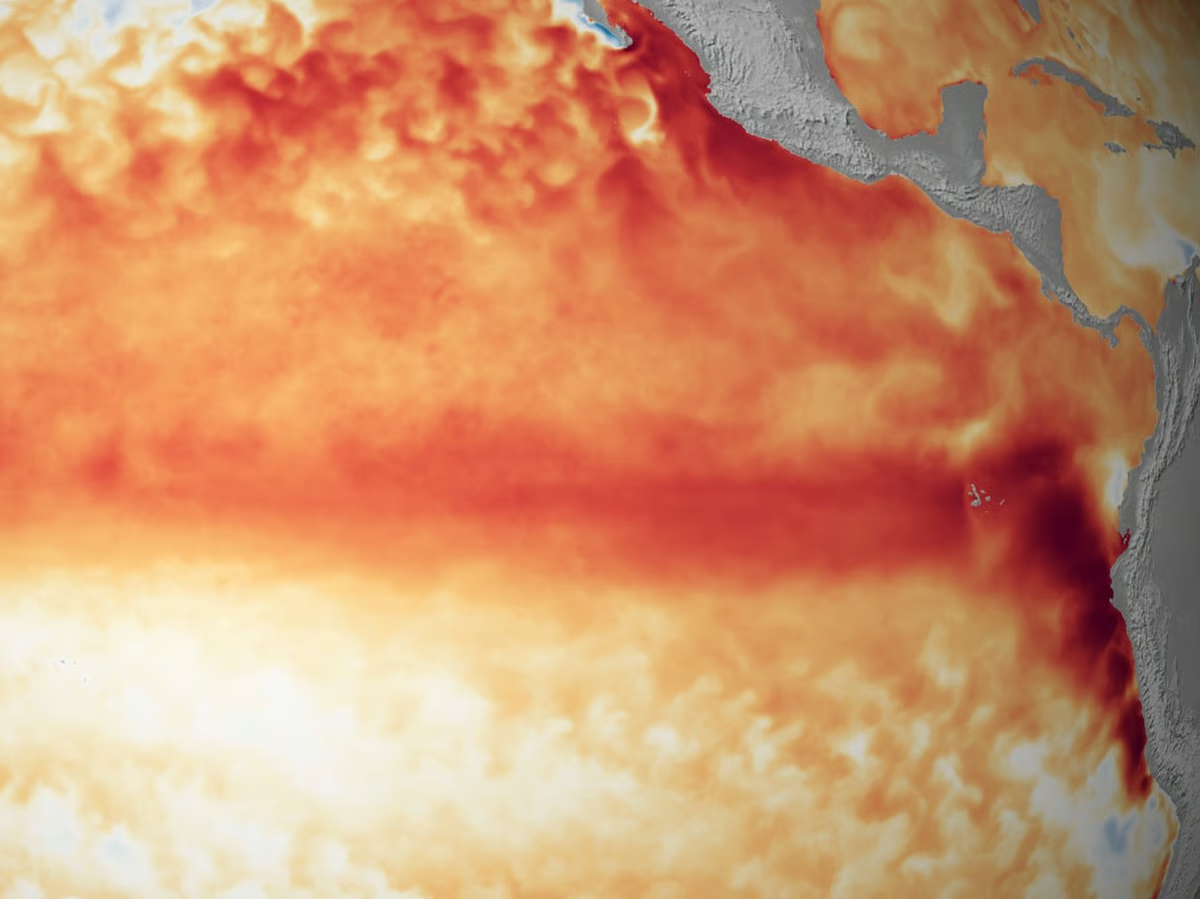
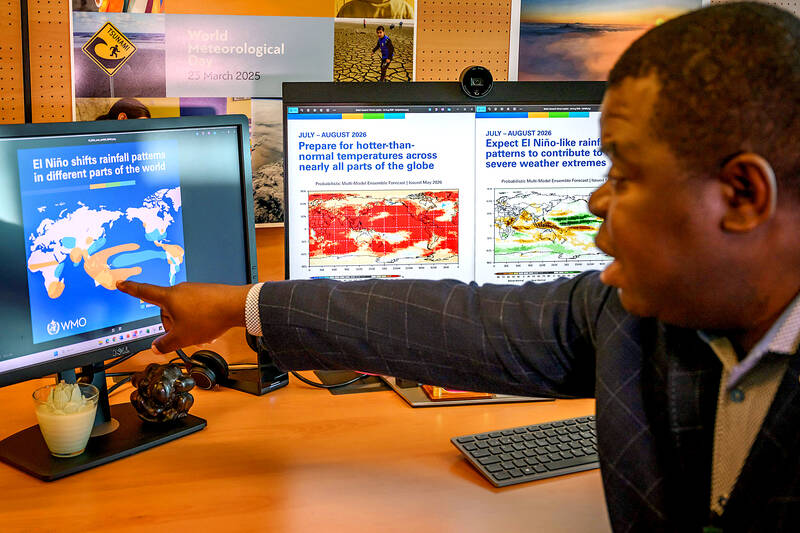
El Nino would quickly develop into a “strong” event between this month and September, fueling the likelihood of extreme weather, the UN’s weather and climate agency warned yesterday.The El Nino had already set in, and would quickly gain strength, the World Meteorological Organization (WMO) said, warning countries to brace for impact.El Nino is a natural climate phenomenon that warms surface temperatures in the central and eastern equatorial Pacific Ocean, bringing worldwide changes in winds, pressure and rainfall patterns.
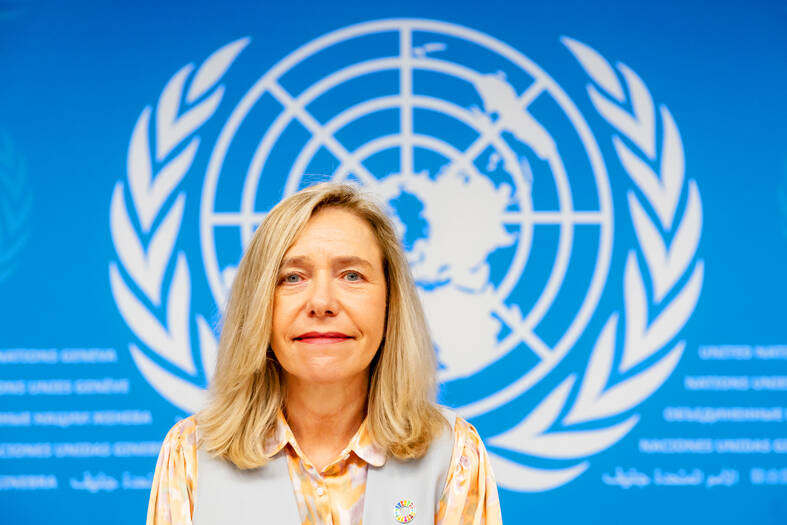
World Meteorological Organization Secretary-General Celeste Saulo is pictured at the organization’s headquarters in Geneva, Switzerland, on Oct. 7, 2024.
It typically takes place every two to seven years and lasts about nine to 12 months.The WMO’s monthly Global Seasonal Climate Update points toward “a rapid development into a strong El Nino event during July-September.”
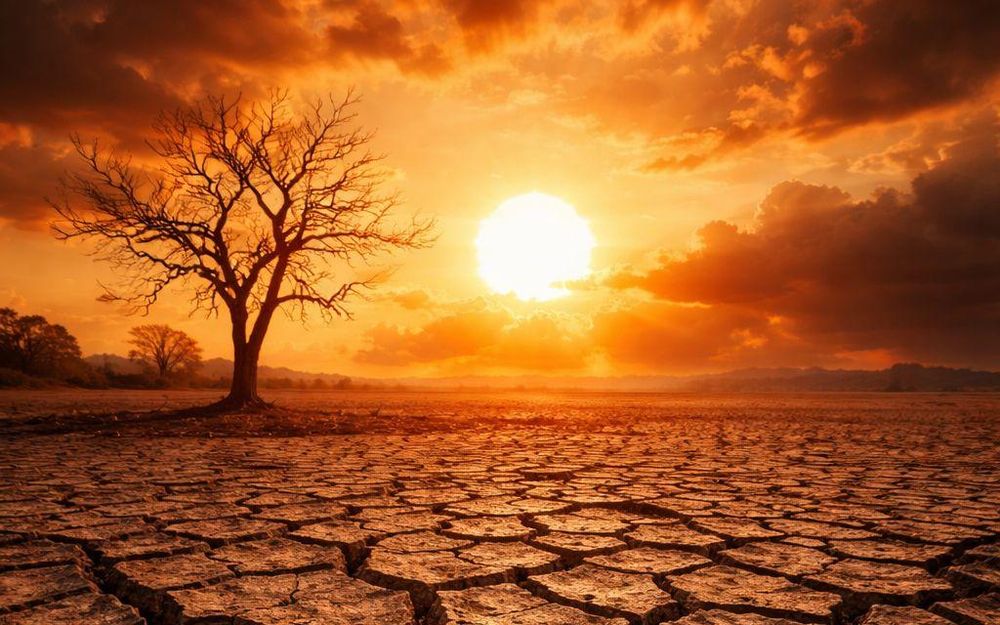
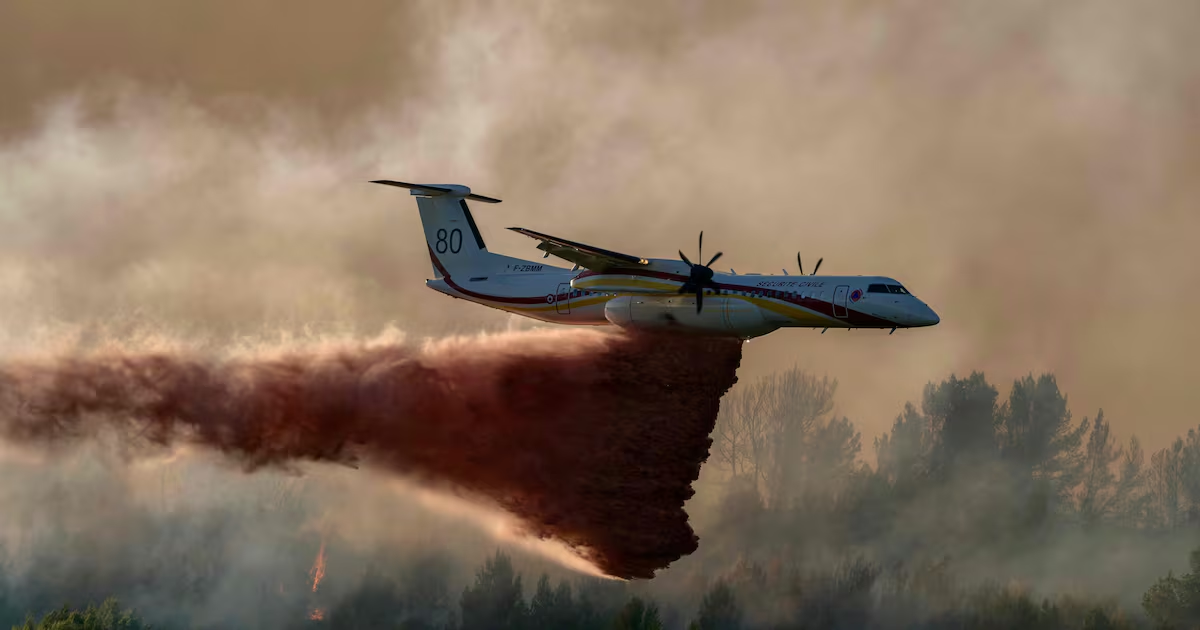
The UN agency classifies El Nino events as weak, moderate, strong or very strong.“El Nino conditions have developed in the tropical Pacific and are forecast to strengthen rapidly over the coming months, increasing the likelihood of... extreme weather events in many parts of the world,” the WMO said.The agency said that forecasts produced by leading global climate centers, using different models, indicate a consistent and significant warming of ocean temperatures across the central and eastern equatorial Pacific.“El Nino is expected to continue strengthening during the Northern Hemisphere autumn, with its influence extending across many regions of the globe,” the WMO said. “Meanwhile, the equatorial Atlantic basin is expected to remain generally warmer than average.”“El Nino conditions are already under way and are forecast to strengthen rapidly into a strong event,” WMO Secretary-General Celeste Saulo. “This will intensify the chances of drought and heavy rainfall and the risk of heatwaves on land and marine heatwaves in many regions.”The WMO said it was stepping up early warning support to help guide preparedness, especially in climate-sensitive sectors such as agriculture and health.“Advanced seasonal forecasts and early warnings are vital to save lives and cushion the impact on our economies and our communities,” Saulo said.The update predicts an overwhelming likelihood of above-average temperatures across most land areas between 60° south and 60° north — covering nearly all populated areas outside the polar regions.The July-to-September rainfall outlook is consistent with a strengthening El Nino, with above-normal rainfall forecast in some areas such as portions of the southwestern US, and below normal forecast across the Indian subcontinent and much of Australia.