The World Meteorological Organization said El Nino had already set in, and would quickly gain strength, as it warned countries to brace for impact.
The effects of El Nino © Nicholas SHEARMAN / AFP
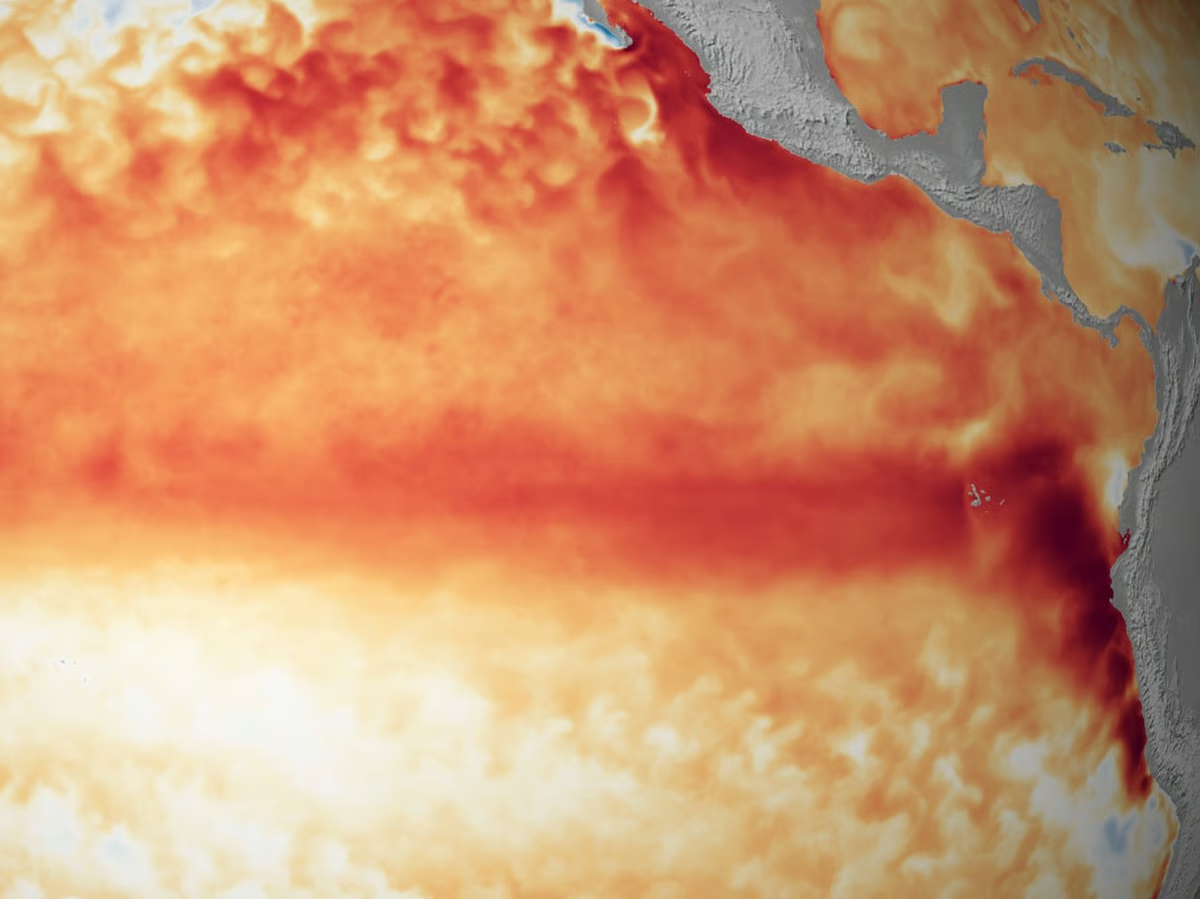
El Nino is a natural climate phenomenon that warms surface temperatures in the central and eastern equatorial Pacific Ocean, bringing worldwide changes in winds, pressure and rainfall patterns.It typically takes place every two to seven years and lasts around nine to 12 months.Conditions oscillate between El Nino and its opposite La Nina, with neutral conditions in between.The WMO's monthly Global Seasonal Climate Update points towards "a rapid development into a strong El Nino event during July-September".The UN agency classifies El Nino events as weak, moderate, strong or very strong, meaning it is set to reach the third-highest level out of four."El Nino conditions have developed in the tropical Pacific and are forecast to strengthen rapidly over the coming months, increasing the likelihood of... extreme weather events in many parts of the world," the WMO said.Heatwave risksThe Geneva-based agency said that forecasts produced by leading global climate centres, using different models, indicate a consistent and significant warming of ocean temperatures across the central and eastern equatorial Pacific.