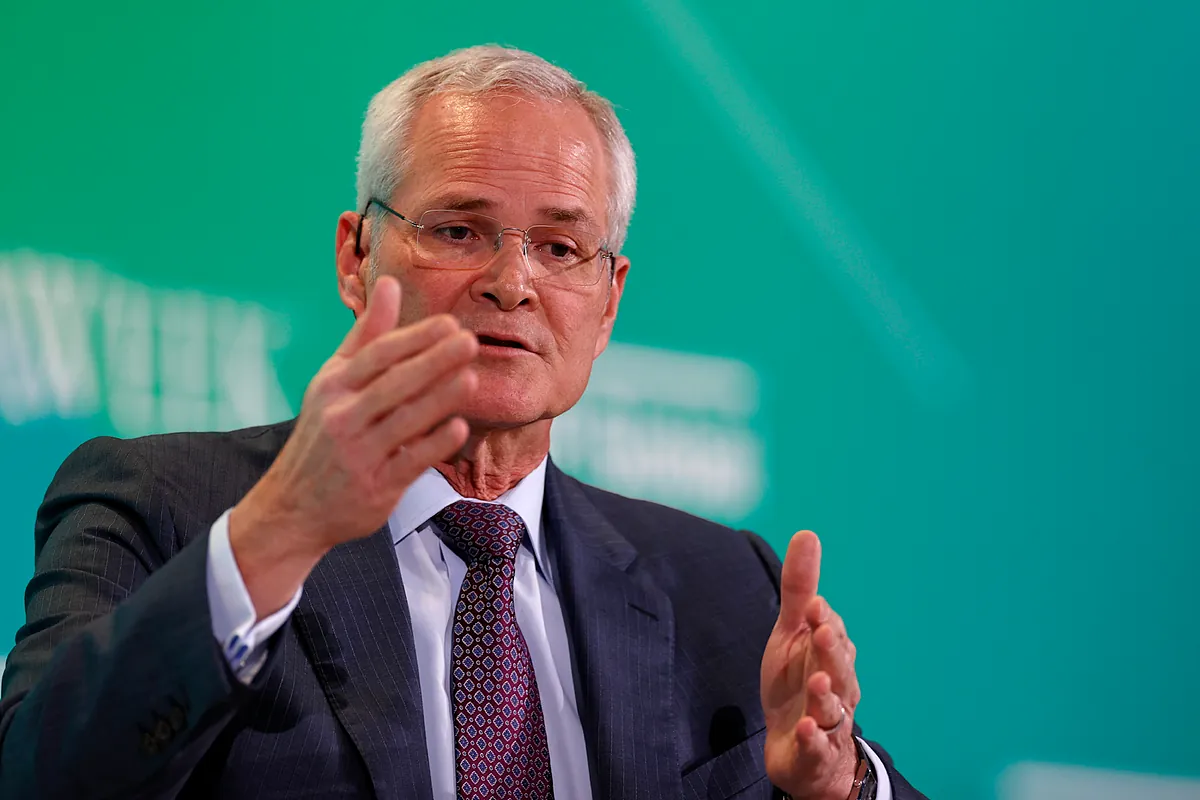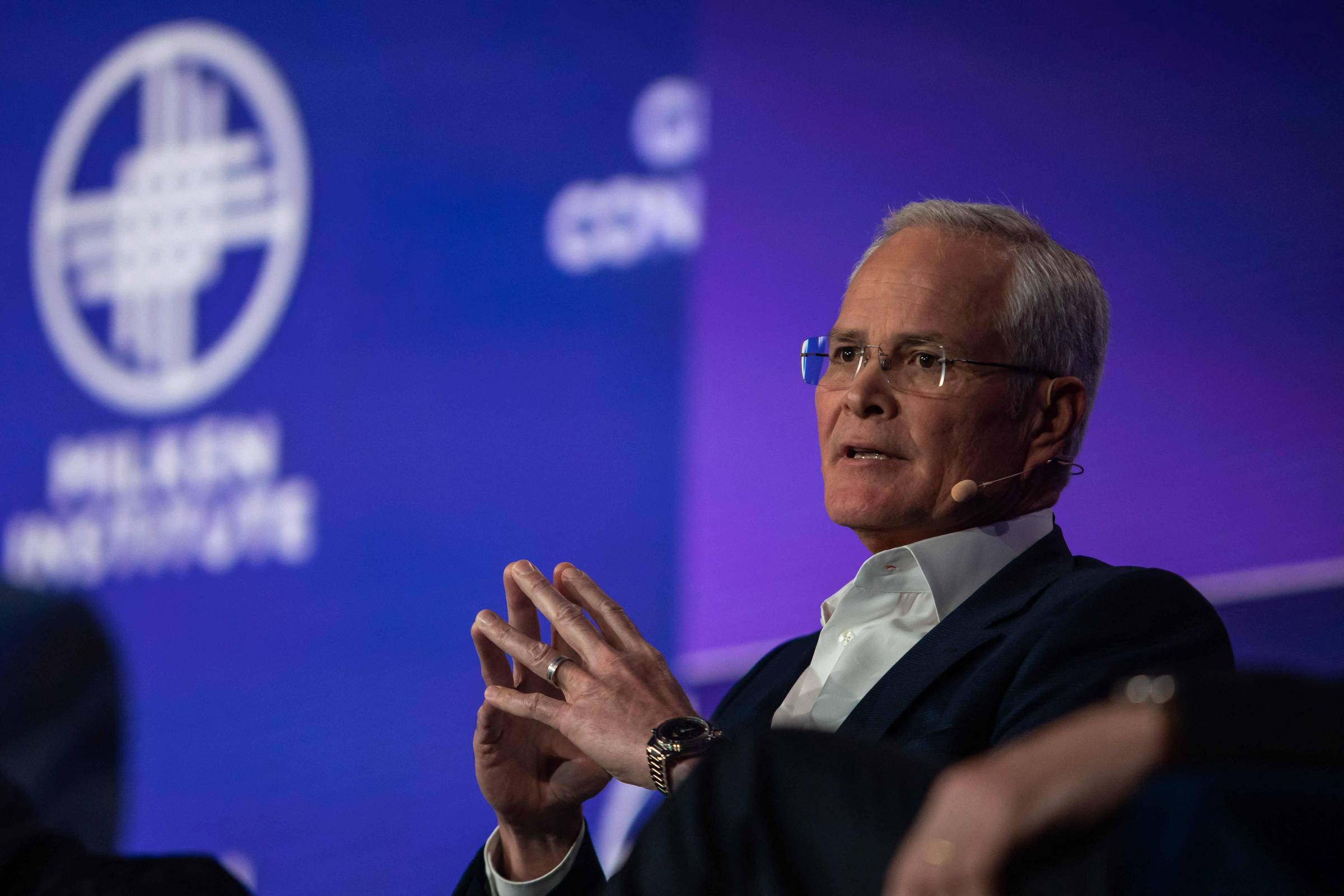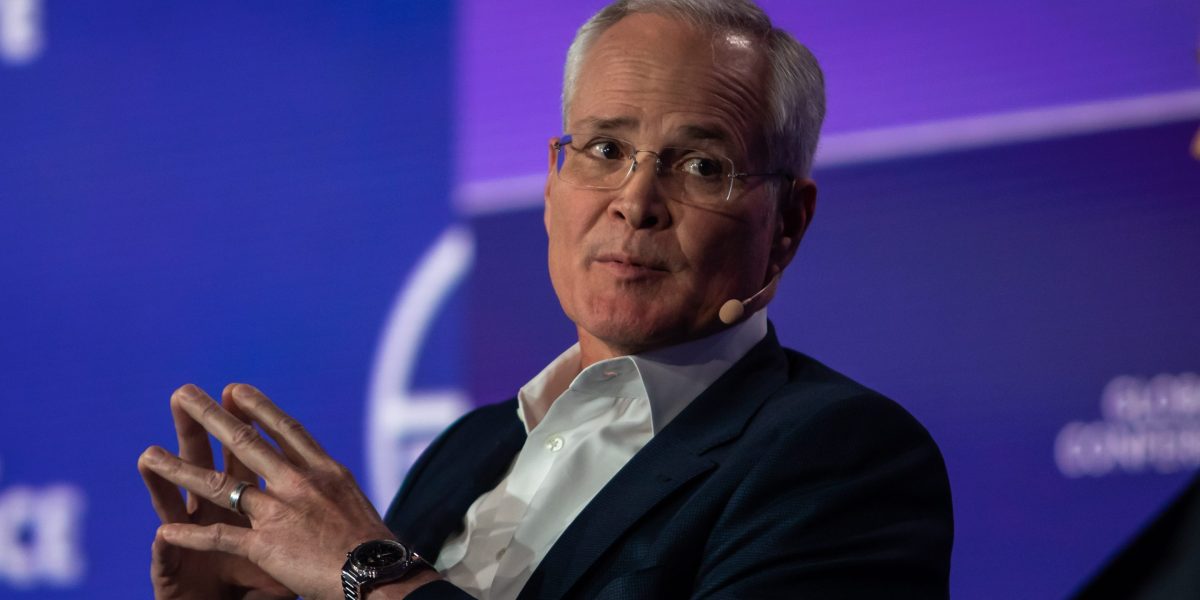
Skip to Content News Archives Economy Energy Oil & Gas Renewables Electric Vehicles Mining Commodities Agriculture Real Estate Mortgages Mortgage Rates Finance Banking Insurance Fintech Cryptocurrency Work Wealth Smart Money Wealth Management Investor Personal Finance Family Finance Retirement Taxes High Net Worth FP Comment Executive Women Puzzmo Newsletters Financial Times Business Essentials More Innovation Information Technology FP500 Podcasts Small Business Lives Told Tails Told Shopping Financial Post Store Obituaries Place a Notice Advertising Advertising With Us Advertising Solutions Postmedia Ad Manager Sponsorship Requests Classifieds Place a Classifieds ad Working Profile Settings My Subscriptions Saved Articles My Offers Newsletters Customer Service FAQ News Economy Energy Mining Real Estate Finance Work Wealth Investor FP Comment Executive Women Puzzmo Newsletters Financial Times Business Essentials HomeOil & GasFinancial TimesHow Exxon's CEO became the King of Big OilDarren Woods is the industry's most powerful chief executive for a generationAuthor of the article:Last updated 49 minutes ago You can save this article by registering for free here. Or sign-in if you have an account.Darren Woods has used his powerful role to influence global climate policy and regulation, as well as hammer green investor groups. Photo by MARK FELIX/AFP via Getty ImagesExxonMobil’s leaders were in a celebratory mood as they wound up the company’s annual meeting in late May.Subscribe now to read the latest news in your city and across Canada.Exclusive articles from Barbara Shecter, Joe O'Connor, Gabriel Friedman, and others.Daily content from Financial Times, the world's leading global business publication.Unlimited online access to read articles from Financial Post, National Post and 15 news sites across Canada with one account.National Post ePaper, an electronic replica of the print edition to view on any device, share and comment on.Daily puzzles, including the New York Times Crossword.Subscribe now to read the latest news in your city and across Canada.Exclusive articles from Barbara Shecter, Joe O'Connor, Gabriel Friedman and others.Daily content from Financial Times, the world's leading global business publication.Unlimited online access to read articles from Financial Post, National Post and 15 news sites across Canada with one account.National Post ePaper, an electronic replica of the print edition to view on any device, share and comment on.Daily puzzles, including the New York Times Crossword.Create an account or sign in to continue with your reading experience.Access articles from across Canada with one account.Share your thoughts and join the conversation in the comments.Enjoy additional articles per month.Get email updates from your favourite authors.Create an account or sign in to continue with your reading experience.Access articles from across Canada with one accountShare your thoughts and join the conversation in the commentsEnjoy additional articles per monthGet email updates from your favourite authorsSign In or Create an AccountorThey had just won a decisive victory over dissident shareholders opposing the oil company’s proposal to move its legal domicile from New Jersey to Texas — a shift critics warned would dilute shareholder rights and set a precedent that other United States corporations would follow.Darren Woods, chair and chief executive of the world’s largest non-state-owned oil company, told shareholders the group’s oil and gas production was at a 40-year high and they could look forward to a future that would be “the brightest in the company’s history.”Get the latest headlines, breaking news and columns.By signing up you consent to receive the above newsletter from Postmedia Network Inc.A welcome email is on its way. If you don't see it, please check your junk folder.The next issue of Top Stories will soon be in your inbox.We encountered an issue signing you up. Please try again“When you step back and look across all of our businesses, it is clear nobody has built a kind of company we have,” the 61-year-old executive said during a virtual meeting at which he answered only a handful of the 250 questions posed by shareholders.Woods’s upbeat assessment of Exxon’s fortunes marks a stunning turnaround for the energy group. Five years earlier, a tiny hedge fund, Engine No. 1, which owned just 0.02 per cent of the company’s shares, ousted three Exxon directors in a proxy battle waged over its weak climate policies and poor financial performance.That followed a collapse in the company’s share price during the pandemic when oil demand cratered due to lockdowns. For a brief moment, America’s second-largest oil company Chevron surpassed its bitter rival in terms of market capitalization.Soon after, Exxon was dumped from the Dow Jones Industrial Average, the prestigious index of the top 30 listed US companies, a symbolic blow for an industry leader that traces its roots back to the founding of Standard Oil by business magnate John D Rockefeller.Some pundits questioned whether Woods, who was appointed chief executive in January 2017 and pursued a growth strategy focused on pumping more oil, could survive in an era when investors rewarded energy transition strategies. The election of three Engine No. 1 nominees to Exxon’s board threatened to weaken his grip on strategy.But Woods, an electrical engineer from Kansas and 34-year Exxon veteran, did not waver. While European rivals BP and Shell invested billions of dollars in wind and solar, Exxon and its partners committed US$60 billion to develop one of the world’s largest oil discoveries in Guyana. In 2022 Exxon bought a stake in the world’s biggest liquefied natural gas project in Qatar. A year later came the US$60 billion takeover of Pioneer Natural Resources, which made Exxon the largest producer and leaseholder in the Permian, the most prolific oilfield in the U.S.These bets have paid off handsomely, in part because of political winds both domestic and global shifting in Exxon’s favour. In 2022, Russia’s full-scale invasion of Ukraine sent crude prices skyrocketing to US$139 per barrel, and they have remained elevated. Then in 2025, Donald Trump returned to the presidency, rolling back environmental rules, cancelling permits for green energy rivals and accelerating lease sales.Over the past five years Exxon shares have surged 115 per cent, more than any other U.S. or European oil major. It holds the largest proven oil and gas reserves among publicly traded western oil majors and is now among the industry’s leaders in return on capital employed, a key measure of profitability.“Woods has done a tremendous job. He set out a strategy and stuck to it, unlike some of his industry rivals,” says Jason Gabelman, an analyst at TD Cowen, an investment bank. “He invested heavily when oil prices were subdued in the highest-quality oil and gas assets that earn money during down cycles. But he also focused on improving profit margins and taking costs out by simplifying the business.”Since acceding to the demands for board changes by Engine No. 1, Woods has regrouped and used his powerful role to influence global climate policy and regulation, as well as hammer green investor groups.But with an extraordinary run of success comes the risk of over-reach.Investors will look for Exxon to sustain its performance even if the political outlook changes, and at a time when its largest rival, Chevron, is again gaining ground on it. In addition, Exxon’s war on activist shareholders and crackdown on internal dissent looks to some like a move to insulate itself from criticism that could have wider repercussions.“This is not just about Exxon. This is about whether American capital markets will maintain shareholder checks and institutional checks on corporate power,” says Christina Sautter, a law professor at Southern Methodist University.Woods endured a tough first five years as Exxon boss when he replaced Rex Tillerson, who retired in 2017 and became secretary of state in Trump’s first administration.The company missed oil production targets, reported its worst-ever financial loss and came under pressure from investors, in part due to poor decisions taken by Tillerson, including a mistimed and costly US$41 billion acquisition of shale gas producer XTO Energy in 2010.But following the defeat to Engine No. 1, Woods began to make strides to modernize Exxon’s corporate culture and slash costs. In 2023 the company shifted its corporate headquarters from Irving, Texas, to a suburb of Houston, resulting in the axing of the “God Pod” — a lavish collection of corporate suites that isolated top executives from the workforce.Woods has cut 13,000 jobs over a decade as part of a drive to simplify the business structure, consolidate offices and introduce new technologies. In January Exxon reported it had made US$15.1 billion of structural cost savings since 2019, saying it was more than all other international oil companies combined.Brian Kersmanc, portfolio manager at GQG Partners, which owns 6.3 million Exxon shares, says one of Woods’s great strengths is his ability to resist the intense pressure from the environmental, social and governance movement and “take a longer-term focus and perspective”.But some former Exxon employees question whether Woods — who declined to be interviewed for this story — has done enough to tackle a corporate culture focused on ruthless competition, a hierarchical internal structure and excessive secrecy.These were the hallmarks of the late Lee Raymond, who led the company between 1993 and 2005, according to Private Empire: ExxonMobil and American Power, a book by journalist Steve Coll.Several former employees tell the FT the company’s performance-based ranking system is a concern because it measures workers against each other and creates a “fear-based” culture that discourages them from speaking up to challenge decisions or strategy. Under the system, employees ranked in the lowest-performing tier are required to enrol in improvement plans or can be fired.Exxon has disciplined staff who raised whistleblower complaints, including data scientists Lindsey Gulden and her co-worker Damian Burch. They raised concerns internally that the company had overstated its earnings by not accounting for slower than expected drilling speeds and were fired when a newspaper later reported similar claims.Gulden tells the FT she joined Exxon because she thought the company “valued integrity and compliance” but had been disappointed.“The fact I was fired after reporting these concerns caused me to question the credibility of the company’s public communications, especially its claims regarding climate change mitigation,” she says.Exxon rejects criticism of its performance-based ranking system, saying it drives the “strong performance” that underpins its results. It says Gulden’s termination had nothing to do with any complaint of fraud, and “vigorously” contests the whistleblower claims.Exxon’s uncompromising position on oil and gas production continues to make it a target for environmental groups.Green campaigners, Democratic politicians and activist shareholder groups label the company as one of the world’s largest “climate villains” and Woods as a “ringleader”.They cite historical records that show the company’s own scientists accurately modelled global warming in the 1970s and 1980s, although the company funded disinformation campaigns that cast doubt on this science. Exxon denies misleading the public.Woods is a more conciliatory figure than his predecessors Raymond and Tillerson, who were openly skeptical of climate science. He has said he believes human activity is a major cause of climate change and urged Trump to keep the U.S. in the 2015 Paris agreement to limit global warming to maintain the country’s international influence.At the same time, Woods has leveraged his proximity to the Trump administration to become a fierce opponent of climate legislation, especially in Europe. Last year he urged Washington to use trade talks with Brussels to demand changes to the EU’s proposed corporate sustainability due diligence directive — a new climate and human rights regulation that Exxon said threatened U.S. companies with “bone-crushing penalties”.After months of fierce lobbying in Europe and the U.S., the oil and gas majors got their way: the rule was heavily watered down in February 2026.Exxon has also continued to aggressively target critics. In January 2024 the company sued the activist shareholders Arjuna Capital and Amsterdam-based investor group Follow This to stop an emissions-reduction resolution from going to vote at its annual meeting.Exxon argued it was being bombarded with frivolous shareholder resolutions that breached securities law and it was forced to take the unusual step of going to court to stop them.Subsequently it easily defeated a campaign by Calpers, the giant US pension fund, and Norway’s sovereign wealth fund to block the re-election of some board members in protest.“This was the most blatant attack on shareholder rights to date by Big Oil,” says Mark van Baal, founder of Follow This. Like many climate activists, van Baal expresses disappointment at the failure of Engine No. 1’s three directors elected to Exxon’s board to implement significant change to its strategies.Since then, the company has introduced two significant reforms that critics warn will dilute shareholder rights further — a new management-friendly proxy-voting system and the relocation of its corporate domicile to Texas.Both measures easily passed shareholder votes at annual meetings, despite a public clash with some shareholders, including the New York City comptroller, whose office represents the city’s pension funds.Governance experts have warned the new voting mechanism will make it harder for activists to win votes, while Texas recently amended its corporate law to make shareholder lawsuits and proposals more difficult to bring and give directors a greater presumption of independence.Exxon has said Texas’s pro-business laws and public policy are more in line with its values and the move could place it under the jurisdiction of courts viewed as more friendly towards corporate interests.It denies its actions dilute shareholder rights, saying it has not adopted provisions of Texas law that could be viewed as having such an outcome.Critics say Exxon is leading a campaign facilitated by the Trump-led Securities and Exchange Commission to ensure “ordinary shareholders are silenced”, shareholders’ meetings are “depoliticized” and management is insulated from criticism.Southern Methodist University’s Sautter says there is a danger for the company inherent in the dilution of shareholder rights, as it weakens scrutiny of management and board decisions. “When shareholders can’t effectively challenge board decisions, whether it’s via derivative suits or shareholder proposals, you’re not eliminating problems, you’re hiding them until they explode,” she says.By some accounts, Woods plans to go further in limiting transparency on climate-related matters.Late last year, he called chief executives of a number of listed companies in Latin America and Europe to pitch them on a new lobbying initiative backed by Exxon called Carbon Measures, according to people familiar with the calls.The rule book the group proposed would, if adopted by regulators, remove the need in European and Californian law for fossil fuel groups to disclose levels of planet-warming gases from the barrels of oil they have sold.Under Woods, Exxon has long struggled against the expectation it should disclose all its emissions, and the group remains the only one of the five western energy supermajors never to have set a target that factors in combustion emissions — which, in its case, are comparable to those of a country such as Canada or Saudi Arabia.Instead, Carbon Measures argues, companies should focus on publishing emissions from production. So while emissions from the shipping fuel used to transport a barrel of Exxon oil to a refinery would be included, for example, the far higher greenhouse gases from burning barrels of oil sold by Exxon would remain off the books.Critics say this would absolve energy companies and banks of responsibility for their production of or investment in fossil fuels, passing this liability on to the consumer.Carbon Measures says that Exxon exercises no more influence on the group than other founders.But Exxon’s then special projects lead Pat McCarthy helped set Carbon Measures up and served as interim chief of staff and senior director of communications, his LinkedIn page shows. Exxon mid-level management repeatedly met external climate policy experts to make the case for Carbon Measures, meeting attendees say.“Woods has been very good at saying, ‘This is a difficult problem but… we just can’t change what people do with our product,'” says Kert Davies, investigations director at the U.S. non-profit Center for Climate Integrity. “They seek to be blameless in the equation: that’s the modern lie, the modern deception.”Curtis Smith, a spokesperson for Exxon, called the Carbon Measures lobby group a “solution for real change” that could help “reduce emissions at scale”.Jeffrey Ubben, a climate-conscious investor who was appointed by Exxon to its board during the fight with Engine No. 1 and stepped down in May, says criticism of the company and Woods in particular can be unfair.“There are a lot of folks who want to see Exxon as the villain. They want to see a bogeyman, but Darren is not a bogeyman,” Ubben says, signalling the chief executive’s launch of a low-carbon business in which Exxon has pledged to invest US$20 billion by 2030. “He has invested in carbonation but as with any CEO he cannot invest in projects that will not provide a return or that society is not willing to pay for.”Exxon’s strong performance and recent victories over activists and other critics have cemented Woods’s position as the most powerful oil industry chief executive for a generation.But analysts caution that he faces some key obstacles over the next five years before he is expected to stand down in the early 2030s at the company’s mandatory retirement age of 65.“One of the big challenges they face now is that their stock price reflects their success in recent years and they will need to continue that level of success and growth to justify the price,” says Gabelman at TD Cowen.He says Exxon’s profit margins at its hugely successful Guyana project will fall this year under the terms of its production-sharing agreement; it must now negotiate investments in the country with Chevron, which gained a 30 per cent stake in a massive offshore block in Guyana through its acquisition of Hess.Exxon filed and lost a contentious arbitration case with Chevron over the purchase, a two-year battle that damaged the personal relationship between Woods and Chevron chief executive Mike Wirth.Chevron has also pushed ahead of Exxon in two growth businesses: oil drilling in Venezuela and supplying electricity to AI data centres.Its 20-year deal with Microsoft to develop a huge power facility in Texas is one of the most significant strategic moves by an oil major into power generation and places Chevron ahead of Exxon in the race to exploit a surge in demand from the AI build-out.“This is a major win for Chevron,” says Paul Sankey, founder of Sankey Research. “The 20th century was driven by oil, the 21st century will be driven by electricity.”But, despite Chevron’s recent successes, Exxon still leads the pack, particularly in the high-margin oil business, analysts say. Exxon has almost double the proven reserves of its nearest listed competitor and Woods shows no signs of allowing rivals to catch up.The company also enjoys an elevated role as a global advocate for the oil and gas industry in an era when Trump has made fossil-fuel diplomacy a key tenet of U.S. foreign policy.“Few would bet against Exxon maintaining its lead over other oil majors,” says Martin Houston, former executive chair of LNG developer Tellurian.“From the outside, there is nothing flamboyant about Darren Woods. He comes from the refining side of the business, and just gets on with the job in a low-key way. Producing a lot of oil very efficiently and making a lot of money for shareholders.”Even climate activists concede that Woods’s advocacy for looser regulations is part and parcel of his job steering a company with a historic and singular focus on oil and gas extraction.“Exxon’s survival is the paramount job of the Exxon CEO,” says Davies, of the Center for Climate Integrity. “No matter who he is.”© 2026 The Financial Times Ltd Join the Conversation This website uses cookies to personalize your content (including ads), and allows us to analyze our traffic. Read more about cookies here. By continuing to use our site, you agree to our Terms of Use and Privacy Policy.
How Exxon's CEO became the King of Big Oil
Exxon's strong performance and recent victories have cemented Darren Woods's position as the most powerful oil CEO for a generation. Read on
3,256 words~15 min read