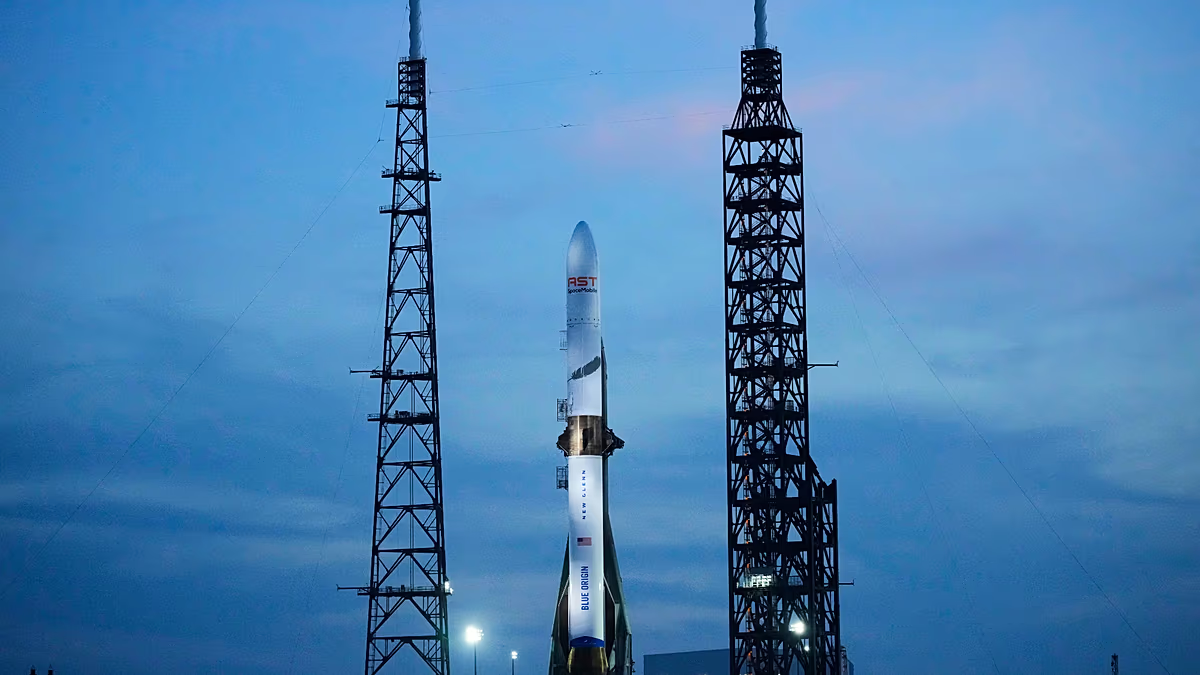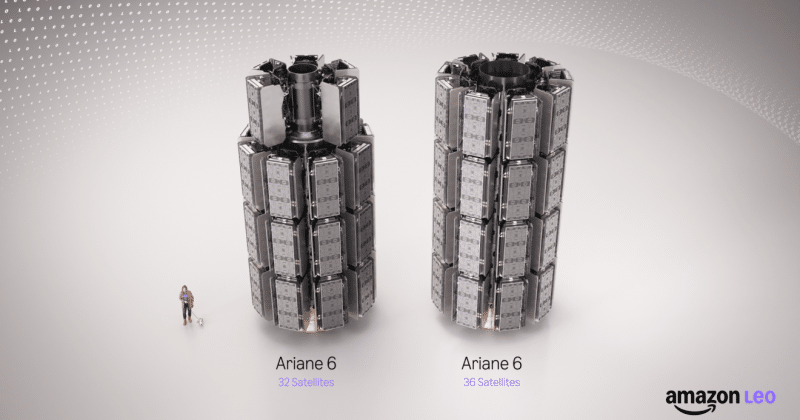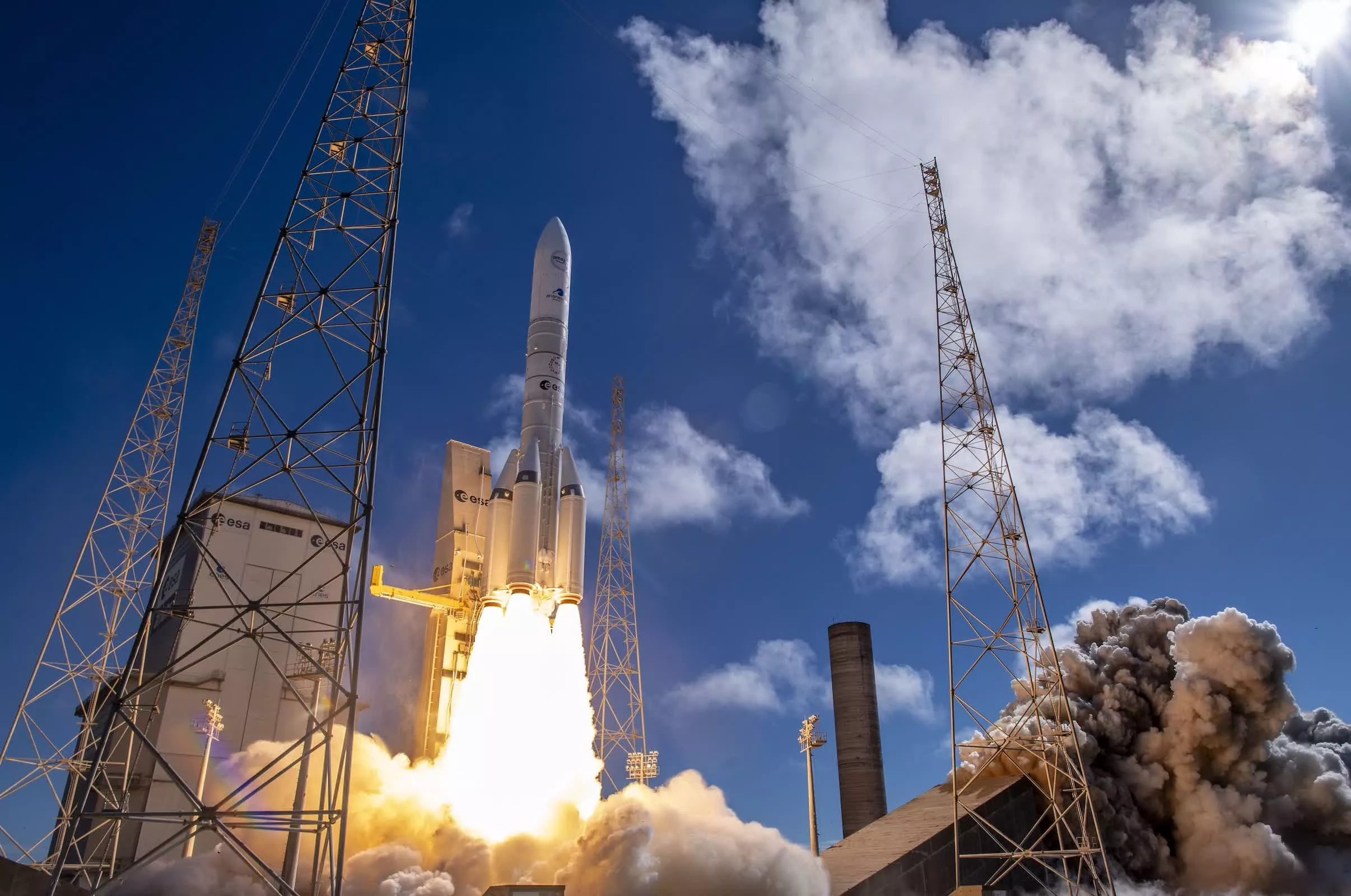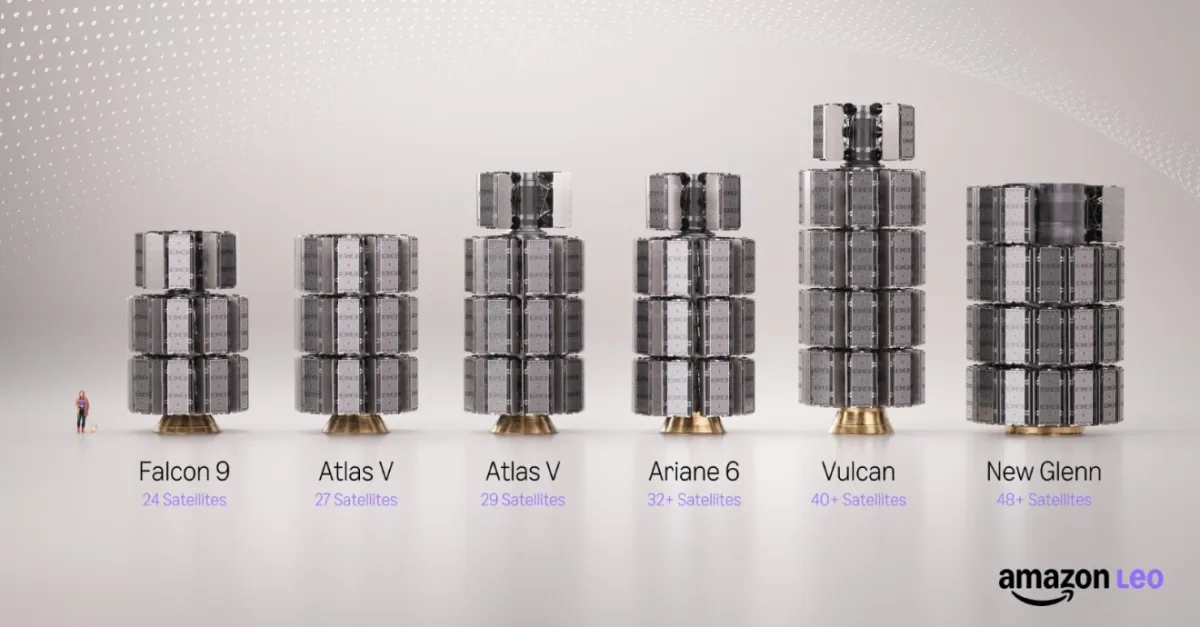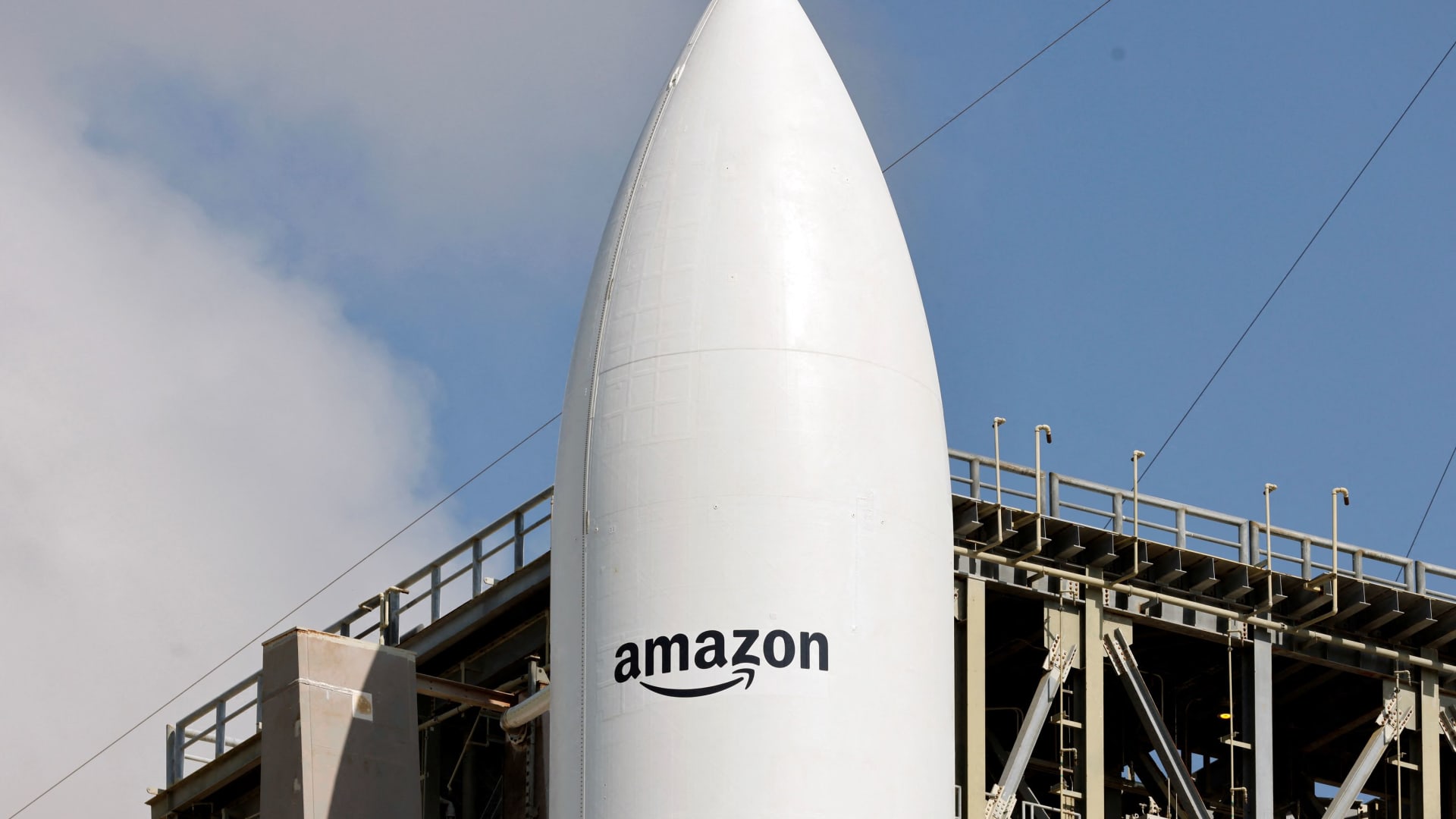
SpaceX's Starlink operates approximately 10,400 satellites in low Earth orbit, against roughly 396 for Amazon Leo and 648 for Eutelsat's OneWeb — close to ten times its two nearest rivals combined. At that scale, the honest question shifts from who leads the satellite internet race to whether a single race is still being run at all. The answer, on the evidence of 2026 so far, is that three different contests now share the same sky, and each one has a different name at the top of its scoreboard.ConstellationOperatorSatellites in OrbitPlanned ConstellationStatus (July 2026)StarlinkSpaceX~10,400 (trackers cite up to 10,700)Up to 42,000 (15,000 currently cleared)Live in ~160 countries, with 10 million+ subscribersAmazon LeoAmazon~3963,236 (first generation)Commercial service targeted for late 2026OneWebEutelsat~648440 next-generation satellites orderedFirst-generation constellation complete since 2023; focused on enterprise connectivityFigures are approximate as of early July 2026 and shift with every launch; verify against operator disclosures before publication.Who Owns The Rocket Wins The RaceThe Federal Communications Commission has cleared SpaceX to operate up to 15,000 Starlink satellites, with long-term filings pointing toward a constellation of as many as 42,000. Batches ride to orbit every few days aboard Falcon 9, a tempo rivals can only watch, because both of them rent their rides.That single structural fact does more to explain the standings than any spreadsheet of funding or ambition. Controlling the launch vehicle means controlling the pace of deployment. When SpaceX wants more capacity, it schedules another flight of its own rocket. When Amazon or Eutelsat wants more capacity, it joins a queue — and pays a launch provider whose interests may run in a very different direction. The gap compounds with every fortnight, the way interest does.The subscriber side tells the same story. Starlink serves customers across approximately 160 countries, with reports placing its base above 10 million subscribers — some coverage cites 12 million, a figure worth pinning to a primary source. SpaceX has also begun lowering thousands of satellites to a 480 km orbit this year, a housekeeping move it says improves space safety and speeds the decay of retired hardware. A company optimising orbital hygiene is a company that has stopped worrying about the scoreboard.Amazon's Five-Rocket GambleAmazon Leo — the constellation formerly known as Project Kuiper, rebranded in November 2025 — is the stronger challenger on paper, which makes its position all the more instructive.This week supplied its biggest milestone yet. On July 2, 2026, a United Launch Alliance Atlas V lofted 29 satellites from Cape Canaveral, taking the constellation past 390 — Amazon puts the figure around 396 — and, by the company's own account, giving it enough hardware for continuous connectivity across its initial service latitudes. Amazon says commercial service will open later this year in a limited band of mid-northern and mid-southern latitudes, expanding as more satellites go up. That flight was also the last of the eight Atlas V missions Amazon reserved; the heavy lifting now passes to ULA's Vulcan, alongside Ariane 6, Blue Origin's New Glenn and — in the detail that invites the most scrutiny — SpaceX's own Falcon 9.Sit with that arrangement for a moment. Amazon has paid the operator of the world's dominant satellite broadband network to launch the hardware built to compete with it. The charitable reading is deliberate risk diversification across five rocket families. The harsher reading is that New Glenn arrived too late to shoulder the burden alone. Both readings have supporting evidence, and Blue Origin's launch-pad rebuild this year strengthens the second.A Deadline Missed, A Penalty AttachedWhat sits beyond interpretation is Amazon's regulatory ledger. The FCC licence required half of the first-generation constellation — roughly 1,618 satellites — in orbit by July 30, 2026. Amazon fell far short and petitioned for relief. The FCC granted an extension in June 2026 but, according to reporting on the decision, attached a cost: reduced spectral priority for Amazon's future satellites, a penalty that could shape network performance once service is live. That specific consequence deserves verification against the FCC order itself before publication.Amazon's counterweight is strategy rather than satellites. Its acquisition of Globalstar points the company at the direct-to-device market, and under a linked agreement Amazon Leo is reported to begin powering Apple's iPhone satellite services from 2028. If that holds, Amazon will have done something clever: bypassed the consumer-dish fight it is losing and boarded a billion iPhones instead.OneWeb Plays A Different SportOneWeb occupies a different corner of this market, and it moved there on purpose. The company completed its first-generation constellation in 2023 — the first operator to fully deploy a LEO broadband network — and drew modest applause for it, largely because OneWeb was built for a different customer altogether.Its network serves airlines, maritime operators, defence customers and governments. The orbital design — higher altitude, near-polar inclination — is tuned for geographic reach rather than the sub-20-millisecond latency household broadband demands. Within that narrower brief, the business functions and, by available indications, earns in a way the two larger constellations have yet to demonstrate in the enterprise segment.Eutelsat, which owns OneWeb, has ordered 440 next-generation satellites from Airbus to replace the existing fleet, with deployment scheduled to begin in late 2026. That is the spending pattern of a company fortifying a defensible position rather than mounting a charge for consumer market share.Delhi Presses PauseFor Indian readers, the most consequential development of 2026 sits closer to home. India reportedly froze final approvals for Starlink's commercial launch in June 2026, with security agencies under the Ministry of Home Affairs withholding clearance amid concerns over the reported unauthorised use of Starlink terminals during the Iran conflict. The episode crystallises Delhi's core anxiety about foreign-operated constellations: control of the off switch during wartime conditions sits in California rather than in India.The freeze reshuffles the local deck. Starlink had cleared most of its Indian regulatory gauntlet and was widely expected to launch commercially this year against Eutelsat OneWeb's joint venture with Bharti and the Jio-SES partnership. Every month of delay hands those rivals runway in a market of hundreds of millions of underserved users — the single largest prize left on the satellite broadband map. The status of the approval freeze should be re-verified at publication time, since this situation is moving week to week.Three ScoreboardsThree companies are flying LEO broadband constellations in 2026, and each is winning or losing by a different measure.On global broadband coverage, Starlink's lead is categorical rather than incremental. Every realistic projection of Amazon's and Eutelsat's launch schedules keeps the gap yawning open beyond the end of this decade.On strategic ingenuity, Amazon runs the most interesting book: five launch providers including a direct rival, a regulatory penalty accepted as the cost of survival, and a side door into Apple's iPhone. Whether that reads as the industry's most elaborate contingency plan or as improvisation under duress will be settled by how Vulcan and New Glenn perform over the next 18 months.On revenue from an established customer base, OneWeb holds the quietest and steadiest hand. Enterprise, government and defence pay reliably and have fewer alternatives than the residential market. Starlink and Amazon are both still working out how to take that business away.The satellite internet story of 2026 refuses to be one race with one result. It is three contests running on shared orbital infrastructure, each with its own scoreboard — and only the first of them has already produced a chequered flag.Frequently Asked QuestionsHow far ahead is Starlink in 2026?Starlink operates approximately 10,400 satellites (some trackers cite up to 10,700), against roughly 396 for Amazon Leo and 648 for OneWeb — close to ten times its two nearest rivals combined. Every realistic launch schedule keeps that gap open past 2030.Why is Amazon unable to simply launch faster?Amazon rents its rides. Its constellation depends on five rocket families — Atlas V (now retired from Leo duty), Vulcan, Ariane 6, New Glenn and SpaceX's Falcon 9 — so its pace is set by third-party providers, including its direct rival.What happened with Amazon Leo's FCC deadline?The licence required around 1,618 satellites in orbit by July 30, 2026. Amazon fell short and sought relief. The FCC granted an extension in June 2026, reportedly attaching reduced spectral priority to Amazon's future satellites — a penalty that could affect performance once service is live.When does Amazon Leo service actually start?Amazon says later in 2026, following the July 2 launch that took its constellation to roughly 396 satellites — enough, per the company, for continuous coverage across initial mid-latitudes. Coverage expands as more satellites go up.Is OneWeb competing with Starlink for home broadband?OneWeb serves a different market entirely: airlines, shipping, defence and governments. Its higher, near-polar orbits favour geographic reach over the low latency home broadband demands, and within that enterprise niche it is the steadiest business of the three.What is happening with Starlink in India?India reportedly froze Starlink's final commercial approvals in June 2026 over security concerns tied to unauthorised terminal use during the Iran conflict. The delay benefits Eutelsat OneWeb's Bharti-backed venture and the Jio-SES partnership in the world's largest untapped satellite broadband market. Verify current status before publishing — this is moving quickly.end of article
Starlink Vs Amazon Leo Vs OneWeb: Why The 2026 Race Has 3 Scoreboards
SpaceX has lapped the field so decisively that the real contest has split into three separate games — coverage, catch-up, and quiet profit.
1,514 words~7 min read