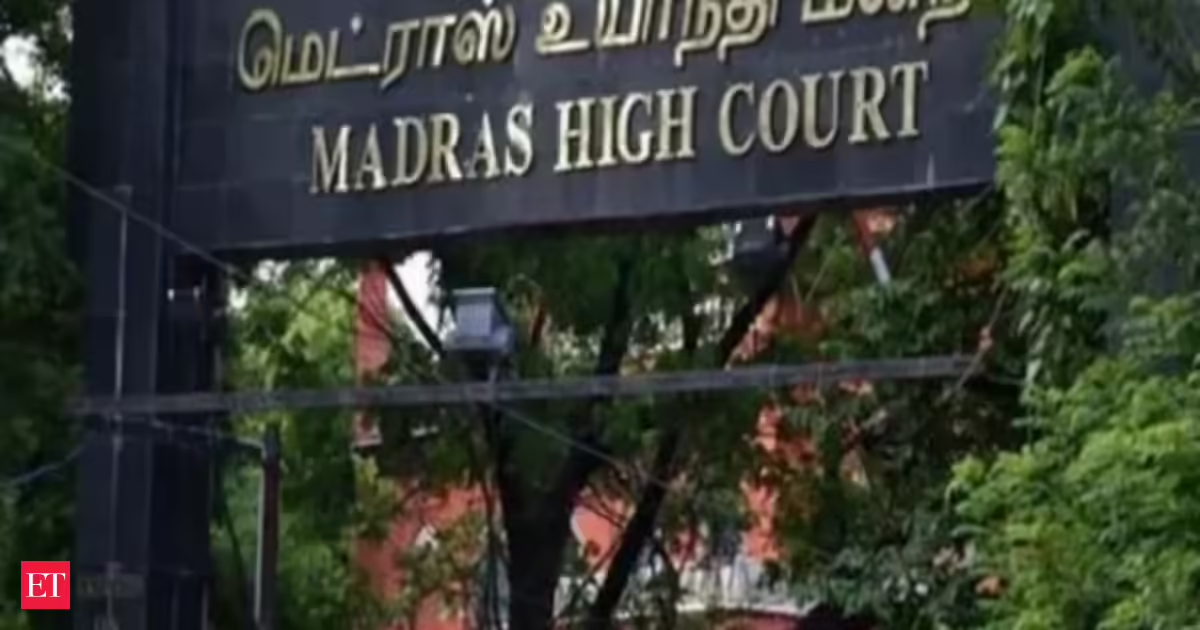
Taking into account that an American woman was professing and practicing Hinduism, the Madurai Bench of the Madras High Court has directed the Hindu Religious and Charitable Endowments (HR and CE) Department not to deny her any right available to a Hindu woman devotee in any temple, subject to customs, usages, agamas and regulations governing such temple.The court was hearing a petition filed by Laura Frances Iyengar, who sought a direction to the HR and CE Department to permit her to enter the premises of Sri Arulmighu Abishta Varadharaja Perumal Temple in Thanjavur district.The case of the petitioner is that she is an American citizen. Having been attracted to Hinduism, she embraced and has been professing Hindu faith for several years. She has undertaken pilgrimages to various Hindu temples across the Indian subcontinent. In her official records, including visa applications, she has consistently described herself as a Hindu, much prior to her marriage.Subsequently, she married Varadha Balaji Venkadakrishnan, a Hindu. The marriage itself was solemnized on the premises of the very same temple in 2023. When she recently visited the temple, some people objected to her entry under the impression that she did not belong to Hindu faith.Consequently, when the petitioner’s husband addressed a communication to the authorities seeking permission for the petitioner to freely enter the temple and worship like any other Hindu devotee, the authorities passed an order that the petitioner was an American Christian woman who attempted to enter the sanctum sanctorum of the temple and that, without violating any Agamic practice, she was permitted to remain within the outer precincts of the temple so as not to hurt the sentiments of other devotees.Challenging the order the petition was filed.Justice D. Bharatha Chakravarthy said Hinduism is a faith that has historically been inclusive and accommodating. Unlike certain other religions, it does not prescribe any mandatory formal ceremony of conversion or issuance of any certificate as a condition precedent for acceptance into the faith.The Supreme Court has held that a person may become a Hindu either by birth or by conversion. A mere theoretical allegiance to the Hindu faith or a bare declaration of belief would not, by themselves, constitute conversion. However, a bona fide intention to embrace Hinduism, coupled with conduct unequivocally expressing such intention, may constitute sufficient evidence of conversion.The Supreme Court further held that no formal ceremony of purification or expiation is necessary to effectuate such conversion, the judge said.“Documentary materials clearly demonstrate that the petitioner has consistently identified herself as a Hindu and has conducted herself in a manner that unequivocally establishes her acceptance and practice of Hindu faith. The finding recorded by the authorities describing the petitioner as an American Christian woman is factually erroneous and unsustainable,” the court said.Merely because the petitioner bears the name Laura Frances or holds American citizenship, she cannot be denied recognition as a Hindu when her conduct and belief unequivocally establish her adherence to Hinduism. Accordingly, the petitioner shall be treated as a Hindu devotee. Consequently, all rights and obligations applicable to a Hindu woman devotee in relation to temple worship shall equally apply to the petitioner. If Hindu women are permitted, in accordance with the customs, usages, Agamas and regulations governing a particular temple, to enter any specified area or perform any particular ritual, the petitioner shall also be entitled to the same. Equally, the petitioner shall not claim any special privilege or right not otherwise available to any other Hindu woman devotee, the court said.Since the petitioner professes and practices Hinduism, “the authorities and all officials functioning under the Department shall not deny to the petitioner any right available to a Hindu woman devotee in any temple, including Sri Arulmighu Abishta Varadharaja Perumal Temple, subject to the customs, usages, agamas and regulations governing such temple.” Published - July 03, 2026 08:03 pm IST
HC allows American woman, who embraced Hinduism, to enter temple; says Hinduism is a faith that has historically been inclusive and accommodating
HC allows American woman, who embraced Hinduism, to enter temple; says Hinduism is a faith that has historically been inclusive and accommodating
638 words~3 min read