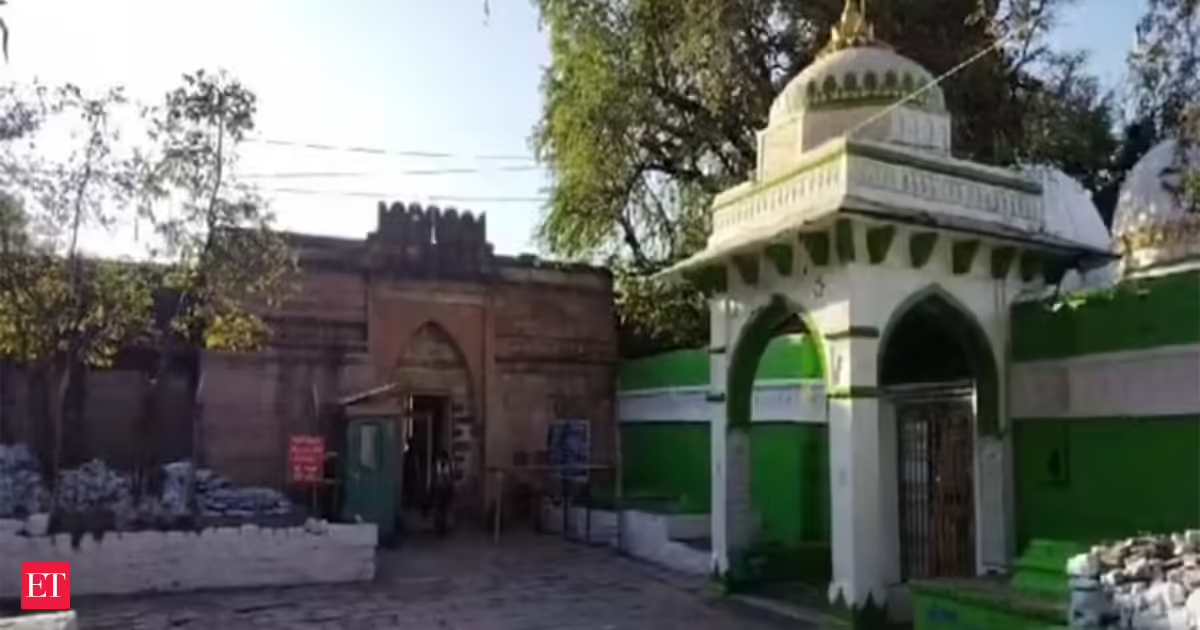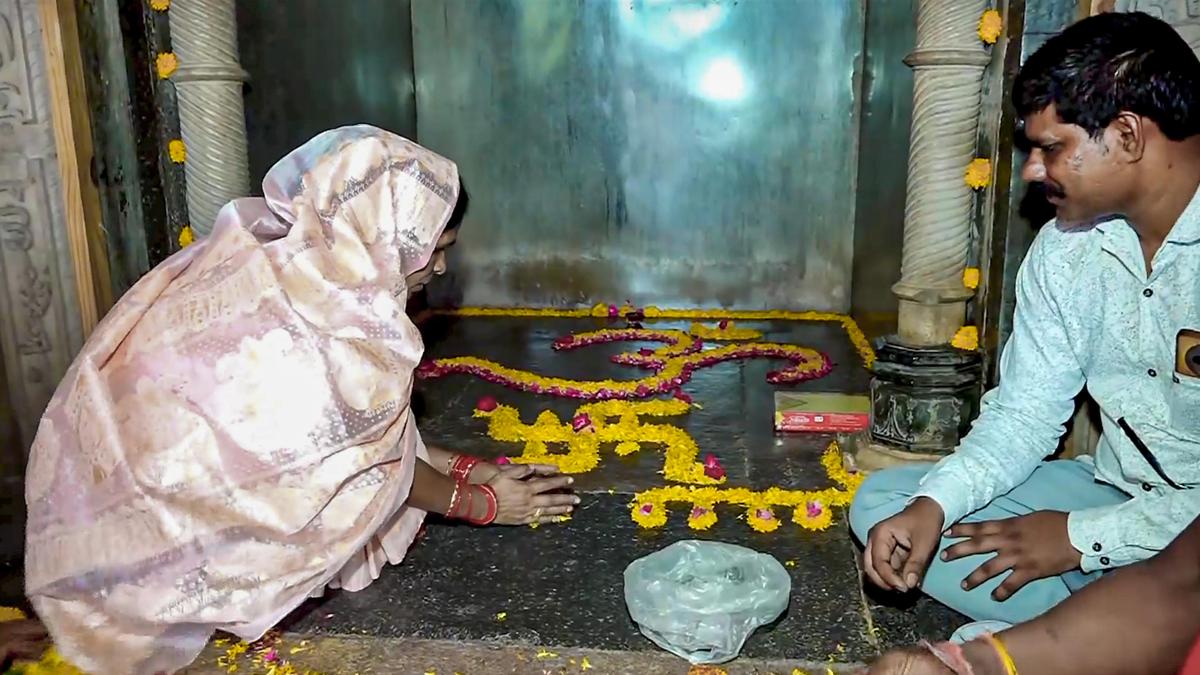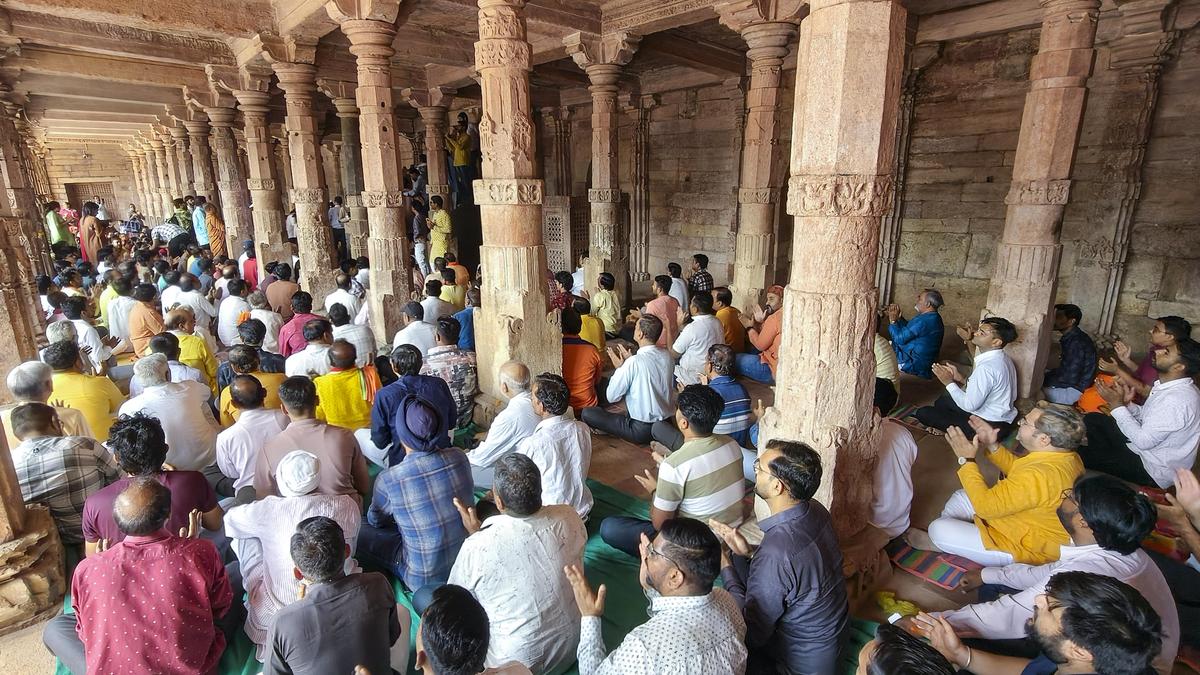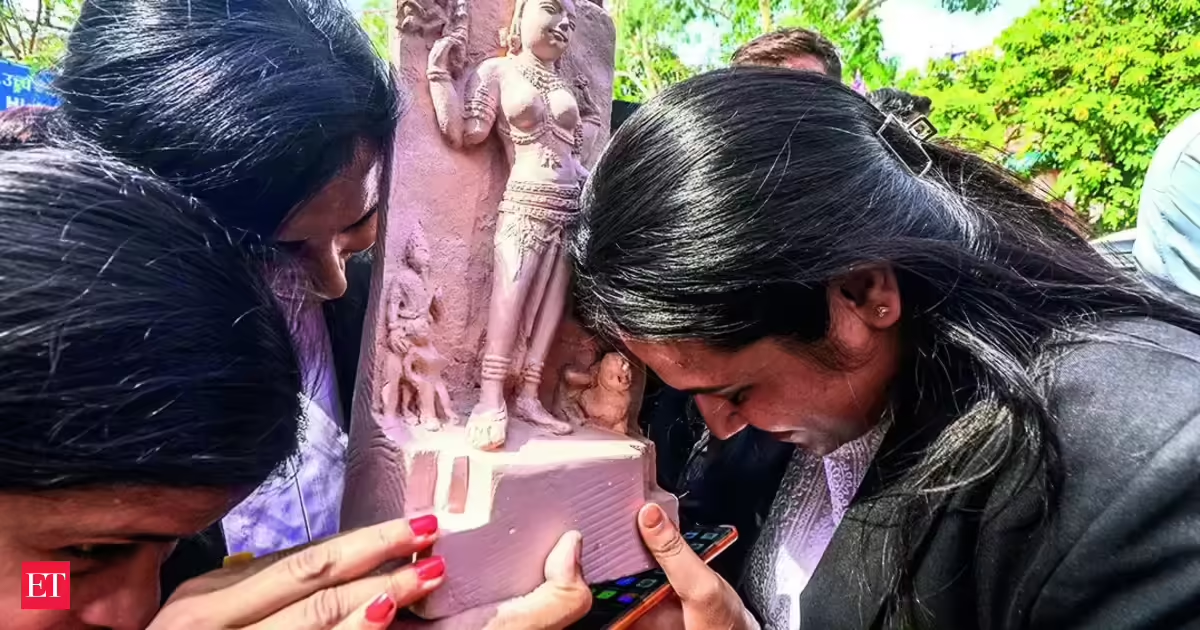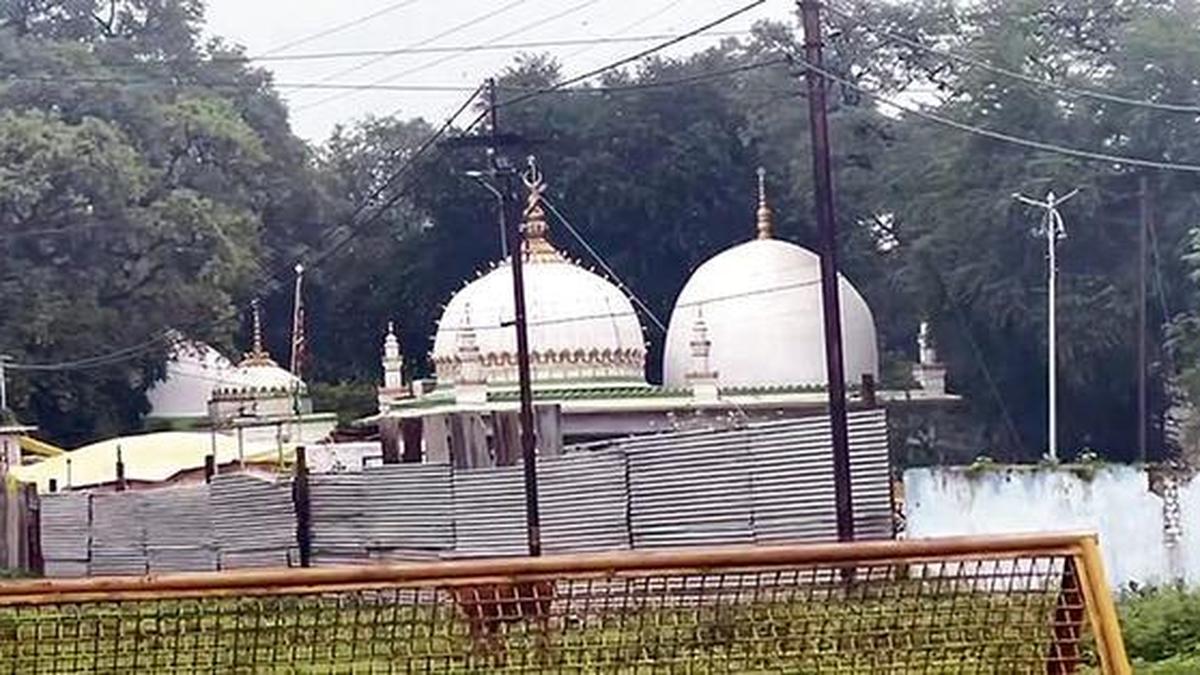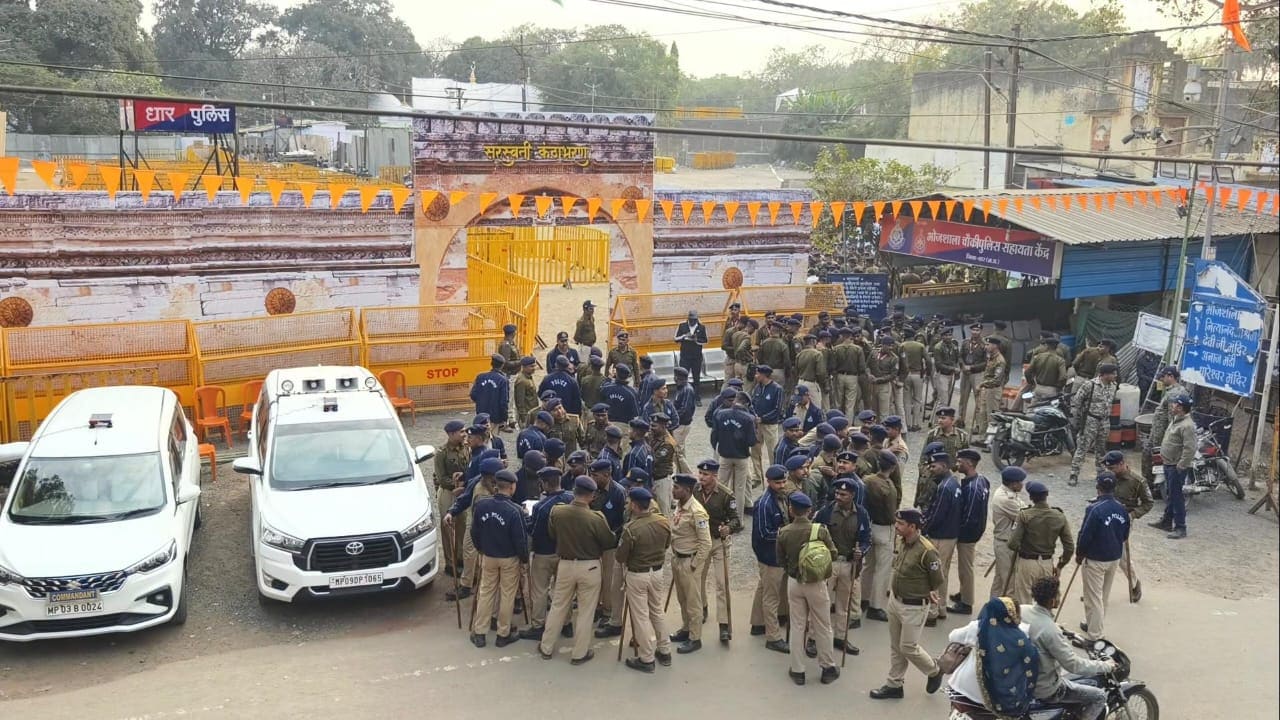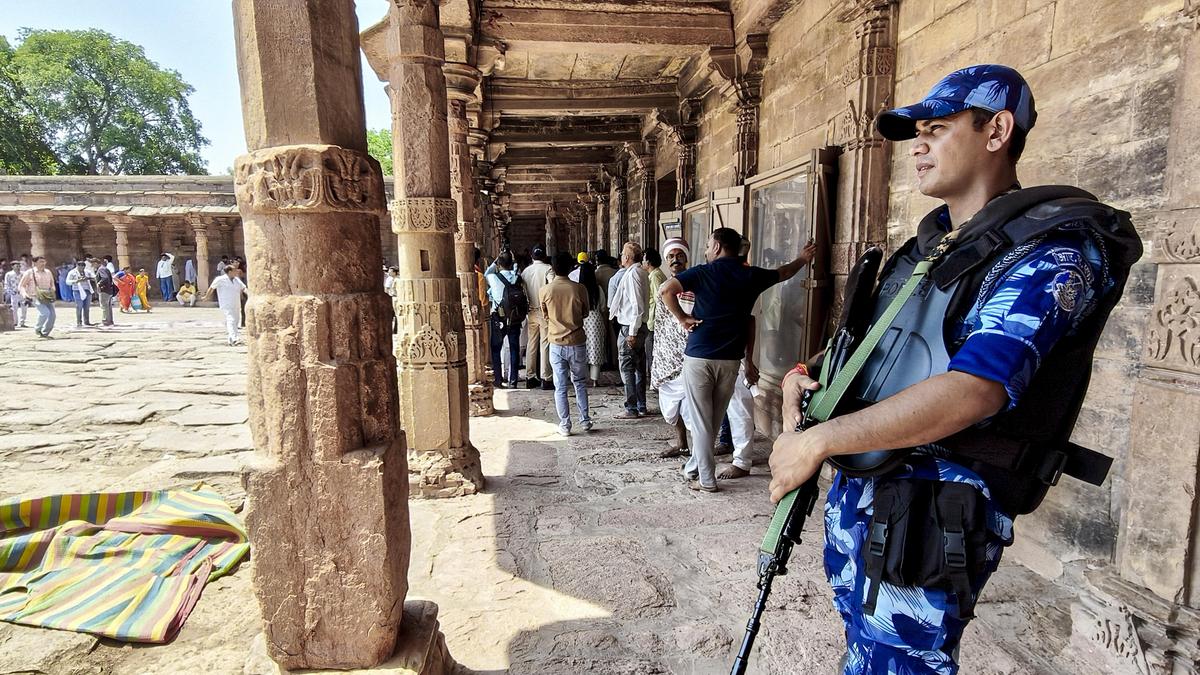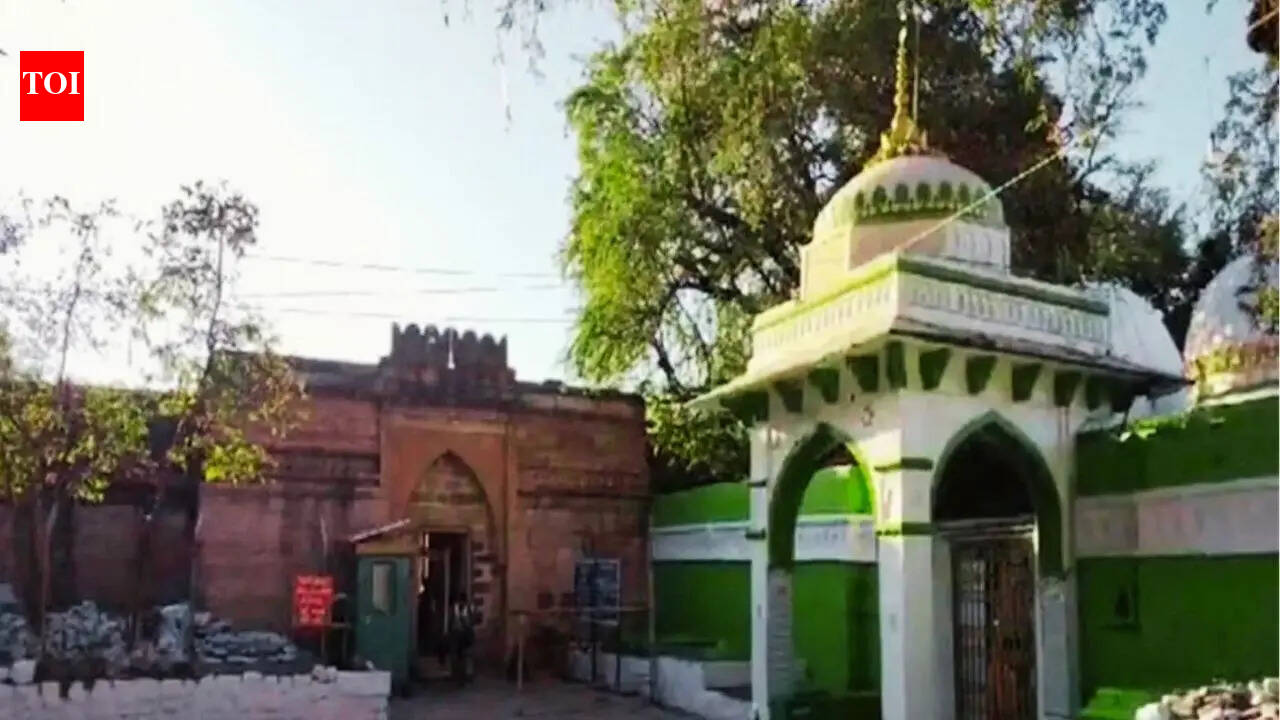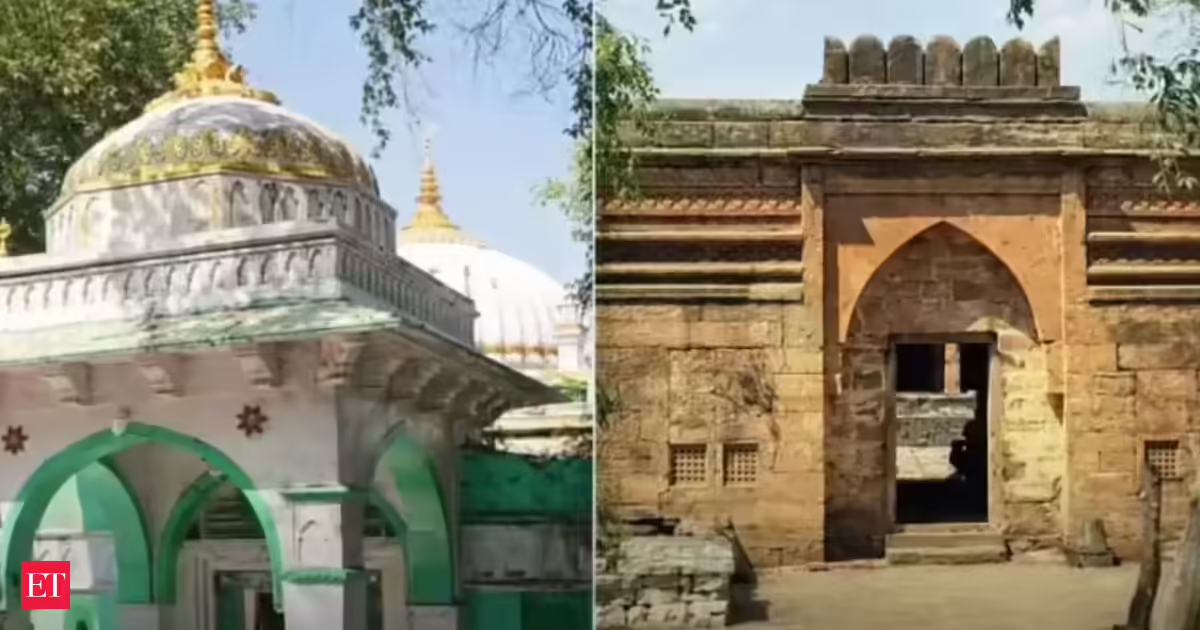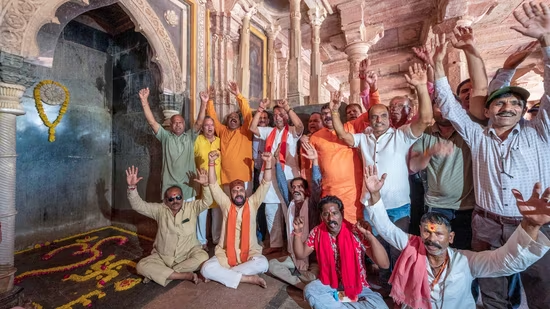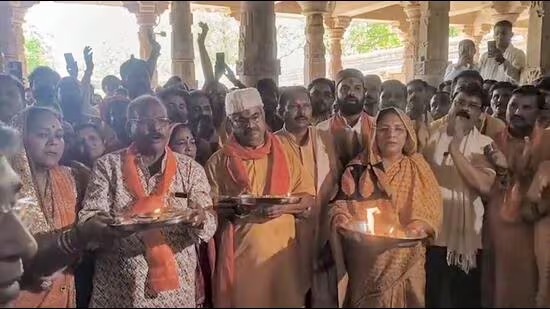
The Archaeological Survey of India (ASI) on May 16 issued a formal order granting the Hindu community unrestricted daily worship rights at the Bhojshala complex in Madhya Pradesh’s Dhar district, a day after the Madhya Pradesh High Court declared the site a temple dedicated to Goddess Vagdevi (Saraswati).People perform 'Maha Aarti' at the Bhojshala, in Dhar, Madhya Pradesh. (PTI)The ASI order, a copy of which is available with HT, supersedes all previous orders including the April 7, 2003 directive that divided access between Hindu and Muslim communities on separate days of the week.The order, signed by director (Mont 1) AMV Subramanyam for the director general, is addressed to the chief secretary of Madhya Pradesh, the principal secretary of the department of culture, the district collector of Dhar, the superintendent of police Dhar district, and the superintending archaeologist ASI Bhopal.It directs the latter to take appropriate action for the monument’s maintenance and upkeep in compliance with the high court’s directions. The site will continue to be a protected monument under the AMASR Act 1958, with worship timings to be determined by the superintending archaeologist in consultation with the district administration.The Bhojshala complex is associated with King Bhoj of the Paramara dynasty, who is said to have constructed the site in 1034CE. The site, dedicated to Goddess Saraswati, functioned as a major centre of Sanskrit education. The Hindu community consistently maintained that it is a Saraswati temple, while the Muslim side identified it as the Kamal Maula Mosque.Also Read:First Saraswati idol installed at Bhojshala sanctum; posters outside ban entry of non-HindusIn 1909, the Dhar princely state declared Bhojshala a protected monument, a status later continued under the ASI. In 1952, the central government handed it to the ASI.In 1997, the Madhya Pradesh government permitted Muslim namaz at Bhojshala every Friday while restricting Hindu entry, allowing puja only on Vasant Panchami. On April 7, 2003, the ASI issued a fresh order dividing access—Hindus were permitted puja on Tuesdays, while Muslims were granted exclusive rights to offer Friday namaz. The arrangement remained in place for over two decades and repeatedly triggered communal tensions, particularly when Vasant Panchami coincided with Friday prayers.On March 11, 2024, Madhya Pradesh high court directed the ASI to conduct a scientific survey of the complex. The ASI began the survey on March 22, 2024 and submitted a more than 2,000-page report to the court on July 15, 2024 after a 98-day exercise. The report indicated that the existing structure was built using parts of ancient temples. The Muslim side called the report biased and challenged its findings before the court.On January 23, 2026, when the two occasions coincided, more than 8,000 security personnel were deployed at the complex.On May 15, 2026, a division bench comprising Justice Vijay Kumar Shukla and Justice Alok Awasthi declared the site a temple dedicated to Goddess Vagdevi, recording that the continuity of Hindu worship at the site never ceased and that historical literature establishes Bhojshala as a Sanskrit learning centre linked to King Bhoj of the Paramara dynasty. The court quashed the April 7, 2003 ASI order.Hindu side petitioner Ashish Goyal said, “The community waited seven centuries to reclaim the Maa Saraswati Temple at Bhojshala and see its glory restored.” Advocate Vishnu Shankar Jain, who represented the Hindu petitioners, said, “The ASI order brought the High Court’s directions into effect and that Hindus could now visit and worship at the complex without any restriction.”The high court, in its order, noted that if the Maulana Kamaluddin Welfare Society sought a plot of land in Dhar district to construct a mosque, the state government was free to consider the request.Dhar city Qazi Waqar Sadiq rejected the suggestion and said, “The Muslim community had no intention of accepting any alternative land.” Representatives of the Maulana Kamaluddin Welfare Society, which argued the Muslim side’s case across 36 days of hearings, maintained that the ASI survey was partisan and said, “The High Court’s verdict would be taken to the Supreme Court.”All India Muslim Jamaat president Maulana Shahabuddin Razvi Barelvi said, “The Kamal Maula Mosque existed in the past, existed now, and would continue to exist.”The Muslim side said it will challenge the verdict in the Supreme Court. Hindu petitioners already filed a caveat in the apex court.
ASI grants Hindus unrestricted daily access to MP’s disputed Bhojshala complex
The site will continue to be a protected monument under the AMASR Act 1958, with worship timings to be determined by the superintending archaeologist | India News
707 words~3 min read