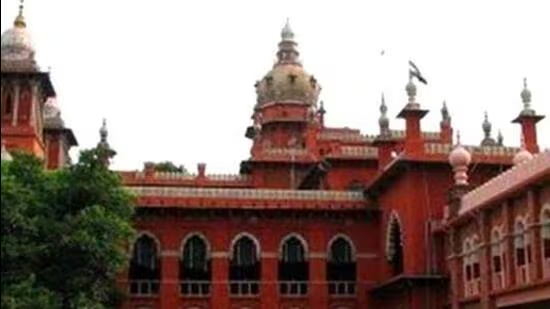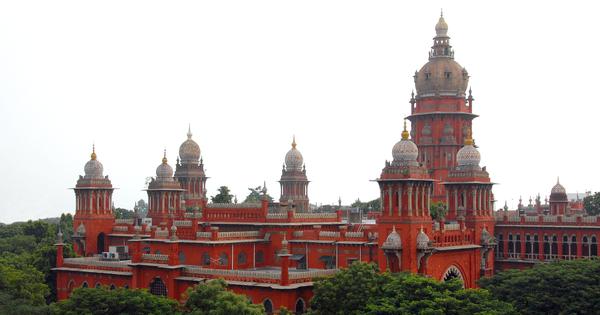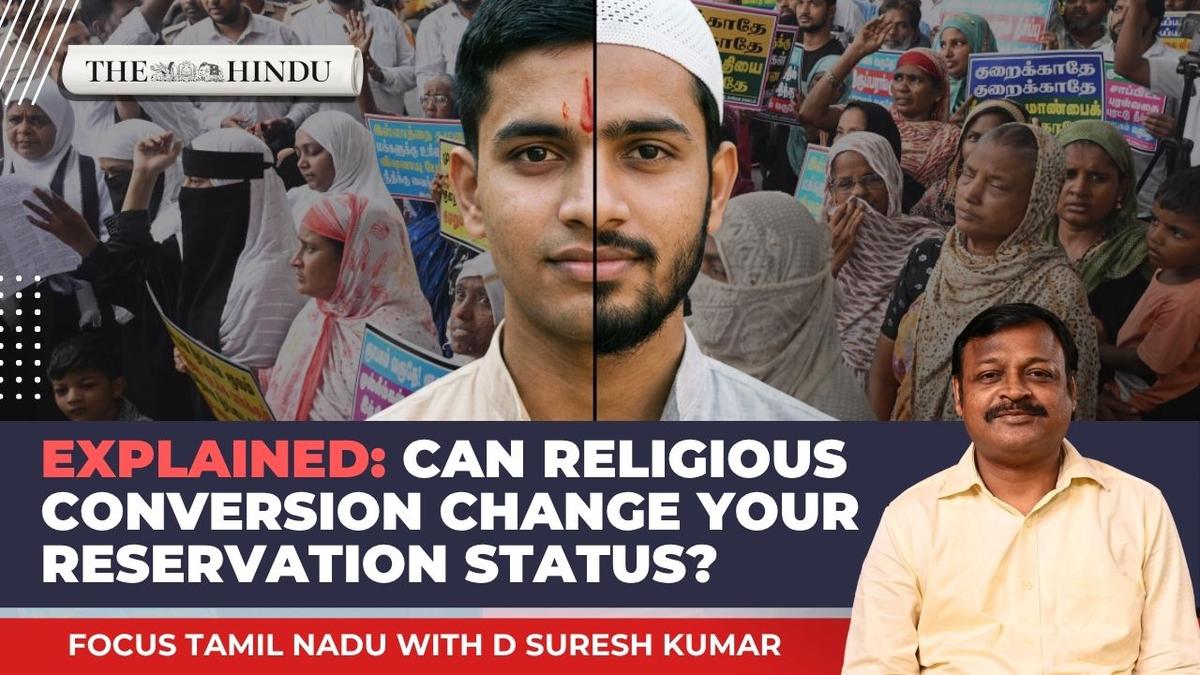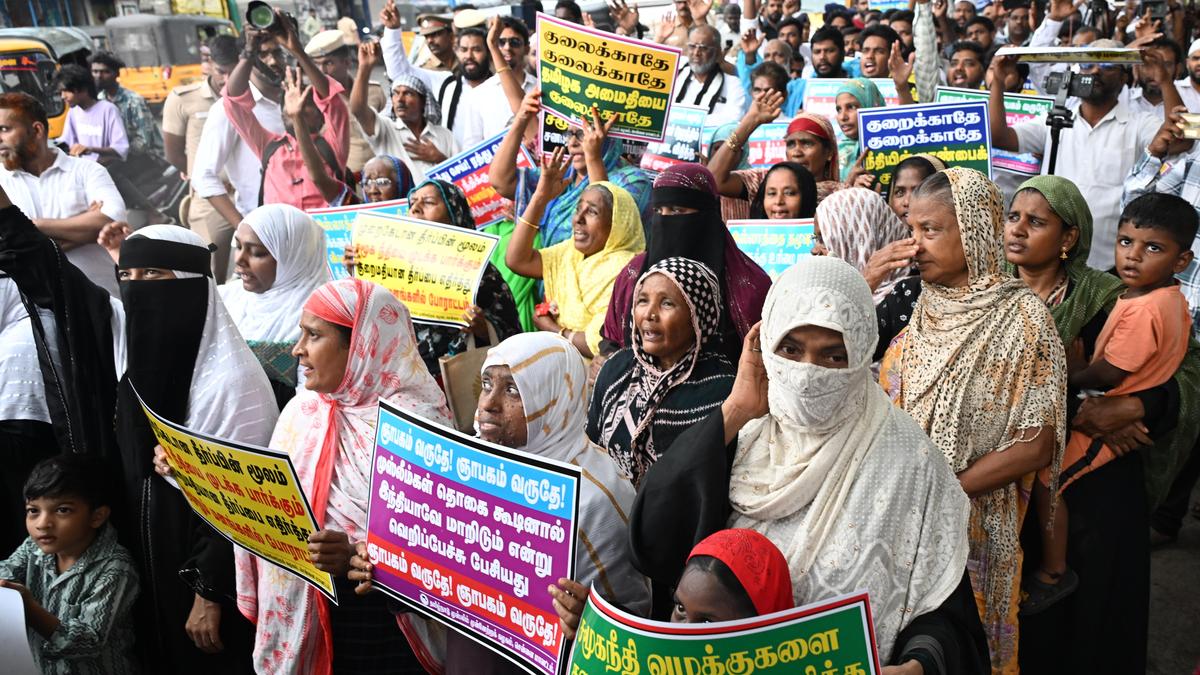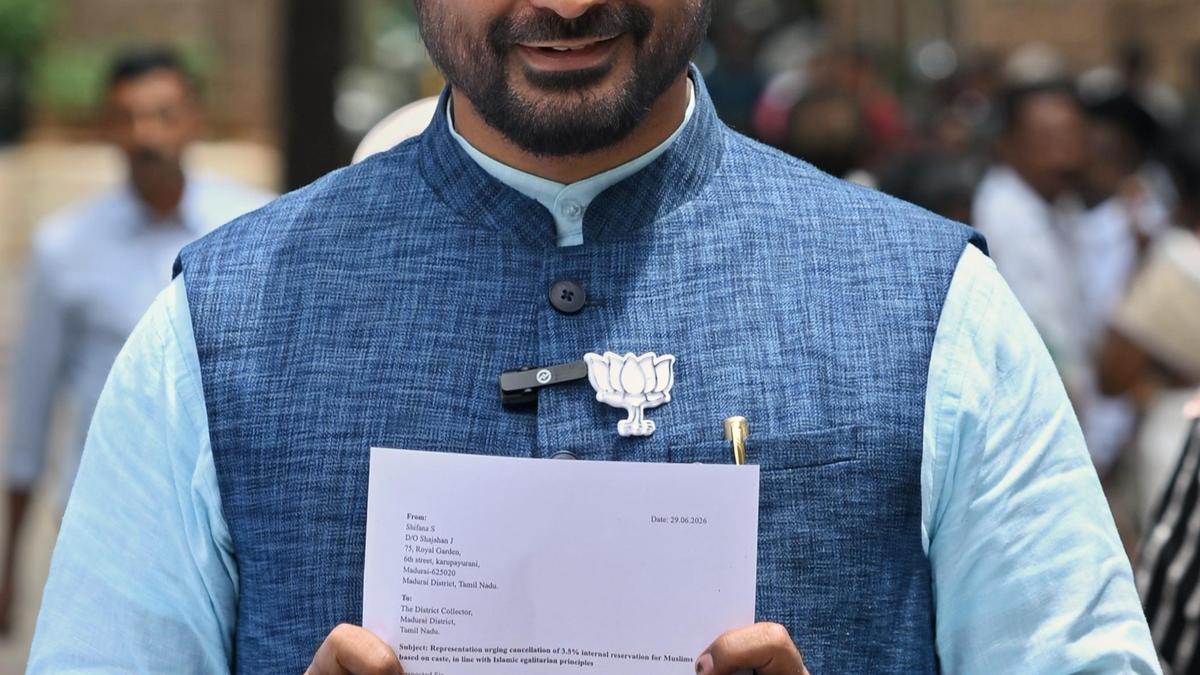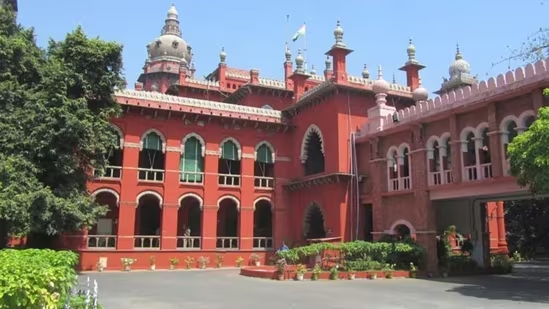
The Madras high court last week quashed a Tamil Nadu government order that allowed people from backward classes (BC), most backward classes (MBC), denotified communities (DNC) and scheduled castes (SC) who converted to Islam to continue being availing reservation benefits.The Madras high court, in its order, held that the executive cannot override a judicial precedent. (File photo )In doing so, the court reaffirmed a legal principle laid down by the Madras High Court more than seven decades ago — that conversion to Islam changes a person’s religion, but it “does not automatically make the person a member of one of the state’s recognised Backward Class Muslim communities (BCM)”.The judgment, passed on June 25 by Justices GR Swaminathan and PB Balaji, held that the executive cannot override binding judicial precedent through an executive order, and that any change to the legal position must come through legislation, not administrative instructions.The caseThe order arose from a plea filed by Sameer Ahamed, who was born into a Hindu family, converted to Islam in 2015 and sought a community certificate identifying him as a Muslim Lebbai. A tehsildar rejected his application for a ‘backward class Muslim’ in 2022 on the ground that he had converted to a religion, not a caste.Ahamed challenged the tehsildar’s rejection in the high court. While his petition was pending, the Tamil Nadu government issued a government order (GO) on March 9, 2024, directing that BC, MBC, DNC and SC converts to Islam be treated as backward class Muslims. This entitled them to certificates that placed them within one of the state’s seven notified BCM communities.The high court held this policy legally impermissible, ruled the GO unconstitutional, and upheld the tehsildar's original rejection of Ahamed’s application. “A convert to Islam cannot claim the status of Backward Class Muslim. He is only a Muslim, and that is all there is to it,” the court said.It clarified that embracing Islam is an exercise of the fundamental right to freedom of religion under Article 25 of the Constitution, but that the question before it was distinct: whether conversion entitled a person to reservation benefits reserved for members of notified BCM communities.Also read: Basic structure touchstone for anti-conversion lawsThe 1951 precedentThe June ruling rests on a principle the Madras high court laid down 75 years ago, in G Michael vs S Venkateswaran — an election dispute in which a division bench comprising then chief justice PV Rajamannar and justice TL Venkatarama Aiyar had to determine the legal status of a Hindu who had converted to Islam.The question then, as now, was whether a convert could claim membership of a particular Muslim community based on pre-conversion caste identity.The bench answered in the negative. On conversion, it said, a person becomes “just a Mussalman”, ceasing to belong to a caste without automatically acquiring membership of any particular Muslim community.In the latest ruling, Justice Swaminathan’s bench held that this has remained “settled law” for over seven decades. Communities such as Labbai, Rowther, Marakkayar, Deccani Muslim, Sheikh and Syed are birth-based groupings. A person may freely adopt Islam as a religion, but membership of these communities cannot be acquired through conversion alone. The court noted that although Islam preaches equality, historical developments have produced distinct Muslim communities in India that may function as birth-based social groups for reservation purposes, even where Islamic theology does not recognise hierarchy.The 1951 ruling has since been upheld by the Supreme Court on multiple occasions. In its 2015 judgment in KP Manu vs Scrutiny Committee, the apex court held: “There is no doubt true, and there we agree with the Madras High Court in G Michael case that the general rule is that conversion operates as an expulsion from the caste.”In a 2024 re-conversion case, C Selvarani vs Special Secretary, it cited G Michael again: “The general rule is conversion operates as an expulsion from the caste; in other words, a convert ceases to have any caste.”The Madras high court also pointed to Justice Swaminathan’s own 2022 judgment, which had rejected a similar claim on the same reasoning.Also read: West Bengal assembly passes OBC amendment bills, removes 77 Muslim communities from listWhy GO was struck downThe court held that the issue was not just the GO’s content, but it sought to achieve: once binding precedent has settled the law, the executive cannot issue an administrative order producing the opposite legal consequence. If the government disagreed with the judicial interpretation, its remedy lay in legislation, not executive instructions.Although Ahamed’s petition had challenged only the tehsildar’s order and not the GO itself, the high court held it could still examine the GO’s validity, since its enforcement had become central to the case.Courts, the bench said, can declare executive action invalid even without a specific challenge to it, provided the question of its legality arises directly in the proceedings.Beyond this, the bench also found the scheme arbitrary on its own terms. The GO would have placed converts from four distinct categories — BC, MBC, DNC and SC — into any of seven notified BCM communities, effectively clubbing together categories the Supreme Court has consistently treated as constitutionally distinct.
‘He is a Muslim. That's all there is to it’: How a 75-year-old ruling undid Tamil Nadu order on BCM quota
Quashing a 2024 state government order, the Madras HC held that conversion to Islam doesn't automatically confer backward class Muslim status. | India News
851 words~4 min read