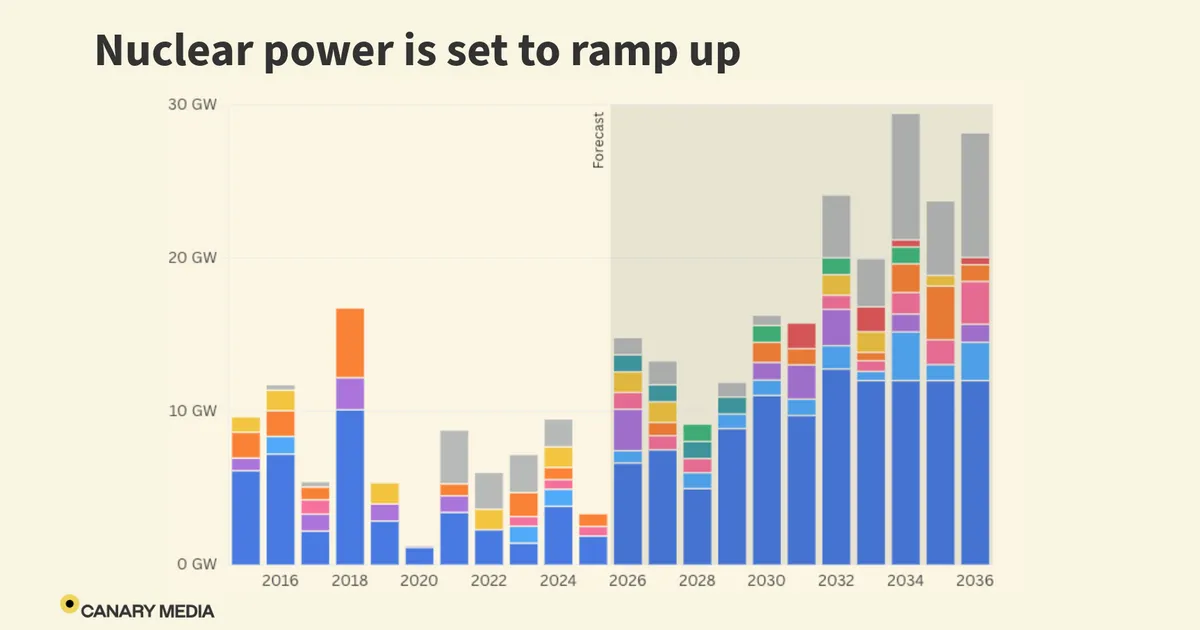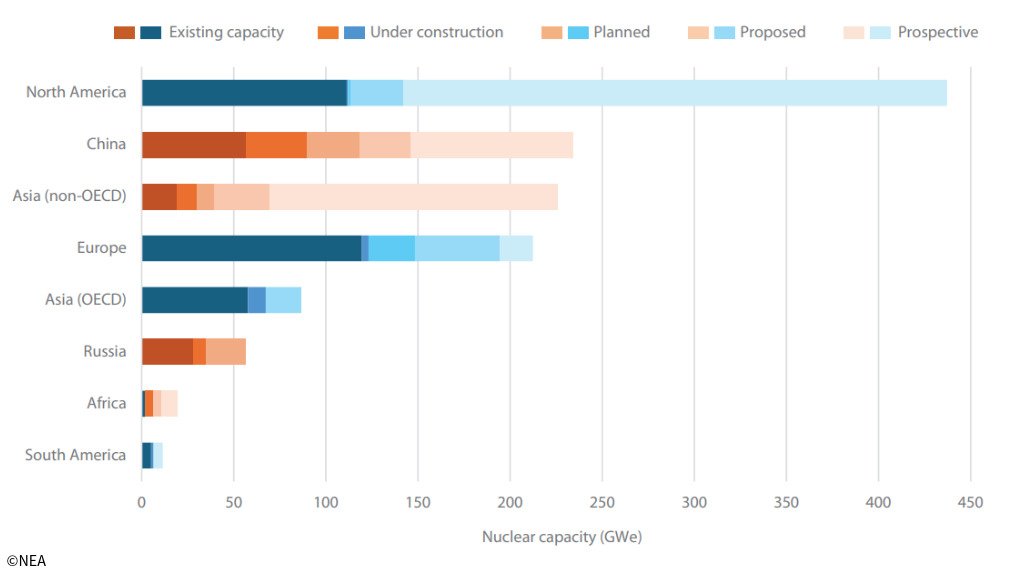
The Nuclear Energy Agency (NEA), an entity of the Organisation for Economic Cooperation and Development (OECD), has cautioned that successfully fulfilling global ambitions to significantly increase the quantity of nuclear energy will necessitate a major acceleration in the increase of the nuclear workforce, available finance and supply chains. This is the assessment contained in its new report, 'Nuclear Energy Outlook: Global Installed Capacity to 2050 and Beyond'.
For decades, the development of nuclear energy suffered from inaction on the part of OECD States, it points out. But now, an increasing number of both OECD and Global South countries are viewing nuclear energy as a key means of achieving energy security, environmental and industrial competitiveness goals.
The NEA report considers four scenarios for how global nuclear energy could develop from now until 2050, and beyond. These scenarios take into account new construction of both large (gigawatt-scale) nuclear power plants (NPPs) and small modular reactor (SMR) NPPs, and the refurbishment and long-term operation (LTO) of existing NPPs. These are dubbed the low, the current trends, the ambitious and the transformative scenarios.