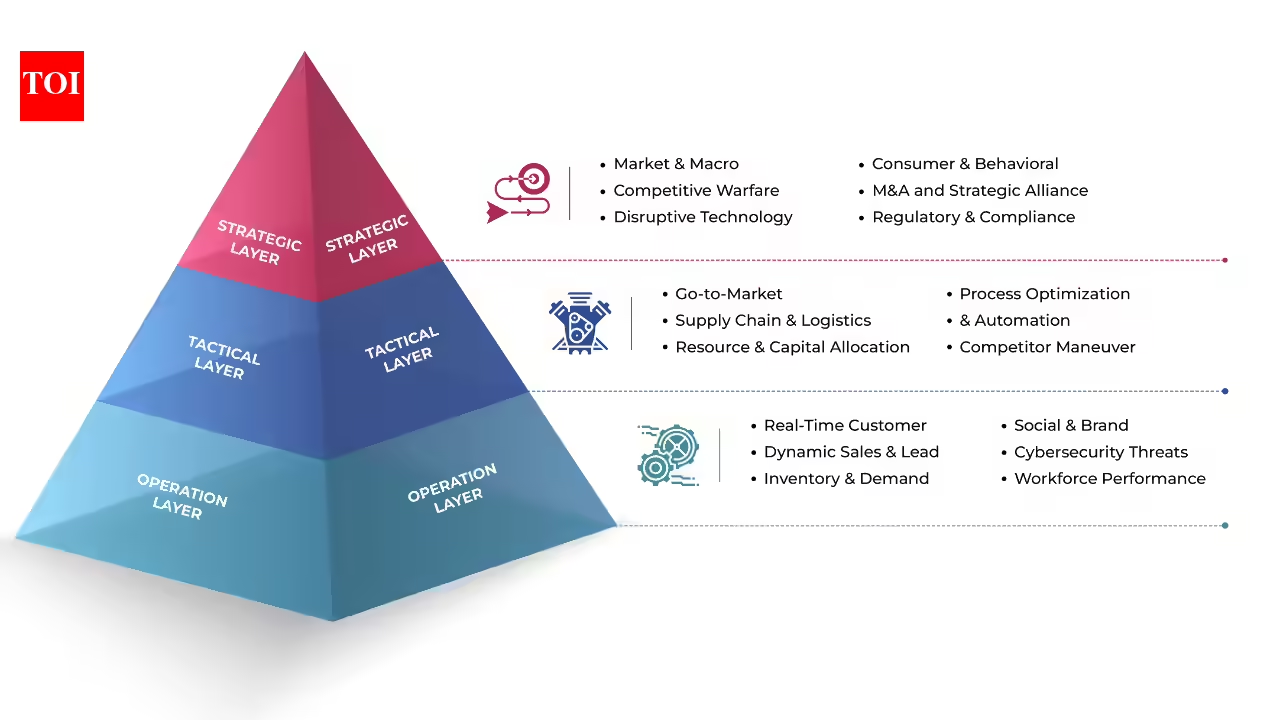
Understanding the Intelligence PyramidIn every competitive environment, intelligence is the only resource that has consistently separated organisations that lead from those who just react. Intelligence is not only information or data collected in dashboards.It is the ability to contextualise, interpret, and transform that information into timely, informed decisions. .Most organisations today face a conflict. They possess real-time analytics, AI-powered monitoring, market research, customer feedback systems, and predictive models that can generate endless information. Despite this abundance, decisive action often remains a concern for them. Opportunities are identified but not pursued. Risks are recognised but not addressed. The problem is no longer the availability of intelligence. It is the organisation's ability to move intelligence through the enterprise and translate it into action.IIRIS describes this as the "intelligence-to-action gap", the disconnect between what an organisation knows and the decisions it ultimately makes. Bridging this gap requires an architecture that enables intelligence to flow seamlessly between strategic leadership, operational teams, and tactical decision-makers. The IIRIS Intelligence Pyramid has been developed to address this challenge.Three tiers, one architectureAt the top of the IIRIS’s Intelligence pyramid sits the Strategic Layer, the long-horizon domain of the C-suite and board. Its seven building blocks span Market and Macro Intelligence, Competitive Warfare Intelligence (mapping rivals' strategic intent, not just their products), Disruptive Technology Intelligence, Consumer and Behavioural Intelligence, M&A and Strategic Alliance Intelligence, Regulatory Foresight, and Insider Threat Intelligence. Together, they answer the foundational question every leadership team must confront: where do we play, and how do we win?The Tactical Layer is where strategy meets execution, managed by business unit heads and regional leaders. Its five components, Go-to-Market Intelligence, Supply Chain and Logistics Intelligence, Resource and Capital Allocation Intelligence, Process Optimisation and Automation Intelligence, and Competitor Maneuver Intelligence, translate boardroom vision into operational reality. Capital is deployed to the highest-impact initiatives. Competitor moves are anticipated rather than merely reacted to.The Operational Layer is the organisation's central nervous system. Real-Time Customer Intelligence, Dynamic Sales and Lead Intelligence, Cybersecurity Threat Intelligence, Social and Brand Intelligence, Workforce Performance Intelligence, and Inventory and Demand Sensing Intelligence together provide frontline managers with the signals they need to act today, while simultaneously providing strategic leadership with the raw data that sharpens tomorrow's decisions.The IIRIS model is explicit on one point: these tiers are not independent. Intelligence must move upward and downward continuously among these. The moment organisational silos or broken data systems interrupt this flow, the organisation gets back to possessing data without possessing intelligence. From intelligence to advantageThe value of the Intelligence Pyramid does not lie in any single layer, says IIRIS. Its strength comes from the continuous movement of intelligence across all three. Strategic priorities inform tactical decisions. Operational signals refine strategic thinking. Each layer strengthens the others.This creates an organisation that is not merely informed, but responsive. Market shifts are identified earlier. Competitive threats are recognised sooner. Resources are allocated with greater precision. Most importantly, decisions are made with context rather than instinct.In an environment defined by disruption, the organisations that succeed will not necessarily be those with access to the most information. They will be those who can transform intelligence into action faster and more effectively than their competitors.Why the Intelligence Pyramid mattersAccording to IIRIS, the Intelligence Pyramid changes the way organisations look at intelligence. Instead of viewing intelligence as a series of reports, dashboard tools, and other activities, it should be viewed as a function that links together strategy, execution, and operations, the company states.As the markets grow and become more unstable, and competitive advantages get shorter in duration, organisations will not succeed because of the added information they have over everybody else. Organisations will succeed because of their ability to harness their intelligence internally, make decisions, and act while there is still time.The challenge for leaders in the coming years will be less about having sufficient intelligence and more about whether their organisation is structured to utilise it.This article has been authored by Garry Singh, President of IIRIS, and Sagarika Chakraborty,CEO for India and the Gulf at IIRIS Consulting.Disclaimer: The above content is non-editorial, and TIL hereby disclaims any and all warranties, expressed or implied, relating to it, and does not guarantee, vouch for or necessarily endorse any of the content.
Understanding the Intelligence Pyramid: Why most companies know everything and do nothing
In every competitive environment, intelligence is the only resource that has consistently separated organisations that lead from those who just react. Intelligence is not only information or data collected in dashboards.It is the ability to contextualise, interpret, and transform that information into timely, informed decisions.
703 words~3 min read