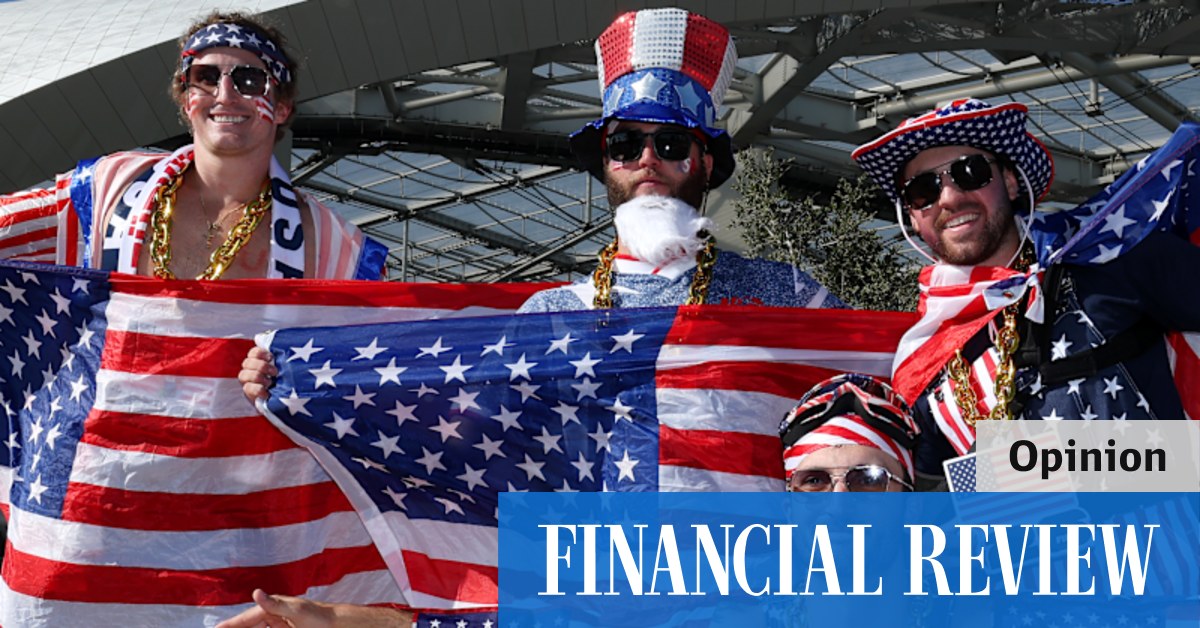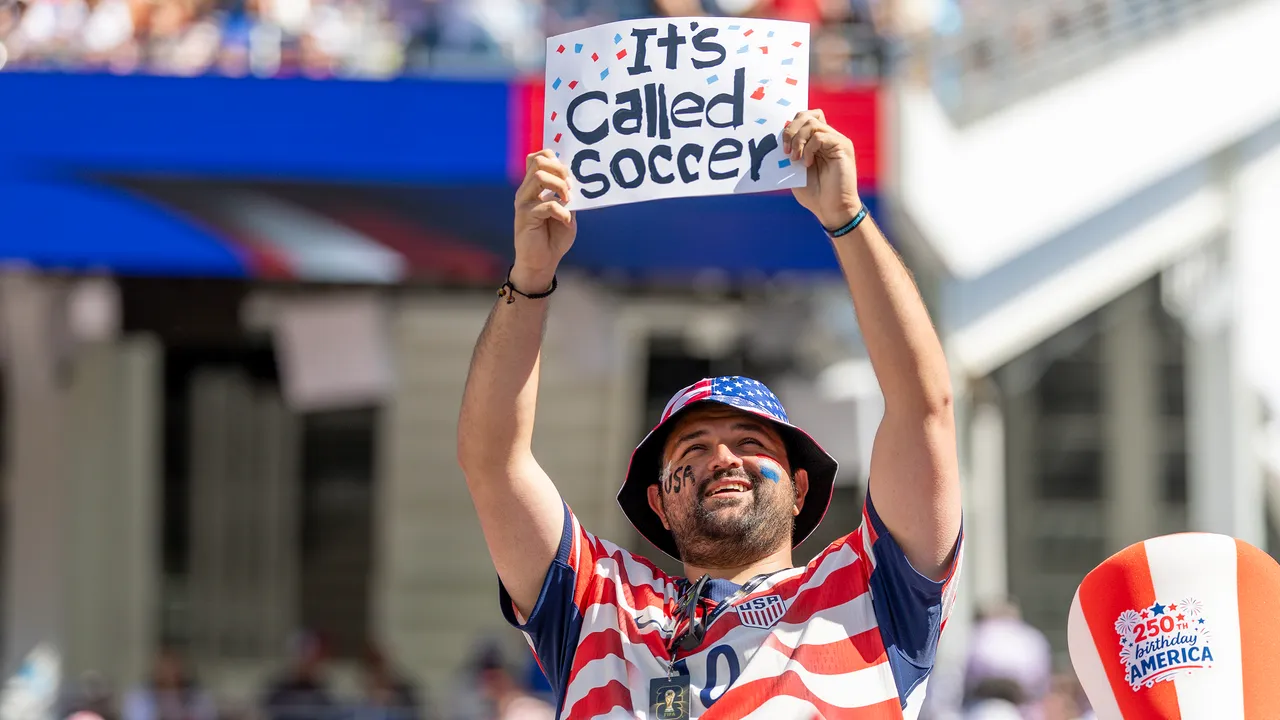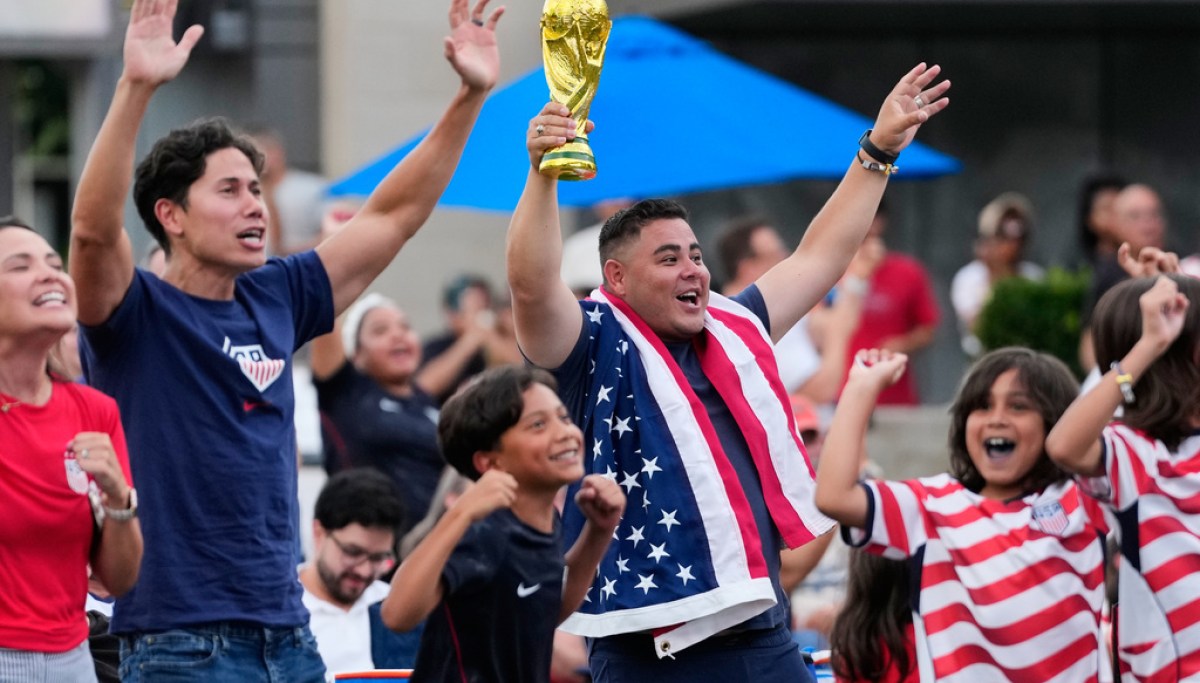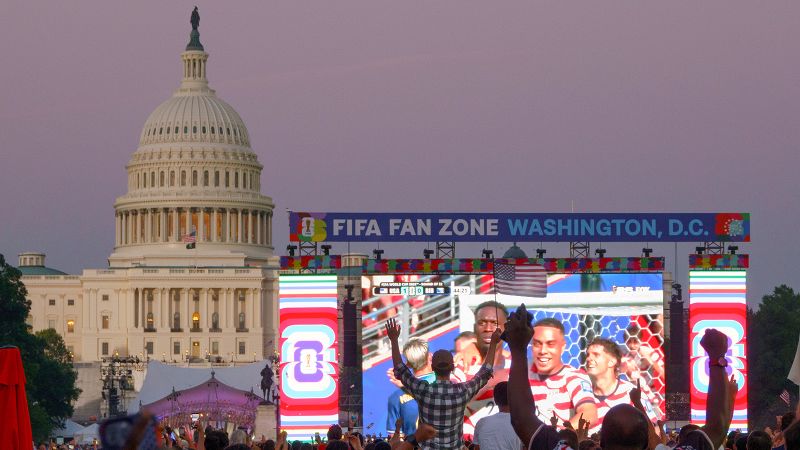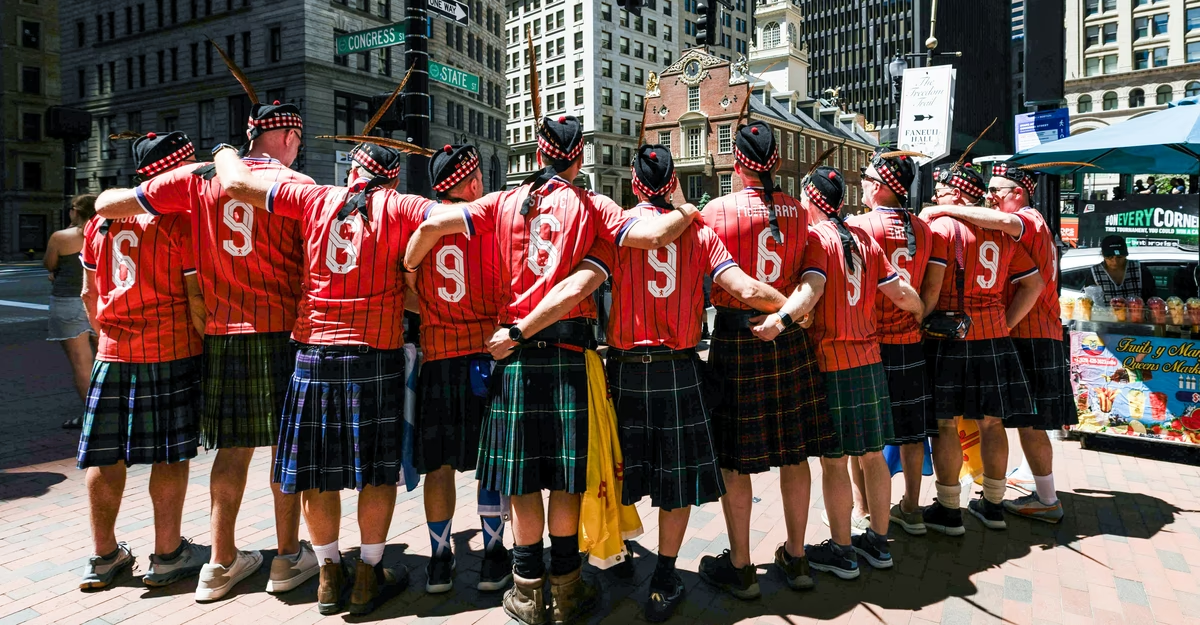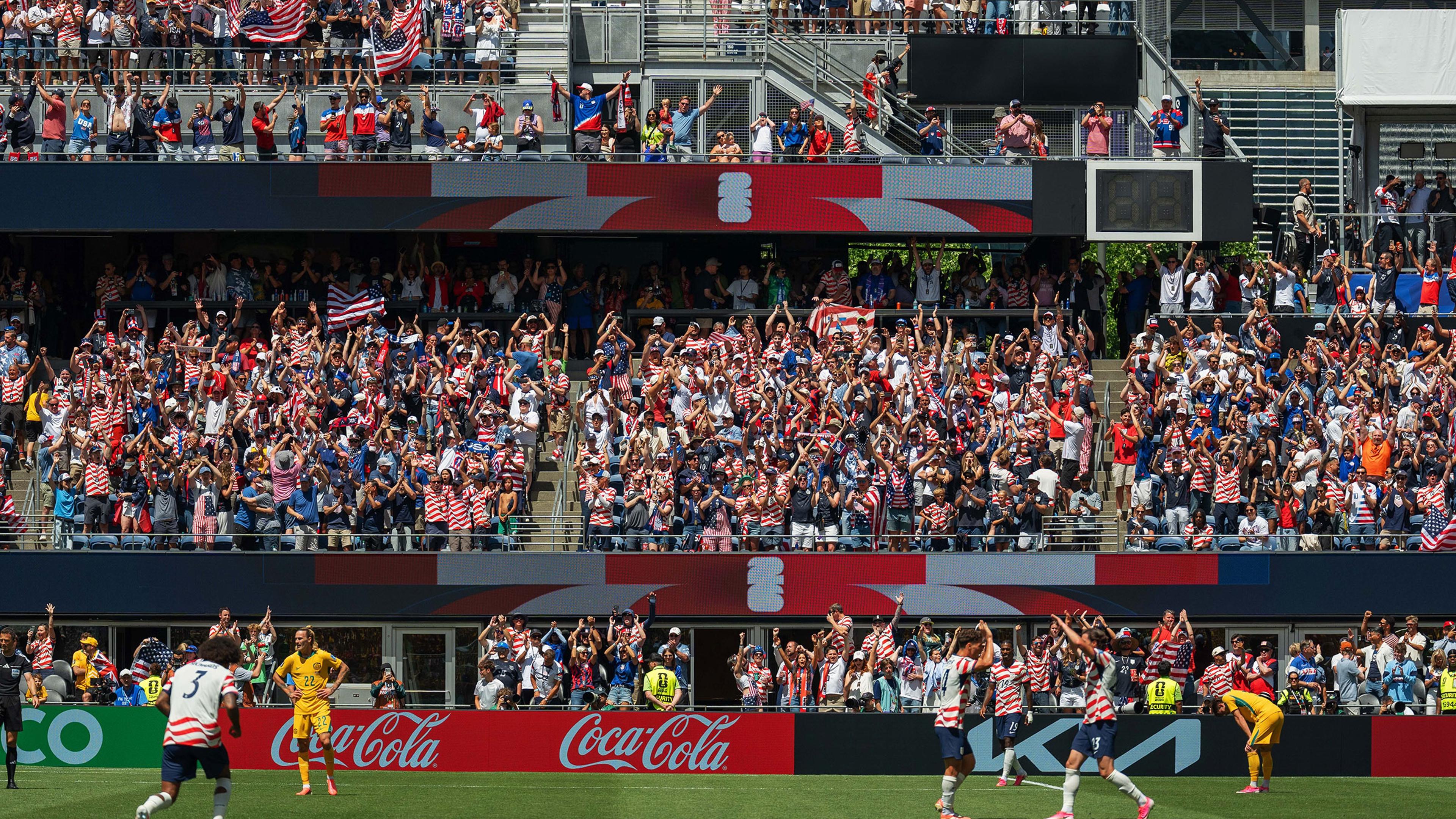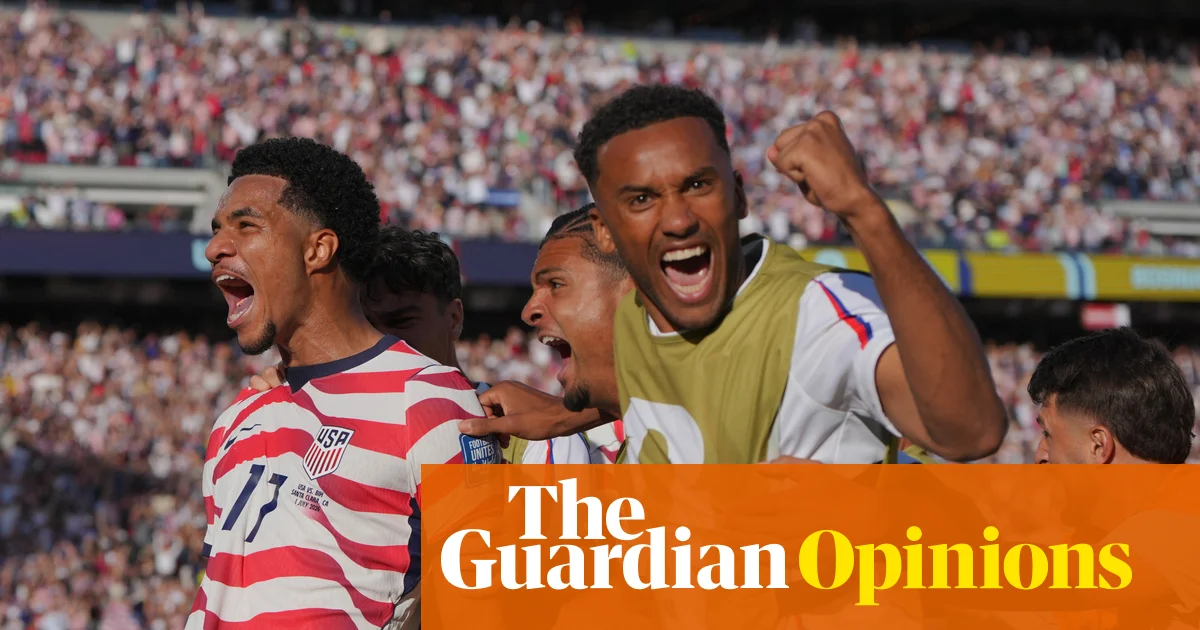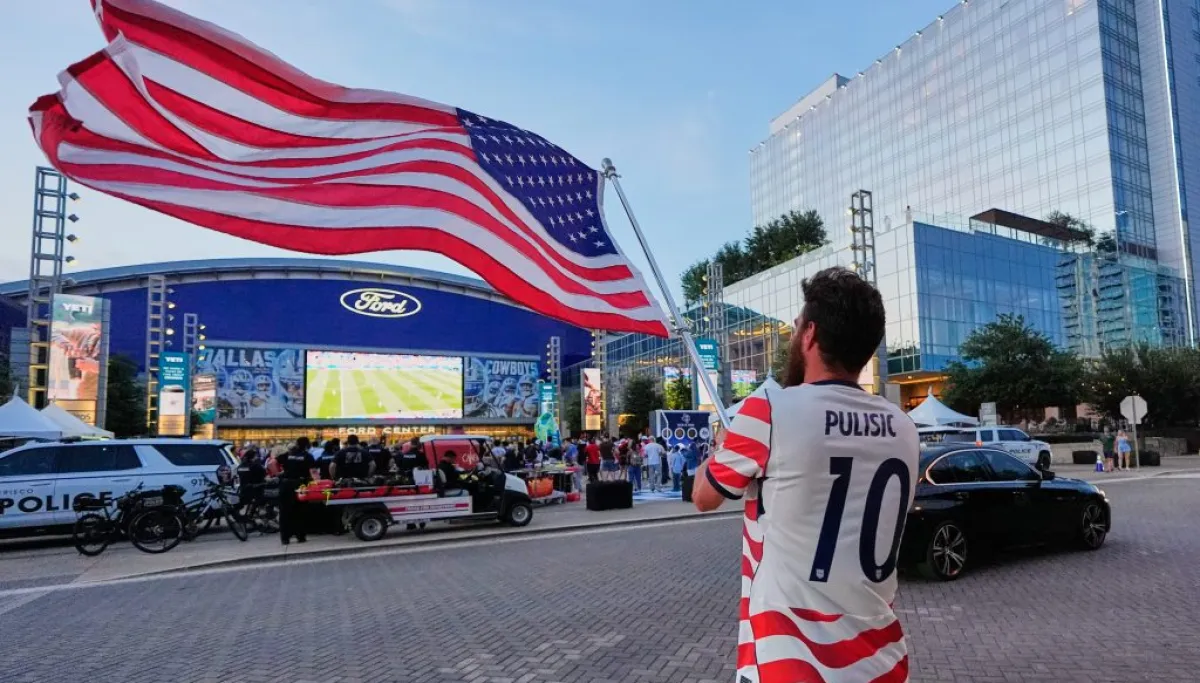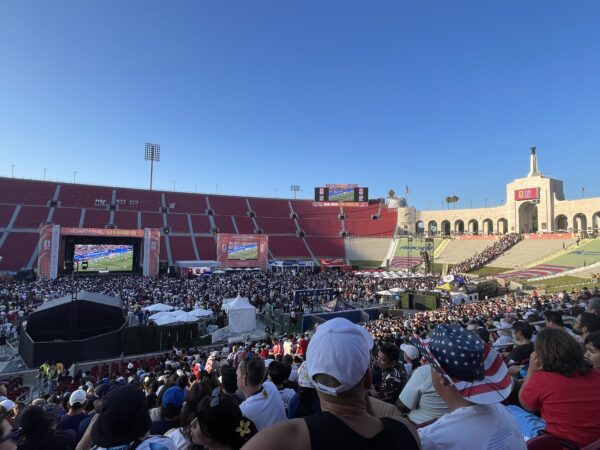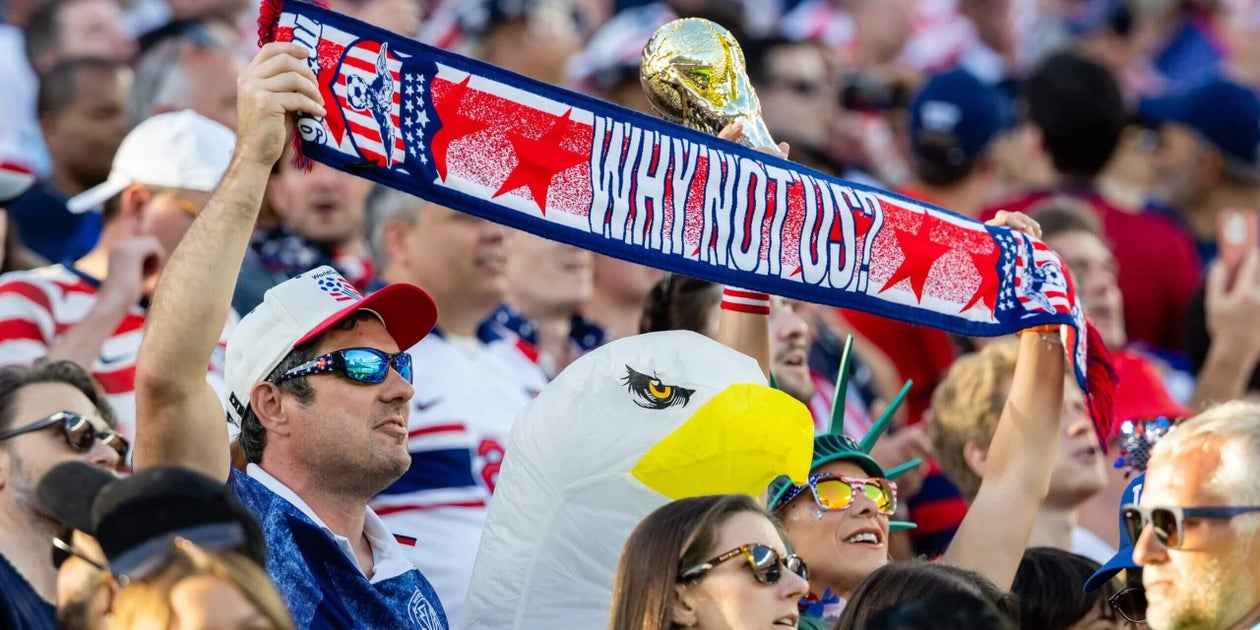
SANTA CLARA, Calif. — We wear the same jersey. One size fits all, for a change, with clashing accents that we make match.We paint our faces and drape the flag across our shoulders, some like a cape, others like a shawl. We show up, loud and unashamed, suddenly immune to the rage baiters and social media bots. We find, for a moment, something better than ourselves. And then we act bigger than ourselves.A woman wears a bald eagle costume and flaps red, white and blue wings from the upper deck at San Francisco Bay Area Stadium. A man perches a toddler on his shoulders, the boy’s striped face an American canvas of potential. A girl holds a handcrafted “We Believe” sign on a poster half her size.In downtown San Jose, Patricia Vo cheers in bustling San Pedro Square, standing in the middle of a kind of joy that she envisioned to get through three surgeries and eight rounds of chemotherapy. Naseem Farooqi bounds out of the stadium after a 2-0 win over Bosnia and Herzegovina, draped in an American flag, cowboy hat and boots. He lights a cigar as soon as he clears the exit. Dressed in a USA crop top and flag-colored socks to her knees, Robin Roettger completes her look by sporting the shell of a soccer ball across her stomach, making it seem like she is with child. She stands with her mother, who is bedecked as the Statue of Liberty.These people look silly.These people look fabulous.This United States fan is flying high at San Francisco Bay Area Stadium (David Gonzales / Imagn Images)These are images of America, at 250 years old, hosting the world’s grandest sporting event and partying like it’s 1776. But the jersey has never been just a jersey. It is a visual manifesto of a complicated country, and in the upkeep of long-recited ideals, it becomes a battleground. The politics of exclusion have infiltrated these colors, this flag, narrowing perspectives about who counts as a real American and who does not. In response, the politics of inclusion have turned to elitist derision, partly as a shield, but that only makes it easier to exile the faction from national pride.This World Cup has become a bridge. It is not ideal to host a world reunion during a family feud, but it has been beneficial. The event has created a reprieve, delivering us from division and reminding us that patriotism can be inviting. Before large crowds that contain multitudes, the U.S. men’s national team takes the field, striving the way we are supposed to strive. And for a 90-minute respite, the arguing stops.This is not a constraining pride, either. A warm welcome has not been universal, but it has been prevalent. Some nations — such as Iran, whose team captain called this “a disaster World Cup” — and their fans could not escape the political shadows. But most have observed the difference between the government and the people. Most have witnessed an America that wants to wrap its arms around the globe.In a viral social media video, a Scottish supporter traveling with the Tartan Army cried on a Boston sidewalk, expressing what many visitors have felt the past few weeks. When she arrived, she expected hostility from a nation with a presidential administration that antagonizes the world. She found joy.May her tears irrigate the feeling.A powerful forceJust a couple hundred yards from a parking lot asking for $200, the men danced in front of a vendor. One was Latino, the other White. Both wore USA overalls, stars on top, stripes on the bottom. They made up a bop: “Hot dogs! (clap, clap) Hot dogs! (clap, clap) Hot dogs!” Their steps were a hilariously poor approximation of the way Kid ‘n Play moved in the 1980s. The song “Whoomp! (There It Is),” a classic from 33 summers ago, blasted in the distance.Maybe that’s how we ought to picture freedom: warm in addition to weighty, a serious human right that shouldn’t have to take itself seriously.Sports have always been a powerful social force. At their best, these games give a multicultural invitation to a monocultural experience. The shared language requires no translation, no common background, no political agreement. A goal is a goal. A comeback makes every heart in the building lurch. The electricity of 70,000 people rising and screaming in unison jolts everyone. In a fracturing nation, in a fracturing world, this is no small accomplishment. It is among the few remaining gateways to human connection.The World Cup has spread unity and a human connection across North America (Darren Yamashita / Imagn Images)But the unity does not happen by accident, and no one should assume it is protected by default. Those unifying elements — passion, tribalism, a deep and generational emotional investment — can be redirected. The stadium is not immune to society. It houses a sliver of it for a few excitable hours.Over the past decade in American sports, we have experienced an unsettling amount of conflict. When Colin Kaepernick started kneeling during the national anthem in 2016, he continued an old American tradition, leveraging his visibility to demand the country meet the high standards of its stated values. It was a demonstration as quiet as it was provocative. The reaction was loud and lasting. Early in his first term, Donald Trump seized on Kaepernick’s protest and made it into a quarrel about respecting the flag, a reframing from which sports have yet to fully recover.
The World Cup gives America a unified look. The rest is complicated
Sports fandom would make an ideal mentor for patriotism. The essential characteristics: commitment, unity, aspiration, hope, accountability.
2,128 words~10 min read