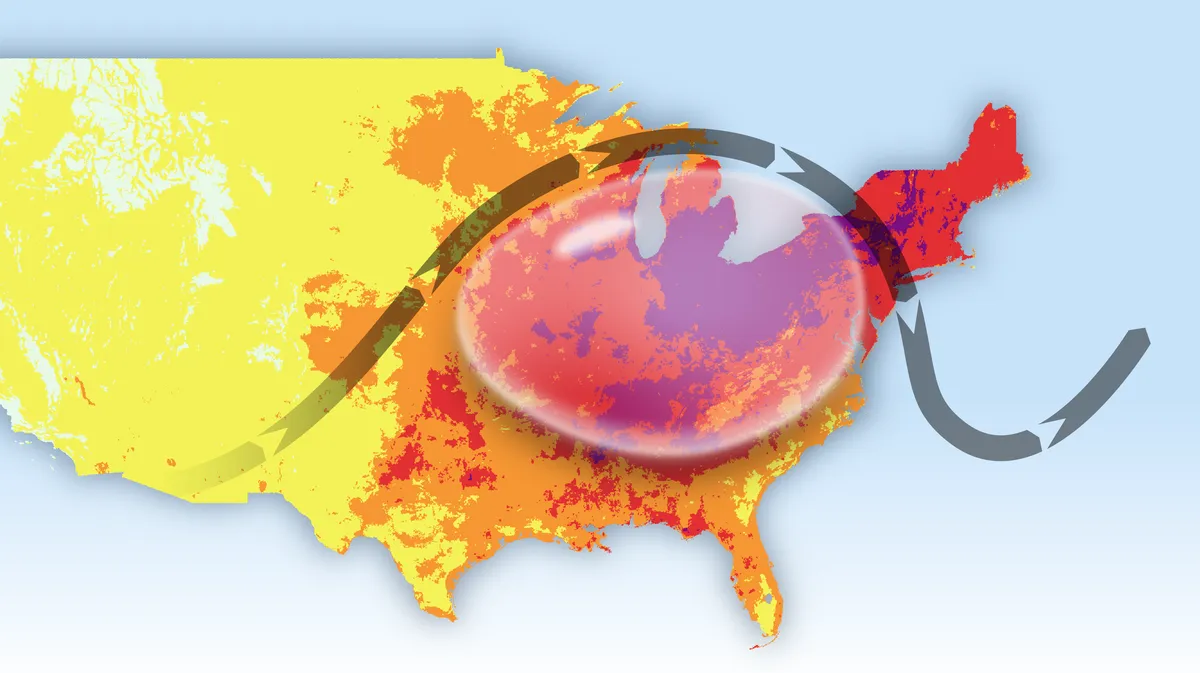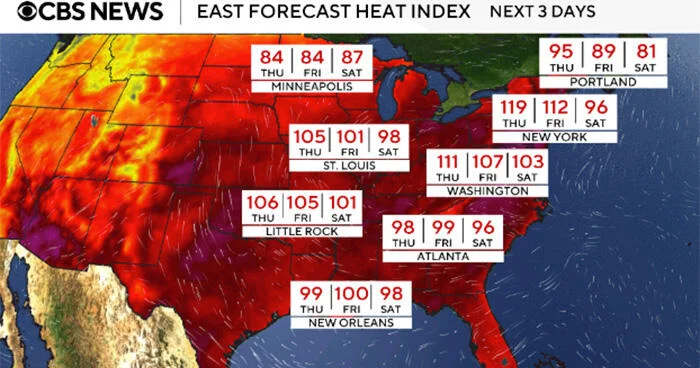
Temperatures are skyrocketing for the third straight day across the Eastern US, with officials in cities from Boston to Washington, DC trying to keep residents cool amid outdoor July 4th celebrations. Dozens of daily records are being set as the combination of heat and humidity sends the heat index soaring.
But “how hot is it?” is not as straightforward a question as it seems. And understanding the different heat metrics can be lifesaving, since heat is the number one weather-related killer in the US.
“The problem with temperature alone is that there’s other factors that can cause heat stress,” said Andrew Grundstein, a researcher at the University of Georgia who specializes in climate and health. Relative humidity, dewpoint, the angle of the sun and wind speed can all play a role.
Over the years, researchers have come up with a variety of ways to quantify how hot it is, and how extreme heat affects the human body. Each one has its merits and drawbacks, and some have become increasingly important as the climate heats up.
First (and probably most familiar to people) is the heat index. The heat index is a value calculated by combining the air temperature and relative humidity, to arrive at something close to a “feels like” air temperature. In short, the higher the heat index, the more oppressive it feels outside, and the more dangerous the heat is to human health.